Source Blunt and Bend Liquid Dispensing Needle for Glue and Resin
Find and compare 30 Blunt and Bend Liquid Dispensing Needle options from China. These tools support pumping water, samples, and dispensing glue or UV resin in medical and industrial settings. Specifications range from 14G to 32G with CE and ISO certifications.
Key considerations
Products List


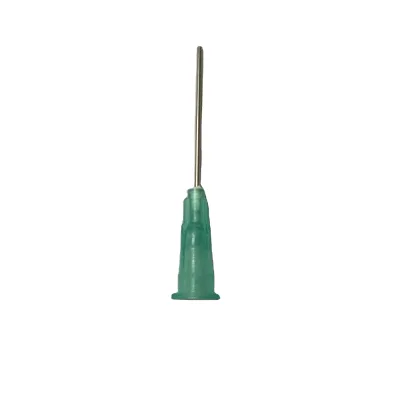


Protecting Glue Dispensing Tips Plastic Syringe PP Flexible Dispenser Needles
$0.02 - $0.02
MOQ: 1000 Pieces

High Quality Precision Glue Dispensing Stainless Steel Needle Blunt Needles
$0.06 - $0.10
MOQ: 1000 Pieces

0.5 Inch 25g Epoxy Resin Blunt Dispense Tips Luer Lock Dispensing Needles
$0.06 - $0.10
MOQ: 1000 Pieces


Supply Disposable Medical Devices Medicine Dispensing Blunt Fill Needle
$0.02 - $0.07
MOQ: 100000 Pieces


$6.00 - $7.00
MOQ: 100 Bags




Comprehensive Sourcing Guide
Blunt and Bend Liquid Dispensing Needle Sourcing Guide
Procuring the correct dispensing needle is a critical step in ensuring the precision and reliability of automated fluid handling systems. The Blunt and Bend Liquid Dispensing Needle represents a specialized category of consumables designed for applications where standard straight needles may cause splashing, backflow, or inadequate coverage. These needles are engineered to direct fluid flow with specific angularity and tip geometry, making them indispensable in industries ranging from medical device assembly to industrial adhesive application. Buyers must approach this procurement with a clear understanding of the technical nuances that differentiate these components from generic dispensing tips.
The market for these needles is characterized by a wide variance in material composition, gauge sizes, and customization options. While some listings indicate a focus on medical-grade stainless steel for high-precision experiments, others highlight plastic variants like PP and PE for general industrial glue dispensing. This diversity means that a buyer cannot assume a single specification fits all use cases. It is essential to evaluate the specific rheological properties of the fluid being dispensed, the required flow rate, and the mechanical constraints of the dispensing valve before selecting a supplier. The following guide provides a structured approach to navigating this complex sourcing landscape.
Product Scope and Observed Listing Signals
The observed product landscape for blunt and bend needles reveals a significant divergence in intended application and material construction. Listings indicate that these components are utilized for pumping water, taking samples, and conducting high-precision experiments, suggesting a subset of products designed for medical or laboratory environments. Conversely, other signals point to industrial applications involving glue, UV resin, and other viscous liquids. This duality requires buyers to carefully distinguish between medical-grade disposables and industrial-grade reusable or semi-disposable tips. The presence of both "Medical" and "Industry" application tags in the same market segment highlights the need for precise filtering based on end-use requirements.
Material selection is another critical signal that varies across suppliers. Some products are explicitly described as being made from stainless steel, offering high rigidity and durability suitable for high-pressure dispensing. Others are constructed from plastic materials such as PP (polypropylene) and PE (polyethylene), which may offer chemical resistance or cost advantages for lower-pressure applications. The observed size range spans from 14G to 32G, indicating that buyers must match the needle gauge to the viscosity of their fluid. A 14G needle is suitable for low-viscosity fluids, while a 32G needle is necessary for high-viscosity adhesives or precise micro-dosing. Understanding these material and gauge distinctions is the first step in narrowing down supplier options.
Technical Specifications to Verify
When evaluating technical specifications, the geometry of the needle tip is paramount. The "blunt and bend" configuration is not merely aesthetic; it serves a functional purpose in directing fluid flow away from the nozzle wall to prevent splashing and ensure accurate deposition. Buyers must verify the exact angle of the bend and the length of the blunt tip, as these dimensions directly impact the dispensing pattern and the distance from the substrate. Additionally, the internal diameter of the needle must be compatible with the dispensing valve’s tubing size. Mismatches here can lead to leaks, pressure drops, or inconsistent flow rates, which compromise the quality of the final product.
Precision and rigidity are also key technical factors that require verification. Some listings highlight "High Rigidity" as a key selling point, which is crucial for maintaining tip integrity during high-pressure dispensing or when using stiff tubing. However, other products are described as having "Normal Precision," which may be sufficient for general industrial gluing but inadequate for medical or micro-electronics assembly. Buyers should request detailed technical drawings or CAD models from suppliers to confirm the internal and external dimensions. Furthermore, the installation type, whether vertical or horizontal, and the driven type, such as pneumatic systems, must align with the buyer’s existing automation infrastructure to ensure seamless integration.
Compliance and Safety Documentation
Compliance documentation is a non-negotiable aspect of sourcing, particularly when the needles are intended for medical or regulated industrial applications. The presence of CE certification and ISO 13485 certificates in some listings indicates that certain suppliers adhere to strict quality management systems for medical devices. Buyers must verify the validity and scope of these certificates, ensuring they cover the specific product model and material being purchased. For industrial applications, while medical certifications may not be required, other standards such as ISO 9001 for general quality management may be relevant. It is crucial to request copies of these certificates and cross-reference them with the issuing bodies to avoid fraudulent claims.
Safety and material safety data sheets (MSDS) are also important, especially when dealing with needles that come into contact with hazardous chemicals like UV resins or industrial glues. Buyers should inquire about the chemical compatibility of the needle material, whether it is stainless steel or plastic, with the fluids they intend to dispense. For plastic needles, understanding the resistance to solvents and adhesives is vital to prevent degradation or contamination of the fluid. Additionally, if the needles are disposable, buyers should confirm the sterilization status if they are used in any context involving human contact or cleanroom environments. Even for industrial use, ensuring that the materials do not leach contaminants into the product is a key safety consideration.
Cost Drivers and Commercial Terms
The cost of blunt and bend liquid dispensing needles is influenced by several factors, including material type, gauge size, and customization requirements. Stainless steel needles, particularly those with high rigidity and precise bending, tend to be more expensive than their plastic counterparts due to the complexity of manufacturing and the cost of raw materials. Customization, such as specific bend angles or lengths, can also significantly impact the price, as it often requires dedicated tooling or production runs. Buyers should be aware that while the unit price may be low, the total cost of ownership includes factors like replacement frequency and dispensing efficiency.
Commercial terms such as Minimum Order Quantity (MOQ) and lead times vary widely among suppliers. Observed MOQs range from 1 to 100,000 units, reflecting the diverse needs of small-scale laboratories versus large-scale industrial manufacturers. Lead times are typically based on order quantity, with common delivery windows of within 30 days. However, for customized orders or large volumes, lead times may extend. Buyers should negotiate clear terms regarding packaging, such as carton or OPP bag packaging, and ensure that the packaging protects the needles from damage during transit. Additionally, understanding the warranty policies, which are often unavailable for consumables, is important for managing risk and planning for potential quality issues.
Supplier Qualification and Quality Control
Supplier qualification is essential to ensure consistent quality and reliable supply. Buyers should assess the supplier’s manufacturing capabilities, including their machinery test reports and quality control processes. The presence of machinery test reports indicates that the supplier conducts regular checks on their production equipment, which is a positive sign of quality assurance. Buyers should also inquire about the supplier’s experience in producing blunt and bend needles, as this specialized geometry requires specific expertise. Suppliers with a strong track record in the medical or industrial sectors are likely to have more robust quality systems in place.
Quality control measures should extend beyond the manufacturing process to include incoming material inspection and final product testing. Buyers should request information on how the supplier verifies the dimensions and rigidity of each needle batch. For plastic needles, checking for defects such as burrs or inconsistent wall thickness is crucial. For stainless steel needles, ensuring the absence of cracks or deformities is vital. Additionally, buyers should consider implementing their own incoming quality control checks to verify that the received products meet their specifications. Establishing a clear communication channel with the supplier for addressing quality issues is also important for maintaining a smooth procurement process.
Long-Term Procurement Checks
Long-term procurement success depends on establishing a sustainable relationship with suppliers and continuously monitoring performance. Buyers should regularly review supplier performance metrics, such as on-time delivery rates, product quality consistency, and responsiveness to issues. This data can help identify potential risks and opportunities for improvement. Additionally, buyers should stay informed about advancements in needle technology and materials, as new innovations may offer better performance or cost savings. Engaging with suppliers for feedback on usage and performance can also lead to product improvements and better alignment with the buyer’s needs.
It is also important to diversify the supplier base to mitigate supply chain risks. Relying on a single supplier for critical consumables like dispensing needles can be risky, especially if that supplier faces production delays or quality issues. Buyers should identify and qualify alternative suppliers who can meet their technical and commercial requirements. This diversification strategy ensures continuity of supply and provides leverage in negotiations. Finally, buyers should regularly update their technical specifications and requirements to reflect changes in their production processes or product designs, ensuring that the needles they procure remain optimal for their applications.
FAQs
What materials are used for blunt and bend liquid dispensing needles?
These needles are constructed from stainless steel or plastic materials like PP and PE. The specific material depends on the application, with some models featuring a plastic texture for specific dispensing needs while others use metal for high rigidity.
Which certifications do these dispensing needles hold?
The products typically hold CE and ISO 13485 certifications for medical applications. Some listings also indicate ISO certification for general industrial use, ensuring compliance with safety and quality standards required for medical and industrial sectors.
Can I customize the size of the blunt and bend needle?
Yes, customization is available for these dispensing needles. The standard size range spans from 14G to 32G, allowing buyers to select specific gauges that match their precision requirements for glue, UV resin, or water pumping applications.
How long is the delivery time for these needles?
Delivery is based on order quantity and is commonly within 30 days. This lead time applies to the standard production cycle, though specific timelines may vary depending on the total volume ordered and the supplier's current capacity.
What is the minimum order quantity for these needles?
The minimum order quantity ranges from 1 to 100,000 units depending on the supplier. Buyers can find options for single items or bulk orders, with pricing varying significantly across the observed range of 0.01 to 6500 USD.
Are these needles suitable for medical applications?
Yes, these needles are explicitly designed for medical applications such as pumping water and high precision experiments. They feature a needle component and are often categorized as disposable injection needles suitable for adult use in clinical settings.
What packaging options are available for these needles?
Packaging options include carton boxes or individual OPP bags depending on the specific product model. The single package size is often around 10x10x3 cm, and the gross weight per unit is approximately 0.3 kg for standard configurations.