Source Bluetooth UVA Flexible LED Strip for Bars, Advertising, Lighting
Find 30 verified options for Bluetooth UVA Flexible LED Strip suitable for bars, advertising displays, and general lighting. Compare specifications like voltage, LED quantity, and IP ratings from suppliers in Shenzhen and Guangdong to find the right solution for your project.
Key considerations
Products List


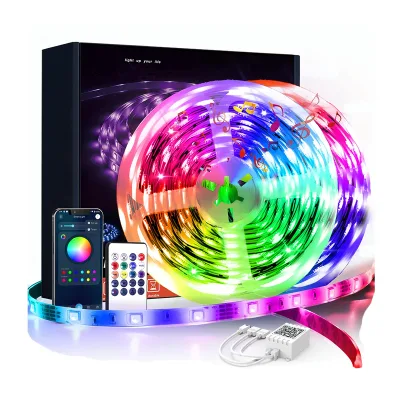


High Quality IP65 Flexible LED Strip Outdoor LED Strip with 3 Years Warranty
$0.80 - $6.00
MOQ: 500 Meters


Comprehensive Sourcing Guide
Bluetooth UVA Flexible LED Strip Sourcing Guide
Buyers seeking Bluetooth UVA flexible LED strips must first reconcile the observed product data with specific spectral requirements, as the supplied facts predominantly describe visible white and RGB variants rather than ultraviolet sources. The available listings confirm attributes like SMD2835 and SMD3528 light sources with emitting colors ranging from pure white to changeable RGB, which are distinct from the UVA spectrum needed for curing or fluorescence applications. Procurement teams should verify if the "Changeable" color attribute extends to UV wavelengths or if the current inventory is limited to visible light, ensuring the selected model matches the intended functional outcome before proceeding with any order.
Commercial viability for specialized UVA strips often hinges on the customization availability noted in the product attributes, as standard rolls may not inherently include the specific diodes required for ultraviolet emission. The observed MOQ range of 1 to 10,000 units suggests flexibility for both prototyping and bulk deployment, yet the specific voltage requirements of DC12V or DC24V must be cross-referenced with the driver compatibility for the target application. Buyers should prioritize suppliers who explicitly confirm the spectral output of their "Flexible LED Strip" offerings, as the generic listing data does not guarantee the presence of UVA diodes in the standard 60LED/Meter or 300PCS/M configurations.
Product Scope and Observed Listing Signals
The current market signals indicate a strong presence of flexible LED strips with IP65 ratings and standard roll lengths of 5 meters, though these specifications generally apply to visible light products rather than specialized UVA solutions. The observed packing methods, ranging from simple cartons to anti-static packaging, highlight the need for careful handling during transit, particularly if the final application involves sensitive curing processes or delicate substrates. Buyers must scrutinize the "Product Type" and "Type" fields to ensure the strip is truly flexible and suitable for the intended surface curvature, as rigid or semi-rigid variants would fail to meet the installation requirements of complex geometries.
Application data points to uses in bars, general lighting, and advertising, which typically rely on visible white or RGB illumination rather than ultraviolet light. While the "Macadam Level" and "Brightness" metrics provide a baseline for visual performance, they do not directly correlate with the efficacy of UVA output for curing or detection tasks. Procurement teams should treat the listed "LED Quantity" and "Light Source" as baseline indicators of strip density and technology, but must explicitly request spectral data sheets to confirm the presence of UVA diodes, as the standard SMD2835 and SMD3528 components are primarily optimized for visible spectrum efficiency.
Technical Specifications to Verify
Voltage compatibility is a critical verification step, as the observed listings specify DC12V and DC24V options, which dictate the necessary power supply infrastructure for the installation. Buyers must confirm that the selected strip's voltage rating aligns with their existing power distribution to avoid efficiency losses or component failure, especially given the "Max.Length" constraints of 10m or 50m per roll which affect voltage drop calculations. The "LED Numbers/M" values, ranging from 60 to 300 per meter, directly influence the light density and power consumption, requiring precise calculation to ensure the power supply can handle the total load without overheating or dimming.
The physical dimensions and standard roll lengths, such as the 5-meter/roll or 13.513.53cm packaging standards, must be validated against the physical constraints of the installation site. While the "Life(H)" of 25,000 hours is a notable attribute for visible light strips, the operational lifespan of UVA diodes can differ significantly based on drive current and thermal management. Buyers should verify the "Board" material, noting the presence of RGB or white/yellow options, to ensure the substrate can support the specific thermal and electrical demands of ultraviolet emission, as standard boards may not be optimized for the higher heat generation often associated with UVA applications.
Compliance and Safety Documentation
Certification requirements are paramount, with the observed data listing CE, RoHS, EMC, and LVD as common compliance markers for the available LED strip inventory. Buyers must ensure that the specific UVA variant they intend to purchase carries these certifications, as the presence of EMC and LVD indicates compliance with electromagnetic and low-voltage directives essential for safe operation in commercial environments. The "Standard" field often references CE and RoHS, but procurement teams should demand specific test reports for the UVA spectral output to confirm that the ultraviolet emission levels do not exceed safety limits for human exposure or material degradation.
Safety documentation must also address the specific risks associated with ultraviolet radiation, which are not explicitly covered in the general product attributes like "IP Rating" or "Warranty." While the listed warranty periods of 1-3 years provide a baseline for product reliability, they may not cover failures related to UV degradation or specific spectral drift over time. Buyers should request detailed safety data sheets that outline the protective measures required for handling UVA light, ensuring that the supplier's compliance documentation extends beyond standard electrical safety to include radiation safety standards relevant to the specific application environment.
Cost Drivers and Commercial Terms
Pricing dynamics for specialized LED strips are influenced by the "Customization" availability and the specific diode technology required for UVA emission, which often commands a premium over standard white or RGB variants. The observed price range of 0.1 to 15 USD suggests a wide variance based on specifications, but buyers should anticipate higher costs for UVA-specific models due to the specialized nature of the diodes and the lower production volumes. The "Product Weight" and "Packing" details, such as the 0.2kg weight and natural packing, contribute to logistics costs, which can escalate significantly if the order requires specialized anti-static or reinforced packaging to protect the sensitive UVA components.
Minimum Order Quantities (MOQ) ranging from 1 to 10,000 units offer flexibility but can impact the unit cost structure, with larger orders typically yielding better economies of scale. Buyers must evaluate the "Warranty" terms, which vary from 1 to 3 years, as longer warranties may indicate higher confidence in the product's durability but could also reflect higher initial pricing. The "Place of Origin" in Shenzhen and Guangdong suggests a mature supply chain, yet buyers should verify if the specific UVA components are sourced locally or imported, as this can affect lead times and the overall cost structure of the procurement.
Supplier Qualification and Quality Control
Supplier qualification should focus on the ability to provide consistent spectral output and adherence to the observed "Standard" of 5-meter/roll or similar configurations for flexible LED strips. Buyers must verify the supplier's capacity to maintain the "LED Type" consistency, ensuring that SMD2835 or SMD3528 diodes are used as specified, and that any UVA variants meet the same quality benchmarks. The "Certification" list including CE and RoHS is a baseline, but suppliers should also demonstrate a track record of quality control for specialized applications, providing batch testing results that confirm the uniformity of the ultraviolet emission across the entire roll length.
Quality control protocols must address the "Board" material and the "Light Source" integrity, as these factors directly impact the longevity and performance of the strip. Buyers should request evidence of the "Life(H)" testing, particularly for UVA diodes, to ensure the claimed 25,000 hours or similar metrics are accurate under real-world operating conditions. The "Application" data points to diverse uses, so suppliers must demonstrate the ability to tailor the strip for specific environments, such as bars or advertising, while maintaining the IP65 rating and other critical performance attributes required for the intended installation.
Long-Term Procurement Checks
Long-term procurement strategies should prioritize the stability of the "Warranty" terms and the availability of replacement parts, as the "Life(H)" of the diodes will eventually dictate the need for maintenance or replacement. Buyers must establish a relationship with suppliers who can provide consistent stock of the specific UVA diodes and compatible power supplies, ensuring that the "Voltage" requirements of DC12V or DC24V remain supported over the product lifecycle. The "Customization" availability should be leveraged to secure long-term agreements that lock in pricing and specifications, mitigating the risk of supply chain disruptions for specialized components.
Performance monitoring is essential to validate the "Brightness" and "Emitting Color" consistency over time, as UVA output can degrade faster than visible light under certain conditions. Buyers should implement a schedule for periodic testing of the installed strips to verify that the "IP Rating" and other environmental protections remain intact, preventing premature failure due to moisture or dust ingress. The "Product Origin" in China offers a robust supply base, but buyers must maintain regular communication with suppliers to track any changes in manufacturing processes or component sourcing that could affect the long-term reliability of the UVA flexible LED strips.
FAQs
What certifications do these flexible LED strips have?
The flexible LED strips are certified with CE, RoHS, EMC, and LVD standards. These certifications ensure compliance with international safety and environmental regulations for electronic products. Buyers can rely on these documented credentials for import clearance and quality assurance in various global markets without additional verification steps.
What is the IP rating for outdoor use?
The product features an IP65 rating, which provides protection against dust and low-pressure water jets. This makes the flexible LED strips suitable for outdoor applications and humid environments. The IP65 specification ensures durability and reliable performance when exposed to weather elements, offering peace of mind for exterior lighting projects.
Can the LED strips be customized for specific projects?
Yes, customization is available for these flexible LED strips. Buyers can request specific modifications to meet unique project requirements. This flexibility allows for tailored solutions in various lighting applications, ensuring the product aligns perfectly with specific design needs and functional demands without compromising on quality or performance standards.
What is the warranty period for these LED strips?
The warranty period ranges from 1 to 3 years depending on the specific model. This coverage provides assurance against manufacturing defects and ensures product reliability. Buyers benefit from this warranty support, which varies by configuration, offering a safety net for long-term usage and reducing potential risks associated with bulk procurement.
What is the typical packaging for these LED strips?
The LED strips are packaged in cartons, with some models using inner boxes and strong master cartons. Anti-static packaging is also available for certain variants. This robust packaging ensures safe transit and protection against damage during shipping. The varied packaging options cater to different logistical needs and product sensitivity requirements.
Where are these LED strips manufactured?
These LED strips are manufactured in Shenzhen, China, and generally originate from Guangdong province. This location is a major hub for electronics manufacturing, ensuring access to high-quality components and efficient production processes. Buyers benefit from the established supply chain infrastructure in this region, which supports consistent quality and timely delivery.