Source Bluetooth Wired Selfie Stick for Travel, Events, and Social Media
Find 30 Bluetooth Wired Selfie Stick options from Shenzhen suppliers with customizable features and CE, RoHS certifications. Compare models like MNS04 and ZH-0074 for lengths up to 1.8 meters and weights ranging from 260g to 900g.
Key considerations
Products List


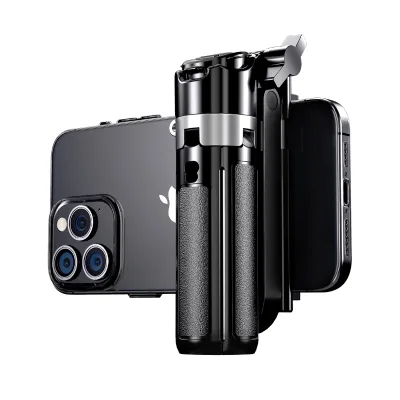


Hot Selling Bluetooth Remote Control Photo Live Broadcast Mobile Phone Selfie Stick
$2.43 - $2.71
MOQ: 400 Pieces

Hot Selling Anti-Shake Retractable Bluetooth Remote Control Selfie Stick
$4.37 - $4.89
MOQ: 300 Pieces

Hot Selling Anti-Shake Retractable Live Broadcast Bluetooth Remote Control Selfie Stick
$4.37 - $4.89
MOQ: 200 Pieces


Hot Selling Bluetooth Intelligent Follow-up Gimbam Anti-Shake Mobile Phone Selfie Stick
$6.68 - $7.46
MOQ: 150 Pieces


A35 Extendable Selfie Stick - 1.6m with Bluetooth Remote & Tripod Stand
$4.12 - $5.35
MOQ: 1000 Pieces


Comprehensive Sourcing Guide
Strategic Sourcing Guide for Bluetooth and Wired Selfie Sticks
The global demand for mobile photography accessories has driven a robust market for selfie sticks, specifically those integrating Bluetooth connectivity for remote shutter control alongside traditional wired options. For B2B procurement professionals, navigating this sector requires a disciplined approach that distinguishes between product attributes, technical specifications, and compliance requirements. The following guide synthesizes observed market data and verified product facts to provide a structured framework for sourcing Bluetooth and wired selfie sticks. Buyers must prioritize evidence-based verification over marketing claims to ensure supply chain reliability and product quality.
Technical Specifications and Functional Differentiation
Understanding the technical architecture of selfie sticks is the first step in defining procurement requirements. The market offers distinct variations in connectivity, physical dimensions, and material composition. A critical observation from current product listings is the coexistence of Bluetooth and wired features. Some units are explicitly categorized by the attribute "Bluetooth," indicating wireless remote shutter functionality, while others are defined by the attribute "Wired," suggesting a direct physical connection or a specific design philosophy. Procurement teams must verify which connectivity type aligns with their target demographic, as Bluetooth models often require battery integration, whereas wired models may rely on direct device interfacing.
Physical specifications vary significantly across product lines, directly impacting shipping costs and user experience. The observed data indicates a wide range in maximum extension lengths. Specific models, such as those with model numbers MNS03 and MNS04, list a maximum length of 80cm. In contrast, other product lines, including those identified by model number M1, offer a folded length of 1.8 meters, suggesting a telescopic design that extends significantly when deployed. Other entries specify a maximum length of 150cm with a minimum length of 25cm, while alternative models like ZH-0038 and ZH-0048 list minimum lengths of 20cm and 18cm respectively. The maximum length for some units is capped at 70cm. These dimensional variances dictate the suitability of the product for different use cases, from compact pocket carry to professional extended reach.
Weight is another pivotal specification. Observed weights range from a lightweight 260g for model ZH-0048 to a substantial 900g for model ZH-0064. Most mid-range options fall between 300g and 620g. For buyers targeting portable consumer markets, the attribute "Portable" is a key filter, often correlating with the lower end of the weight spectrum. The product standard dimensions also vary, with packaging sizes ranging from 2054cm to 3695cm, influencing logistics planning and shelf space requirements.
Compatibility and Brand Integration
A primary driver for sales in this category is device compatibility. The observed product attributes explicitly list a broad range of compatible brands, including iPhone, Samsung, HTC, Nokia, Sony, Motorola, LG, Xiaomi, Lenovo, and Blackberry. This universal compatibility is a standard expectation for modern selfie sticks, which typically utilize standard 3.5mm audio jacks or universal Bluetooth pairing protocols. However, procurement officers must verify that the specific model selected supports the latest operating systems and device types. While the attribute "Compatible Brand" lists these major manufacturers, the actual implementation of the connection mechanism (wired vs. wireless) must be confirmed for each specific device generation.
For Bluetooth-enabled units, the integration relies on standard wireless protocols that pair with the target device's camera application. For wired units, the physical connector must match the device's input port. The presence of the "Customization: Available" attribute suggests that suppliers may offer branding options or specific connector configurations, which is vital for private label strategies. Buyers should confirm if the customization extends to the compatibility matrix, ensuring that the final product supports the specific devices their customers use.
Compliance, Certification, and Safety Standards
In the consumer electronics sector, compliance is non-negotiable. The supplied facts highlight several critical certifications that serve as indicators of regulatory adherence. The most frequently observed certification attributes include CE, RoHS, SGS, and CCC. Some product entries list a combination of CE, ISO, RoHS, and CCC, indicating a higher level of regulatory coverage for both European and Chinese markets.
The CE mark signifies conformity with health, safety, and environmental protection standards for products sold within the European Economic Area. RoHS (Restriction of Hazardous Substances) compliance ensures that the product does not contain specific hazardous materials, which is a legal requirement in many jurisdictions. The CCC (China Compulsory Certification) is mandatory for products sold within China. The presence of SGS, a leading inspection and certification company, adds a layer of third-party verification regarding product quality and safety.
Buyers must treat these certifications as observations of specific listed products rather than universal guarantees for all inventory. When evaluating a supplier, procurement teams should request valid certification documents for the specific model numbers being ordered. The absence of these certifications in a product listing should trigger a red flag, requiring immediate verification before proceeding with an order. The standard "prod_standard" values, such as 2507535mm or 3095cm, likely refer to packaging dimensions rather than safety standards, so buyers should not conflate packaging size with regulatory compliance.
Cost Drivers and Pricing Dynamics
The pricing landscape for selfie sticks is influenced by a combination of factors, including material costs, feature complexity, and certification status. The observed price range in the market spans from $0.40 to $28.86 USD. This wide disparity reflects the diversity in product quality, from basic plastic models to premium units with advanced Bluetooth modules and durable materials.
The Minimum Order Quantity (MOQ) is another significant cost driver, with observed ranges from 1 to 1000 units. Lower MOQs, such as 1 unit, are typically associated with sample orders or drop-shipping arrangements, which often carry a higher per-unit cost. Higher MOQs, approaching 1000 units, usually unlock significant volume discounts, making them suitable for large-scale retail distribution. The "Selling Units: Single item" attribute suggests that some listings are structured for individual sale, which may impact bulk pricing strategies.
Additional cost factors include the packaging type. Products listed with "Gift Box" packaging often command a higher price point than those in standard "Carton" packaging, as the former targets the gift market and requires more expensive materials and design. The weight of the product also influences shipping costs; heavier models like the 900g unit will incur higher freight charges compared to the 260g variant. Buyers should analyze the total landed cost, including freight and duties, rather than focusing solely on the unit price.
Supplier Evaluation and Quality Control
Evaluating suppliers requires a focus on origin and manufacturing capability. The primary location for these products is Shenzhen, China, a global hub for electronics manufacturing. The attribute "prod_origin: Shenzhen, China" and "place of origin: China" confirms this geographic concentration. Shenzhen's ecosystem offers advantages in supply chain efficiency and rapid prototyping, but it also necessitates rigorous quality control.
Quality control should be a multi-stage process. First, verify the "Quanlity: High" attribute through sample testing. This claim should be validated by inspecting the physical build, the responsiveness of the Bluetooth connection, and the durability of the telescopic mechanism. Second, review the product's weight and dimensions against the specified standards to ensure consistency. Third, conduct a compliance audit to confirm that the certifications (CE, RoHS, CCC) are valid and applicable to the specific batch.
Buyers should also assess the supplier's ability to handle customization. The "Customized: Yes" and "Customization: Available" attributes indicate flexibility, but the scope of this customization must be defined. Does it include logo printing, color variations (Black, White), or packaging design? The "prod_packing" attribute shows options for "Gift Box" or "Carton," which should be aligned with the buyer's branding strategy.
Typical Applications and Market Segmentation
Selfie sticks serve diverse applications, ranging from casual social media usage to professional content creation. The "Tripod Type: Tripod" attribute indicates that many of these sticks can be unfolded to function as a stable base for the device, a feature highly valued for group photos and video recording. The "Carry: Portable" attribute highlights their utility for travelers and tourists.
The compatibility with major brands like iPhone, Samsung, and Xiaomi ensures broad market appeal. The "Feature: Bluetooth" attribute targets tech-savvy consumers who prefer wireless control, while the "Feature: Wired" attribute appeals to users who prioritize reliability or have devices with limited battery life. The color options, specifically Black and White, cater to standard aesthetic preferences, though customization may allow for broader color palettes.
Long-Term Procurement Considerations
Sourcing selfie sticks is not merely a transactional exercise but a strategic partnership. Buyers should consider the lifecycle of the product, including the availability of replacement parts and the longevity of the Bluetooth modules. The "Maximum Length" and "Folded Length" specifications suggest that the mechanical integrity of the telescopic joints is crucial for long-term durability.
Furthermore, the regulatory landscape is dynamic. Certifications like CE and RoHS are subject to updates. Buyers must ensure that their suppliers remain compliant with evolving standards to avoid supply chain disruptions. The "Customization" aspect offers a path to differentiation, allowing buyers to create unique products that stand out in a crowded market. However, this requires clear communication and strict quality assurance to maintain the "High" quality perception.
In conclusion, successful procurement of Bluetooth and wired selfie sticks relies on a meticulous analysis of technical specifications, compliance documentation, and supplier capabilities. By leveraging the observed data on model numbers, dimensions, weights, and certifications, buyers can make informed decisions that balance cost, quality, and market demand. The wide range of options, from the compact 260g units to the 1.8-meter extended models, provides ample opportunity for strategic sourcing tailored to specific business objectives.
FAQs
What certifications do bluetooth wired selfie sticks typically have?
Many listed models carry CE, RoHS, and CCC certifications to ensure regulatory compliance. Some units also include SGS verification for quality assurance. Buyers must verify these specific marks for each model number before ordering to confirm safety standards.
Which brands are compatible with these selfie sticks?
The products support major brands including iPhone, Samsung, Nokia, Sony, and Xiaomi. Compatibility extends to Motorola, LG, and Lenovo devices as well. Buyers should confirm the specific connection type, wired or Bluetooth, matches their target device generation.
How long can the selfie sticks extend when fully deployed?
Maximum lengths vary by model, ranging from 70cm to 150cm for extended reach. Some units fold down to a minimum length of 18cm or 20cm for portability. Specific dimensions depend on the model number, such as MNS04 or ZH-0074.
Can buyers request customization for these products?
Yes, customization is available for branding and specific configurations. Suppliers offer options for color variations like black or white and custom packaging types such as gift boxes. Buyers should define the scope of customization, including logo printing or connector types.
What is the weight range for these portable selfie sticks?
Weights range from lightweight 260g models to heavier 900g units depending on the design. Most mid-range options fall between 300g and 620g to balance durability and portability. The specific weight is tied to the model number and material composition.
Where are these selfie sticks manufactured?
The primary manufacturing origin is Shenzhen, China, a major electronics hub. This location supports efficient supply chains and rapid prototyping capabilities. Buyers should verify the specific place of origin listed for each batch to ensure quality control standards.
What packaging options are available for these items?
Products come in standard cartons or premium gift boxes depending on the target market. Packaging dimensions vary, such as 30*9*5cm or 20*5*4cm, affecting shipping costs. Buyers should select packaging that aligns with their branding strategy and retail requirements.