Source BMW Front Bumper Cover for Cars, Trucks, and SUVs
Explore 30 listings for the BMW Front Bumper Cover, featuring options in ABS and carbon fiber materials. Buyers can compare specifications for various BMW models including E46, E36, F25, and F44, with customization and OEM services available from suppliers in China.
Key considerations
Products List


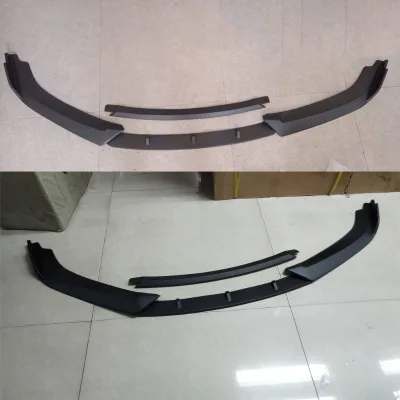
BMW X1 Front Bumper Strip, BMW X1 Front Bumper Lip, Black / Carbon Fiber Look
$1.00 - $100.00
MOQ: 10 Pieces


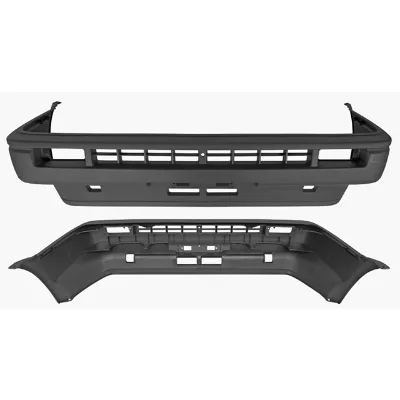

Black Color Car Front Bumper Protector Universal Black Rubber Auto Front Bumper
$2.51 - $2.57
MOQ: 1000 Pieces




Comprehensive Sourcing Guide
Strategic Sourcing Guide for BMW Front Bumper Covers
The automotive aftermarket sector presents a complex landscape for buyers seeking replacement components, particularly for specific models like the BMW Front Bumper Cover. Sourcing these parts requires a disciplined approach that balances technical compatibility, regulatory compliance, and supply chain reliability. The following guide outlines the essential factors procurement professionals must evaluate when researching and acquiring BMW front bumper covers, ensuring that the final selection meets both functional and aesthetic requirements without compromising on safety or durability.
Technical Specifications and Model Compatibility
The primary challenge in sourcing a front bumper cover lies in the precise alignment with the vehicle's chassis and body lines. Unlike universal components, bumper covers are engineered to fit specific generations and trim levels. The data indicates that successful procurement relies heavily on matching the product model to the exact car model and production year. For instance, specific listings reference compatibility with the BMW 3 Series E46 M3 (1999-2004), the BMW X3 F25 (2011-2014), and the BMW 3 Series E36 (1990-2000). Additionally, newer models such as the BMW F44 and BMW M5 are also represented in the market.
Buyers must verify that the "Car Model" specification provided by the supplier matches their inventory or customer requirements exactly. While some products are marketed as "Universal," the high-confidence facts suggest that most viable options are tailored to specific chassis codes. The material composition is another critical technical variable. The observed market includes components made from ABS (Acrylonitrile Butadiene Styrene) and Carbon Fiber. ABS is widely recognized for its balance of impact resistance and cost-effectiveness, making it a standard for aftermarket replacements. Conversely, Carbon Fiber options offer superior weight reduction and rigidity, often targeting the "Automotive Performance" sector.
Furthermore, the physical dimensions and design features must be scrutinized. Some listings specify dimensions such as 17cm25cm18cm or 0.06*2.5m, though these often refer to packaging or specific sub-components rather than the bumper itself. Buyers should request detailed engineering drawings or CAD files to confirm that the mounting points, sensor cutouts, and aerodynamic profiles align with the original equipment manufacturer (OEM) specifications. The "Function" of the part, whether listed as "Decoration" or "Protection," also dictates the structural integrity required. A bumper intended for performance use must withstand higher impact forces than one designed purely for aesthetic enhancement.
Compliance and Certification Verification
In the B2B automotive supply chain, certification is not merely a marketing badge but a prerequisite for liability management and market access. The sourcing data highlights several key certifications that buyers should look for to ensure product legitimacy. ISO standards appear frequently, with specific mentions of ISO 9001:2000 and general ISO certification. These standards indicate that the manufacturing facility adheres to established quality management systems, which is crucial for maintaining consistency across large production runs.
Beyond quality management, environmental and safety certifications are vital. The RoHS (Restriction of Hazardous Substances) directive is explicitly noted in the product attributes, ensuring that the materials used do not contain prohibited levels of hazardous substances. This is particularly important for exports to the European Union and other regions with strict environmental regulations. Additionally, SGS certification is mentioned as a quality assurance marker. SGS is a globally recognized inspection, verification, testing, and certification company, and their involvement suggests that the product has undergone third-party verification for material composition and structural integrity.
Buyers must also verify the "Quality" attribute, which is sometimes listed as "Aftermarket" or "ISO, SGS Certified." While "Aftermarket" describes the market segment, it does not inherently guarantee quality. Therefore, the presence of specific certifications like CE (Conformité Européenne) is a strong indicator that the product meets European safety and health requirements. When evaluating suppliers, procurement teams should request copies of these certificates and verify their validity dates. Relying on a supplier who claims "SGS Certified" without providing the specific test report or certificate number introduces unnecessary risk. The "prod_standard" field often lists "as original size" or specific dimensional standards, which should be cross-referenced with the actual physical product to ensure compliance with the stated norms.
Cost Drivers and Pricing Dynamics
The pricing structure for BMW front bumper covers is influenced by a multitude of factors, ranging from material costs to logistical complexities. The observed price range in the market is extensive, spanning from $0.20 to $790.00 USD. This wide disparity is not indicative of a single product type but rather reflects the diversity of materials, manufacturing processes, and intended applications. The lower end of the spectrum likely corresponds to simple accessories, such as stickers or small trim pieces, or perhaps bulk-packaged components with minimal finishing. The higher end of the range is associated with full bumper covers made from premium materials like Carbon Fiber or those requiring complex molding and painting processes.
Material composition is a primary cost driver. ABS plastic is generally more affordable than Carbon Fiber, which requires specialized weaving and resin infusion techniques. Consequently, a Carbon Fiber bumper cover will command a significantly higher price point than an ABS equivalent. The level of customization also impacts cost. Products listed with "Customized" models or specific "prod_packing" requirements often incur higher unit costs due to the setup fees and lower economies of scale associated with bespoke manufacturing.
Minimum Order Quantity (MOQ) is another critical factor in the total cost of ownership. The observed MOQ range is 1 to 1000 units. Suppliers with an MOQ of 1 offer flexibility for small businesses or testing purposes but typically charge a premium per unit. Conversely, suppliers requiring an MOQ of 1000 units may offer lower per-unit pricing, which is beneficial for large-scale distributors. Buyers must calculate the total landed cost, including the unit price, shipping, and potential inventory holding costs, to determine the most economical option. The "prod_packing" method, whether "Standard Export Packing," "OPP," or "Each Roll in a Relative Box," also affects shipping efficiency and damage rates, indirectly influencing the final cost.
Typical Applications and Market Segmentation
The application of BMW front bumper covers extends beyond simple replacement, serving various market segments with distinct needs. The data identifies several key application areas: Agricultural, Automotive, Electronics, Household, and Medical. While the "Automotive" and "Automotive Performance" sectors are the primary targets for bumper covers, the inclusion of other industries suggests that these components or similar manufacturing capabilities may be utilized in broader contexts, such as protective casings for equipment in agricultural or medical settings.
Within the automotive sector, the usage is further divided. The "Usage" attribute explicitly states "Protection Car Body," highlighting the functional role of the bumper in absorbing impact and protecting the vehicle's frame. However, the "Function" is also listed as "Decoration," indicating that many buyers prioritize aesthetic restoration or customization over pure structural protection. This dual nature requires buyers to clarify the end-user's priority. For instance, a fleet manager might prioritize durability and cost (Protection), while a luxury car enthusiast might prioritize the visual appeal and material quality (Decoration).
The "Served Industry" is noted as "Automotive Performance," which implies that these parts are often sourced by tuners and performance shops looking to enhance the vehicle's aerodynamics or visual aggression. The "Type" of product varies from "Auto Bumper" to "Car Sticker," suggesting that the market includes both structural components and cosmetic add-ons. Buyers must ensure that the product they select aligns with the specific industry segment they serve. For example, a supplier specializing in "OEM Part" services is better suited for repair shops needing exact replacements, whereas a supplier offering "Customized" options is ideal for performance modification shops.
Supplier Evaluation and Geographic Considerations
Evaluating suppliers requires a careful analysis of their geographic origins and logistical capabilities. The supply chain data indicates that products originate from various locations in China, including Xiamen, Guangdong, and Changzhou. These regions are known for their robust manufacturing ecosystems, particularly in the automotive parts sector. However, the presence of multiple origins suggests that buyers should not assume uniform quality across all suppliers from the same country.
When selecting a supplier, buyers should verify the "prod_origin" and "Place of Origin" details. A supplier based in Xiamen may have different logistical advantages compared to one in Changzhou, particularly regarding shipping routes to specific global markets. The "prod_packing" methods, such as "by Sea, by Air, by Land," also provide insight into the supplier's logistical flexibility. Suppliers offering multiple shipping options are generally more adaptable to urgent orders or cost-sensitive shipments.
The "Service" attribute, listed as "OEM Part," is a strong indicator of a supplier's capability to produce parts that meet original equipment standards. This suggests that the supplier has the necessary tooling and quality control processes to replicate OEM specifications. However, buyers should also assess the "Customization" availability. Suppliers that offer customization are better equipped to handle unique orders, but this may come with longer lead times. The "Condition" of the product is consistently listed as "New," which is a baseline requirement for most procurement scenarios. Buyers should also check for "Easy Installation" features, as this reduces the labor cost for the end-user and can be a significant competitive advantage.
Quality Control and Long-Term Procurement Strategy
Ensuring consistent quality is paramount in the automotive aftermarket. The "Quality" attribute, which includes "ISO, SGS Certified" and "Aftermarket," provides a starting point for evaluation, but it is not a guarantee of every unit's performance. Buyers should implement a robust quality control (QC) protocol that includes pre-shipment inspections and post-delivery testing. The "prod_standard" field, which mentions "before sending," implies that some suppliers conduct internal checks prior to dispatch. However, relying solely on the supplier's internal QC is risky; independent third-party inspections are recommended for large orders.
Long-term procurement considerations involve building a sustainable relationship with suppliers who can maintain consistency over time. The "prod_packing" standards, such as "Standard Export Packing" or "1-2PCS in One Box Carton Box," play a crucial role in preventing damage during transit. Buyers should negotiate packaging requirements that minimize the risk of scratches, dents, or structural damage, especially for parts made from brittle materials like ABS or Carbon Fiber.
Furthermore, the "MOQ" flexibility is a key strategic consideration. Suppliers with lower MOQs allow buyers to test the market with smaller batches, reducing the risk of holding obsolete inventory. As demand stabilizes, buyers can negotiate higher volumes to secure better pricing. The "Customization" aspect also offers a long-term advantage, allowing buyers to differentiate their product offerings in a competitive market. However, customization requires clear communication and detailed specifications to avoid errors.
In conclusion, sourcing BMW front bumper covers requires a meticulous approach that integrates technical verification, compliance checks, and strategic supplier evaluation. By focusing on the specific model compatibility, material properties, and certification standards, buyers can mitigate risks and ensure the delivery of high-quality products. The extensive price range and diverse applications highlight the need for a tailored sourcing strategy that aligns with the specific needs of the target market. Through rigorous quality control and long-term relationship building, procurement professionals can secure a reliable supply chain that supports the growth and reputation of their automotive businesses.
FAQs
What materials are used for BMW front bumper covers?
The primary materials observed are ABS plastic and Carbon Fiber. ABS offers a balance of impact resistance and cost-effectiveness, while Carbon Fiber provides superior weight reduction and rigidity for performance applications.
Which certifications should I verify for these parts?
Look for ISO, RoHS, and SGS certifications to ensure quality and safety compliance. Some listings also mention CE certification, which indicates adherence to European safety and health requirements for exported goods.
Can I find custom options for specific BMW models?
Yes, customization is available for specific models like the 3 Series E46 M3 and X3 F25. Suppliers offer tailored specifications to match exact chassis codes and production years rather than universal fits.
How do I check the minimum order quantity requirements?
The minimum order quantity ranges from 1 to 1000 units depending on the supplier. Lower MOQs allow for testing, while higher volumes may reduce per-unit costs for large-scale distributors.
Where are these bumper covers typically manufactured?
Products originate from various locations in China, including Xiamen, Guangdong, and Changzhou. Buyers should verify the specific place of origin to assess logistical advantages and shipping routes.
What packaging methods are used for shipping?
Packaging options include Standard Export Packing, OPP bags, or custom requests. Some items are packed individually in boxes within cartons, while others specify dimensions for bulk shipping efficiency.