Source Boltless Adjustable Mezzanine Rack for Warehouse, Industrial, Tools
Find 30 Boltless Adjustable Mezzanine Rack options for warehouse, industrial, and tool storage needs. Compare specifications including height, material, and customization to select the right steel platform for your facility.
Key considerations
Products List


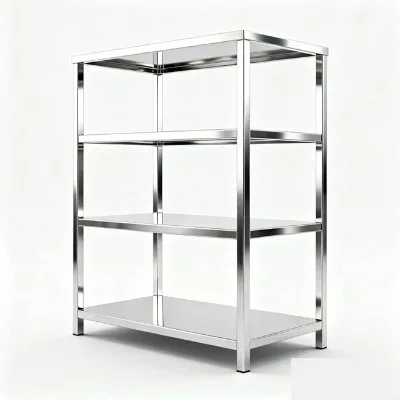
Customized Warehouse Storage Heavy Duty Metal Steel Mezzanine Rack//Storage Rack
$30.00 - $80.00
MOQ: 1 Square Meters


for Various Industry Applications Steel Mezzanine Racking Storage Rack
$70.00 - $100.00
MOQ: 100 Square Meters




Comprehensive Sourcing Guide
Strategic Sourcing Guide for Boltless Adjustable Mezzanine Racks
The procurement of boltless adjustable mezzanine racks represents a critical decision for industrial facilities seeking to maximize vertical storage capacity without the complexity of welded structures. These systems, often categorized under steel platform racking or multi-level racking solutions, offer a flexible approach to warehouse optimization. The core value proposition lies in their ability to be assembled without bolts, utilizing a friction-fit or clip-in mechanism that allows for rapid deployment and reconfiguration. For buyers in the global market, understanding the specific attributes of these systems—ranging from load capacities and height configurations to material standards and origin locations—is essential for aligning procurement strategies with operational needs. This guide provides a disciplined framework for evaluating suppliers and specifications based on verified product data and industry standards.
Technical Specifications and Structural Attributes
When evaluating boltless adjustable mezzanine racks, the primary focus must be on the structural integrity and dimensional flexibility of the product. The supplied data indicates that these systems are predominantly constructed from steel, a material choice that ensures durability and high load-bearing capabilities. A critical observation in the current market is the variance in height specifications. Some product listings specify a height range of 5 to 15 meters, while others indicate a range of 0 to 5 meters. This discrepancy suggests that buyers must clearly define their vertical space requirements before engaging with suppliers, as the structural design for a 15-meter system differs significantly from a low-profile 5-meter solution.
The structural configuration of these racks is another vital technical parameter. The market data reveals two distinct structural types: "Rack" and "Layer Frame." The "Rack" configuration typically implies a more open, pallet-racking style suitable for heavy industrial loads, whereas the "Layer Frame" structure often supports a mezzanine deck system with a semi-closed or open design. The mobility of the system is another key variable; while some units are described as "Fixed," others offer "Adjustable" mobility, allowing for reconfiguration of the bay spacing. The weight capacity is a definitive specification, with one observed attribute listing a weight of 500kg, likely referring to a specific deck panel or a single bay capacity, rather than the total system load. Buyers must verify the total dynamic and static load limits per square meter to ensure safety compliance.
Furthermore, the customization capabilities of these systems are extensive. Specifications indicate that dimensions are "Customized" with special sizes available to specific requests. This includes the ability to tailor the color and finish to "as Request" or "According Your Request," which is particularly relevant for facilities requiring specific aesthetic integration or color-coding for safety zones. The product models observed, such as JH-GPT, GL-022, GL-004, and EBMP-2, suggest a wide variety of configurations available, but the specific technical details for each model must be confirmed with the manufacturer to avoid mismatches in load ratings or assembly requirements.
Compliance, Certification, and Safety Standards
In the realm of industrial storage, compliance with international standards is non-negotiable. The supplied product data highlights several certifications that buyers should look for during the vetting process. The most frequently cited standard is ISO9001, often paired with ISO14001 and ISO18001. These certifications indicate that the manufacturer adheres to quality management, environmental management, and occupational health and safety management systems, respectively. Additionally, some product listings mention CE and ISO standards, which are crucial for products intended for the European market or those requiring specific safety compliance.
However, it is imperative to treat these certifications as observations of specific supplier capabilities rather than universal guarantees for every listed product. The data shows that while some models carry ISO9001/ISO14001/ISO18001, others are listed with "OEM, ODM" standards or "CE, ISO" without further elaboration. Buyers must verify the validity of these certifications for the specific model they intend to purchase. The "Standard" attribute in the data also lists "Customized," which implies that the manufacturing process can be adapted to meet specific regional or client-mandated standards.
Safety is paramount in the design of mezzanine racks. The "Closed" attribute varies between "Open" and "Semi-closed," which directly impacts safety features such as guardrails and toe boards. A semi-closed structure may offer better containment for smaller items but requires careful engineering to ensure stability. The "Warranty" attribute of 10 years observed in the data is a significant indicator of manufacturer confidence, but buyers should scrutinize the terms of this warranty to understand what specific components are covered and under what conditions. Verifying that the supplier has a documented quality control process aligned with these certifications is a necessary step before finalizing any procurement contract.
Cost Drivers and Pricing Dynamics
The pricing of boltless adjustable mezzanine racks is influenced by a complex interplay of factors, including material costs, customization levels, and logistics. The observed price range in the market spans from 0.3 to 5000 USD, a vast disparity that reflects the difference between individual components (such as a single deck panel) and complete, custom-engineered systems. This wide range underscores the importance of defining the scope of the project clearly. A low unit price might apply to a standard component, while the total system cost will be driven by the total square footage, the height of the installation, and the complexity of the design.
The Minimum Order Quantity (MOQ) is another significant cost driver. The data indicates an MOQ range of 1 to 1000 units, with specific listings showing MOQs of 100 square meters or 50 square meters. This suggests that buyers purchasing smaller quantities may face higher per-unit costs or may need to negotiate with suppliers who have lower volume thresholds. The "Customized" nature of the product also impacts cost; special sizes, non-standard colors, or unique structural modifications will invariably increase the price compared to off-the-shelf solutions.
Logistics and packaging play a role in the final landed cost. The observed packing methods include "Tray Packaging," "Pallet Package or as Requested," "Simple export packing," and "Film + Hardboard." The choice of packaging affects the efficiency of shipping and the risk of damage during transit. Suppliers located in different regions, such as Shandong Province, Jiangxi, and Nanjing in China, may have varying freight costs and lead times. Buyers should factor in these logistical variables when comparing quotes, as a lower product price might be offset by higher shipping costs or longer lead times.
Typical Applications and Usage Scenarios
Boltless adjustable mezzanine racks are versatile solutions designed for a wide array of industrial and commercial applications. The primary usage category identified is "Warehouse Rack," indicating their suitability for storage optimization in logistics centers. However, the data also highlights specific industry applications, including "Industrial," "Food," "Supermarket," "Tools," "Clothing," and "Beverage." This versatility suggests that these racks can be adapted to handle various types of inventory, from heavy industrial tools to lighter consumer goods.
The "Multi-Level Racking" and "Pallet Racking" types mentioned in the data point to the system's ability to create additional storage floors within existing warehouse footprints. This is particularly beneficial for facilities with high ceilings but limited floor space. The "Adjustable" nature of the racks allows them to accommodate different storage needs over time, making them ideal for businesses with fluctuating inventory levels or evolving operational requirements. The "Common Use" serviceability attribute further reinforces their suitability for general warehouse operations.
In specific scenarios, such as food or beverage storage, the "Semi-closed" structure might be preferred to maintain hygiene standards or prevent contamination. For tool storage in industrial settings, the "Open" structure might be more appropriate for easy access and visibility. The ability to customize the height and dimensions allows these systems to fit into unique architectural constraints, making them a practical choice for retrofits in older facilities or new builds with specific spatial requirements.
Supplier Evaluation and Geographic Considerations
Evaluating suppliers for boltless adjustable mezzanine racks requires a thorough assessment of their geographic location, production capabilities, and service offerings. The data identifies suppliers located in Shandong Province, Jiangxi, and Nanjing, China. These regions are known for their manufacturing capabilities in steel and metal fabrication. However, the specific location of the supplier can influence lead times, shipping costs, and communication efficiency. Buyers should verify the exact origin of the product to ensure it aligns with their supply chain strategy.
The "Development" attribute in the data shows a mix of "New Type" and "Conventional" classifications. This suggests that some suppliers may offer innovative designs with improved features, while others stick to established, proven models. Buyers should assess whether a "New Type" offers tangible benefits over a "Conventional" design or if the latter provides a more reliable, lower-risk option. The "Customization" availability is a key differentiator; suppliers that offer OEM and ODM services can tailor the product to specific needs, whereas those with standard offerings may be more suitable for quick, off-the-shelf purchases.
Serviceability is another critical factor. The "Common Use" attribute indicates that these products are designed for general applications, but buyers should inquire about the availability of technical support, installation guidance, and after-sales service. The "Warranty" of 10 years observed in some listings is a strong indicator of supplier reliability, but it must be backed by a clear service agreement. Buyers should also consider the "Delivery Time," which ranges from 5 to 20 days, and ensure that this aligns with their project timeline.
Quality Control and Long-Term Procurement Strategy
Ensuring the quality of boltless adjustable mezzanine racks is essential for long-term safety and operational efficiency. The "Quality Control" process should be a central part of the procurement strategy. Buyers should request detailed inspection reports, material test certificates, and proof of the claimed certifications (ISO9001, CE, etc.). The "Standard" attribute being "Customized" implies that the quality control process may vary between suppliers, making it crucial to establish clear quality benchmarks before production begins.
Long-term procurement considerations include the scalability of the system and the availability of replacement parts. The "Adjustable" and "Customized" features suggest that the system can be expanded or modified as the business grows, but buyers must ensure that the supplier can support these future changes. The "Lead Time" of 5 to 20 days is relatively short, but buyers should account for potential delays in the event of supply chain disruptions or custom order complexities.
Finally, the "Product Name" and "Model" consistency is important for maintenance and future ordering. The data lists various models (JH-GPT, GL-022, etc.), and buyers should ensure that the selected model is compatible with their existing infrastructure and that the supplier can provide a consistent supply of parts over the 10-year warranty period. By focusing on these long-term factors, buyers can secure a reliable storage solution that delivers value over its entire lifecycle.
Comparative Analysis of Key Product Attributes
To facilitate a clearer understanding of the market landscape, the following table summarizes the key attributes observed in the supplied product data. This comparison highlights the diversity in specifications and helps buyers identify the specific requirements that match their operational needs.
| Attribute | Observed Range/Options | Relevance to Procurement |
|---|---|---|
| Material | Steel | Determines durability and load capacity. |
| Height | 0-5m, 5-15m | Critical for vertical space utilization. |
| Structure | Rack, Layer Frame | Influences stability and deck support. |
| Mobility | Adjustable, Fixed | Affects reconfiguration flexibility. |
| Customization | Available, Customized | Allows for tailored dimensions and colors. |
| Certification | ISO9001, ISO14001, CE, ISO | Ensures quality and safety compliance. |
| MOQ | 1, 50 m², 100 m² | Impacts initial investment and order volume. |
| Lead Time | 5-20 Days | Affects project scheduling and inventory planning. |
| Origin | Shandong, Jiangxi, Nanjing | Influences logistics costs and lead times. |
| Warranty | 10 Years | Indicates manufacturer confidence and longevity. |
This table serves as a reference point for buyers to systematically evaluate potential suppliers. By cross-referencing these attributes with specific project requirements, buyers can make informed decisions that balance cost, quality, and operational efficiency. The diversity in options, from the 0-5m height range to the 5-15m range, underscores the need for precise specification definition to avoid costly mismatches. Ultimately, a disciplined approach to sourcing, grounded in verified data and clear requirements, is the key to successful procurement of boltless adjustable mezzanine racks.
FAQs
What is the typical height range for these racks?
The height range varies between 0 to 5 meters and 5 to 15 meters depending on the specific model. Buyers must define their vertical space requirements before engaging with suppliers to ensure the structural design matches their needs.
Can I customize the dimensions and color of the rack?
Yes, dimensions are customized with special sizes available to specific requests, and colors can be set as requested. This flexibility allows facilities to tailor the system to unique architectural constraints or safety zone color-coding.
Which certifications should I look for in a supplier?
Look for ISO9001, ISO14001, and ISO18001 certifications which indicate adherence to quality, environmental, and safety management systems. Some listings also mention CE and ISO standards, but buyers must verify validity for the specific model.
How long is the delivery time for these systems?
The delivery time typically ranges from 5 to 20 days depending on the order volume and customization level. Buyers should ensure this timeline aligns with their project schedule and factor in potential logistics variables from the supplier location.
What is the minimum order quantity for purchasing?
The minimum order quantity ranges from 1 unit to 1000 units, with some listings specifying 50 or 100 square meters. Purchasing smaller quantities may result in higher per-unit costs or require negotiation with suppliers having lower volume thresholds.
What warranty is typically offered for these racks?
Some product listings indicate a warranty period of 10 years, reflecting manufacturer confidence in durability. Buyers should scrutinize the specific terms to understand which components are covered and under what conditions the warranty remains valid.