Source Bread Toaster for Bakery, Cafe, and Catering Needs
Find 30 Bread Toaster models with varying power, dimensions, and capacity for commercial bakeries, cafes, and catering services. Compare specifications like voltage, temperature range, and productivity to select the right equipment for your business.
Key considerations
Products List


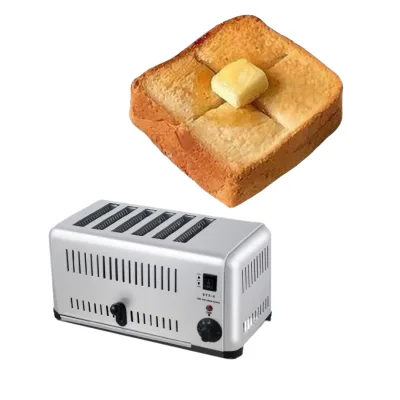
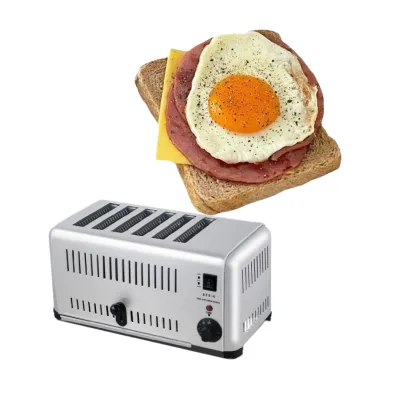


High-Speed Bread Toaster with Multiple Toasting Settings for Perfect Results
$186.00 - $206.00
MOQ: 10 Pieces
Comprehensive Sourcing Guide
Strategic Sourcing Guide for Industrial Bread Toasters
Understanding Technical Specifications and Performance Metrics
When sourcing a Bread Toaster for commercial or industrial applications, the primary focus must be on aligning technical specifications with operational throughput requirements. The market offers a diverse range of units, from compact countertop models to high-capacity conveyor systems. Based on observed product data, a critical specification to verify is the power rating, which typically ranges from 1800W to 2500W, with specific high-efficiency models operating at 2000W. This power variance directly influences the heating element's ability to maintain consistent browning across different bread densities.
Voltage compatibility is another non-negotiable technical parameter. While many units are designed for a standard 220V supply, some models support a dual-voltage configuration of 220V/110V to accommodate international deployment. Buyers must confirm the specific voltage requirement of the target facility to prevent electrical incompatibility issues. The temperature control range is equally vital; observed data indicates a functional operating range between 50℃ and 300℃. This wide spectrum allows for the toasting of various products, from delicate pastries to dense artisanal loaves. The control interface is often a push-button mechanism, which offers simplicity but requires verification of its durability under continuous cycling.
Efficiency metrics provide a clear indicator of a machine's suitability for high-volume environments. Certain industrial-grade toasters boast a capacity of 2100 pieces per hour, a figure that should be cross-referenced against the buyer's daily production targets. The physical dimensions of the unit also vary significantly. While some compact models measure approximately 285250210mm, larger industrial units may reach dimensions of 510340645mm. The material construction is predominantly stainless steel, ensuring resistance to corrosion and ease of cleaning, which is essential for food safety compliance. Buyers should also note the net weight, which can range from lightweight portable units to heavier industrial machines weighing up to 11.4kg, affecting floor load calculations and mobility.
Compliance, Certification, and Safety Standards
In the B2B food equipment sector, regulatory compliance is not merely a formality but a prerequisite for market entry and operational safety. When evaluating potential suppliers, the presence of recognized certifications serves as a primary indicator of quality assurance. The most frequently observed certifications for bread toasters include CE Certification, RoHS compliance, and IEC Reports. These documents verify that the electrical components meet European safety standards, restrict the use of hazardous substances, and adhere to international electrotechnical standards.
Buyers must request valid certification documents for every batch of equipment purchased. The CE mark, for instance, indicates conformity with health, safety, and environmental protection standards for products sold within the European Economic Area. Similarly, RoHS compliance ensures that the toaster does not contain restricted levels of lead, mercury, cadmium, and other hazardous materials. The IEC Report provides further validation of the electrical safety and performance of the device. It is important to note that while these certifications are common, they are not automatically guaranteed for every listed product. Procurement teams should verify the authenticity of these documents with the issuing bodies or through third-party verification services before finalizing any order.
Temperature control valves are a critical safety component within the toaster assembly. In some high-end models, these valves are sourced from reputable manufacturers such as EGO (Germany), which implies a higher standard of thermal regulation and safety. However, this is a specific attribute of certain models and should not be assumed for all units. Buyers should explicitly ask about the brand and origin of internal components, particularly those related to heating and safety mechanisms. Additionally, the warranty period is a standard contractual element, with a typical duration of one year observed in the market. This warranty should cover manufacturing defects and component failures, providing a safety net for the buyer during the initial operational phase.
Cost Drivers and Pricing Structures
The pricing of bread toasters is influenced by a complex interplay of factors, including power capacity, material quality, automation level, and production volume. The observed price range in the market spans from 1 USD to 380 USD, a wide disparity that reflects the difference between basic consumer-grade units and sophisticated industrial machinery. Lower-priced models often feature simpler construction, lower power ratings, and fewer advanced features, making them suitable for low-volume or home-use scenarios. In contrast, higher-priced units typically offer robust stainless steel construction, precise temperature controls, and higher throughput capabilities.
Minimum Order Quantity (MOQ) is another significant cost driver. The market data indicates an MOQ range of 1 to 3138 units. For small businesses or startups, an MOQ of 1 allows for low-risk testing of the equipment. However, for large-scale procurement, negotiating a lower unit price often requires meeting a higher MOQ threshold. Buyers should be aware that the unit price may decrease as the order volume increases, but this must be balanced against storage costs and cash flow requirements. The packaging method, typically a carton box, also contributes to the overall cost, especially for international shipping. Proper packaging is essential to prevent damage during transit, and buyers should verify that the packaging standards meet the requirements of their logistics partners.
Customization is a key factor that can significantly impact the final cost. While some suppliers offer standard models, others provide customization options for branding, voltage, or specific functional requirements. The availability of customization can increase the unit price and extend the lead time. Buyers must clearly define their customization needs early in the sourcing process to avoid unexpected costs. Additionally, the condition of the equipment, whether new or refurbished, plays a role in pricing. New units generally command a premium but offer the assurance of full warranty coverage and the latest technological features.
Typical Applications and Operational Use Cases
Bread toasters are designed for a variety of applications, ranging from small bakeries to large-scale industrial food processing facilities. The primary application is in bread and bakery production, where consistent toasting is essential for product quality. The observed "Application" field explicitly lists "Bread Bakery Machine," confirming their intended use in commercial baking environments. These machines are also suitable for hotels, restaurants, and catering services that require high-volume toast production.
The operational features of these toasters, such as "Easy Operating" and "Simple Operation," make them accessible to staff with varying levels of technical expertise. The "Function" of easy operation is particularly important in fast-paced environments where speed and efficiency are paramount. The "Key Selling Points" of high productivity, low noise level, and long service life highlight the machine's suitability for continuous operation. High productivity ensures that the machine can keep up with demand during peak hours, while low noise levels contribute to a more pleasant working environment.
Special features such as "Portable," "Lightweight," and "Large Capacity" indicate that these toasters can be adapted to different operational setups. Portable models are ideal for temporary events or mobile food services, while large capacity units are better suited for fixed industrial installations. The absence of a timing device in some models suggests that these units rely on manual control or visual inspection for doneness, which may require more operator attention. Conversely, models with advanced features may offer automated controls for consistent results. Buyers should assess their specific operational needs to determine the right balance between automation and manual control.
Supplier Evaluation and Due Diligence
Selecting the right supplier is a critical step in the procurement process. The origin of the products is predominantly China, which is a major hub for food equipment manufacturing. Buyers should evaluate suppliers based on their ability to provide consistent quality, reliable after-sales support, and transparent communication. The "After-sales Service Provided" field indicates that online technical support is a common offering, which is essential for troubleshooting operational issues without the need for on-site visits.
When evaluating a supplier, buyers should verify their production capabilities and quality control processes. The "Condition" of the equipment is listed as "New," which is a standard expectation, but buyers should confirm that the equipment is indeed brand new and not refurbished or used. The "Brand Name" and "Model Number" are specific identifiers that should be cross-referenced with the supplier's catalog to ensure authenticity. Suppliers with a reputation for high productivity and low noise levels are likely to have invested in quality manufacturing processes.
Buyers should also consider the supplier's flexibility in meeting customization requests. The availability of customization options, such as branding or specific voltage requirements, can be a differentiator between suppliers. Additionally, the "Warranty" period is a key indicator of the supplier's confidence in their product. A one-year warranty is standard, but buyers should negotiate terms that provide adequate protection against defects. The "Selling Units" being listed as "Single item" suggests that suppliers are willing to accommodate small orders, which can be beneficial for initial testing.
Quality Control and Long-Term Procurement Considerations
Quality control is essential to ensure that the bread toasters meet the required performance and safety standards. Buyers should implement a rigorous inspection process that includes visual checks for material defects, functional tests for heating elements and controls, and verification of certification documents. The "Material" of stainless steel should be inspected for signs of corrosion or poor welding. The "Housing" should be robust and free from sharp edges that could pose a safety hazard.
Long-term procurement considerations include the availability of spare parts and the ease of maintenance. The "Feature" of "Easy Clean" is a significant advantage, reducing downtime and labor costs associated with cleaning. Buyers should verify that the design of the toaster allows for easy access to internal components for maintenance. The "Reheat Function" and "Automatic Pop-Up" features, or the lack thereof, should be evaluated based on the specific needs of the operation. Units without these features may require more manual intervention, which could impact efficiency.
The "Net Weight" and "Dimension" of the unit are important for logistics and installation planning. Buyers should ensure that the facility has the necessary space and structural support for the equipment. The "Packing" method should be robust enough to protect the unit during shipping. Finally, the "Key Selling Points" of high productivity and long service life should be validated through reference checks or pilot testing. By focusing on these quality control and long-term considerations, buyers can ensure a successful procurement experience and a reliable supply of bread toasters for their operations.
FAQs
What certifications do bread toasters typically have?
Bread toasters typically carry CE Certification, RoHS compliance, and IEC Reports. These documents verify electrical safety and restrict hazardous substances, ensuring the equipment meets international standards for commercial use.
How much power do industrial bread toasters consume?
Industrial bread toasters generally consume between 1800W and 2500W, with specific high-efficiency models operating at 2000W. This power rating directly influences the heating element's ability to maintain consistent browning across different bread densities.
Can bread toasters operate on different voltage supplies?
Yes, some models support a dual-voltage configuration of 220V and 110V to accommodate international deployment. Buyers must confirm the specific voltage requirement of their facility to prevent electrical incompatibility issues during operation.
What is the typical temperature range for these machines?
The functional operating range is between 50℃ and 300℃. This wide spectrum allows for the toasting of various products, from delicate pastries to dense artisanal loaves, ensuring versatility in commercial baking environments.
Which material is used for the housing of bread toasters?
The housing is predominantly constructed from stainless steel to ensure resistance to corrosion and ease of cleaning. This material choice is essential for food safety compliance and durability in high-volume production settings.
How many units can a high-efficiency Bread Toaster produce?
Certain industrial-grade toasters boast a capacity of 2100 pieces per hour. This figure should be cross-referenced against the buyer's daily production targets to ensure the machine meets specific throughput requirements.