Source Bread Crumbs Grinder for Commercial Kitchens
Find 30 Bread Crumbs Grinder options from Jinan, China. Compare automatic stainless steel models with 250W power and 21.5kg/h capacity. Select fully automatic lines for food processing applications; compare the available evidence and request quotations based on your requirements.
Key considerations
Products List


Breadcrumbs Production Line Breadcrumb Making Machine Bread Crumbs Grinding Machine
$15500.00 - $35500.00
MOQ: 1 Pieces
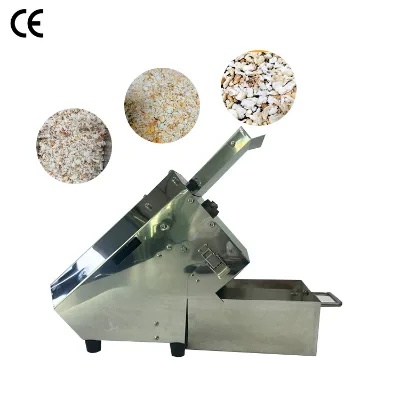
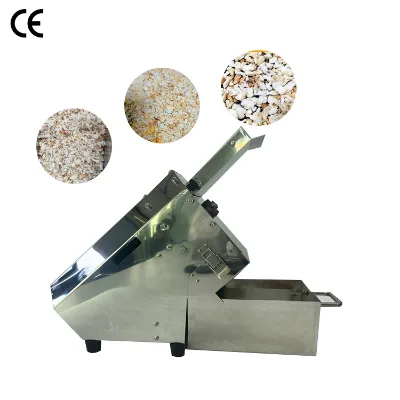


Bread Crumbs Maker Machine Bread Crumb Food Machine Production Line Extruder
$28000.00 - $30000.00
MOQ: 1 Sets


Fried Panko Chicken Bread Crumbs Crusher Breadcrumb Maker Bread Crumb Grinder
$24000.00 - $25000.00
MOQ: 1 Sets

Bread Crumb Machine/Bread Crumb Making Machine/Commercial Bread Making Machines
$10000.00 - $35000.00
MOQ: 1 Pieces

Comprehensive Sourcing Guide
Bread Crumbs Grinder Sourcing Guide
Buyers evaluating bread crumbs grinders must first distinguish between standalone crushing units and integrated production lines, as the supplied data reveals a wide spectrum of capabilities. The observed listings include compact machines designed for commercial restaurants with specific loaf size outputs, alongside larger turnkey projects capable of full thermal processing and automatic grading. Understanding this distinction is critical before initiating contact, as the required power source, voltage settings, and physical footprint vary significantly between a 250-watt single-item unit and a fully automatic stainless steel production line.
Procurement decisions should also account for the specific customization options available, such as the ability to adjust loaf sizes ranging from 0.5 lb to 2 lb or the provision of seller-supplied product formulas. While some units are marketed as small-scale grinders with specific dimensions like 221463438mm, others are described as comprehensive lines with dimensions reaching 2.51.21.5m. Buyers must verify whether the supplier offers the specific frequency converter brand, such as Delta, or if the machine material is strictly SUS304 stainless steel to ensure compatibility with their existing food processing infrastructure.
Product Scope and Observed Listing Signals
The market for bread crumbs grinders presents a clear dichotomy between entry-level crushing tools and high-capacity automated systems, a distinction visible in the observed price range of 1200 to 80,000 USD. Lower-priced listings often correspond to single-item units with a capacity of 21.5kg/h and a weight of 16kg, suitable for smaller commercial kitchens. In contrast, higher-value listings describe complex turnkey projects that include thermal processing steps and fully automatic grading, necessitating a more rigorous evaluation of the seller's engineering capabilities and the scope of the included equipment.
Buyers must carefully scrutinize the listed application fields to ensure the machine matches their operational scale, as some products are explicitly targeted at commercial restaurants while others serve broader food processing industries. The presence of specific attributes like "Automatic Grade: Automatic" and "Key Words: Automatic Breadcrumbs Making Machine Turnkey Project" indicates a high level of integration that requires different installation and training protocols compared to manual or semi-automatic crushers. Verifying the exact product name and model, such as the PH-270, helps confirm whether the listing describes a simple grinder or a complete production line capable of handling raw bread materials into finished crumbs.
Technical Specifications to Verify
Technical due diligence requires confirming the electrical compatibility of the unit, as voltage settings can vary from standard 220v to fully customer-defined configurations. Buyers should explicitly verify the power consumption, noting that some compact models operate at 250w while larger lines may require significantly higher inputs, and ensure the frequency converter brand, such as Delta, is compatible with local power grids. The plug type, often listed as US Plug, must be matched to the destination country's standards to avoid costly retrofitting or safety hazards during initial operation.
Physical dimensions and material composition are equally critical for facility planning and hygiene compliance, with observed listings specifying dimensions ranging from 221463438mm to 2.51.21.5m. The machine material is frequently cited as Stainless Steel or SUS304, which is essential for food safety, but buyers must confirm the exact grade and thickness to ensure durability against the abrasive nature of bread crumbs. Additionally, the output capacity, observed at 21.5kg/h for smaller units, must be validated against production targets, and the availability of customizable blades or accessories should be confirmed to handle different loaf sizes effectively.
Compliance and Safety Documentation
Regulatory compliance is a primary concern when sourcing food processing equipment, and buyers must verify the presence of recognized certifications such as SGS, CE, and ISO before finalizing any purchase. The supplied data indicates that some sellers provide these certificates, but the specific scope of the ISO certification, noted as ISOCE in some contexts, requires clarification to ensure it covers the specific machinery model and intended application. Relying on general claims without requesting the actual certificate documents can lead to non-compliance issues during local health and safety inspections.
Safety documentation should also include detailed installation and training protocols, as the observed listings mention that sellers provide engineers for on-site installation and training. Buyers must ensure that the after-sales service agreement explicitly covers the safety procedures for operating fully automatic machinery, including emergency stop functions and thermal processing safety measures. The warranty period, typically listed as 12 months or 1 year, should be reviewed to confirm it covers critical components like the frequency converter and motor, ensuring that any safety-related defects are addressed promptly without additional cost.
Cost Drivers and Commercial Terms
The total cost of ownership for bread crumbs grinders is heavily influenced by the level of automation and the scope of the turnkey project, with prices ranging from 1200 to 80,000 USD based on these factors. Buyers should analyze whether the quoted price includes the full production line, including thermal processing units and automatic grading systems, or if it is limited to a basic crushing grinder. The inclusion of seller-provided formulas and spare parts can add significant value, but the cost implications of these inclusions must be clearly understood to avoid budget overruns during the procurement phase.
Commercial terms regarding delivery and packaging are also key cost drivers, with observed listings specifying film and wooden box packing or standard wooden cases for protection during transit. The delivery schedule, often described as "arranged by the seller," requires a clear agreement on lead times to prevent production delays, especially for custom-configured units. Buyers must clarify if the minimum order quantity of 1 set applies to the entire line or individual components, and negotiate payment terms that align with the delivery schedule to mitigate financial risk during the manufacturing and shipping process.
Supplier Qualification and Quality Control
Supplier qualification should prioritize manufacturers identified as real factories rather than trading companies, as this distinction often correlates with better quality control and direct engineering support. The observed listings frequently mention the company type as a real factory, which suggests a direct line of communication for technical adjustments and spare parts availability. Buyers should request proof of this status and verify the supplier's history in producing food processing machines to ensure they have the necessary expertise for complex turnkey projects.
Quality control processes must be validated through the supplier's warranty and after-sales service commitments, which typically include providing spare parts and sending engineers for installation. The availability of a 12-month warranty period is a standard indicator of confidence in product durability, but buyers should verify the specific terms regarding the coverage of critical components like the motor and frequency converter. Additionally, the provision of seller-supplied formulas and the ability to customize blades or accessories indicate a supplier's willingness to adapt the machine to specific production needs, which is a strong indicator of a reliable partnership.
Long-Term Procurement Checks
Long-term procurement success depends on establishing a robust support framework that extends beyond the initial warranty period, focusing on the availability of spare parts and ongoing technical assistance. Buyers should confirm that the seller provides a comprehensive list of spare parts and has a clear protocol for their delivery, ensuring that maintenance can be performed without significant downtime. The observation that sellers provide spare parts is a positive signal, but the specific lead time for these parts and the cost structure for replacements must be defined in the long-term service agreement.
Continuous performance monitoring is essential to ensure the machine maintains its specified output capacity and product quality over time, particularly for fully automatic systems. Buyers should establish a schedule for regular maintenance checks, leveraging the seller's engineer training to identify potential issues before they impact production. The ability to adjust loaf sizes and the availability of customizable accessories should be re-evaluated periodically to ensure the machine continues to meet evolving market demands and production requirements without requiring a complete equipment replacement.
FAQs
What is the output capacity of the Bread Crumbs Grinder?
The machine delivers an output capacity of 21.5kg per hour for bread crumb production. This automatic grade equipment processes raw bread efficiently. It features a fully automatic operation with a 250w power source. The stainless steel construction ensures durability during continuous commercial use. Buyers can expect consistent throughput for small-scale or restaurant applications.
Can the Bread Crumbs Grinder be customized for specific needs?
Yes, customization is available for this Bread Crumbs Grinder. The seller provides the product formula and offers customized blades or accessories like chopping blades. Voltage settings can be adjusted to customer requirements, including 220v options. The frequency converter is from the Delta brand for reliable control. This flexibility supports various commercial restaurant and food processing requirements.
What certifications does the Bread Crumbs Grinder hold?
The Bread Crumbs Grinder holds ISO, CE, and SGS certifications. These documents verify compliance with international safety and quality standards. The equipment is manufactured by a real factory in Jinan, China. The stainless steel material meets food processing industry requirements. Buyers receive these certificates to ensure regulatory compliance for their operations.
What is the warranty period for the Bread Crumbs Grinder?
The warranty period is 12 months or one year for this unit. The seller provides spare parts to support long-term maintenance. After-sales service includes sending an engineer for installation and training. This comprehensive support ensures proper operation from the start. Buyers benefit from direct manufacturer assistance for any technical issues.
How is the Bread Crumbs Grinder packaged for shipping?
The machine is packaged in a standard wooden case with film protection. The dimensions are approximately 2.5 by 1.2 by 1.5 meters for the production line. The individual grinder unit measures 221 by 463 by 438 millimeters. This sturdy packaging protects the stainless steel equipment during transit. The seller arranges delivery logistics to ensure safe arrival at the destination.
What is the minimum order quantity for the Bread Crumbs Grinder?
The minimum order quantity is one set for this Bread Crumbs Grinder. Buyers can purchase a single unit for immediate deployment. The selling unit is listed as a single item. This low MOQ allows small businesses to test the equipment. The price range varies from 1200 to 80000 USD depending on configuration.