Source Breathable Mesh Basketball Sneakers for daily wear, outdoor sports, and walking
Compare 30 listings of Breathable Mesh Basketball Sneakers featuring EVA insoles, cotton linings, and rubber outsoles. Buyers can evaluate options with lace-up closures, multi-color designs, and summer-appropriate styles for various foot sizes.
Key considerations
Products List


Breathable Training Basketball Sneakers High Quality Luminous Sports Shoes
$14.72 - $16.15
MOQ: 50 Pairs


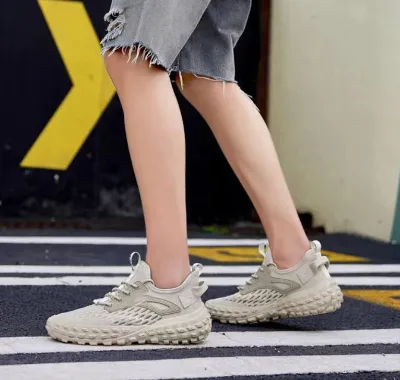


Casual Shoes, Sports Shoes, Anti-Skid and Wear-Resistant Basketball Shoes
$15.31 - $16.59
MOQ: 1000 Pairs


Tailored Running Shoes and Breathable Men's Climbing Sneakers for Basketball and Fitness
$10.80 - $18.50
MOQ: 500 Pieces

Custom Climbing Footwear and Performance Sneakers for Basketball and Gym
$10.80 - $18.50
MOQ: 500 Pieces

Comprehensive Sourcing Guide
Strategic Sourcing Guide for Breathable Mesh Basketball Sneakers
Understanding Product Composition and Technical Specifications
When sourcing Breathable Mesh Basketball Sneakers, the primary objective is to identify footwear that balances structural integrity with airflow capabilities. Based on the available product data, the upper material is frequently identified as mesh, which is a critical component for breathability. This mesh construction is often paired with synthetic leather or genuine leather to provide necessary durability and support during high-intensity movement. The insole material is commonly observed as EVA (Ethylene-Vinyl Acetate), a choice that offers lightweight cushioning and shock absorption, essential for basketball applications where impact is frequent.
The outsole material is predominantly rubber, a standard requirement for basketball footwear to ensure traction on indoor and outdoor courts. The closure pattern is consistently lace-up, allowing for a customizable fit that secures the foot within the shoe. A significant variation exists in the waterproofing attributes; while some listings specify "Not Waterproof," others claim "Waterproof" status with features like anti-microbial properties. Buyers must verify the specific waterproofing claim for their intended use case, as a shoe designed for indoor play may not require waterproofing, whereas outdoor models might benefit from it. The color options range from multi-color schemes to solid black, and the style often leans towards retro, casual, or walking shoe aesthetics, though the functional requirements of basketball remain central.
Sizing Standards and Regional Compatibility
One of the most critical technical considerations in sourcing these sneakers is the alignment of sizing standards across different markets. The observed product data reveals a fragmented approach to sizing specifications. Some listings utilize Chinese sizing (Cn) ranging from 35 to 45, while others specify a broader range of 36 to 45 or 39 to 45. Additionally, a specific standard is noted as "EU 39-48 / US 7-13," indicating that some suppliers adhere to international conversion charts, while others rely on domestic sizing conventions.
This discrepancy necessitates rigorous verification before placing an order. A buyer cannot assume that a "Size 42" in one batch corresponds exactly to a "Size 42" in another if the underlying standard differs. The presence of "Customized" standards in the data further complicates the landscape, suggesting that some manufacturers offer bespoke sizing solutions. To mitigate risk, procurement teams must request detailed size charts that explicitly map the manufacturer's internal codes to US, EU, and CN standards. The absence of a universal standard in the observed data means that relying on a single size reference without cross-referencing can lead to significant inventory mismatches.
Cost Drivers and Pricing Dynamics
The pricing structure for Breathable Mesh Basketball Sneakers is influenced by several material and production factors. The observed price range spans from $9.29 to $98, a wide variance that reflects differences in material quality, brand positioning, and production complexity. The lower end of the spectrum likely corresponds to models utilizing synthetic leather and basic mesh with standard EVA insoles. In contrast, the higher price points may involve genuine leather uppers, advanced cushioning technologies, or specialized features such as height-increasing insoles and anti-microbial treatments.
The Minimum Order Quantity (MOQ) also plays a pivotal role in the total cost of ownership. The observed MOQ range is between 2 and 1000 units. A low MOQ of 2 allows for small-scale testing or sample acquisition, which is ideal for new buyers validating a supplier's quality. However, larger orders with an MOQ closer to 1000 often yield better per-unit economics. Buyers should analyze the total landed cost, including shipping and duties, rather than focusing solely on the unit price. The variability in packing options, such as PVC bags, boxes, or custom packaging, also impacts costs. Custom packaging, while offering branding opportunities, typically incurs a higher unit cost compared to standard box or bag packaging.
Compliance, Certification, and Quality Verification
While the product data does not explicitly list specific third-party certifications like ISO or ASTM, the presence of "Top Quality" claims and "Customized" standards indicates a market where quality assurance is a primary concern. Buyers must independently verify compliance with relevant safety and quality standards for footwear. The observation of "EU 39-48 / US 7-13" suggests that some products may be intended for export to Western markets, where compliance with REACH (Registration, Evaluation, Authorisation and Restriction of Chemicals) or other chemical safety regulations is mandatory.
The feature list includes "Anti-microbial" and "Resilient" attributes. To substantiate these claims, buyers should request test reports or certificates of analysis from the supplier. Without documented evidence, these features remain marketing assertions. Furthermore, the origin of the products is noted as China, with specific mentions of Fujian as a production hub. Fujian is a known manufacturing center for footwear, but buyers should still conduct factory audits to ensure that labor practices and environmental standards meet their corporate social responsibility (CSR) requirements. The "Customized" nature of the product standard implies that the supplier may be willing to adapt to specific compliance needs, but this must be clearly defined in the purchase agreement.
Supplier Evaluation and Production Capabilities
Evaluating potential suppliers requires a deep dive into their customization capabilities and production flexibility. The data confirms that customization is available for attributes such as the upper material, color, and packing. Some listings indicate "Basketball" as a packing type, which is unusual and may suggest a specific marketing angle or a misunderstanding in the data entry, while others specify "Carton with Shoe Box" or "Box." This variability highlights the need for clear communication regarding packaging requirements.
Suppliers should be assessed on their ability to handle the specific model numbers observed, such as 8803-1, 78503, 262, and ZF0625-22. The existence of multiple model numbers suggests a diverse product line, but buyers must ensure the supplier has the capacity to maintain consistency across these models. The "High-confidence facts" regarding the lining material as cotton fabric and the upper as mesh provide a baseline for material verification. Buyers should request physical samples to confirm that the lining is indeed cotton and that the mesh is durable enough for basketball use. The "Season" attribute is listed as "Summer," which aligns with the breathable nature of the mesh, but buyers should verify if these models are suitable for year-round use or if they are strictly seasonal.
Application Scenarios and Performance Expectations
The intended application of these sneakers significantly influences the selection criteria. The data lists "Daily Wear," "Outdoor," and "Sports" as applicable scenarios. While the core keyword is "basketball sneakers," the observed styles include "Retro," "Casual," and "Walking Shoes." This suggests that the market offers a hybrid category of footwear that blends athletic performance with everyday fashion. Buyers must clarify whether the end-user requires pure basketball performance or a lifestyle shoe that mimics the aesthetic of basketball sneakers.
For actual basketball performance, the "Breathable" feature is paramount, especially given the "Summer" season designation. The "Low Top" style is observed, which offers greater ankle mobility but less support compared to high-tops. This is a critical design choice that affects the suitability for different playing styles. The "Height Increasing" feature noted in some listings indicates a niche market segment where aesthetics and perceived stature are prioritized alongside performance. Buyers should ensure that any height-increasing technology does not compromise the stability or safety of the shoe during play. The "Flat" heel height is another observation that supports a natural foot position, which is generally preferred for agility and speed on the court.
Long-Term Procurement and Supply Chain Resilience
Sourcing Breathable Mesh Basketball Sneakers is not merely a transactional activity but a strategic decision that impacts long-term inventory management and brand reputation. The variability in lead times, though not explicitly quantified in the data, is a common risk in the footwear industry. Buyers should establish clear timelines with suppliers, especially when dealing with customized orders. The "Customized" packing and "Customized" standard options offer flexibility but require longer lead times for setup and production.
To ensure supply chain resilience, buyers should diversify their supplier base rather than relying on a single source. The wide range of MOQs (2 to 1000) allows for a phased approach to procurement, starting with small orders to test quality and scaling up as confidence grows. The "PVC Bag or Box or Customization" options for packing suggest that suppliers are adaptable, but buyers must standardize their packaging requirements to avoid confusion in the supply chain. Finally, the "Top Quality" claim should be treated as a starting point for negotiation rather than a guarantee. Establishing a robust quality control protocol, including pre-shipment inspections and third-party testing, is essential to maintain product integrity and customer satisfaction over the long term.
FAQs
What materials are used for the upper and lining?
The upper material is typically mesh or synthetic leather, while the lining is made of cotton fabric. Some models also feature genuine leather uppers. These materials ensure breathability and comfort during summer use.
Which sizing standards are available for these sneakers?
Available sizing standards include Chinese sizes ranging from 35 to 45 and international standards like EU 39-48 or US 7-13. Buyers must verify specific size charts as standards vary by model and supplier.
Can I find breathable mesh sneakers with waterproof features?
Yes, some listings offer waterproof features alongside breathable mesh, while others are explicitly not waterproof. Buyers should verify the specific waterproof claim for their intended use case before ordering.
What is the typical price range for these products?
The observed price range spans from 9.29 to 98 USD depending on material quality and features. Lower prices often correspond to synthetic leather, while higher prices may involve genuine leather or specialized insoles.
How does the Minimum Order Quantity vary for suppliers?
The Minimum Order Quantity ranges from 2 to 1000 units depending on the supplier and customization needs. Low MOQs allow for small-scale testing, while larger orders often yield better per-unit economics.
Where are these breathable mesh sneakers manufactured?
The products originate from China, with specific mentions of Fujian as a production hub. Buyers should verify factory audits to ensure compliance with labor and environmental standards.