Source Breathable White Shoe Storage Box for closet, entryway, under bed
Compare 30 options for a Breathable White Shoe Storage Box designed for closets, entryways, and under-bed use. These stackable units offer dust-proof protection and are available in various sizes from manufacturers in Dongguan.
Key considerations
Products List


Custom Storage Stackable Convenient Shoe Box Transparent Shoe Box Storage
$4.90 - $5.39
MOQ: 5000 Pieces


Clear Drop Front Shoe Container Plastic Space Saving Foldable Shoe Storage Box
$2.00 - $10.00
MOQ: 100 Pieces

Stackable Transparent Shoe Box for Heel, Sneaker and Loafer Storage Shoe Box
$0.42 - $0.46
MOQ: 500 Pieces

Transparent Plastic Shoe Box Stackable for Closet Shoe Organization Shoe Box
$0.42 - $0.46
MOQ: 500 Pieces

Stackable Transparent Shoe Box for Sneaker Collection and Home Organizing Shoe Box
$0.42 - $0.46
MOQ: 500 Pieces

Transparent Stackable Shoe Box for Multi - Pair Shoe Storage and Organization Shoe Box
$0.42 - $0.46
MOQ: 500 Pieces

Drawer Style Clear Shoe Box Stackable for Heel and Flat Shoe Storage Shoe Box
$0.42 - $0.46
MOQ: 500 Pieces

Stackable Clear Shoe Box for Shoe Collection and Closet Space Saving Shoe Box
$0.42 - $0.46
MOQ: 500 Pieces
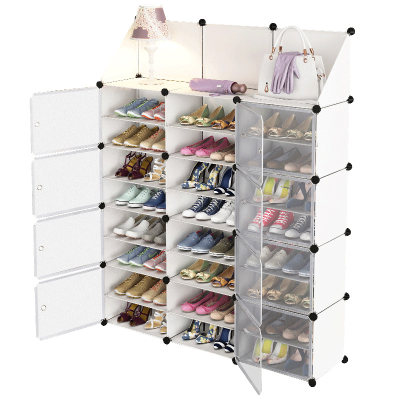

Transparent Storage Box Shoe Box for Man and Female, White Lid with Clear Base
$0.60 - $5.50
MOQ: 2000 Pieces


Collapsible Shoe Boot Container Under Bed Shoes Storage Box with Handles
$4.29 - $5.07
MOQ: 1008 Pieces


Comprehensive Sourcing Guide
Strategic Sourcing Guide for Breathable White Shoe Storage Solutions
The global demand for organized home storage has elevated the importance of specialized footwear management systems. For procurement professionals and B2B buyers seeking breathable white shoe storage boxes, the market offers a diverse array of plastic-based solutions designed to meet varying operational and logistical needs. This guide synthesizes available product attributes, material specifications, and compliance frameworks to provide a disciplined approach to sourcing these items. The focus remains on objective analysis of the supply chain landscape, ensuring that procurement decisions are grounded in verifiable facts rather than speculative marketing claims.
Material Composition and Physical Specifications
The foundation of any shoe storage unit lies in its material composition and physical dimensions. Based on current market offerings, the primary material utilized for these storage solutions is plastic. Specifically, the supply chain supports a range of polymer types including PVC, PET, PP, and PS. This variety allows buyers to select materials based on specific requirements for rigidity, flexibility, and chemical resistance. The thickness of the plastic material is a critical specification, with observed ranges extending from 0.12mm to 2.0mm. This variance suggests that products are available for both lightweight, cost-sensitive applications and heavy-duty, high-capacity storage needs.
When evaluating the physical form, the standard shape for these units is rectangular, which optimizes space utilization in closets, entryways, and under-bed environments. Dimensions vary significantly across different product models. For instance, specific configurations have been observed with standard sizes such as 342518.4cm, 30x18x19.5cm, and 33.42314.5cm. Buyers must verify that the selected model aligns with their inventory volume and spatial constraints. The weight of the units is also a factor in logistics; observed data indicates a product weight of 350 (units), which influences shipping costs and handling requirements.
The structural design often incorporates features such as stackability, with some models supporting stacking limits of 10 layers and above, while others are rated for 6 layers and above. This stacking capability is essential for maximizing vertical storage space in commercial or residential settings. Additionally, the design trends in this sector prioritize safety and functionality, with features like dust-proof and moisture-proof capabilities being standard expectations for protecting footwear from environmental degradation.
Functional Attributes and Application Scenarios
The utility of a shoe storage box extends beyond simple containment; it must address specific application scenarios and user needs. The primary application for these units is the storage of shoes, but the versatility of the design often allows for multi-purpose use, including the organization of toys, cosmetics, and other household items. The intended application scenes are diverse, ranging from closet organization and entryway neatness to under-bed storage solutions.
A key functional attribute for the "breathable" aspect of the product is the material selection and design. While the core material is plastic, the breathability is often achieved through specific manufacturing processes or structural designs that allow air circulation. This is crucial for preventing mold and odor buildup, particularly in humid climates. The product features frequently cited include being stackable, foldable, and sustainable. The foldable nature of certain models offers significant advantages for buyers concerned with shipping volume and storage efficiency when the units are not in use.
The assembly process is another critical functional consideration. Most modern shoe storage boxes are designed for easy assembly, reducing the labor time and skill required for setup. This "Easy Assemble" attribute is a significant value proposition for B2B clients who may be distributing these products to end-users who prefer minimal setup complexity. Furthermore, the design trends emphasize safety, ensuring that edges are smooth and the structure is stable even when fully loaded.
Compliance, Certification, and Quality Standards
In the B2B procurement landscape, compliance and certification are non-negotiable elements that validate the quality and safety of the product. Suppliers in this sector often hold recognized certifications that serve as indicators of their commitment to quality management and environmental standards. Common certifications observed in the supply chain include ISO9001, which relates to quality management systems, and ISO14001, which pertains to environmental management. Additionally, third-party verification from organizations like SGS is frequently cited, providing an external audit of product safety and material integrity.
Buyers must verify that the specific batch or model they are procuring adheres to these standards. While the general market data indicates the availability of these certifications, it is imperative to request current certificates for the specific production run to ensure validity. The product standards themselves can be customized, meaning that buyers should clearly define their required specifications during the ordering process. The standard production origin for these items is often cited as Dongguan, China, a region known for its manufacturing capabilities in plastic goods.
Regarding safety and material standards, the use of plastic materials like PVC, PET, PP, and PS must be evaluated against local regulations regarding chemical safety, particularly for products intended for household use. The "Safety" design trend mentioned in product attributes suggests a focus on non-toxic materials and robust construction, but buyers should explicitly request test reports or compliance documents to confirm that the specific product meets the safety standards of their target market.
Cost Drivers and Pricing Dynamics
Understanding the cost structure of shoe storage boxes is essential for effective budget management. The observed price range in the market spans from $0.30 to $24.69 USD. This wide variance is driven by several key factors, including the thickness of the plastic, the complexity of the design, the quantity ordered, and the specific material type used. Thicker plastics and more complex features, such as advanced stacking mechanisms or specialized printing, will naturally command higher price points.
The Minimum Order Quantity (MOQ) is another significant cost driver, with observed ranges extending from 1 to 5000 units. Buyers with smaller volume requirements may face higher per-unit costs due to the setup and production overheads associated with smaller batches. Conversely, larger orders typically benefit from economies of scale, reducing the unit price. The customization options available, such as custom printing and tailored dimensions, also add to the cost. While standard models are generally more affordable, bespoke solutions involving custom molds or specific branding will incur additional expenses.
Shipping costs constitute a substantial portion of the total landed cost. The products are typically shipped via sea, air, or express freight, with the choice depending on the urgency of the order and the total volume. Sea freight is the most cost-effective option for large orders, while air or express shipping is reserved for urgent, smaller deliveries. The packaging method, often standard cartons with PE protective layers or individual boxes, also impacts the volumetric weight and, consequently, the shipping charges.
Supplier Evaluation and Customization Capabilities
Selecting the right supplier requires a thorough evaluation of their capabilities, particularly regarding customization and service levels. The market data indicates that customization is a widely available attribute, with suppliers offering OEM (Original Equipment Manufacturer) and ODM (Original Design Manufacturer) services. This means buyers can request modifications to the product design, color, and branding to align with their specific market needs. The "Custom Order" attribute confirms that suppliers are generally willing to accommodate bespoke requests.
When evaluating suppliers, buyers should assess their ability to handle the full spectrum of customization, including color selection (any color is typically available) and printing methods such as offset printing or silk screen printing. The ability to produce custom packaging, such as standard cartons or individual boxes, is also a valuable service. The production origin, often Dongguan, suggests a mature supply chain with established logistics networks, but buyers should verify the specific factory location and capacity to ensure it meets their volume requirements.
Service levels are another critical factor. Suppliers should demonstrate a commitment to quality control and timely delivery. The delivery time is typically stated as "According to The Quantity," indicating that lead times are variable and dependent on order size. Buyers must establish clear communication channels to negotiate realistic lead times and ensure that production schedules align with their inventory planning. The availability of stackable and foldable designs also indicates a supplier's focus on innovative and practical solutions, which is a positive indicator of their R&D capabilities.
Quality Control and Long-Term Procurement Strategy
Implementing a robust quality control (QC) strategy is vital for maintaining product integrity and customer satisfaction. Given the wide range of materials and thicknesses, buyers should establish clear acceptance criteria for the physical properties of the shoe storage boxes. Key QC checkpoints should include verifying the thickness of the plastic, the structural integrity of the stacking mechanism, and the durability of the folding features. The "Dust-proof" and "Moisture-proof" features should be tested to ensure they perform as advertised under various environmental conditions.
For long-term procurement, building a strategic partnership with suppliers who offer consistent quality and reliable customization is essential. Buyers should consider the sustainability aspect of the products, as "Sustainable" is listed as a feature for some models. This aligns with growing global trends toward eco-friendly packaging and storage solutions. Evaluating the supplier's commitment to environmental standards, such as ISO14001, can provide assurance that their production processes are aligned with sustainability goals.
Furthermore, the ability to scale production is a key consideration for long-term success. Suppliers with the capacity to handle orders ranging from small batches to large volumes of 5000 units or more offer greater flexibility. Buyers should also consider the packaging quality, ensuring that the "Standard Carton with PE Protective" or "Box" packaging prevents damage during transit. Regular audits and quality checks, supported by third-party certifications like SGS, will help maintain high standards and mitigate the risk of defects in the supply chain.
Comparative Analysis of Product Models
To assist in decision-making, the following table summarizes the key specifications of observed product models. This comparison highlights the diversity in dimensions, stacking capabilities, and standard configurations available in the market.
| Product Model | Standard Dimensions (cm) | Stacking Limit | Key Features | Typical Application |
|---|---|---|---|---|
| CL03262016 | Not Specified | 10 Layers and Above | Stackable, Foldable, Dust-proof | General Storage |
| Y12 | 342518.4 | Not Specified | Modern Style, Easy Assemble | Closet, Entryway |
| Y501-502 | 30x18x19.5 & 34x21x13 | Not Specified | Multi-Purpose Use | Shoes, Cosmetics |
| Y02 | 352518.7 | Not Specified | Stackable, Foldable | Under Bed Storage |
| Y18 | 33.42314.5 | Not Specified | Modern Style, Save Space | Shoes, Toys |
| Y001 | 33.42314 | Not Specified | Box Packing, Easy Assemble | Multi-Use |
This table illustrates that while the core function remains consistent, the specific dimensions and stacking capabilities vary. Buyers must match these specifications to their spatial requirements and inventory needs. The presence of multiple models with different dimensions suggests a flexible supply chain capable of meeting diverse market demands. By carefully analyzing these attributes, procurement professionals can select the most suitable product for their specific use case, ensuring optimal performance and cost-efficiency.
FAQs
What materials are used for breathable white shoe storage boxes?
These boxes are primarily made of plastic, including PVC, PET, PP, and PS types. The material thickness ranges from 0.12mm to 2.0mm to ensure durability while maintaining a lightweight profile for easy handling and stacking in various storage environments.
Can these storage boxes be customized for specific branding needs?
Yes, suppliers offer full customization including OEM and ODM services with custom printing options like offset or silk screen. Buyers can request specific colors, dimensions, and packaging types to align with their brand identity and specific product requirements.
Which certifications ensure the quality and safety of these plastic boxes?
Reputable manufacturers hold ISO9001 for quality management and ISO14001 for environmental standards, often verified by SGS. These certifications confirm that the production processes meet international safety and quality benchmarks for household and commercial storage applications.
How many layers can these stackable shoe boxes support safely?
Different models support stacking limits of either 6 layers or 10 layers and above depending on the specific design. This structural capacity allows users to maximize vertical space in closets, entryways, or under-bed storage areas effectively.
What is the typical delivery time for custom orders of these boxes?
Delivery time is determined according to the quantity ordered, as production schedules vary based on volume requirements. Buyers should confirm specific lead times with the manufacturer before placing an order to ensure alignment with their inventory planning needs.
Where are these plastic shoe storage boxes typically manufactured?
The primary production origin for these items is Dongguan, China, a region known for its plastic manufacturing capabilities. Products are shipped via sea, air, or express freight from this location to global destinations depending on the buyer's logistics preferences.