Source Breathable Yellow Surgical Isolation Gowns for labs, hospitals, and food plants
Find 30 options for Breathable Yellow Surgical Isolation Gowns suitable for lab, hospital, and food plant environments. Buyers can compare GSM, material types like SMS, and customization features to select the right disposable isolation gown.
Key considerations
Products List
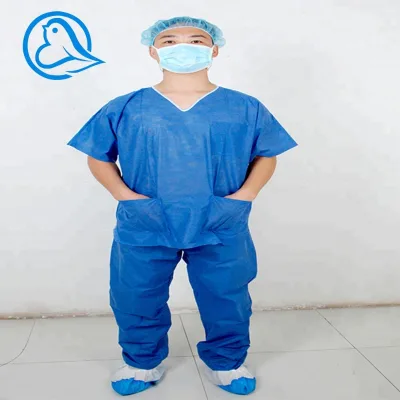


Disposable Non-Woven Protective Isolation Gown PPE Medical Surgical Gown
$0.20 - $0.50
MOQ: 10000 Pieces


Personal Protective Equipment Non-Disposable Isolation Gown Medical Surgical Gown
$0.29 - $0.99
MOQ: 100 Pieces


Anti-Bacterial Long Sleeve Medical Isolation Gown for Hospital Protection
$10.18 - $12.98
MOQ: 100 Pieces


Blue PP Nonwoven Disposable Hospital Protective Surgical Isolation Gown
$1.15 - $1.45
MOQ: 5000 Pieces
Comprehensive Sourcing Guide
Strategic Sourcing Guide for Breathable Yellow Surgical Isolation Gowns
Understanding Product Specifications and Material Composition
When sourcing Breathable Yellow Surgical Isolation Gowns, the primary objective is to identify products that balance fluid resistance with user comfort. The market offers a variety of configurations, but the core definition of a "surgical isolation gown" often centers on specific material compositions and structural designs. Based on available product data, the material composition is a critical differentiator. Suppliers frequently utilize Non-woven Fabric as a base, with specific variations including SMS (Spunbond-Meltblown-Spunbond), PP (Polypropylene), PP+PE, and PP combined with Microporous Film. The GSM (grams per square meter) weight is a direct indicator of breathability and barrier protection. Observed ranges for these gowns typically fall between 20-55 GSM for standard isolation types and extend up to 25-70 GSM for light chemical protective clothing.
The color specification is a key requirement for the target keyword. While white is a standard industry color, yellow isolation gowns are specifically noted in product listings, often used for visual differentiation in hospital zones or for specific infection control protocols. The availability of customized colors suggests that yellow is a viable option for bulk orders. The construction of the gown involves specific stitching methods, such as 4-Thread Sewing or Ultrasonic Heat Sealing. Ultrasonic sealing is particularly relevant for breathability, as it creates a continuous barrier without needle holes that could compromise fluid resistance, though traditional sewing offers flexibility in fit.
The physical dimensions and sizing are equally vital. Standard sizes often range from S to 5XL, with specific dimensions like 115137cm, 120140cm, or 125*145cm. Buyers must verify if the supplier offers these standard measurements or if custom sizing is required for their specific workforce. The design features, including the type of cuffs (Elastic, Knitted, or Cotton), neck closures (Tie on or Velcro), and waist ties (Sewn or Loose), significantly impact the gown's usability. For instance, elastic cuffs provide a tighter seal against fluids, while knitted cuffs may offer better comfort for prolonged wear. The presence of a hood and boots, or the option for an open-cuff design, further defines the level of protection and the specific application environment.
Compliance, Certification, and Sterilization Protocols
Navigating the regulatory landscape is essential for any procurement of medical-grade isolation gowns. The supply chain for these products often references international standards to ensure quality and safety. A high-confidence fact in the current market data indicates that products may carry CE and ISO13485 certifications. ISO13485 is a specific standard for medical device quality management systems, ensuring that the manufacturer maintains rigorous controls over design, production, and delivery. The CE mark signifies conformity with health, safety, and environmental protection standards for products sold within the European Economic Area.
Sterilization status is a critical variable that dictates the end-use application. The market data presents a dichotomy: some products are explicitly marked as "Without Ethylene Oxide Sterilization," while others are listed as having undergone "Ethylene Oxide Sterilization." This distinction is paramount for surgical applications. Surgical gowns intended for sterile environments must be ethylene oxide (EO) sterilized to ensure they are free from pathogens. Conversely, isolation gowns used in general hospital wards, laboratories, or food plants may be supplied non-sterile. Buyers must carefully verify the sterilization status of the specific SKU they intend to purchase. Assuming a gown is sterile when it is not can lead to severe compliance violations and infection risks.
While the data mentions EN 13795, it is categorized as low-confidence background information. Therefore, buyers should not assume a product automatically meets this standard based on general market knowledge alone. Instead, procurement teams must request specific test reports or certification documents that explicitly confirm compliance with EN 13795 or other relevant regional standards (such as AAMI PB70 in the US) before finalizing an order. The absence of a specific standard claim in the product listing should trigger a request for verification rather than an assumption of compliance. The "Quality Guarantee Period" mentioned in some listings, such as a two-year term, may apply to reusable equipment or specific packaging integrity, but for disposable gowns, the focus remains on the shelf life and the validity of the sterilization certificate.
Cost Drivers and Pricing Structure Analysis
The pricing for Breathable Yellow Surgical Isolation Gowns is influenced by a complex interplay of material costs, production complexity, and order volume. The observed price range in the market is vast, spanning from $0.12 to $20,000. This wide disparity indicates that the unit price is not a fixed value but is highly dependent on the specific configuration of the order. The lower end of the spectrum likely corresponds to basic, non-sterile, single-use gowns with minimal features, while the higher end may reflect bulk orders of specialized, sterilized, or custom-branded products.
Material composition is a primary cost driver. SMS fabric, which combines the strength of spunbond with the barrier properties of meltblown, generally commands a higher price than standard non-woven PP fabric. Similarly, the inclusion of microporous films or the use of PP+PE blends increases the material cost. The GSM weight also directly correlates with price; gowns in the 25-70 GSM range will typically cost more than those in the 20-55 GSM range due to the higher volume of raw material used.
Order volume is another significant factor. The Minimum Order Quantity (MOQ) ranges from 0 to 1,000,000 units. While some suppliers may offer samples or very small batches, the most competitive unit prices are usually reserved for large-volume orders. The "OEM Service" availability suggests that custom branding, such as logo printing (though some listings specify "Without Logo Printing"), can be an added cost. Packaging requirements also influence the final price. Standard packing configurations like 10PCS/Bag with 10 bags per carton differ in cost from custom packaging solutions. Buyers should expect that requests for customized packing, such as 1PCS/Bag or 50PCS/CTN, may incur additional handling fees.
Lead times are another hidden cost factor. The typical delivery time is generally 30 days after order confirmation, with some suppliers offering a 15-30 day window. Expedited shipping or rush orders to meet tight deadlines will likely incur premium charges. Additionally, the cost of samples, which are often free of charge but require the buyer to pay freight, should be factored into the initial budget. For large procurement projects, the total cost of ownership includes not just the unit price but also logistics, customs duties, and potential inventory holding costs if the lead time is extended.
Typical Applications and Operational Requirements
The versatility of Breathable Yellow Surgical Isolation Gowns makes them suitable for a diverse range of applications. The product data explicitly lists applications in laboratories, food plants, hospitals, and chemical environments. In a hospital setting, these gowns serve as a critical barrier against blood and body fluid splashes. The yellow color can be strategically used to designate specific zones, such as isolation wards or areas handling infectious diseases, aiding in visual management and infection control protocols.
In laboratory and chemical environments, the requirement for "Light Chemical Protective Clothing" becomes relevant. Gowns with higher GSM weights and SMS construction provide better resistance to chemical splashes and particulate matter. The choice between "Semi Closed" designs and fully enclosed gowns with hoods and boots depends on the specific hazard level. For instance, handling hazardous chemicals may require a gown with a zipper closure, a flap, and integrated boots, whereas general lab work might only require a standard tie-back gown with elastic cuffs.
The food plant application highlights the need for hygiene and contamination control. In these facilities, the gowns must be easy to don and doff to maintain workflow efficiency while preventing cross-contamination. The breathable nature of the fabric is crucial here, as workers may wear the gowns for extended periods in varying temperatures. The availability of different sleeve lengths (Long, Short, Sleeveless) allows for customization based on the specific tasks performed. For example, short sleeves might be preferred for tasks requiring frequent hand washing, while long sleeves offer better protection for general processing.
The "Disposable" nature of these gowns is a key operational feature. Unlike reusable PPE, disposable gowns eliminate the need for laundering and sterilization processes, reducing the risk of cross-contamination between patients or batches. However, this also means that procurement must be managed as a recurring expense. The "Available Times" attribute confirms their single-use status, necessitating a steady supply chain to avoid stockouts. Buyers should consider the waste management implications of high-volume disposable usage, ensuring that the procurement strategy aligns with the organization's sustainability goals.
Supplier Evaluation and Quality Control Measures
Evaluating suppliers for Breathable Yellow Surgical Isolation Gowns requires a rigorous assessment of their manufacturing capabilities and quality assurance processes. The origin of the products is a significant factor, with Hubei, China, identified as a primary production location. Buyers should verify the supplier's capacity to maintain consistent quality across large production runs. The "Quality Guarantee Period" of two years mentioned in some listings may indicate a commitment to product durability, though for disposable items, this likely refers to shelf life or packaging integrity rather than the gown's functional lifespan.
Quality control should be verified through documentation. Buyers must request test reports that confirm the GSM weight, tensile strength, and fluid resistance of the gowns. The specific stitching method, whether 4-Thread Sewing or Ultrasonic Heat Sealing, should be validated to ensure it meets the required barrier standards. The presence of certifications like CE and ISO13485 is a positive indicator, but these should be checked for validity and scope. It is essential to confirm that the certification covers the specific model number and production facility being used.
Sample evaluation is a critical step in the supplier selection process. The data indicates that samples are often provided free of charge, with freight charges to be collected by the buyer. This allows procurement teams to physically inspect the gowns for color accuracy (specifically the yellow shade), material feel, and construction quality. Buyers should test the samples for breathability, fit, and comfort, ensuring they meet the specific needs of their end-users. The "Customization" attribute suggests that suppliers can tailor products, but this requires clear communication of specifications to avoid quality discrepancies.
Supplier reliability is also measured by their ability to meet delivery timelines. The standard delivery time of 30 days after order confirmation is a benchmark. Buyers should assess the supplier's track record for on-time delivery and their capacity to handle fluctuations in demand. The "OEM Service" availability indicates flexibility, but it also requires a robust quality control process to ensure that custom-branded products meet the same standards as standard items. Finally, the "Available Times" and "Disposable" attributes should be confirmed to ensure the supplier understands the product lifecycle and can provide appropriate storage and handling recommendations.
Long-Term Procurement and Supply Chain Considerations
Sourcing Breathable Yellow Surgical Isolation Gowns is not merely a transactional activity but a strategic long-term endeavor. The wide range of MOQs, from zero to one million units, offers flexibility but also requires careful planning. For organizations with stable demand, establishing a long-term contract with a reliable supplier can secure better pricing and ensure consistent supply. The ability to customize packaging, such as 10PCS/Bag or 100PCS/CTN, allows for optimization of storage and distribution logistics.
Sustainability is an increasingly important consideration in long-term procurement. While the gowns are disposable, the environmental impact of non-woven fabrics like PP and SMS is significant. Buyers should explore suppliers who offer eco-friendly alternatives or recycling programs. The choice of material, such as SMS versus standard non-woven, can also influence the environmental footprint. Additionally, the "Customized" color option allows for brand alignment, which can be a strategic advantage in corporate identity and patient experience.
Supply chain resilience is another critical factor. The reliance on a specific origin, such as Hubei, China, means that geopolitical events, logistics disruptions, or local regulations could impact supply. Buyers should consider diversifying their supplier base or maintaining a safety stock to mitigate these risks. The "Delivery Time" of 15-30 days is a standard benchmark, but buyers should negotiate terms that account for potential delays. The "Sample" policy, where freight is collected, should be leveraged to test new suppliers before committing to large orders.
Finally, the evolving nature of medical and industrial standards requires ongoing vigilance. As regulations change, the requirements for gowns may shift. Buyers must stay informed about updates to standards like EN 13795 or AAMI PB70 and ensure their suppliers can adapt. The "Quality" attribute of "High-Quality" is a marketing claim that must be backed by continuous performance data. Regular audits and performance reviews of suppliers will help maintain the integrity of the supply chain and ensure that the Breathable Yellow Surgical Isolation Gowns continue to meet the highest standards of safety and performance.
FAQs
What materials are used for Breathable Yellow Surgical Isolation Gowns?
These gowns are typically made from Non-woven Fabric, SMS, PP, or PP+PE blends. The GSM weight usually ranges from 20 to 55 GSM for standard isolation types and up to 70 GSM for light chemical protective clothing.
Can I get ethylene oxide sterilized Breathable Yellow Surgical Isolation Gowns?
Yes, ethylene oxide sterilization is available for specific product models. However, some listings explicitly state the product is without ethylene oxide sterilization, so you must verify the specific SKU before ordering.
Which certifications do Breathable Yellow Surgical Isolation Gowns typically hold?
High-confidence facts indicate products may carry CE and ISO13485 certifications. These standards ensure compliance with medical device quality management systems and European safety requirements for the supplied gowns.
How long is the delivery time for Breathable Yellow Surgical Isolation Gowns?
The general delivery time is 30 days after order confirmation. Some suppliers offer a shorter window of 15 to 30 days, depending on the specific manufacturer and order volume requirements.
What customization options are available for Breathable Yellow Surgical Isolation Gowns?
Customization is available for color, size, and packaging configurations. Buyers can request specific GSM weights, dimensions like 115*137cm, and customized packing such as 1PCS per bag or 50PCS per carton.
Where are Breathable Yellow Surgical Isolation Gowns manufactured?
The primary production location identified for these products is Hubei, China. This origin is a key factor for sourcing logistics and understanding the supply chain for bulk orders.
What are the typical applications for Breathable Yellow Surgical Isolation Gowns?
These gowns are designed for use in laboratories, food plants, hospitals, and chemical environments. They serve as light chemical protective clothing or standard isolation wear depending on the specific hazard level.