Source Butterfly Cone Vent Fan for Poultry, Greenhouse, Factory
Compare 30 Butterfly Cone Vent Fan listings from verified Chinese suppliers. Evaluate options based on voltage, air volume, and mounting types for poultry farms, greenhouses, and industrial factories.
Key considerations
Products List
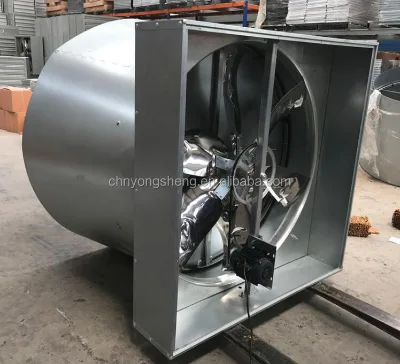
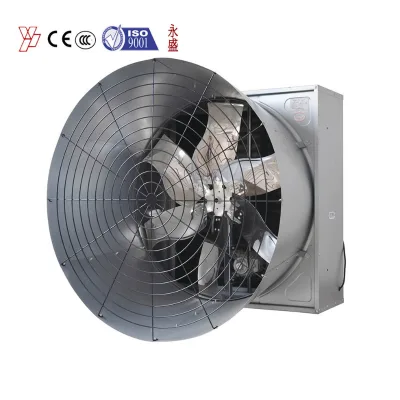


Wall Window Mounted Butterfly Cone Ventilation Exhaust Fan Shutter Cone Fan
$240.00 - $280.00
MOQ: 50 Pieces


Poultry Farm Chicken House Ventilation Exhaust Fan Butterfly Cone Fan
$600.00 - $650.00
MOQ: 10 Pieces


Shutter Cone Type Exhaust Fan Wall Mounted for Greenhouse Ventilation
$350.00 - $550.00
MOQ: 10 Pieces


Comprehensive Sourcing Guide
Strategic Sourcing Guide for Butterfly Cone Vent Fans
Understanding Technical Specifications and Performance Metrics
When sourcing a Butterfly Cone Vent Fan, often categorized under industrial exhaust ventilation or poultry farm cooling systems, buyers must first establish a clear baseline of technical specifications. The core functionality of these units relies on the interaction between the blade design, motor power, and airflow capacity. Based on observed market data, these fans frequently utilize stainless steel or galvanized steel for blade construction, ensuring resistance to corrosion in humid or chemically aggressive environments common in agricultural and industrial settings. The structural frame is often composed of Mg-Al alloy or galvanized plates, paired with tough rubber components to dampen vibration and extend operational life.
The performance envelope of these units varies significantly based on the intended application. Observed specifications indicate a wide range of dimensions, with common configurations measuring approximately 1380x1380x400mm or larger variants reaching 1380x1380x1300mm. For larger industrial applications, dimensions can extend to 1610x1610x1370mm. The airflow capacity is a critical metric, with high-performance models capable of moving up to 44,000 cubic meters per hour. This high volume is driven by motors operating at speeds around 1400rpm, typically powered by AC motors. Buyers should verify the specific voltage requirements, as the market offers units compatible with 220V, 380V, or custom voltage configurations to match local grid standards. The power consumption for these robust units can reach 1.1kW, necessitating careful electrical planning during installation.
The blade configuration is another vital technical consideration. Units are available with either three or five blades, a design choice that directly impacts the noise level and air pressure generation. While some models boast noise levels around 40dB, buyers must verify this metric against the specific acoustic requirements of their facility, as higher air volumes often correlate with increased decibel levels. The mounting method is equally specific; these fans are designed for through-wall or window mounting, often referred to as wall fan or box cooling fan configurations. The collector material is frequently PVC, which aids in directing airflow efficiently. Understanding these parameters is essential before engaging with suppliers, as a mismatch in voltage, size, or airflow capacity can render the equipment ineffective for its intended purpose.
Compliance and Certification Verification
In the B2B procurement of industrial ventilation equipment, compliance with international and regional safety standards is non-negotiable. The market data indicates that reputable suppliers typically provide products with multiple certifications, including CCC (China Compulsory Certification), CE (Conformité Européenne), RoHS (Restriction of Hazardous Substances), and ISO (International Organization for Standardization). These certifications serve as evidence that the manufacturing process adheres to specific safety, environmental, and quality management protocols.
Buyers must exercise caution when interpreting certification claims. While CE and CCC are frequently observed, the specific scope of these certifications must be verified against the product's actual voltage and power rating. For instance, a unit operating at 380V may require different safety testing protocols than a 220V model. The presence of RoHS certification is particularly important for buyers operating in markets with strict environmental regulations regarding hazardous substances in electrical components. Similarly, ISO certification suggests that the supplier maintains a documented quality management system, which is a strong indicator of process consistency.
However, buyers should not assume that every listed product possesses every certification mentioned in a general category description. Verification should be conducted by requesting specific test reports or certificates of conformity for the exact model number being purchased. The standard electrical specifications often cited include 220V/380V at 50Hz or 60Hz, and compliance with these electrical standards is a prerequisite for safe operation. Failure to verify that a fan's electrical ratings match the local grid frequency and voltage can lead to equipment failure or safety hazards. Therefore, the procurement strategy must include a rigorous document review phase where the supplier provides proof of certification for the specific batch or model intended for delivery.
Cost Drivers and Pricing Dynamics
The pricing of butterfly cone vent fans is influenced by a complex interplay of material costs, manufacturing complexity, and customization requirements. The observed price range in the market spans from approximately $90 to $965 USD, a significant variance that reflects differences in size, material quality, and power output. The primary cost driver is the material composition. Fans constructed with high-grade stainless steel blades and Mg-Al alloy frames command a higher price point compared to those using standard galvanized steel. The inclusion of tough rubber components for vibration damping also adds to the manufacturing cost but is essential for longevity.
Customization is another major factor affecting the final price. Many suppliers offer OEM (Original Equipment Manufacturer) support, allowing buyers to request specific dimensions, voltage configurations, or branding. The observed data indicates that customization is available, but this flexibility often comes with a premium. Furthermore, the production volume plays a role; the Minimum Order Quantity (MOQ) ranges from 1 to 50 units. Buyers purchasing single items or small batches may face higher per-unit costs compared to those placing larger orders, although the specific price per unit is not fixed and depends on the negotiated terms.
Additional cost considerations include the after-sales service package. Products that include free spare parts or video technical support may be priced higher initially but offer better long-term value by reducing maintenance downtime. The complexity of the motor, such as the distinction between standard AC motors and more efficient variants, also influences the price. Buyers should analyze the total cost of ownership rather than just the initial purchase price. A cheaper unit with a shorter warranty or higher energy consumption may prove more expensive over its lifecycle compared to a higher-priced, energy-saving model with a robust warranty and support package.
Typical Applications and Operational Environments
Butterfly cone vent fans are engineered for a diverse range of applications, primarily driven by the need for effective air exchange and temperature control in large, enclosed spaces. The most prevalent use case is in the agricultural sector, specifically for poultry farming. These fans are critical for chicken cage ventilation, ensuring that ammonia levels are kept low and that the birds have adequate oxygen in high-density housing environments. The design is optimized for the specific needs of chicken houses, where continuous operation and high air volume are essential for animal health and productivity.
Beyond agriculture, these units are widely deployed in greenhouse management, where precise control of humidity and temperature is required to optimize crop yields. The ability to move large volumes of air makes them suitable for industrial factories and workshops where heat buildup from machinery or processes must be mitigated. In these settings, the fans function as exhaust ventilation systems, removing hot air and replacing it with cooler, fresher air. The mounting flexibility, allowing for both wall and window installation, makes them adaptable to various building structures, from newly constructed facilities to retrofitted older buildings.
The durability of the materials used, such as stainless steel and galvanized plates, ensures that these fans can withstand the corrosive environments often found in livestock farming, where moisture and chemical byproducts are prevalent. The "long life-span" feature observed in product descriptions is particularly relevant for these applications, where equipment failure can lead to significant losses in livestock or production downtime. Buyers should match the fan's specific features, such as "strong wind power" and "energy saving," to the specific demands of their facility. For instance, a facility requiring high air exchange rates will prioritize the 44,000m³/h capacity models, while a smaller greenhouse might opt for a more compact unit with lower power consumption.
Supplier Evaluation and Relationship Management
Selecting the right supplier is a critical step in the procurement process, requiring a thorough evaluation of their capabilities, reliability, and support infrastructure. Buyers should prioritize suppliers who demonstrate a clear commitment to quality through their certification portfolio and manufacturing standards. The presence of a "place of origin" such as Shandong, China, indicates a region known for its manufacturing base, but buyers must verify the specific factory's track record. It is advisable to request references from previous clients, particularly those in similar industries such as poultry farming or industrial ventilation.
The availability of after-sales support is a key differentiator among suppliers. The market data highlights that many suppliers offer "video technical support" and "free spare parts," which are invaluable for maintaining operational continuity. A supplier that provides comprehensive technical assistance can help buyers troubleshoot installation issues or optimize fan performance without incurring additional service costs. Additionally, the flexibility of the supplier regarding customization and packaging is important. Buyers should assess whether the supplier can accommodate specific requests, such as custom branding or unique packaging requirements, as indicated by the "prod_packing: as Buyer's Request" attribute.
Communication and responsiveness are also vital indicators of a supplier's reliability. Buyers should evaluate the supplier's ability to provide detailed product specifications, answer technical queries promptly, and maintain transparency regarding production timelines. While specific lead times are not universally standardized in the provided data, a reliable supplier should be able to provide a clear estimate based on order volume and customization needs. Building a long-term relationship with a supplier who understands the buyer's specific requirements can lead to better pricing, priority production scheduling, and improved service quality over time.
Quality Control and Long-Term Procurement Strategy
Implementing a robust quality control (QC) strategy is essential to ensure that the butterfly cone vent fans received meet the required performance and safety standards. Buyers should establish clear acceptance criteria based on the technical specifications, including blade material integrity, motor performance, and airflow capacity. Conducting pre-shipment inspections is highly recommended, focusing on critical components such as the blade balance, motor winding quality, and the structural integrity of the frame. The presence of certifications like ISO and CE should be verified against the actual product documentation to ensure authenticity.
For long-term procurement, buyers should consider the warranty and maintenance aspects of the equipment. A standard one-year warranty is common, but buyers should negotiate terms that cover critical components like the motor and blades. The availability of spare parts, such as replacement blades or rubber dampers, is crucial for extending the operational life of the fans. Suppliers that offer a comprehensive spare parts program can significantly reduce the total cost of ownership. Additionally, buyers should evaluate the energy efficiency of the units, as "energy saving" features can lead to substantial cost reductions over the lifespan of the equipment, especially in facilities with high operational hours.
Finally, buyers should maintain a dynamic procurement strategy that adapts to changing market conditions and technological advancements. Regularly reviewing the performance of installed units and gathering feedback from end-users can help identify areas for improvement in future purchases. By focusing on quality, compliance, and supplier reliability, buyers can ensure a steady supply of high-performance butterfly cone vent fans that meet their operational needs while minimizing risks and costs. The integration of these strategies will result in a resilient supply chain capable of supporting the demanding requirements of industrial and agricultural ventilation applications.
FAQs
What certifications do butterfly cone vent fans typically have?
These fans commonly hold CCC, CE, RoHS, and ISO certifications. Buyers should verify specific certificates for the exact model and voltage to ensure compliance with local safety and environmental standards before purchasing.
Which voltage options are available for these industrial fans?
Available voltage configurations include 220V, 380V, and custom options. The standard electrical specifications often support 50Hz or 60Hz frequencies, so buyers must match the unit to their local grid requirements.
Can buyers request custom dimensions for butterfly cone vent fans?
Yes, customization is available for dimensions and other specifications. Suppliers offer OEM support, allowing requests for specific sizes like 1380x1380x400mm or 1610x1610x1370mm to fit unique facility layouts.
How much airflow can high-performance butterfly cone vent fans move?
High-performance models can move up to 44,000 cubic meters per hour. This capacity is driven by AC motors operating at speeds around 1400rpm, suitable for large poultry farms and industrial factories.
What materials are used to construct the fan blades and frame?
Blades are typically made of stainless steel or galvanized steel for corrosion resistance. The frame often uses Mg-Al alloy or galvanized plates, paired with tough rubber components to dampen vibration.
What after-sales services are provided for these ventilation units?
Suppliers often provide free spare parts and video technical support. These services help maintain operational continuity and assist with troubleshooting installation or performance issues without incurring additional service costs.