Source Calcined Low-Iron Kaolin Slurry for Ceramic, Paper, and Mining
Find 30 verified listings for calcined low-iron kaolin slurry suitable for ceramic, paper, and mining applications. Buyers can compare specifications, prices, and supplier details to identify the best fit for their industrial needs.
Key considerations
Products List


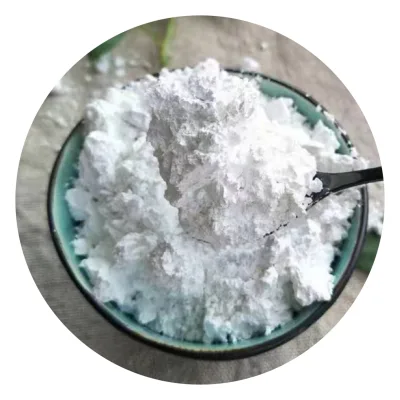


Premium Quality 4000 Mesh Calcined Kaolin Clay for Industrial Applications
$200.00 - $240.00
MOQ: 1 Tons




Comprehensive Sourcing Guide
Strategic Sourcing Guide for Calcined Low-Iron Kaolin Slurry
The procurement of calcined low-iron kaolin slurry represents a critical decision point for industries ranging from advanced ceramics to high-performance paper manufacturing. Unlike raw kaolin, calcined variants undergo thermal treatment to alter their physical and chemical properties, specifically enhancing brightness, opacity, and refractive index while reducing iron content to meet stringent aesthetic and functional requirements. For B2B buyers, navigating this market requires a disciplined approach that distinguishes between raw material specifications and the complex processing capabilities of suppliers. This guide synthesizes observed market data and technical realities to provide a framework for evaluating potential supply partners and ensuring product consistency.
Technical Specifications and Physical Properties
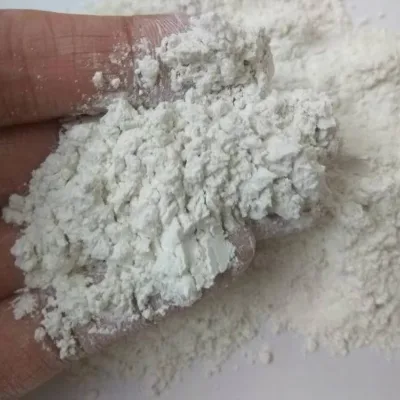
When sourcing calcined low-iron kaolin, the primary focus must be on the physical attributes that define the material's performance in end applications. The core product is often identified as "Kaolin Powder" with a specific shape classified as "Powder." The calcination process typically results in a material that is available in "White" or "Yellow" hues, depending on the iron content and the specific firing atmosphere used. Buyers must verify the mesh size, as the standard specification range observed in the market spans from 320 mesh to 3000 mesh. This granularity is crucial; finer meshes are generally required for high-gloss paper coatings, while coarser grades may suffice for certain ceramic bodies or fillers.
The production technique is explicitly noted as "Calcined Kaolin," which implies a transformation from the raw mineral state. This process affects the material's density and water absorption. In the context of slurry preparation, the particle size distribution determines the stability of the suspension. While the product is often packaged in 25kg bags, 50kg bags, or 1000kg bulk bags, the internal consistency of the powder within these packages must be uniform. Buyers should request specific gravity and moisture content data, as these are not always listed in standard catalogs but are vital for calculating slurry viscosity. The "Hz" brand name observed in listings suggests that branding may be present, but the technical identity remains tied to the "Kaolin" keyword and the "PH" or "EDW-400" model identifiers which often denote specific processing lines or equipment used to achieve the final slurry consistency.
Compliance, Certification, and Quality Assurance
In the global supply chain, certification serves as the primary proxy for quality assurance. For calcined kaolin, the presence of ISO certification is a high-confidence indicator of a supplier's adherence to international management standards. Specific certifications observed include ISO 9001, ISO 14001, and ISO 45001, which cover quality management, environmental management, and occupational health and safety, respectively. Additionally, products may carry CE, SGS, and RoHS certifications, indicating compliance with European safety standards and restrictions on hazardous substances.
However, buyers must exercise caution when interpreting these labels. While a supplier may list "CE/SGS" or "ISO 9001:RoHS," these certifications often apply to the manufacturing facility or the specific equipment used (such as the slurry pumps or grinding mills) rather than the raw kaolin itself. The distinction is vital because a facility can be ISO certified while the raw material batch varies in iron content. Therefore, procurement teams should request batch-specific test reports that verify the low-iron content and the calcination temperature profile. The "Standard Export Wooden Box" or "Wooden Case" packaging mentioned for certain models suggests a high level of care in logistics, but the internal quality control protocols for the powder itself must be verified through independent third-party testing.
Cost Drivers and Pricing Dynamics
The pricing of calcined low-iron kaolin slurry is influenced by a complex matrix of factors, including the degree of calcination, the purity of the iron content, and the particle size distribution. The observed price range in the market is exceptionally broad, spanning from $0.18 to $99,999.99 USD. This variance is not indicative of a single product line but rather reflects the difference between raw bulk commodities and highly processed, micronized, or custom-formulated slurries.
Several key drivers influence where a specific order falls within this range. First, the "Customization" attribute being "Available" suggests that buyers can pay a premium for tailored particle sizes or specific chemical modifications. Second, the "Variable Speed" capabilities of the processing equipment, such as the "EDW-400" model, allow for precise control over the grinding process, which increases production costs but ensures tighter tolerances. Third, the "Working Pressure" and "High Pressure Pump" requirements for slurry transport imply that the material may need to be processed through specialized equipment, adding to the overhead.
Buyers should also consider the Minimum Order Quantity (MOQ), which ranges from 1kg to 50kg in observed listings. While an MOQ of 1kg allows for sampling, it often carries a significantly higher unit cost. Conversely, bulk orders in 1000kg bags may offer economies of scale but require significant storage capacity and capital outlay. The "Delivery Time" of 3-15 days from China indicates that logistics costs and lead time volatility are significant factors in the total landed cost. Buyers must factor in the "Place of Origin: China" when calculating duties and shipping insurance, as these can fluctuate based on geopolitical and trade policies.
Typical Applications and Performance Requirements
The versatility of calcined low-iron kaolin slurry is its greatest asset, with applications spanning the "Ceramic" and "Paper" industries, as well as "Mining," "Metallurgy," "Petroleum," and "Chemical Industry" sectors. In the paper industry, the low-iron content is critical for maintaining the brightness and whiteness of the final product, preventing discoloration during the drying process. The "Grinding Medium" of "Zirconia Beads 3.0~3.2mm" used in processing suggests that the material is subjected to high-intensity milling to achieve the desired fineness for coating applications.
For the ceramic sector, the calcined kaolin acts as a flux and a source of alumina, influencing the sintering behavior and mechanical strength of the final product. The "Working Style: Grain" and "Disc (Wheel) Type: Grinding Disc" attributes highlight the mechanical processing required to prepare the slurry for these applications. In the chemical and mining sectors, the material's resistance to abrasion and chemical stability is paramount. The "Material" composition of the processing equipment, such as "High Chrome Alloy," "Rubber," "Polyurethane," and "Ceramic," indicates that the slurry is often abrasive and corrosive, requiring specialized handling equipment to prevent contamination and equipment failure.
Supplier Evaluation and Technical Capabilities
Evaluating a supplier for calcined kaolin slurry requires a deep dive into their technical infrastructure. The presence of "Motor" driven "Centrifugal Slurry Pumps" with "Single Suction" impellers and "Closed" impeller designs suggests that the supplier has the capability to handle high-viscosity slurries efficiently. The "Mounting Height: Suction Centrifugal" and "Position of Pump Shaft: Horizontal Pump" details are technical specifications that buyers should verify against their own plant requirements to ensure compatibility.
A robust supplier will offer "Engineers Available to Service Machinery Overseas," indicating a commitment to long-term support and troubleshooting. This is particularly important for slurry systems where pump failure can halt production. The "Seal" types available, including "Packing Seal," "Mechanical Seal," and "Expeller Seal," demonstrate the supplier's ability to handle different pressure and leakage scenarios. Buyers should prioritize suppliers who can demonstrate a complete system approach, from the raw kaolin source to the final slurry delivery, rather than those who only provide the powder. The "After-Sales Service" capability is a key differentiator in the B2B market, ensuring that any issues with the slurry consistency or pump performance can be resolved quickly.
Quality Control and Long-Term Procurement Strategy
Implementing a rigorous quality control (QC) protocol is essential for maintaining the integrity of the supply chain. Buyers should establish a protocol that includes incoming inspection of the "Kaolin Powder" for color consistency ("White;Yellow") and particle size verification against the "320mesh-3000mesh" standard. The "Package" specifications, such as "25kg/Bag" or "1000kg/Bag," must be checked for integrity to prevent moisture ingress, which can alter the slurry properties.
For long-term procurement, buyers should consider the "Variable Speed" capabilities of the processing equipment as a means to adapt to changing production needs. The ability to adjust the "Working Pressure" and "Max Particle Size" (observed up to 76mm in some contexts, though likely referring to pump capacity rather than final product) allows for flexibility in slurry formulation. Establishing a partnership with a supplier that offers "Customization" and has a proven track record of "ISO" compliance will mitigate risks associated with supply chain disruptions.
Furthermore, the "Theory: Centrifugal Slurry Pump" and "Influent Type of Impeller: Single Suction Pump" indicate that the supplier's technology is based on established hydraulic principles. Buyers should verify that the supplier's equipment is compatible with their existing infrastructure to avoid costly retrofits. The "Standard Export Wooden Box" packaging suggests a high level of protection during transit, which is crucial for maintaining the quality of the slurry over the "3-15days" delivery window.
Conclusion
Sourcing calcined low-iron kaolin slurry requires a balanced approach that weighs technical specifications, certification validity, and cost dynamics. The market offers a wide range of options, from basic powders to highly customized slurries, but the buyer must remain vigilant in verifying claims against actual product data. By focusing on the observed attributes such as the "Calcined Kaolin" technique, "ISO" certifications, and the specific "Ceramic" and "Paper" applications, buyers can build a resilient supply chain. The integration of advanced processing equipment, such as "Centrifugal Slurry Pumps" with "High Chrome Alloy" components, ensures that the material can be handled effectively throughout the production process. Ultimately, the success of the procurement strategy lies in the ability to distinguish between marketing claims and verified technical performance, ensuring that the final product meets the rigorous demands of modern industrial applications.
FAQs
What certifications do calcined low-iron kaolin slurry suppliers typically hold?
Suppliers typically hold ISO 9001, ISO 14001, and ISO 45001 certifications. Some listings also display CE, SGS, and RoHS marks, though these often apply to the manufacturing equipment rather than the raw material itself.
How is the particle size specified for this kaolin powder product?
The standard specification range spans from 320 mesh to 3000 mesh. Finer meshes are generally required for high-gloss paper coatings, while coarser grades may suffice for certain ceramic bodies or fillers.
Can buyers customize the particle size or chemical properties of the slurry?
Yes, customization is available for tailored particle sizes or specific chemical modifications. Buyers can often pay a premium for these specific adjustments to meet unique application requirements.
What are the typical packaging options for bulk orders of this material?
The material is commonly packaged in 25kg bags, 50kg bags, or 1000kg bulk bags. Some models also utilize standard export wooden boxes or wooden cases for higher protection during transit.
Which industries primarily utilize calcined low-iron kaolin slurry?
Primary applications include the ceramic and paper industries for brightness and opacity. It is also used in mining, metallurgy, petroleum, and chemical sectors due to its abrasion resistance and chemical stability.
What is the minimum order quantity for purchasing this kaolin product?
The observed minimum order quantity ranges from 1kg to 50kg. While 1kg allows for sampling, it often carries a higher unit cost compared to bulk orders in 1000kg bags.
How long does delivery typically take from the place of origin?
Delivery time is typically 3 to 15 days from China. Buyers must factor in logistics costs and potential lead time volatility when calculating the total landed cost of the order.