Source Car Motorcycle Truck Battery Tester for Vehicles
Find 30 Car Motorcycle Truck Battery Tester options for cars, vans, RVs, and farm vehicles. Compare models like BK200 and HF-200A with features such as Bluetooth connectivity, 100A-200A capacity, and RoHS certification to select the right diagnostic tool for your needs.
Key considerations
Products List


High Quality Factory Direct Sale Car Multi-Functional Circuit Voltage Tester
$2.53 - $2.86
MOQ: 390 Pieces


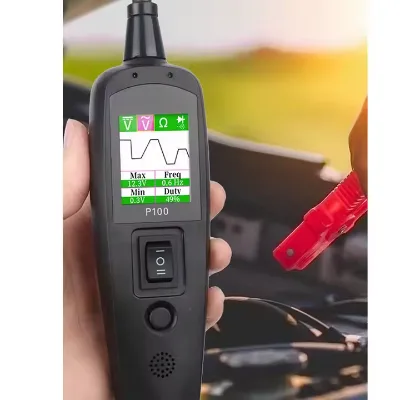
Comprehensive Sourcing Guide
Car Motorcycle Truck Battery Tester Sourcing Guide
Procuring a reliable battery tester for automotive and light commercial fleets requires distinguishing between general diagnostic tools and specialized units capable of handling lead-acid chemistry across varying voltage systems. The market offers devices ranging from simple analog indicators to advanced digital units with Bluetooth connectivity, each serving distinct operational needs for mechanics and fleet managers. Buyers must first identify whether their primary requirement involves testing standard passenger vehicles, heavy-duty trucks, or specialized farm equipment, as the internal circuitry and current handling capabilities differ significantly between these applications.
Selection should be driven by the specific voltage and amperage demands of the target vehicle fleet, ensuring the chosen unit can accurately assess battery health without causing damage. While some models are designed strictly for 6V or 12V systems, others support a broader range including 24V configurations essential for larger trucks and RVs. Understanding these electrical parameters is critical before engaging with suppliers, as a mismatch in voltage compatibility can render the device ineffective for specific vehicle types, leading to wasted procurement spend and operational delays.
Product Scope and Observed Listing Signals
The current market landscape for battery testers reveals a diverse array of product models, including digital mini testers, silver Bluetooth-enabled units, and heavy-duty auto chargers. Listings frequently highlight specific model identifiers such as BK200, HF-200a, and BA-020, indicating a wide variety of form factors and feature sets available to international buyers. These signals suggest that suppliers are catering to both entry-level mechanics seeking basic diagnostics and professional workshops requiring high-precision data logging and wireless connectivity for modern fleet management systems.
Buyers should carefully observe the stated customization options and sample availability, as these factors often dictate the flexibility of the procurement process. Many suppliers indicate that customization is available, allowing for branding or specific functional adjustments, while others offer free samples to validate performance before bulk ordering. The presence of OEM and ODM services further expands the scope, enabling buyers to source private-label equipment that aligns with their specific brand identity or unique operational requirements without compromising on the core testing functionality.
Technical Specifications to Verify
When evaluating technical specifications, the working voltage range and current capacity are the most critical parameters to confirm against your fleet's requirements. Verified data indicates that many units support a voltage range of 6V to 24V, with current ratings typically observed at 100A or 200A, which determines the device's ability to handle high-load testing scenarios. It is essential to verify that the selected tester can accurately measure the specific amperage of the batteries in your inventory, as underpowered units may fail to provide reliable readings on larger truck batteries or deep-cycle applications.
Physical attributes such as weight, dimensions, and display clarity also play a significant role in the usability of the device during field operations. Observed specifications include compact dimensions around 35168.5cm and weights near 1.3 Kgs, which facilitate portability for mobile technicians. Additionally, the display interface should clearly indicate battery status with distinct markers for Bad, Weak, and Good conditions, ensuring that even non-technical staff can interpret results quickly. Buyers must also check the testing temperature range and clip material, as copper-plated clips and robust temperature tolerances ensure durability in harsh workshop environments.
Compliance and Safety Documentation
Safety and regulatory compliance are non-negotiable when sourcing electrical testing equipment for commercial use, requiring verification of specific international certifications. The supply chain data confirms the availability of products bearing RoHS, ISO9001, CCC, and CE certifications, which indicate adherence to environmental standards, quality management systems, and regional safety requirements. Procurement teams must request valid certification documents for each batch to ensure that the devices meet the legal and safety standards of the destination market, particularly when importing into regions with strict electrical safety regulations.
Beyond standard certifications, buyers should verify the testing region capabilities and standard compliance of the specific model to ensure it is suitable for the intended operational environment. Some listings specify testing regions such as "Charge and Discharge" or "All," which defines the scope of the diagnostic functions included. Ensuring that the product standard aligns with local industry norms is vital for liability protection and operational safety, as non-compliant equipment may pose risks to both the user and the vehicle being tested.
Cost Drivers and Commercial Terms
Pricing for battery testers varies significantly based on the complexity of the technology, the inclusion of connectivity features like Bluetooth, and the level of customization requested. The observed price range spans from 1 to 923 USD, reflecting the difference between basic manual testers and advanced digital units with internet update capabilities. Buyers should analyze the cost structure relative to the features provided, ensuring that the premium paid for advanced models translates into tangible operational benefits such as faster diagnostics or improved data accuracy.
Commercial terms, including Minimum Order Quantity (MOQ) and payment conditions, are key factors in the final procurement decision. Listings indicate an MOQ of 100 PCS or negotiable terms, which allows for flexibility depending on the buyer's volume needs. Understanding the negotiation leverage available on MOQ and lead times is essential for optimizing cash flow and inventory levels. Additionally, the availability of free samples and support for OEM/ODM services can significantly influence the total cost of ownership by reducing the risk associated with bulk purchases.
Supplier Qualification and Quality Control
Supplier qualification should focus on verifying the origin of the products and the consistency of their manufacturing processes to ensure long-term reliability. The majority of observed listings originate from China, a major hub for automotive diagnostic tools, but buyers must assess the specific factory's quality control measures and production capacity. Requesting detailed information about the production line and quality assurance protocols is necessary to confirm that the devices will maintain performance standards over time and across different batches.
Quality control extends to the physical construction of the tester, including the material of the clips and the durability of the casing. Verified attributes such as copper-plated clips and robust packaging in export cartons with pallets suggest a focus on product longevity during transit and use. Buyers should implement a rigorous inspection process upon receipt, checking for physical defects and verifying that the device functions according to the stated specifications. Establishing a clear communication channel with the supplier for addressing any quality issues is also crucial for maintaining a stable supply chain.
Long-Term Procurement Checks
Sustaining a successful procurement relationship requires regular checks on the supplier's ability to provide software updates and technical support. Some models feature internet-based update methods, which are essential for keeping the diagnostic algorithms current and compatible with new vehicle battery technologies. Buyers should confirm the frequency and cost of these updates, as well as the availability of technical assistance, to ensure the equipment remains a viable asset for years rather than becoming obsolete quickly.
Finally, monitoring the supplier's performance in terms of delivery consistency and after-sales service is vital for long-term operational stability. The main sales areas often include Africa, Europe, South America, and Southeast Asia, indicating a global reach that can be leveraged for future expansion. Buyers should track delivery times and the responsiveness of the supplier to warranty claims or repair requests. Establishing a performance scorecard based on these metrics will help identify reliable partners and mitigate risks associated with supply chain disruptions or product failures.
FAQs
What certifications do car motorcycle truck battery testers have?
These testers typically hold RoHS, ISO9001, CCC, and CE certifications. These standards ensure the devices meet international safety and quality requirements for manufacturing and usage. Buyers should verify specific certificates for their target markets to ensure compliance with local regulations and import standards.
Can I get a free sample of the battery tester?
Yes, free samples are available for many models. This allows buyers to evaluate build quality and functionality before placing bulk orders. Suppliers often support sample requests to facilitate trust and ensure the product meets specific operational needs for automotive diagnostics.
What is the minimum order quantity for these testers?
The minimum order quantity is generally 100 pieces or negotiable. This flexible MOQ allows businesses to start with smaller batches. Buyers can discuss terms directly with suppliers to adjust quantities based on their initial market testing and inventory requirements.
Which models support Bluetooth connectivity for data transfer?
Specific models like the BK200 Silver support Bluetooth connectivity. This feature enables wireless data transfer to mobile devices for detailed analysis. Buyers seeking digital integration should look for these specific model numbers to ensure compatibility with modern diagnostic software.
Are these testers suitable for 24V vehicle batteries?
Yes, many models support 6V, 12V, and 24V systems. This versatility makes them suitable for cars, vans, RVs, and farm vehicles. Buyers should confirm the voltage range of the specific model to ensure it matches their target vehicle fleet requirements.
How are the battery testers packaged for shipping?
Products are packed in plastic bags, export cartons, and pallets. This secure packaging protects the devices during international transit. Buyers should request detailed packing lists to ensure proper handling and storage upon arrival at their destination warehouse.