Source Car Mudguards for Trailers, Trucks, and Cars
Compare 30 verified listings for Car Mudguards made from plastic, steel, ABS, and PE. Buyers can evaluate customization options, certifications like ISO, and fitting positions for trailers, trucks, and cars with MOQs starting at 10 pieces.
Key considerations
Products List


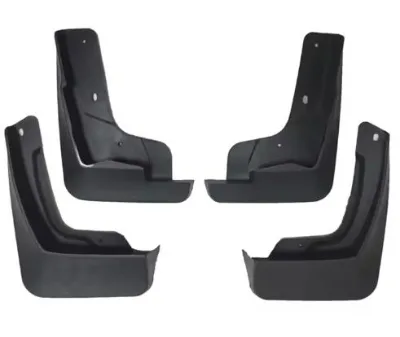
Wholesale Car Modification Soft Rubber Front and Rear Wheel Special Mudguard
$3.26 - $3.67
MOQ: 300 Pieces




$1.36 - $2.00
MOQ: 500 Bags


Comprehensive Sourcing Guide
Strategic Sourcing Guide for Car Mudguards
Understanding Product Specifications and Material Composition
When sourcing Car Mudguards, the primary technical differentiator lies in the material composition and dimensional specifications. Based on available market data, the product landscape for mudguards is dominated by two distinct material categories: plastic and steel. Plastic variants, often composed of ABS (Acrylonitrile Butadiene Styrene) or PE (Polyethylene), are frequently cited for their lightweight properties and resistance to corrosion. These materials are particularly suitable for applications requiring flexibility and impact absorption, such as on trailers or light commercial vehicles. Conversely, steel mudguards offer superior structural rigidity and are often selected for heavy-duty applications, including trucks where durability against road debris is paramount.
The dimensional specifications for these components vary significantly depending on the intended vehicle class. Observed data indicates that sizes are often customized to fit specific vehicle profiles, with standard reference dimensions appearing in ranges such as 440350150mm for certain models or 19.319.517.1cm for others. However, the prevailing trend in the market leans heavily toward "Custom" sizing, allowing buyers to specify exact dimensions to match the fender arches of their target vehicles. The fitting position is another critical specification, with products explicitly designed for either the front fender, rear fender, or both. Some listings specify a singular focus on the rear fender, while others offer comprehensive coverage for both positions.
Manufacturing processes also play a vital role in the final product quality. The production of these mudguards typically involves cutting and moulding techniques. For rubber-based or specialized polymer variants, continuous vulcanization is a noted process, ensuring consistent material density and durability. The visual finish is equally important; observed attributes include a "shining surface" and "beautiful" aesthetics, with color options predominantly featuring black, red, and silver. These finishes are not merely cosmetic but often indicate specific UV-resistant treatments or surface coatings designed to withstand harsh environmental conditions.
Compliance, Certification, and Regulatory Standards
Navigating the regulatory landscape is essential for B2B procurement, particularly when sourcing automotive accessories that must meet international safety and quality benchmarks. The most frequently observed certification in the current market data is ISO. This indicates a baseline adherence to quality management systems, which is a prerequisite for many large-scale distributors. More specifically, certain product lines reference ISO/TS 16949:2009, a technical specification for automotive quality management systems. This standard is critical for suppliers aiming to serve the automotive industry, as it addresses the specific requirements for continuous improvement, defect prevention, and reduction of variation and waste in the automotive supply chain.
In addition to ISO standards, some product listings explicitly mention CE certification. The CE mark signifies that a product meets EU safety, health, and environmental protection requirements. For buyers targeting the European market, verifying the presence of CE certification is a non-negotiable step. However, it is important to note that not all listed products carry this specific mark, and the absence of a listed certification in a general product description does not necessarily imply non-compliance, but rather that the specific listing may not highlight it. Buyers must verify the actual certification status of the specific batch or model they intend to purchase.
The origin of the products is another factor influencing compliance. The majority of the observed supply originates from China, with specific regions like Hebei and Shandong being prominent manufacturing hubs. These regions have developed specialized clusters for automotive accessories. When evaluating compliance, buyers should request documentation that confirms the product standards, such as the "2424/2430etc" or "Customizable" standards mentioned in various listings. These standards often refer to internal manufacturing tolerances or packaging dimensions rather than international safety codes. Therefore, relying solely on the listed "standard" field for regulatory compliance is risky; direct verification of the specific safety standards applicable to the destination market is required.
Cost Drivers and Pricing Dynamics
The pricing structure for Car Mudguards is influenced by a complex interplay of material costs, customization levels, and order volume. The observed price range in the market spans from approximately $0.80 to $86.00 USD. This wide variance is primarily driven by the material type and the degree of customization. Basic plastic mudguards, which are mass-produced and require minimal modification, tend to cluster at the lower end of the price spectrum. In contrast, steel variants or those requiring complex moulding, specific color matching, or custom branding commands a premium price.
Order volume is a significant determinant of the final unit cost. The Minimum Order Quantity (MOQ) observed in the market ranges from 10 to 500 pieces, with a specific cluster of suppliers setting an MOQ of 100 pieces. Suppliers often employ tiered pricing models where the unit cost decreases as the order quantity increases. For buyers with high-volume requirements, negotiating based on the 500-piece threshold can yield substantial savings. Conversely, smaller buyers may need to accept higher unit costs or look for suppliers willing to accommodate lower MOQs, which are less common but exist within the 10-piece range.
Additional cost drivers include packaging and logistics. The standard packaging for these products is typically cartons, though some suppliers offer wooden pallets for larger shipments or custom packaging solutions. The choice of packaging can impact the overall landed cost, especially for heavy steel mudguards that require robust protection during transit. Furthermore, the availability of free samples can influence the initial procurement decision, as it allows buyers to verify quality without immediate financial commitment. However, the cost of shipping samples and the time invested in evaluation should be factored into the total cost of ownership. Buyers should also consider the "24hours" service availability mentioned in some listings, as rapid response times can reduce lead times and mitigate supply chain disruptions, indirectly affecting the overall cost efficiency of the procurement process.
Typical Applications and Market Segmentation
Car Mudguards serve a functional purpose across a diverse range of vehicle types, from light passenger cars to heavy-duty trucks and trailers. The application data reveals a clear segmentation based on vehicle class. For the automotive sector, mudguards are designed specifically for "Car" applications, focusing on aesthetic integration and protection against road spray. In the commercial transport sector, the demand shifts towards "Truck" and "Trailer" applications, where the primary function is durability and protection of the vehicle body and cargo from mud, stones, and debris.
The fitting position is a critical factor in application suitability. Products are explicitly categorized for "Front Fender" or "Rear Fender" use. In many cases, a complete set requires both front and rear units, and buyers must ensure compatibility with their specific vehicle model. The "All" applicable models designation suggests a universal fit for certain generic mudguard designs, but this is less common than model-specific solutions. For specialized vehicles, the "Custom" specification is often the only viable option, allowing for precise alignment with unique fender geometries.
Geographically, the main sales areas for these products include Africa, Europe, South America, and Southeast Asia. This distribution reflects the global demand for automotive accessories in developing markets where road conditions may be harsher, necessitating more robust mudguards. In Europe, the demand is likely driven by regulatory requirements for vehicle cleanliness and safety. In contrast, markets in Africa and South America may prioritize durability and cost-effectiveness. The "Main Sales Area" data indicates that suppliers are actively targeting these regions, suggesting a mature supply chain capable of handling international logistics. Buyers should align their sourcing strategy with these regional trends, ensuring that the selected mudguards meet the specific environmental and regulatory demands of their target market.
Supplier Evaluation and Quality Control Protocols
Evaluating a supplier for Car Mudguards requires a rigorous assessment of their manufacturing capabilities and quality control systems. The presence of certifications like ISO and ISO/TS 16949:2009 is a strong indicator of a supplier's commitment to quality management. However, buyers should not rely solely on these labels. It is essential to request evidence of these certifications, such as valid certificates from accredited bodies, and to verify their scope and validity dates. The "Customization" attribute is another key evaluation point. Suppliers that offer OEM/ODM services and allow for custom logos and packaging demonstrate flexibility and a customer-centric approach.
Quality control should be integrated into the procurement process from the initial sample stage. The availability of free samples is a positive signal, allowing buyers to physically inspect the product for surface finish, material integrity, and fitment. When evaluating samples, buyers should check for the "Superior Quality" and "Shining Surface" attributes mentioned in product descriptions. This involves a tactile and visual inspection to ensure the surface is free from defects, bubbles, or uneven coloring. For plastic variants, checking for flexibility and resistance to cracking is crucial. For steel variants, inspecting the welds and coating thickness is necessary to prevent rust.
The manufacturing process, specifically "Cutting" and "Moulding," should be scrutinized. Buyers should inquire about the machinery used and the quality of the molds. High-quality molds result in consistent dimensions and a smooth finish, reducing the need for post-production trimming. The "Continuous Vulcanization" process for rubber-based products should be verified to ensure uniform curing, which affects the product's longevity. Additionally, the "24hours" service availability suggests a responsive supply chain, which is vital for resolving quality issues or addressing urgent orders. Buyers should also verify the "prod_packing" standards, ensuring that the packaging (cartons, wooden pallets) is sufficient to protect the product during transit, especially for international shipments.
Long-Term Procurement Considerations and Supply Chain Resilience
Sourcing Car Mudguards is not merely a transactional activity but a strategic decision that impacts long-term supply chain resilience. The "Custom" nature of many products means that once a design is finalized, switching suppliers can be costly and time-consuming. Therefore, establishing a long-term relationship with a reliable supplier is paramount. Buyers should prioritize suppliers who demonstrate stability in their production capabilities and have a proven track record of meeting delivery schedules. The "Hebei, China" and "Shandong" origins indicate established manufacturing clusters, which can offer supply chain advantages due to the concentration of raw materials and specialized labor.
Lead times and production capacity are critical factors for long-term planning. While specific lead times are not universally listed, the "24hours" service attribute suggests that some suppliers can offer rapid turnaround for inquiries or small orders. For larger orders, buyers must negotiate clear delivery schedules and ensure the supplier has the capacity to scale production as demand grows. The "Cartons or as Your Requirement" packaging option highlights the flexibility of suppliers to adapt to specific logistics needs, which can be advantageous for optimizing shipping costs and reducing damage rates.
Sustainability and future-proofing are also emerging considerations. As regulations tighten regarding vehicle emissions and environmental impact, suppliers who can demonstrate adherence to higher environmental standards or use of recyclable materials may gain a competitive edge. The "Customizable" standard and "OEM/ODM" capabilities allow buyers to adapt their product offerings to changing market trends, such as the increasing demand for eco-friendly materials or specific design aesthetics. By maintaining a diverse supplier base and fostering strong relationships with key partners, buyers can mitigate risks associated with supply chain disruptions and ensure a steady flow of high-quality Car Mudguards to meet market demands.
FAQs
What certifications do Car Mudguards typically have?
Most listed Car Mudguards carry ISO certification, and some include CE marks. Specific automotive lines may reference ISO/TS 16949:2009 standards. Buyers should verify the actual certification status of the specific batch they intend to purchase.
Which materials are used for Car Mudguards?
Car Mudguards are commonly made from plastic, steel, ABS, or PE. Plastic variants like ABS or PE offer lightweight properties and corrosion resistance. Steel options provide superior structural rigidity for heavy-duty applications on trucks.
Can I get custom sized Car Mudguards?
Yes, custom sizing is a prevailing trend for Car Mudguards to match specific vehicle profiles. Many listings specify custom dimensions or offer standard references like 440*350*150mm. Buyers can specify exact dimensions to fit their fender arches.
How much is the minimum order quantity?
The minimum order quantity ranges from 10 to 500 pieces, with a common cluster at 100 pieces. Suppliers often use tiered pricing where costs decrease as volume increases. Smaller buyers may find options as low as 10 pieces.
What is the price range for Car Mudguards?
The observed price range spans from approximately 0.80 to 86.00 USD. Basic plastic mudguards cluster at the lower end, while steel or customized variants command a premium. Unit costs typically decrease with higher order volumes.
Where are Car Mudguards manufactured?
The majority of products originate from China, with hubs in Hebei and Shandong. Some listings also indicate origins in Changlian. These regions have developed specialized clusters for automotive accessories and international logistics.
What customization options are available for logos?
Custom logos are available and can be printed on the mudguards. Suppliers welcome OEM and ODM services for branding. Buyers can request custom packaging and specific color options like black, red, or silver.