Source Cast Iron Dryer Cylinder for Paper Machines and Industrial Drying
Compare 18 Cast Iron Dryer Cylinder options from verified Chinese manufacturers. Buyers can evaluate specifications like diameter, thickness, and surface treatment for paper machine dryer sections and custom applications.
Key considerations
Products List


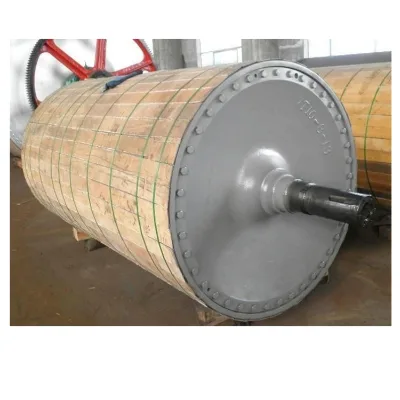


High-Performance Dryer Cylinder for Efficient Paper Machine Operations
$3500.00 - $20000.00
MOQ: 1 Pieces


The Multi-Station Rotary Cylinder Liner Centrifugal Casting Machine
$75000.00 - $100000.00
MOQ: 1 Pieces

Comprehensive Sourcing Guide
Strategic Sourcing Guide for Cast Iron Dryer Cylinders
Understanding the Core Product and Material Composition
The Cast Iron Dryer Cylinder represents a critical component within the drying section of paper machines, serving as the primary heat transfer surface where moisture is removed from the paper web. Sourcing this equipment requires a precise understanding of its material properties, as the integrity of the cylinder directly impacts production efficiency and product quality. Based on available market data, the primary material specification for these units is cast iron, often denoted by grades such as HT250-300. This specific alloy selection is vital because it offers the necessary thermal conductivity and structural rigidity required to withstand the high pressures and temperatures inherent in the drying process.
While stainless steel variants exist in the broader market for specific corrosion-resistant applications, the core keyword focus on cast iron implies a reliance on the thermal mass and durability of iron alloys. The manufacturing process for these cylinders is predominantly casting, a method that allows for the creation of complex geometries and robust wall thicknesses. The surface treatment typically involves polishing to achieve a specific roughness range, which is essential for preventing paper tearing and ensuring smooth web travel. Buyers must verify that the specific unit they are procuring matches the intended application, whether it is for a household paper machine or a large-scale packing paper machine, as the dimensional tolerances and material grades may vary significantly between these use cases.
Technical Specifications and Dimensional Variability
When evaluating potential suppliers, technical specifications form the backbone of the procurement decision. The dimensions of a Cast Iron Dryer Cylinder are rarely standard; they are frequently customized to fit the specific width and diameter requirements of the buyer's existing paper machine infrastructure. Observed data indicates a wide range of diameters, with specific units listed at 1000mm and others reaching up to 3680mm. Similarly, the face width can vary substantially, with documented ranges extending from 1350mm to 5000mm. This variability necessitates a "make-to-order" or "customized" approach for the majority of procurement cycles, rather than purchasing off-the-shelf inventory.
The physical characteristics of the cylinder extend beyond simple dimensions. The shell thickness is a critical parameter, with observed values ranging between 37mm and 56mm, and in some configurations, thicknesses specified between 18mm and 27mm depending on the design pressure. The working speed of the cylinder is another vital specification, typically operating within a range of 200 to 1200 revolutions per minute. For applications involving impellers, the rotating speed and diameter must be carefully matched to the hydraulic and mechanical constraints of the system. Additionally, the design pressure is a key safety factor, with observed ranges between 0.3 MPa and 0.8 MPa, and specific design pressures noted at 0.5 MPa. The working medium is consistently water vapor, and the design temperature can reach up to 158°C. Buyers must ensure that the supplier provides detailed technical drawings that confirm these specific parameters, as deviations can lead to catastrophic failure or inefficient drying performance.
Compliance, Certification, and Quality Standards
Navigating the compliance landscape for industrial machinery is essential for risk mitigation. The market data indicates that reputable suppliers often provide certifications such as ISO 9001, which validates the manufacturer's quality management system. Furthermore, CE marking is frequently observed, indicating conformity with health, safety, and environmental protection standards for products sold within the European Economic Area. Some listings also reference RoHS compliance, suggesting adherence to restrictions on hazardous substances. However, buyers must treat these certifications as observations of specific supplier capabilities rather than universal guarantees for every listed product.
Verification of these certifications should be a primary step in the supplier evaluation process. Buyers should request current, valid certificates directly from the supplier rather than relying on marketing materials. It is also important to note that while ISO 6594 is a relevant standard in the broader context of paper machinery, specific claims regarding this standard should be verified against the actual product documentation. The manufacturing process, identified as casting, must be accompanied by quality control records that demonstrate adherence to these standards. The "make to order" nature of these products means that the final inspection and testing protocols are often customized to the specific order, making the supplier's internal quality assurance procedures a critical area of inquiry.
Cost Drivers and Pricing Dynamics
The pricing structure for cast iron dryer cylinders is highly variable, reflecting the custom nature of the product and the complexity of the manufacturing process. Observed price ranges in the market span from approximately $6.60 to $199,000, a disparity that underscores the difference between small-scale components or accessories and full-scale industrial dryer cylinders. The cost is driven primarily by the material volume, the complexity of the casting process, the required surface finishing, and the specific customization level.
Several factors influence the final cost. The material grade, such as HT250-300, dictates the base cost of the raw iron. The surface treatment, specifically polishing to achieve a roughness of 0.2-0.4 or 0.4-0.8, adds significant processing time and cost. Customization is a major cost driver; since the standard is "made to order," the engineering time required to design a cylinder with a specific diameter, width, and thickness will be factored into the price. Additionally, the MOQ (Minimum Order Quantity) varies, with some suppliers offering a single set as the minimum, while others may require larger quantities. Buyers should expect that larger, more complex cylinders with higher design pressures and temperatures will command a premium price. It is crucial to request a detailed breakdown of costs to understand how much is attributed to material, labor, and engineering, rather than accepting a lump-sum figure.
Supplier Evaluation and Geographic Considerations
When selecting a supplier for cast iron dryer cylinders, geographic origin and production capabilities are significant factors. The majority of observed listings indicate an origin in China, with specific provinces such as Shandong and Henan being prominent manufacturing hubs. These regions have established industrial ecosystems for heavy machinery and casting operations. However, the location should not be the sole determinant of supplier quality. Buyers must evaluate the supplier's production capacity, specifically their ability to handle the casting and finishing processes required for large-diameter cylinders.
The "Automatic" nature of some production lines suggests a level of modernization that can improve consistency, but manual oversight is often required for custom casting projects. Buyers should assess the supplier's experience with similar applications, such as paper machine dryer sections or waste paper pulp processing. The availability of customization is a key differentiator; suppliers that offer "Customized" options and "Available" customization services are better positioned to meet unique operational needs. Furthermore, the packaging standard, often listed as "Exporting Stand" or "Standard," indicates the supplier's attention to logistics and protection during transit, which is vital for heavy, precision-machined equipment.
Quality Control and Long-Term Procurement Strategy
Ensuring the long-term reliability of cast iron dryer cylinders requires a robust quality control strategy. Key quality indicators include the hardness of the material, observed in ranges of 190-240, and the surface roughness, which must be strictly controlled to prevent paper damage. The hydraulic test pressure, often observed at 1.0 MPa for a design pressure of 0.5 MPa, is a critical safety verification step that buyers should insist upon. This test ensures the cylinder can withstand operational pressures without leakage or structural failure.
For long-term procurement, buyers should consider the maintenance requirements and the availability of spare parts. The "New" condition of the products listed implies that replacements are available, but the lead time for custom orders can be a constraint. Buyers should negotiate clear lead times and delivery schedules, as the "Exporting Stand" packaging and the custom nature of the product may affect shipping logistics. Establishing a relationship with a supplier who understands the specific demands of the paper machine industry, including the "Fourdrinier Wire" sheet former type compatibility, can streamline future procurement. Ultimately, the goal is to secure a cylinder that not only meets the immediate technical specifications but also integrates seamlessly into the existing production line for years of reliable operation.
Comparative Analysis of Product Attributes
To facilitate a clearer decision-making process, the following table summarizes the key attributes observed in the market for cast iron dryer cylinders. This comparison highlights the variability in specifications and helps buyers identify the specific requirements for their projects.
| Attribute | Observed Range / Value | Relevance to Procurement |
|---|---|---|
| Material | Cast Iron (HT250-300), Stainless Steel | Determines thermal properties and corrosion resistance. |
| Manufacturing Process | Casting, Finishing Process | Affects structural integrity and surface finish quality. |
| Surface Treatment | Polishing | Critical for paper web smoothness and roughness control. |
| Diameter | 1000mm to 3680mm | Must match existing machine frame dimensions. |
| Face Width | 1350mm to 5000mm | Dictates the drying capacity and paper width. |
| Design Pressure | 0.3-0.8 MPa (Typical 0.5 MPa) | Safety limit for steam operation. |
| Working Speed | 200-1200 r/min | Impacts production throughput and heat transfer. |
| Roughness | 0.2-0.4 or 0.4-0.8 | Affects paper surface quality and friction. |
| Certification | ISO 9001, CE, RoHS | Validates quality management and safety compliance. |
| Customization | Available / Make to Order | Essential for fitting non-standard machinery. |
| Origin | China (Shandong, Henan) | Influences logistics, lead time, and supply chain. |
| MOQ | 1 Set to 200 | Determines initial investment and inventory strategy. |
This structured approach to sourcing ensures that buyers can navigate the complexities of the Cast Iron Dryer Cylinder market with confidence, focusing on verified data and technical requirements rather than speculative claims. By adhering to these guidelines, procurement teams can secure high-quality equipment that meets the rigorous demands of modern paper manufacturing.
FAQs
What material is used for cast iron dryer cylinders?
The primary material used is cast iron, specifically grades like HT250-300, though stainless steel variants exist for specific applications. This selection ensures the necessary thermal conductivity and structural rigidity to withstand high pressures and temperatures during the drying process.
Can these cylinders be customized for specific machines?
Yes, customization is available and the standard production mode is make-to-order to fit unique machine dimensions. Buyers can specify exact diameters, face widths, and shell thicknesses to ensure compatibility with their existing paper machine infrastructure.
Which certifications do suppliers typically provide?
Reputable suppliers often provide ISO 9001 for quality management and CE marking for safety compliance, with some also listing RoHS. Buyers should verify these certifications directly rather than assuming they apply to every listed product.
How is the surface finish of the cylinder treated?
The surface treatment typically involves polishing to achieve a roughness range between 0.2 and 0.8 micrometers. This specific finish is essential for preventing paper tearing and ensuring smooth web travel during the drying operation.
What is the typical design pressure for these units?
The design pressure typically ranges from 0.3 to 0.8 MPa, with specific units designed for 0.5 MPa. The working medium is water vapor, and the design temperature can reach up to 158 degrees Celsius.
Where are these cylinders primarily manufactured?
The majority of observed listings indicate an origin in China, with specific manufacturing hubs in Shandong and Henan provinces. These regions have established industrial ecosystems for heavy machinery and casting operations.