Source Cast Iron Enamel Crepe Pan for Home, Restaurant, and Hotel Use
Explore 30 verified listings for a Cast Iron Enamel Crepe Pan suitable for home cooking, restaurant service, and hotel kitchens. Buyers can compare specifications like size, coating type, and handle design to find the right equipment for their needs.
Key considerations
Products List
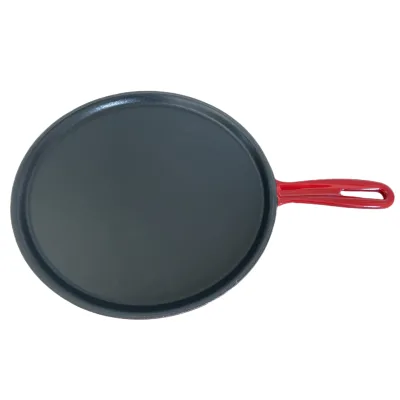
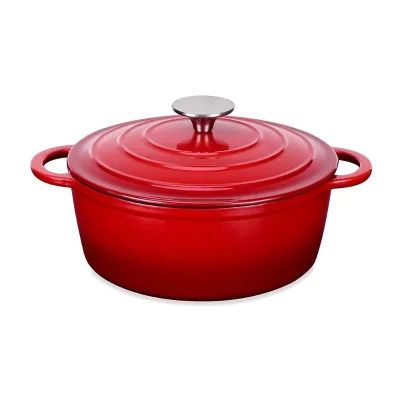

Home Cooking Cast Iron Bread Pans Homemade Bread Enamel Cast Iron Bread Pan
$10.66 - $11.34
MOQ: 300 pieces


24cm Enameled Cast Iron Bread Baking Pan Bread Pot Cast Iron Bread Pan
$14.00 - $17.00
MOQ: 100 Pieces




Comprehensive Sourcing Guide
Strategic Sourcing Guide for Cast Iron Enamel Crepe Pans
Understanding Product Specifications and Variants
When sourcing cast iron enamel crepe pans, buyers must first distinguish between the specific functional requirements of the core keyword and the broader category of cast iron cookware. The supplied data indicates a diverse product landscape where "crep pan" and "Paella Pans" coexist alongside general "Round Frying Pan" and "Casseroles." A critical observation for the procurement specialist is the variation in coating technologies. While the core search term implies a non-stick surface suitable for delicate crepes, the available product attributes list both "Non-Stick" and "Color Enamel Coating" or "Pre-Seasoned or Enamel" surface treatments. This distinction is vital because enamel coating provides a glass-like barrier that is naturally non-stick when properly seasoned or manufactured, whereas a dedicated non-stick coating may refer to a different chemical application.
The physical dimensions and shapes vary significantly across the observed inventory. Specifications list sizes ranging from 24cm to 26cm, with some models featuring specific depth measurements such as a 24cm diameter with a 12.5cm height. This suggests that "crepe pan" in this context may refer to a shallow frying pan with a flat bottom, distinct from the deeper "Paella Pans" or "Casseroles" which have capacities listed as 3-4L. The shape is consistently described as "Round Shape" or "Round Frying Pan," but the bottom profile is explicitly noted as "Flat," which is a mandatory requirement for modern induction cookers. The material is uniformly identified as "Cast Iron," often paired with a "Cast Iron Handle" or "Double Ears" design. The weight of these units is substantial, with specific observations noting a 5kg weight, indicating a heavy-duty construction that retains heat exceptionally well but requires careful handling logistics.
Technical Compliance and Certification Verification
Compliance in the cookware sector is not merely a formality but a prerequisite for market access, particularly in regions with strict food safety regulations. The supplied context mentions "BSCI" and "ISO 9001" under a low-confidence background category. This classification is crucial for the buyer to understand: these certifications are not confirmed attributes of the specific products listed in the inventory data. Therefore, a procurement strategy must treat these as potential supplier capabilities rather than guaranteed product features. Buyers should explicitly request current, valid certificates from the supplier during the negotiation phase.
The "Eco-Friendly" and "Sustainable" features listed in the product attributes are high-confidence observations. These claims likely stem from the durability of cast iron and the absence of certain toxic chemicals often found in cheaper non-stick coatings. However, without specific test data or third-party verification in the provided text, buyers must verify the exact nature of these eco-claims. For instance, does "Eco-Friendly" refer to the manufacturing process, the recyclability of the metal, or the safety of the enamel coating? The "Packing" attributes mention "Custom Logo Acceptable" and "Color Box or Brown Box," which implies that the packaging itself can be a vector for sustainability claims if the buyer opts for recyclable materials.
Furthermore, the "Applicable Stove" attribute specifies "General Use for Gas and Induction Cooker." This is a technical specification that must be verified through testing. While the "Flat" bottom is a strong indicator of induction compatibility, the magnetic properties of the specific cast iron alloy used must be confirmed. The "Port of dispatch" is listed as "Tianjin" or "Xingang," which are major Chinese ports. Buyers should ensure that the supplier's logistics partners can handle the heavy weight of the product (up to 5kg per unit) without incurring excessive freight costs or damage risks during transit.
Cost Drivers and Pricing Dynamics
The pricing structure for cast iron enamel crepe pans is influenced by several distinct factors derived from the product attributes. The observed price range in the data is 1-17 USD, a wide variance that likely reflects differences in size, coating quality, and order volume. The "MOQ" (Minimum Order Quantity) ranges from 1 to 1000 pieces, with a specific high-confidence observation noting an MOQ of 300PCS for certain models. This suggests that unit costs will decrease significantly as order volumes approach the 1000-piece threshold.
The "Supply Ability" is noted as 20,000 pieces per month for cast iron frying plates. This capacity indicates that the supplier has the infrastructure to handle large orders, but buyers must confirm if this capacity is dedicated to the specific "crepe pan" model or if it is a general aggregate figure. The "Customization" attribute is marked as "Available," which introduces a variable cost driver. Custom logos, specific Pantone color matching, and unique packaging designs (such as "Color Box") will inevitably increase the unit price and potentially extend the lead time.
Weight is another significant cost driver. With a specific observation of 5kg per unit, the shipping cost per piece will be high compared to lighter aluminum or stainless steel alternatives. Buyers should calculate the total landed cost, including freight, insurance, and duties, rather than focusing solely on the FOB price. The "Design Style," ranging from "Morden" to "Vintage" and "Classic," also affects pricing. Hand-painted enamel or intricate vintage designs may command a premium over standard "Red/Black/Blue/Green" mass-produced options.
Typical Applications and Market Segmentation
The versatility of cast iron enamel crepe pans allows them to serve multiple market segments. The "Usage" attribute explicitly lists "Home Cooking," "Home /Restaurant/Hotel," and specific functions like "Stew" and "Pressure Cooker." While the core keyword is "crepe pan," the data suggests these products are often multi-functional. The "Paella Pans" and "Casseroles" listed in the same inventory indicate that the manufacturer produces a range of cast iron products, and a crepe pan might be part of a broader collection.
For the home cooking market, the "Eco-Friendly" and "Stocked" attributes are strong selling points. Consumers looking for durable, long-lasting cookware that avoids chemical leaching will find the enamel-coated cast iron appealing. The "Double Ears" handle design is particularly suitable for home use, allowing for safe removal from the stove using oven mitts or two hands. In the commercial sector (Restaurant/Hotel), the "Flat" bottom and "Induction" compatibility are critical for efficiency in professional kitchens. The "Heavy" nature of the 5kg units ensures even heat distribution, which is essential for professional cooking consistency.
The "Custom Logo Acceptable" feature opens up opportunities for private labeling. Brands looking to create a unique line of kitchenware can leverage the "Color Enamel Coating" to match their brand identity. The "Vintage" and "Classic" design styles are particularly popular in the boutique and specialty food markets, where aesthetics play a significant role in the purchasing decision.
Supplier Evaluation and Selection Criteria
Selecting the right supplier requires a rigorous evaluation process based on the available data points. The "Place of Origin" is consistently "Hebei, China," a region known for its metalworking industry. Buyers should verify the specific factory location within Hebei to assess the local supply chain maturity. The "Loading Port" is listed as "Xingang (Tianjin,China)," which is a major hub, suggesting established logistics capabilities.
Key evaluation criteria should include the supplier's ability to meet the "MOQ" requirements. If a buyer needs 300 pieces, they must confirm if the supplier can accommodate this without a price penalty. The "Supply Ability" of 20,000 pieces per month suggests the supplier can handle large orders, but buyers should ask for a production schedule to ensure they can meet their own delivery deadlines. The "Packing" options, including "Color Box or Brown Box," should be evaluated for durability. Given the 5kg weight, the packaging must be robust enough to prevent damage during international shipping.
The "Customization" capability is a differentiator. Buyers should assess the supplier's design team to ensure they can execute specific "Pantone" color requests or unique "Custom Logo" placements accurately. The "Design Style" options (Morden, Vintage, Classic) indicate a flexible manufacturing process, but buyers should request samples to verify the quality of the enamel coating and the finish of the cast iron.
Quality Control and Long-Term Procurement Considerations
Quality control for cast iron enamel products must focus on the integrity of the enamel coating and the structural soundness of the cast iron. The "Surface Treatment" options of "Pre-Seasoned or Enamel" require specific testing. Buyers should verify that the enamel is free from chips, cracks, or bubbles, which can compromise the non-stick properties and lead to rust. The "Non-Stick" attribute must be validated through cooking tests to ensure it performs as advertised for crepe making.
Long-term procurement considerations include the durability of the product. Cast iron is known for its longevity, but the enamel coating is the weak point. Buyers should inquire about the warranty policy and the supplier's track record for product failures. The "Stocked" attribute suggests that some models are available for immediate shipment, which is beneficial for buyers with urgent needs. However, for custom orders, the lead time must be clearly defined.
The "Accessories" listed include a "Pot Holder," which adds value to the product but also increases the unit cost. Buyers should decide if this accessory is necessary for their target market. The "Lid" options, such as the "Cast Iron Enamel Lid," are also important. A matching lid can transform a crepe pan into a casserole, increasing its utility and perceived value.
In conclusion, sourcing cast iron enamel crepe pans requires a balanced approach that weighs technical specifications, cost drivers, and supplier capabilities. The data provided offers a solid foundation for understanding the product landscape, but buyers must conduct due diligence to verify certifications, test quality, and negotiate terms that align with their specific business needs. By focusing on the high-confidence attributes and rigorously checking the low-confidence claims, buyers can build a reliable supply chain for this versatile and durable cookware category.
FAQs
What is the typical weight of a Cast Iron Enamel Crepe Pan?
The typical weight for these units is 5kg, indicating heavy-duty construction. This substantial mass ensures excellent heat retention but requires careful handling during shipping and kitchen use to prevent injury.
Which stove types are compatible with this Cast Iron Enamel Crepe Pan?
These pans are designed for general use on both gas and induction cookers. The flat bottom profile ensures stable contact with induction surfaces, making them versatile for various modern kitchen setups.
Can buyers request a custom logo on the Cast Iron Enamel Crepe Pan?
Yes, customization is available with options for a custom logo on the product or packaging. Buyers can choose between color boxes or brown boxes, allowing for branding alignment with specific business needs.
What is the minimum order quantity for sourcing cast iron enamel crepe pans?
The minimum order quantity ranges from 1 to 1000 pieces depending on the specific model. Some standard models require a minimum of 300 pieces, while others may accommodate smaller trial orders.
How large is the standard size for this Cast Iron Enamel Crepe Pan?
Standard sizes include 24cm and 26cm diameters, with some models featuring a depth of 12.5cm. These dimensions accommodate both home cooking and commercial restaurant needs for various serving portions.
What coating options are available for the Cast Iron Enamel Crepe Pan?
Available surface treatments include color enamel coating, pre-seasoned finishes, or non-stick coatings. The enamel provides a glass-like barrier that is naturally non-stick when properly manufactured and maintained.
Where are the cast iron enamel crepe pans manufactured and shipped from?
The products originate from Hebei, China, and are dispatched from the Tianjin or Xingang ports. This location offers established logistics capabilities for handling heavy items like 5kg cast iron cookware.