Source Cast Stainless Steel Nipple Fitting for Oil Pipe, Underground, Industrial
Find and compare 29 Cast Stainless Steel Nipple Fitting options for oil pipe, underground, and industrial applications. Evaluate specifications like Sch10s wall thickness, BSP/NPT threads, and ASME/ANSI certifications to select the right male or welding connections for your project.
Key considerations
Products List


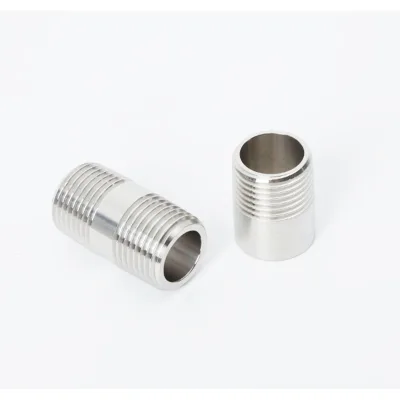


ISO4144 150lbs Stainless Steel 304/316 Screwed Casting Fittings Hose Nipple
$0.10 - $2.60
MOQ: 2000 Pieces


Comprehensive Sourcing Guide
Cast Stainless Steel Nipple Fitting Sourcing Guide
Sourcing cast stainless steel nipple fittings requires a disciplined approach to balancing material integrity, manufacturing precision, and commercial viability. These components serve as critical connectors in piping systems, bridging gaps between threads, welds, or other fittings to maintain system continuity and pressure integrity. The decision to source cast variants rather than forged or machined ones often hinges on cost-efficiency for specific geometries and volume requirements, yet it introduces unique quality control challenges that buyers must actively manage. Understanding the distinction between casting processes and subsequent machining is essential for defining acceptance criteria and preventing premature failure in service.
This guide provides evidence-based procurement strategies for sourcing these fittings, focusing on verified attributes, technical verification, and supplier qualification. By leveraging observed market data and standard industry practices, buyers can navigate the complexities of stainless steel supply chains with greater confidence. The following sections detail how to interpret product listings, verify technical specifications, ensure compliance, manage costs, and establish long-term quality assurance protocols. This structured approach ensures that procurement decisions are grounded in factual data rather than marketing claims, reducing risk and optimizing total cost of ownership.
Product Scope and Observed Listing Signals
The market for stainless steel nipple fittings exhibits a wide range of specifications, with observed price points spanning from $0.03 to $432.68 USD and minimum order quantities (MOQs) ranging from 1 to 10,000 pieces. This variance reflects differences in material grades, such as 304 and 316 stainless steel, as well as variations in manufacturing techniques like casting versus CNC machining. Buyers should interpret these signals carefully, recognizing that lower prices may correspond to smaller sizes, standard grades, or higher MOQs, while premium pricing often reflects specialized alloys, custom certifications, or lower volume orders. The presence of both "Casting" and "Machining" attributes in listings indicates that many suppliers offer hybrid processes, where cast blanks are finished to precise tolerances.
Observed product attributes highlight key decision factors, including connection types such as male threads, welding ends, and various thread distributions like BSP, DIN, NPT, and ISO standards. Sizes typically range from 1/8" to 6", with wall thicknesses specified as Sch10s to Sch80S, and pressure ratings up to 150lbs. Some listings indicate customization availability, suggesting that suppliers can accommodate non-standard dimensions or specific thread configurations. Buyers should verify these attributes against their actual engineering requirements, noting that "Equal" and "Reducing" shapes are common, and that surface treatments may include nickel plating or standard black/silver finishes. The origin of these products is predominantly China, with specific manufacturing hubs in Xuzhou and Cangzhou, which may influence logistics and lead times.
Technical Specifications to Verify
Verifying the technical specifications of cast stainless steel nipples is paramount to ensuring system compatibility and longevity. Buyers must confirm the exact material grade, as 304 and 316 stainless steels offer different corrosion resistance and mechanical properties. The manufacturing process should be clearly defined; while casting allows for complex shapes, it may introduce porosity or inclusions that require post-casting machining to achieve final dimensions. Specifications such as wall thickness (Sch10s-Sch80S) and pressure ratings (150lbs) must be cross-referenced with applicable standards like ASME B16.11 or API specifications to ensure they meet the design pressure and temperature requirements of the intended application.
Thread geometry and connection forms require meticulous verification, as mismatches can lead to leaks or assembly failures. Common thread standards include BSP, DIN, NPT, ISO7/1, and ISO228-1, each with distinct taper and pitch characteristics. Buyers should request detailed drawings or samples to confirm thread fit, especially for custom orders. Additionally, the head code and shape of the fitting, whether round, triangle, hex, or equal, must align with installation tools and space constraints. Surface treatment, such as nickel plating or standard passivation, should be specified to prevent corrosion, particularly in harsh environments. Confirming these details through technical data sheets or direct supplier communication is essential before placing orders.
Compliance and Safety Documentation
Compliance with international standards and certifications is a critical component of the procurement process for stainless steel fittings. Listings often reference certifications such as ASME, ANSI, DIN, JIS, GS, KS, API, VDE, TUV, PSE, CCC, CQC, CE, and ISO. Buyers must verify which specific standards apply to their project, as not all certifications are relevant to every application. For instance, API and ASME certifications are crucial for oil and gas or high-pressure industrial applications, while CE and ISO certifications may be more relevant for general industrial or European market compliance. Documentation should include material test reports (MTRs) that certify the chemical composition and mechanical properties of the stainless steel used.
Safety and quality documentation should also cover surface treatment processes and packaging standards. Some fittings may require specific surface treatments like nickel plating to enhance corrosion resistance, and buyers should ensure that these treatments are documented and tested. Packaging methods, ranging from standard cartons to pallets and wooden cases, should be specified to prevent damage during transit. Additionally, warranty terms, such as a 1-year warranty, should be clearly stated in the contract to provide recourse in case of defects. Buyers should request copies of relevant certificates and test reports prior to order confirmation to ensure that the supplier can substantiate their claims.
Cost Drivers and Commercial Terms
Understanding the cost drivers for cast stainless steel nipple fittings helps buyers negotiate better commercial terms and avoid unexpected expenses. Key factors influencing price include material grade, size, wall thickness, thread type, and surface treatment. Higher grades like 316 stainless steel and thicker wall schedules (e.g., Sch80S) typically command higher prices due to increased material costs and manufacturing complexity. Customization, such as non-standard thread distributions or specific head codes, can also add to the cost. Buyers should request detailed quotes that break down these components to identify potential areas for cost optimization without compromising quality.
Commercial terms, including MOQs, lead times, and payment conditions, vary significantly among suppliers. Observed MOQs range from 1 to 10,000 pieces, allowing for flexibility in order sizing. However, higher volumes often result in lower unit prices. Lead times are influenced by production capacity, customization requirements, and shipping logistics. Buyers should negotiate clear delivery schedules and penalty clauses for delays. Payment terms, such as letters of credit or advance payments, should be structured to balance risk and cash flow. Additionally, buyers should consider total landed cost, including shipping, insurance, and customs duties, when comparing supplier quotes.
Supplier Qualification and Quality Control
Supplier qualification is a critical step in ensuring the reliability and consistency of cast stainless steel nipple fittings. Buyers should conduct thorough due diligence, including site visits or third-party audits, to assess the supplier's manufacturing capabilities, quality control processes, and certification status. Suppliers with established quality management systems, such as ISO 9001, are more likely to deliver consistent product quality. Buyers should also verify the supplier's experience in producing cast stainless steel fittings, particularly for applications involving high pressure or corrosive environments.
Quality control measures should be integrated into the procurement process, including pre-production samples, in-process inspections, and final random inspections. Buyers should specify acceptance criteria for dimensions, thread fit, surface finish, and material composition. Non-destructive testing, such as dye penetrant or X-ray inspection, may be required for critical applications to detect internal defects in cast components. Establishing a clear communication channel with the supplier for addressing quality issues and implementing corrective actions is essential for maintaining long-term supply chain stability. Regular performance reviews and feedback loops can help identify areas for improvement and strengthen the supplier relationship.
Long-Term Procurement Checks
Long-term procurement success depends on continuous monitoring and evaluation of supplier performance and product quality. Buyers should establish key performance indicators (KPIs) such as on-time delivery rate, defect rate, and responsiveness to issues. Regular audits and performance reviews should be conducted to ensure that suppliers continue to meet agreed-upon standards and specifications. Feedback from end-users or field installations can provide valuable insights into the real-world performance of the fittings, highlighting any issues related to corrosion, leakage, or mechanical failure.
Supply chain resilience should also be a priority, with buyers diversifying their supplier base to mitigate risks associated with single-source dependencies. Maintaining a buffer stock of critical fittings can help prevent production delays in case of supply disruptions. Additionally, staying informed about industry trends, regulatory changes, and technological advancements can help buyers make proactive procurement decisions. Building strong relationships with suppliers based on mutual trust and transparency can lead to better collaboration, innovation, and cost savings over time. Regularly reviewing and updating procurement strategies ensures that the organization remains competitive and resilient in a dynamic market environment.
FAQs
What certifications do cast stainless steel nipple fittings have?
These fittings carry multiple certifications including ASME, ANSI, DIN, JIS, API, and ISO. Specific products may also hold VDE, TUV, PSE, CCC, and CQC marks depending on the manufacturer and intended application standards.
Which connection forms are available for these stainless steel fittings?
Available connection forms include threaded and welding options. The fittings feature male connections with internal thread distribution and are designed for 90-degree angles or equal shapes to suit various piping configurations.
Can I request customization for cast stainless steel nipple fittings?
Yes, customization is available for these fittings. Buyers can specify unique requirements while the manufacturer maintains standard production techniques like casting and surface treatments such as nickel plating or black coloring.
What is the typical MOQ for ordering cast stainless steel fittings?
The minimum order quantity ranges from 1 to 10,000 pieces depending on the specific product model. Some standard items like the BWSF series may require a minimum of 100 pieces for initial orders.
How are cast stainless steel nipple fittings packed for shipping?
Packaging options include standard cartons, bundling, pallets, wooden cases, and woven bags. Many orders utilize a combination of polybags, cartons, and pallets to ensure safe transport and protection during logistics.
What wall thickness standards apply to these stainless steel fittings?
Wall thickness specifications follow Sch10s standards and cover models ranging from 1/8 inch to 4 inches. The product line includes various schedules up to Sch80S to meet different pressure requirements.