Source Desktop Motherboard for Server, Workstation, and Industrial Use
Find 30 Desktop Motherboard options featuring Intel H81 chipsets and LGA 1150 sockets. Compare specifications for DDR3 memory support, multiple display outputs, and expansion slots to identify suitable solutions for server, workstation, and industrial applications.
Key considerations
Products List
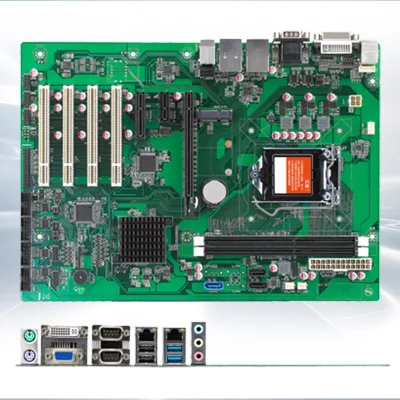


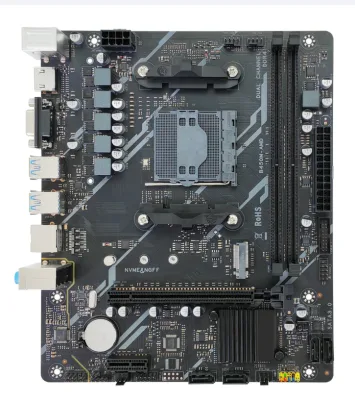
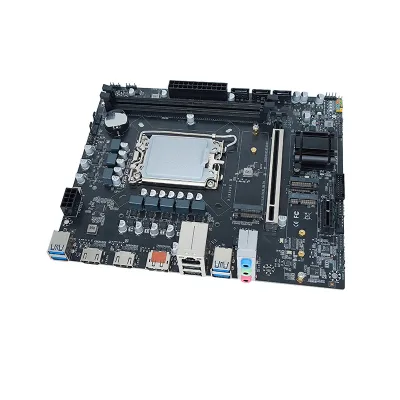
Factory Low Price Wholesale Support Ddr3 Lga 1155 Motherboard 1155 H610
$37.88 - $38.96
MOQ: 100 pieces


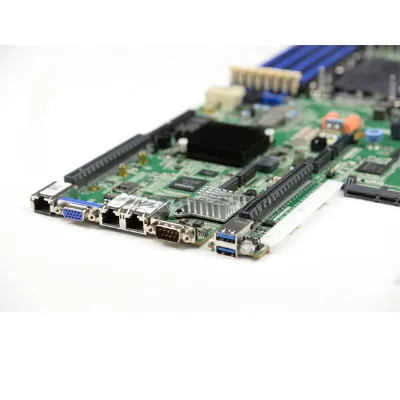


8th Gen Intel Processor 6*LAN 1*COM 32GB DDR4 Multi-Network Port Motherboard
$120.00 - $280.00
MOQ: 1 Pieces

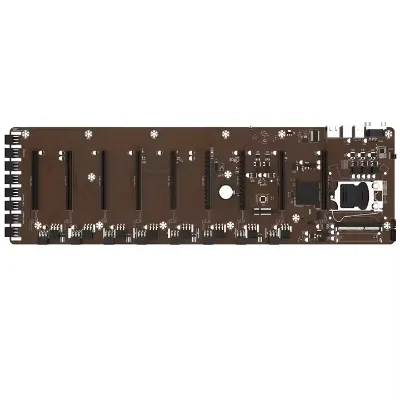
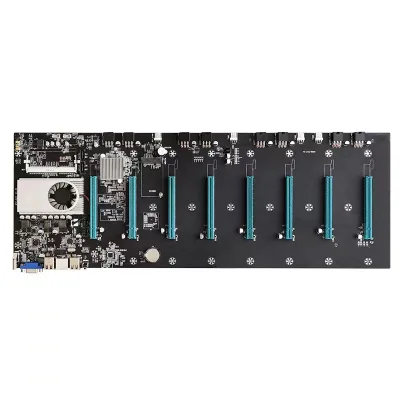
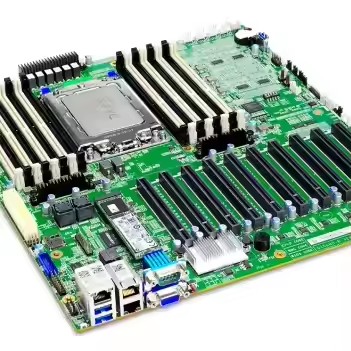
Professional Motherboard 8 GPU Card 1066/1333/1600MHz VGA HD Output Motherboard
$88.79 - $130.00
MOQ: 1 pieces
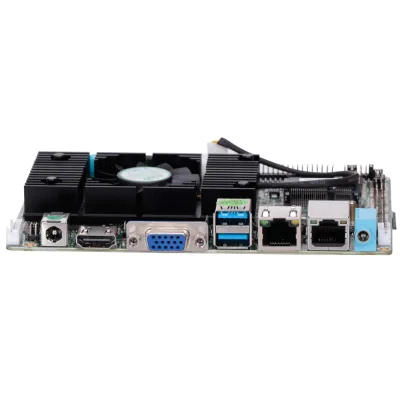
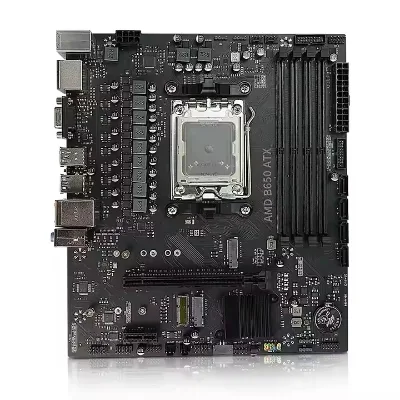


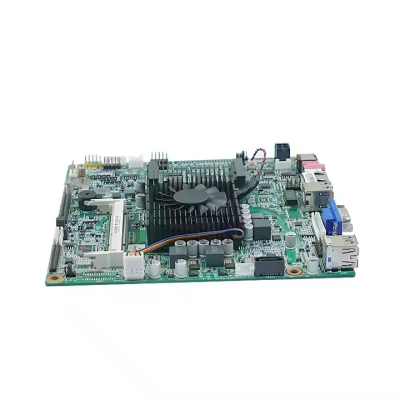
Intel 8gen 120mm*120mm Motherboard Support WiFi 4G/3G 6USB 2COM for Computer
$100.00 - $186.00
MOQ: 1 Pieces

Comprehensive Sourcing Guide
Desktop Motherboard Sourcing Guide
Sourcing desktop motherboards requires a disciplined approach to align technical specifications with operational requirements, particularly when integrating components into server or workstation environments. The market offers a wide variety of form factors and chipset configurations, ranging from consumer-grade boards to industrial-strength solutions designed for continuous operation. Buyers must navigate a complex landscape where attributes such as socket type, memory support, and expansion slots dictate the viability of a motherboard for specific use cases. For instance, the Intel H81 chipset paired with an LGA 1150 socket supports fourth-generation Intel Core, Pentium, and Celeron processors, making it suitable for legacy systems or specific industrial control applications that do not require the latest processor architectures. Understanding these foundational hardware constraints is the first step in preventing costly procurement errors and ensuring compatibility with existing infrastructure.
Beyond the core processing unit, the connectivity and expansion capabilities of a motherboard significantly influence its suitability for specialized tasks. Modern procurement often demands robust I/O options, including multiple USB ports, Ethernet connections, and legacy interfaces like RS-232 or RS-485 for serial communication in industrial settings. The presence of multiple LAN ports, such as dual RJ-45 interfaces, can be critical for network redundancy or segmentation in server applications. Additionally, the availability of various display outputs, including HDMI, VGA, DVI, and LVDS, allows for flexible integration with different monitoring systems. Buyers should carefully evaluate these peripheral options against their specific deployment needs, ensuring that the selected motherboard provides the necessary interface density without requiring excessive external adapters or dongles that could introduce points of failure.
Product Scope and Observed Listing Signals
The current market for desktop motherboards exhibits a broad range of pricing and minimum order quantities, reflecting the diversity of product tiers and supplier models. Observed listing prices span from low-cost consumer options to high-end industrial boards, with minimum order quantities varying significantly from single units to bulk orders of hundreds. This variance suggests that buyers can source individual replacement parts or engage in large-scale procurement for manufacturing or deployment projects. The presence of customized options and available customization services indicates that suppliers are willing to tailor specifications to meet unique client requirements, such as specific PCB layer counts or specialized connector placements. This flexibility is particularly valuable for organizations developing proprietary hardware solutions or requiring specific form factors that deviate from standard retail offerings.
Listing signals also reveal important details about product condition and origin, which are critical for risk assessment. While some products are listed as new, others may appear as used, necessitating rigorous verification of component health and functionality before purchase. The geographic origin of these products, often cited as regions in China such as Henan or Guangdong, provides context for manufacturing capabilities and supply chain dynamics. Buyers should be aware that products originating from different regions may have varying quality control standards and production processes. Furthermore, the inclusion of detailed technical specifications in listings, such as support for DDR3 memory up to 16GB and multiple SATA and MSATA interfaces, allows for precise filtering of potential suppliers. However, buyers must treat these listed attributes as observations rather than guaranteed specifications, verifying each claim through direct communication with the supplier or by requesting detailed datasheets.
Technical Specifications to Verify
Verifying the core technical specifications of a Desktop Motherboard is essential to ensure compatibility with intended applications and existing hardware ecosystems. The socket type and supported CPU generations are primary determinants of performance and upgradeability. For example, an LGA 1150 socket is specific to fourth-generation Intel processors, and buyers must confirm that the motherboard firmware supports the exact CPU model they plan to install. Similarly, memory specifications, including type, speed, and maximum capacity, must be cross-referenced with the processor’s memory controller capabilities. A motherboard supporting DDR3-1333/1600 MHz with a maximum capacity of 16GB across two non-ECC U-DIMM slots offers a specific performance profile that may not be suitable for high-throughput data processing tasks requiring ECC memory or higher bandwidth. Buyers should request detailed memory compatibility lists to avoid purchasing incompatible RAM modules.
Expansion slots and storage interfaces are equally critical for system configurability and data management. The number and type of PCIe slots, such as PCIe 16x, PCIe 4x, and PCIe 1x, determine the potential for adding graphics cards, network adapters, or other expansion cards. Additionally, the availability of legacy PCI slots can be important for integrating older industrial peripherals. Storage connectivity, including SATA and MSATA interfaces, dictates the types of drives that can be installed, affecting both storage capacity and system boot times. Buyers should also verify the presence of specific I/O ports, such as USB 2.0, USB 3.0, and serial ports, to ensure that the motherboard can connect to all necessary peripherals. Confirming these details through supplier documentation or sample testing is crucial to prevent integration issues during system assembly.
Compliance and Safety Documentation
Compliance with international safety and environmental standards is a non-negotiable aspect of sourcing electronic components, including desktop motherboards. Certifications such as RoHS and ISO indicate that the manufacturer adheres to specific regulations regarding hazardous substances and quality management systems. Buyers should request valid certification documents from suppliers to verify that the products meet the regulatory requirements of their target markets. For instance, RoHS compliance ensures that the motherboard does not contain restricted hazardous materials, which is essential for environmental sustainability and regulatory adherence in many regions. ISO certification, particularly ISO 9001, suggests that the manufacturer has implemented a robust quality management system, which can reduce the risk of defects and improve overall product consistency.
In addition to environmental and quality certifications, buyers should inquire about specific testing procedures and quality control measures employed by the supplier. Functional testing methods, such as SPI, AOI, ICT, FCT, and X-ray inspection, provide insights into the thoroughness of the manufacturing process. These tests help identify potential defects in surface-mounted components, solder joints, and internal circuitry before the product leaves the factory. Buyers should ask for detailed test reports or quality assurance protocols to understand the level of scrutiny applied to each unit. Furthermore, inquiries about IP protection and proven records in safeguarding intellectual property can provide assurance that the supplier respects design integrity and confidentiality, which is particularly important for custom or proprietary motherboard designs.
Cost Drivers and Commercial Terms
Understanding the factors that influence the cost of desktop motherboards is crucial for effective budgeting and negotiation. Key cost drivers include the chipset complexity, the number of expansion slots, the quality of components used, and the level of customization required. Motherboards with advanced features, such as multiple LAN ports, extensive I/O options, or support for high-speed memory, typically command higher prices due to increased manufacturing complexity and component costs. Additionally, the form factor, such as M ATX, can impact pricing based on the density of components and the precision required in PCB design. Buyers should request detailed cost breakdowns to understand how specific features contribute to the final price, enabling them to make informed decisions about which features are essential and which can be omitted to reduce costs.
Commercial terms, including minimum order quantities, payment terms, and shipping methods, also play a significant role in the total cost of ownership. Suppliers may offer discounts for larger orders, but buyers must balance this against inventory holding costs and cash flow implications. The mode of production, such as SMT assembly, and the packaging method, such as DHL or UPS shipping, can affect lead times and shipping costs. Buyers should negotiate clear terms regarding warranty, returns, and after-sales support to mitigate the risks associated with defective products. Additionally, inquiries about customization availability and associated costs can help buyers determine the feasibility of tailoring motherboards to specific requirements without incurring prohibitive expenses. Transparent communication about these commercial terms is essential for establishing a mutually beneficial procurement relationship.
Supplier Qualification and Quality Control
Evaluating supplier qualifications is a critical step in ensuring the reliability and consistency of Desktop Motherboard supplies. Buyers should assess the supplier’s manufacturing capabilities, including their experience with SMT production, PCB layer complexity, and component sourcing. Suppliers with a proven track record in producing high-layer-count PCBs and handling various IC pitches demonstrate a higher level of technical expertise and quality control. Additionally, inquiries about the supplier’s sourcing channels for critical components, such as capacitors and connectors, can provide insights into their supply chain resilience and ability to maintain consistent product quality. Buyers should also verify the supplier’s ability to provide customized solutions, as this indicates flexibility and responsiveness to specific client needs.
Quality control processes should be rigorously evaluated to minimize the risk of receiving defective products. Buyers should request information about the supplier’s quality management system, including their procedures for incoming material inspection, in-process quality control, and final product testing. Suppliers that employ comprehensive testing methods, such as X-ray inspection and functional testing, are more likely to deliver high-quality products. Additionally, buyers should inquire about the supplier’s approach to handling non-conforming products and their process for continuous improvement. Establishing clear quality expectations and communication channels with the supplier is essential for maintaining product standards and addressing any issues that may arise during the procurement process. Regular audits or sample evaluations can further validate the supplier’s commitment to quality.
Long-Term Procurement Checks
Establishing long-term procurement checks is essential for maintaining supply chain stability and product quality over time. Buyers should implement regular performance reviews of their suppliers, assessing factors such as delivery reliability, product defect rates, and responsiveness to issues. These reviews help identify potential problems early and allow for corrective actions to be taken before they impact production schedules. Additionally, buyers should monitor market trends and technological advancements to ensure that their motherboard selections remain relevant and competitive. This includes staying informed about new chipset releases, memory technologies, and industry standards that may affect future procurement decisions.
Continuous improvement in the procurement process involves refining supplier evaluation criteria and enhancing quality control measures based on lessons learned. Buyers should document and analyze any quality issues or supply chain disruptions to identify root causes and implement preventive measures. Furthermore, fostering strong relationships with suppliers through open communication and collaborative problem-solving can lead to better pricing, improved service levels, and greater flexibility in meeting changing business needs. By maintaining a proactive approach to supplier management and quality assurance, buyers can ensure a reliable and efficient supply of desktop motherboards that support their operational objectives and long-term growth strategies.
FAQs
What is the supported memory configuration for this motherboard?
It supports DDR3 memory at 1333 or 1600 MHz with a maximum capacity of 16 GB. The board features two non-ECC U-DIMM slots for dual-channel operation. This configuration is suitable for standard server or workstation applications requiring reliable data processing without ECC complexity.
Which CPU sockets and processors are compatible with this board?
The motherboard uses an LGA 1150 socket and supports Intel 4th Generation Core, Pentium, and Celeron desktop CPUs. It is designed for high-performance computing tasks in server or workstation environments. The Intel H81 chipset ensures stable operation for these compatible processor families.
Can this motherboard support multiple display outputs simultaneously?
Yes, it provides integrated graphics with multiple display interfaces including HDMI, VGA, DVI, LVDS, and eDP. This versatility allows connection to various monitors and industrial displays. The integrated GPU handles basic visual processing without requiring a discrete graphics card for standard operations.
What expansion slots are available for hardware upgrades?
The board offers one PCIe 16X slot, one PCIe 4X slot, one PCIe 1X slot, and four PCI slots. These options allow for adding network cards, storage controllers, or other peripheral devices. The M ATX form factor balances expansion capabilities with compact physical dimensions for integration.
How many serial communication ports does the motherboard provide?
It includes five RS-232 ports and one RS-485/232 port for industrial communication. These interfaces are essential for connecting legacy equipment, PLCs, or specialized sensors. The robust serial connectivity supports demanding server and workstation applications requiring reliable data transmission.
Is the motherboard suitable for Linux operating systems?
Yes, it supports Windows 7, Windows 10, and Linux operating systems. This compatibility ensures flexibility for various software environments and development needs. The hardware drivers and chipset support are optimized to run stable Linux distributions alongside standard Windows platforms.