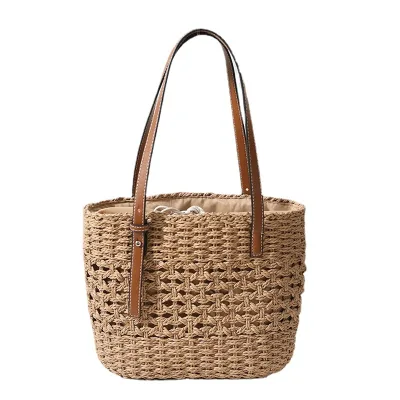
Source Casual Grass Color Straw Handbag with Brown Leather for travel, shopping, and daily use
Find 30 options for a Casual Grass Color Straw Handbag with Brown Leather, featuring woven designs and versatile carrying styles. Compare specifications including dimensions, closure types, and customization options for logo, color, and lining to suit your sourcing needs.
Key considerations
Products List

Boho Style Paper Straw Handbag with Scarf Handle for Daily Outing Picnic
$3.30 - $3.50
MOQ: 100 Pieces


Summer Bag Fashion Natural Straw Wheat Straw Woven Lady Handbag with Handle
$9.75 - $10.62
MOQ: 100 Pieces


Stylish Summer Straw Woven Shoulder Handbag for Travel and Beach Outings
$29.25 - $31.83
MOQ: 100 Pieces




Comprehensive Sourcing Guide
Casual Grass Color Straw Handbag with Brown Leather Sourcing Guide
Sourcing a Casual Grass Color Straw Handbag with Brown Leather requires a nuanced understanding of material compatibility, aesthetic trends, and functional durability. This specific combination merges the lightweight, breathable nature of natural or synthetic straw fibers with the structured elegance and tactile warmth of leather accents. Buyers must recognize that "grass color" typically refers to a natural, unbleached, or lightly dyed straw hue, while "brown leather" often denotes hardware, handles, or trim rather than the primary body material. The intersection of these elements creates a product that appeals to the summer fashion market, emphasizing a relaxed yet sophisticated vibe suitable for beach vacations, casual outings, and resort wear.
The procurement process for this item type is heavily influenced by the handmade nature of the weaving and the precision of the leather finishing. Unlike mass-produced synthetic bags, straw handbags often involve intricate weaving techniques that can vary significantly between suppliers. The brown leather components, whether genuine or PU, must be selected for their ability to complement the organic texture of the straw without overwhelming it. Buyers should focus on suppliers who demonstrate expertise in both textile weaving and leather goods assembly, as the structural integrity of the bag depends on the seamless integration of these disparate materials.
Product Scope and Observed Listing Signals
The current market landscape for casual straw handbags reveals a diverse range of designs, from box-shaped totes to vertical square buckets, each catering to different consumer preferences. Observed listings indicate a strong preference for hollowed-out designs that offer a bohemian flair, often paired with minimalist urban styles. The color palette frequently includes khaki, off-white, and rice white tones for the straw body, while the leather accents provide a contrasting brown or tan finish. These visual cues are critical for buyers aiming to align their inventory with current cross-border trends that favor casual, vacation-ready aesthetics.
Material composition varies significantly across suppliers, with some products utilizing polyester linings for durability and others opting for PU leather linings to enhance the premium feel. The internal structure of these bags often includes dedicated pockets for cell phones and small items, addressing the practical needs of modern consumers. Buyers should note that while the exterior is predominantly straw or woven fiber, the closure mechanisms can range from open tops to magnetic snaps or high-quality zippers, depending on the desired security level and style. Understanding these variations is essential for selecting the right product for specific target demographics.
Technical Specifications to Verify
Verifying technical specifications is paramount to ensuring the product meets quality expectations and functional requirements. Buyers must confirm the exact dimensions of the bag, as straw handbags can vary widely in size, from compact cross-body styles to larger shopping totes. Standard measurements often include specific height, width, and depth ratios, along with handle drop lengths that affect comfort and usability. For instance, some models feature a vertical square shape with a handle height of approximately 35 cm, while others may have a more compact bucket structure with a 13 cm handle drop. These dimensions directly impact the bag’s capacity and how it sits on the shoulder or in the hand.
The craftsmanship details, particularly regarding the leather components and weaving technique, require close inspection. The brown leather elements should exhibit consistent edge oiling and fine stitching to prevent fraying and ensure longevity. Buyers should verify whether the leather is genuine or PU, as this affects both the cost and the care instructions provided to end-users. Additionally, the weaving technique, whether hand-knitted or machine-woven, influences the bag’s texture and durability. Handmade woven straw offers a unique, artisanal look but may have slight variations, whereas machine-woven options provide uniformity and potentially higher production speeds.
Compliance and Safety Documentation
Compliance and safety documentation are critical for importing fashion accessories, particularly those involving natural fibers and leather treatments. Buyers must ensure that the straw material is treated to resist mold, mildew, and pests, especially if the product is intended for humid climates. The leather components, whether genuine or synthetic, should comply with relevant chemical restrictions, such as limits on azo dyes, chromium VI, and other hazardous substances. These regulations vary by destination market, so buyers must verify that their suppliers can provide test reports or certificates confirming adherence to local standards.
While specific certifications like CE were mentioned in background data, buyers should not assume all products hold such certifications without verification. Instead, they should request documentation from suppliers that explicitly states compliance with the target market’s safety and environmental regulations. This includes verifying that the dyes used for the grass color and brown leather are non-toxic and safe for skin contact. Additionally, buyers should inquire about the sourcing of raw materials to ensure they do not violate any environmental or labor standards, which is increasingly important for brand reputation and consumer trust.
Cost Drivers and Commercial Terms
The cost of casual grass color straw handbags with brown leather is driven by several key factors, including material quality, craftsmanship complexity, and order volume. Handmade woven straw bags typically command a higher price due to the labor-intensive nature of the weaving process. The type of leather used for accents also significantly impacts cost, with genuine leather being more expensive than PU alternatives. Buyers should negotiate based on these variables, understanding that higher-quality materials and intricate designs will result in higher unit costs but may offer better margins and customer satisfaction.
Commercial terms, such as minimum order quantities (MOQ) and payment conditions, vary among suppliers. Observed MOQs for these products often start at 50 pieces per order, allowing for flexibility in initial inventory building. However, larger orders may qualify for volume discounts, so buyers should calculate the total landed cost to determine the optimal order size. Payment terms typically involve a deposit upon order confirmation and the balance before shipment. Buyers should also clarify packaging requirements, as individual polybag packing is standard, but custom packaging options may incur additional fees.
Supplier Qualification and Quality Control
Qualifying suppliers for straw handbags requires a thorough assessment of their production capabilities and quality control processes. Buyers should prioritize suppliers with a proven track record in producing woven accessories and leather goods, as this dual expertise ensures better integration of materials. Requesting samples is essential to evaluate the quality of the straw weaving, the finish of the leather accents, and the overall construction of the bag. Buyers should inspect the samples for consistency in color, strength of stitching, and functionality of closures and pockets.
Quality control measures should be established before mass production begins. Buyers should define clear acceptance criteria for defects, such as loose threads, uneven weaving, or leather imperfections. Implementing a pre-shipment inspection is crucial to catch any issues before the goods leave the factory. Additionally, buyers should verify the supplier’s ability to handle customization requests, such as logo printing or color variations, as this flexibility can be a significant competitive advantage. Building a strong relationship with the supplier through regular communication and feedback can help maintain consistent quality over time.
Long-Term Procurement Checks
Long-term procurement success depends on continuous monitoring of supplier performance and market trends. Buyers should regularly review supplier delivery times, product quality, and responsiveness to issues. Establishing a scorecard system to track these metrics can help identify potential problems early and facilitate data-driven decisions regarding supplier retention or replacement. Additionally, buyers should stay informed about emerging trends in straw and leather fashion, as consumer preferences can shift rapidly. Adapting to these trends by updating product designs or material choices can help maintain relevance and drive sales.
Sustainability and ethical sourcing are becoming increasingly important in the fashion industry. Buyers should periodically assess their suppliers’ practices regarding environmental impact and labor conditions. This may involve requesting updates on material sourcing, waste management, and worker welfare policies. By aligning with suppliers who prioritize sustainability, buyers can enhance their brand’s reputation and appeal to environmentally conscious consumers. Furthermore, maintaining open lines of communication with suppliers can foster collaboration on innovative designs and cost-saving initiatives, ensuring a resilient and competitive supply chain.
FAQs
What materials are used for the bag interior?
The inside material is polyester, providing durability for daily use. Some models feature a lining of PU leather or polyester to protect contents like phones and wallets from scratches.
Can I customize the logo and size of the bag?
Yes, customization is available for the logo, size, color, lining, and packing. Buyers can request specific dimensions and branding to match their brand identity or market requirements.
What is the minimum order quantity for this product?
The minimum order quantity is 50 pieces per order. This MOQ applies to most models, allowing small businesses to test the market without excessive initial inventory investment.
How is the bag packed for shipping?
Each bag is packed individually in a polybag. Custom packing options are also available upon request to ensure the product arrives safely and meets specific branding needs.
Which closure types are available for these bags?
Closure types vary by model, including open tops, magnetic snaps, or zippers. Some designs feature high-quality zippers combined with magnetic closures for secure storage of personal items.
Where are these handbags manufactured?
These handbags are made in China. The origin ensures access to established manufacturing capabilities for woven and leather goods with competitive pricing and production capacity.
What are the standard dimensions for the bags?
Standard dimensions vary by model, such as 33x8x21cm plus a 12cm handle or 39x6x39cm with a 35cm handle. Specific sizes are listed in the product specifications for each style.