Source CCS Certified Diesel Marine Generator for Ships, Boats, and Crew
Find 30 CCS Certified Diesel Marine Generator options for ships, boats, and emergency crew use. Compare specifications including 1500rpm speed, water cooling, and ISO 9001:2008 standards to identify suitable marine power solutions.
Key considerations
Products List


CCS Certified Marine Generator Diesel 30kw Waterproof Marine Diesel Generator Set
$1980.00 - $2100.00
MOQ: 1 Pieces


120kw Marine Diesel Engine Power Generator Set for Reliable Performance
$1600.00 - $1650.00
MOQ: 1 Pieces


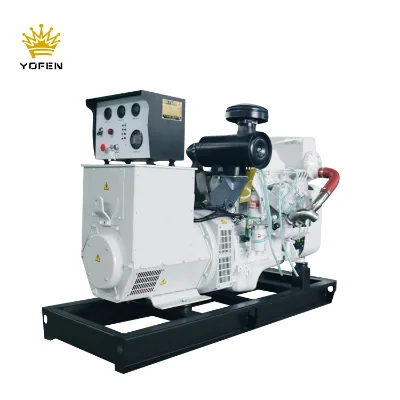


CCS Certified Weichai Marine 120kw 150kVA Diesel Generator by Lowest Price
$12610.00 - $12645.00
MOQ: 1 sets


CCS Certificated Sea Water Cooled 200kVA Marine Generator with Original Cummins Engine
$8000.00 - $15000.00
MOQ: 1 Pieces

80kw/100kVA Marine Diesel Generator Powered by Good Engine with CCS Approved
$7299.00 - $10918.00
MOQ: 1 sets

Small Marine Diesel 30kw Silent Cms Engine Marine Diesel Generator for Boat Use
$6199.00 - $7959.00
MOQ: 1 sets


High-Performance 275kVA Cscpower Diesel Generator for Marine Applications
$2164.00 - $9701.00
MOQ: 1 sets
![50/60Hz Marine Diesel Generator for 600kVA 650kVA 700kVA 750kVA 800kVA 850kVA 900kVA 950kVA 1000kVA 1100kVA Power CCS Approved[Maf00']](https://image.made-in-china.com/221f0j00HpsRqFbMEBcz/50-60Hz-Marine-Diesel-Generator-for-600kVA-650kVA-700kVA-750kVA-800kVA-850kVA-900kVA-950kVA-1000kVA-1100kVA-Power-CCS-Approved-Maf00-.webp)
![50/60Hz Marine Diesel Electric Power Generator for 650kVA with CCS Approved[Maf022]](https://image.made-in-china.com/221f0j00kgefpdNqEBbU/50-60Hz-Marine-Diesel-Electric-Power-Generator-for-650kVA-with-CCS-Approved-Maf022-.webp)
50/60Hz Marine Diesel Electric Power Generator for 650kVA with CCS Approved[Maf022]
$11500.00 - $13500.00
MOQ: 1 Pieces
![50/60Hz Marine Diesel Electric Power Generator for 500kVA with CCS Approved[Maf019]](https://image.made-in-china.com/221f0j00EzBGYaFqJCbo/50-60Hz-Marine-Diesel-Electric-Power-Generator-for-500kVA-with-CCS-Approved-Maf019-.webp)
50/60Hz Marine Diesel Electric Power Generator for 500kVA with CCS Approved[Maf019]
$11500.00 - $13500.00
MOQ: 1 Pieces
![50/60Hz Marine Diesel Electric Power Generator for 750kVA with CCS Approved[Maf023]](https://image.made-in-china.com/221f0j00quvfICOaCebV/50-60Hz-Marine-Diesel-Electric-Power-Generator-for-750kVA-with-CCS-Approved-Maf023-.webp)
50/60Hz Marine Diesel Electric Power Generator for 750kVA with CCS Approved[Maf023]
$11500.00 - $13500.00
MOQ: 1 Pieces
Comprehensive Sourcing Guide
CCS Certified Diesel Marine Generator Sourcing Guide
Procuring a CCS Certified Diesel Marine Generator requires a rigorous evaluation of both the vessel's operational profile and the specific technical constraints of the power unit. Buyers must distinguish between units designed for land-based applications and those engineered for the harsh, corrosive, and vibration-heavy environment of marine operations. The supplied data indicates a market presence of units categorized as "Basic Diesel Generator" with specific configurations for "Marine" conditions, yet it also lists "Land Use" and "Common Units," necessitating a careful verification of the intended application to ensure the selected model meets the unique demands of shipboard power generation.
The sourcing process must prioritize units that explicitly align with the vessel's classification society requirements, as the CCS (China Classification Society) certification is a critical marker for compliance in many maritime jurisdictions. While the observed product listings include models with keywords referencing "Marine Generator with Ship Classification Certificate," buyers must confirm that the specific unit's certification covers the intended vessel type and operational zone. This verification prevents the procurement of land-based generators that may lack the necessary marine-grade protections, such as enhanced corrosion resistance and specific mounting configurations required for stable operation at sea.
Product Scope and Observed Listing Signals
The current market for marine diesel generators presents a wide spectrum of power outputs and operational modes, ranging from standby units to emergency crew power supplies. Observed listings reveal a price range between 1,000 and 500,000 USD, reflecting the significant variance in capacity, engine technology, and certification levels. Buyers should note that while some units are marketed with "Low Noise" and "Automation Type" features suitable for passenger vessels or luxury yachts, others are designated as "Ordinary" units, which may be more appropriate for cargo ships or industrial workboats where acoustic dampening is less critical than raw durability.
A critical signal in the product scope is the distinction between fixed installation units and those with specific customization options. The data confirms that customization is available, allowing buyers to tailor voltage, frequency, and cooling systems to their specific vessel requirements. However, the presence of "Four Stroke" engines and "AC Rotating Exciter" systems suggests a focus on modern, efficient power generation, while the "Water Cooling" method indicates a need for robust thermal management systems compatible with seawater or freshwater cooling loops. Buyers must carefully cross-reference these attributes with their vessel's existing infrastructure to avoid integration issues.
Technical Specifications to Verify
Engine performance parameters are the cornerstone of a reliable marine power system, and buyers must verify the rated power, displacement, and cylinder configuration against the vessel's peak load requirements. The observed specifications include a "Diesel Engine Rated Power" of 33/1500kw/R/Min and a "Generator Rated Power" of 30/37.5kw/kVA, alongside a "Displacement" of 3.26L and a "4-Cylinder" layout. These figures suggest a compact yet powerful unit suitable for medium-duty applications, but the buyer must ensure that the "Compression Ratio" of 17:1 and "Turbocharged Intercooled" air intake are sufficient for the specific altitude and ambient temperature conditions where the vessel will operate.
Electrical output characteristics and starting systems must also be scrutinized to ensure compatibility with the ship's distribution network. The listings indicate a "Rated Voltage" of 400V/230V and a "Frequency" of 50/60 Hz, which are standard for many international maritime operations, but the "Speed" of 1500rpm or 1800rpm must match the generator's design for the specific grid frequency. Additionally, the "12V Starting System" and "Counterclockwise" crankshaft rotation are specific mechanical details that must align with the vessel's engine room layout and battery bank configuration to ensure reliable startup under all conditions.
Compliance and Safety Documentation
Certification is the primary gatekeeper for marine generator procurement, and the presence of ISO 9001:2008 standards is a baseline requirement for quality management systems. While the data confirms that some units carry "ISO9001: 2008" certificates, buyers must explicitly verify that the generator holds the specific "Ship Classification Certificate" required by the CCS or other relevant maritime authorities. The keyword "Marine Generator with Ship Classification Certificate" in the product descriptions is a strong indicator, but the actual documentation must be reviewed to confirm that the certification is valid for the specific model and intended service life of the vessel.
Safety and operational documentation must extend beyond basic manufacturing standards to include detailed manuals for installation, maintenance, and emergency procedures. The "Waranty Time" of 1 Year Since The B/L Date is a standard commercial term, but buyers should ensure that the warranty covers marine-specific failures and that the supplier provides comprehensive technical support documentation. Furthermore, the "Installation Method" being "Fixed" implies that the supplier must provide precise mounting diagrams and vibration isolation specifications to ensure the unit remains secure during rough seas, preventing mechanical failure or structural damage to the vessel.
Cost Drivers and Commercial Terms
The total cost of ownership for a marine diesel generator is influenced by several factors beyond the initial purchase price, including the complexity of the cooling system and the level of customization required. The observed "Water Cooling" method and "Wooden Case" or "Plywood Case" packing suggest that logistics and handling costs may vary significantly depending on the unit's size and the fragility of its components. Buyers should anticipate that units with "Low Noise" features or "Automation Type" capabilities will command a premium, as these add value through reduced operational noise and enhanced ease of use, which are critical for crew comfort and regulatory compliance.
Commercial terms such as delivery time and payment conditions play a vital role in the procurement timeline and budget management. The data indicates a "Delivery Time" of about 10 days, which is relatively fast for custom marine equipment, but this may vary based on the specific model and the availability of the "120GF-2012" or "SN-M" configurations. Buyers must clarify whether the "About 10 Days" lead time includes the time required for final testing and certification, and they should negotiate clear terms regarding the "MOQ" of 1, which allows for flexible ordering but may impact unit pricing if the order volume is low.
Supplier Qualification and Quality Control
Supplier qualification is paramount when sourcing marine equipment, as the reliability of the generator directly impacts the safety of the vessel and its crew. The data points to "Shandong Weifang" as a production origin, a region known for its manufacturing capabilities, but buyers must verify the specific factory's track record in producing marine-grade units. The presence of keywords like "Marine Diesel Generator Factory for Export" and "Chinese Vessel Generator Manufacturer" suggests a focus on international markets, but the buyer should request references from previous marine projects to confirm the supplier's ability to meet the rigorous demands of the maritime industry.
Quality control processes must be transparent and aligned with international standards to ensure that every unit leaving the factory meets the specified performance criteria. The "ISO 9001: 2008" standard is a good starting point, but buyers should insist on witnessing factory acceptance tests (FAT) that verify the "Order of Fire" (1-3-4-2), "Bore×Stroke" dimensions, and "Air Intake" performance under load. Additionally, the "Standard" of "50-100KW" mentioned in the data highlights a specific power range, and buyers should ensure that the supplier's quality control protocols cover the entire range of their product line, not just the specific models currently listed.
Long-Term Procurement Checks
Sourcing a marine generator is not a one-time transaction but the beginning of a long-term partnership that requires ongoing support and maintenance planning. Buyers should establish clear protocols for spare parts availability, as the "1 Year Since The B/L Date" warranty period is limited and marine environments can accelerate wear and tear. The "Standard" packing of "Wooden Case" or "Plywood Case" is designed for transport, but the buyer must ensure that the supplier provides a comprehensive spare parts list and that critical components are readily available to minimize downtime during repairs.
Future-proofing the procurement decision involves considering the scalability and adaptability of the generator system as the vessel's operational needs evolve. The "Customization" availability is a key feature that allows for future upgrades, but buyers should verify that the supplier can support these changes without requiring a complete system replacement. Regular performance reviews and maintenance schedules should be integrated into the vessel's operational plan, ensuring that the "Water Cooling System" and "AC Rotating Exciter" continue to function efficiently throughout the generator's service life, thereby protecting the investment and ensuring compliance with maritime regulations.
FAQs
What certifications do these marine generators hold?
The generators hold ISO9001:2008 certification as a standard quality assurance measure. While the product page lists marine classification keywords, the explicit documented certificate is ISO9001:2008 for manufacturing processes.
How long is the delivery time for these units?
The standard delivery time is about 10 days from order confirmation. This lead time applies to the production and preparation of the units before they are shipped from the origin location in China.
Can the generator voltage be customized for specific needs?
Yes, the voltage can be customized to meet specific requirements such as 400/230V or 480/277V. The product attributes indicate that customization is available for various electrical specifications to suit different operational environments.
What is the warranty period for the diesel generator?
The warranty period is 1 year starting from the Bill of Lading date. This coverage applies to the unit provided, ensuring protection against defects for one year after the shipment date.
Which cooling system type is used in these generators?
These generators utilize a water cooling system for efficient thermal management. The product specifications explicitly state that the cooling method is water cooling, which is suitable for high-performance marine applications.
What is the minimum order quantity for these units?
The minimum order quantity is 1 unit for this product listing. Buyers can purchase a single unit without needing to meet a higher bulk threshold, making it accessible for smaller procurement needs.
How are these generators packaged for shipping?
The generators are packaged in wooden cases or plywood cases depending on the specific model. This robust packaging ensures the units are protected during transit from the manufacturing facility in China to the destination.