Source CCT RF Cabinet Light Controller for Hotels, Stages, and Exhibitions
Compare 30 CCT RF Cabinet Light Controller options from verified suppliers. Buyers can evaluate wireless RF remote control features, dimming ranges, and voltage compatibility for home lighting, stage, and hotel applications.
Key considerations
Products List


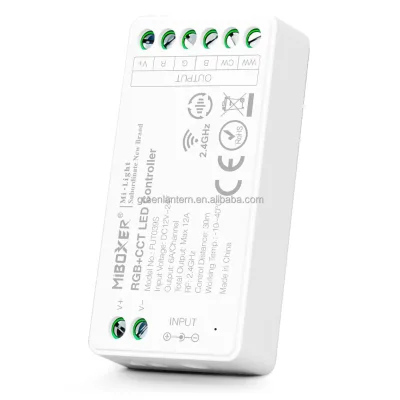
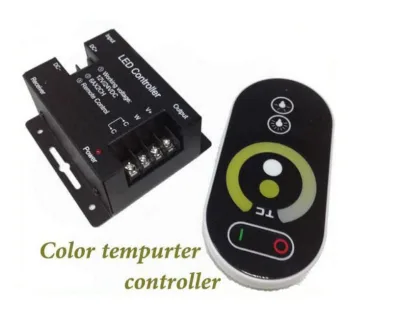
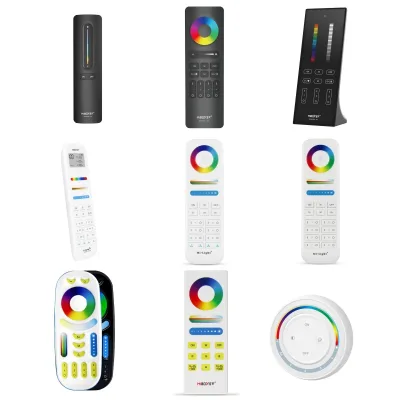
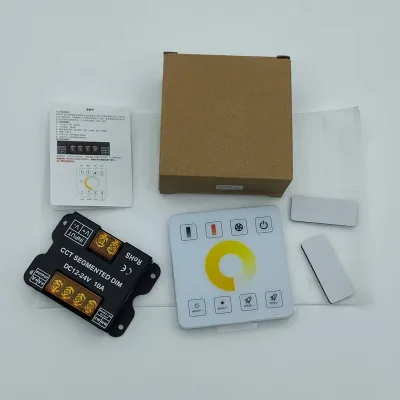
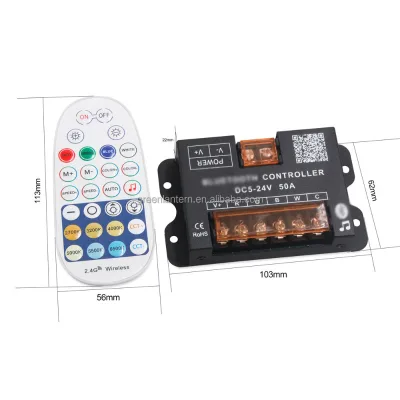
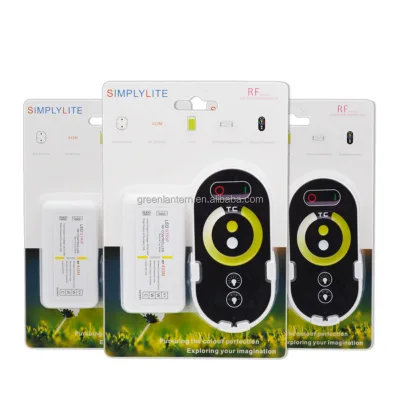


CCT Flexible LED Strip Light with Remote Controller for Closet Lighting Decoration
$6.90 - $19.90
MOQ: 1000 Sets


Comprehensive Sourcing Guide
Strategic Sourcing Guide for CCT RF Cabinet Light Controllers
Selecting the right controller for cabinet lighting applications requires a precise understanding of the intersection between radio frequency (RF) technology, Constant Current Temperature (CCT) management, and the specific environmental constraints of enclosed spaces. The market for these components is characterized by a wide variance in specifications, from simple single-color drivers to sophisticated dual-color touch controllers capable of managing complex lighting scenes. This guide synthesizes available product data to help procurement professionals navigate the technical landscape, ensuring that selected components align with project requirements for reliability, compliance, and performance.
Technical Architecture and Signal Transmission
The core functionality of a CCT RF Cabinet Light Controller relies on robust wireless signal transmission to manage lighting loads without the clutter of physical wiring. In the observed product spectrum, the primary transmission method identified is RF (2.4GHz). This frequency band is critical for maintaining a stable connection in environments where line-of-sight may be obstructed by cabinet walls or metal components. The data indicates a standard remote distance capability of 30 meters in barrier-free space, though specific applications may require verification of performance in obstructed conditions.
Power management is equally critical. The observed controllers operate on distinct voltage profiles. Some units function with a working voltage of 12V, while others support a broader input range of DC 5V to 24V. For battery-operated remote controls, the working voltage is typically 3VDC utilizing a CR2032 cell, with a standby time extending up to one year and a working current consumption of less than 5mA. This low power draw is essential for maintaining the longevity of the remote interface.
The output architecture varies significantly based on the intended lighting load. High-power units offer output capacities ranging from 40W to 288W, supporting constant voltage outputs at 5V, 12V, 24V, and 36V. For dual-color applications, the output current is often specified as 10A per channel with a maximum of 20A, designed for common anode connections. The dimming range is consistently reported as 0-100%, utilizing a logarithmic dimming curve to ensure human-perceivable brightness steps. The PWM (Pulse Width Modulation) frequency is typically set at 2000Hz by default, a frequency high enough to prevent visible flicker in most lighting scenarios.
Compliance and Certification Verification
When sourcing electronic lighting components, verifying compliance with international safety and electromagnetic standards is non-negotiable. The available product data highlights a consistent pattern of certifications, specifically RoHS, FCC, and CE. These certifications indicate that the products meet restrictions on hazardous substances (RoHS), comply with Federal Communications Commission regulations regarding electromagnetic interference (FCC), and adhere to European health, safety, and environmental protection standards (CE).
However, procurement teams must exercise caution. While the data lists these certifications as high-confidence facts for specific models, they should not be assumed to apply universally to every SKU within a supplier's catalog. The presence of a CE mark, for instance, is noted as a high-confidence attribute for certain units but appears as a low-confidence background item in others. Buyers must request current, valid certification documentation for the specific batch or model number being purchased. Relying on general claims without verifying the specific test reports for the model in question can lead to compliance failures during regulatory audits or customs clearance.
Cost Drivers and Pricing Dynamics
The pricing for CCT RF cabinet light controllers exhibits a substantial range, observed between $1.20 and $1,890.60 USD. This wide disparity is not indicative of random market fluctuation but rather reflects the fundamental differences in technical capability, build quality, and power handling. The lower end of the spectrum likely corresponds to basic single-color controllers or low-power units with minimal features. In contrast, the upper end of the price range suggests high-power, multi-channel systems, possibly integrated with advanced touch interfaces, custom packaging, or specialized design services.
Several factors drive these costs. The output power capacity is a primary determinant; a controller rated for 288W will inherently cost more than one rated for 40W due to the cost of internal components like MOSFETs and heat dissipation mechanisms. The inclusion of a remote control, the complexity of the dimming curve (logarithmic vs. linear), and the operating temperature range also influence the final price. Furthermore, the "Lighting and Circuitry Design" service mentioned in the product attributes suggests that some vendors offer value-added engineering support, which would be reflected in a higher unit cost or a project-based fee structure.
Operational Specifications and Environmental Resilience
Cabinet lighting often operates in confined spaces with varying thermal conditions. The technical specifications for the observed controllers indicate an operating temperature range of -30°C to +55°C for some models, while others extend to +60°C. This resilience is crucial for installations in unconditioned warehouses, outdoor cabinets, or areas subject to significant temperature swings. The IP20 rating observed in the data suggests that the units are not protected against solid objects larger than 12.5mm and offer no protection against water. Consequently, these controllers are suitable for dry, indoor environments but require additional enclosure or protection if installed in damp or dusty locations.
Physical dimensions are another critical consideration for cabinet integration. The standard product sizes observed range from compact units measuring 97mm x 33mm x 18mm to larger chassis at 110mm x 94mm x 22mm. The net weight of these units varies, with some models weighing 61g and others reaching 118g gross weight. Procurement teams must ensure that the selected controller fits within the available cabinet volume without obstructing airflow or other components. The use of color boxes or cartons for packing indicates that the units are designed for retail or bulk distribution, but the internal packaging must be verified to ensure the components are not damaged during transit.
Application Scenarios and Control Logic
The versatility of these controllers allows them to serve a broad array of applications, including home lighting, stage settings, hotels, and exhibition halls. The "Dual Color Touch Controller" and "Single Color Touch Controller" models highlight the ability to manage different lighting effects. The dual-color variants are particularly relevant for CCT applications, allowing users to adjust the color temperature of the light to suit different moods or tasks. The "Direct" load type and "Active" switch device specifications suggest that these controllers are designed to handle the load directly without the need for external relays in many scenarios.
The control logic is defined by the connection mode, typically "Common Anode," which is a standard configuration for LED strips. The remote control capability, with a stated control distance of more than 20 meters, ensures that users can manage lighting from a distance, which is beneficial for large exhibition halls or high-ceilinged hotel lobbies. The stepless lighting variation ensures smooth transitions between brightness levels, avoiding the jarring effect of stepped dimming. For complex installations, the availability of "Lighting and Circuitry Design" services can be a significant advantage, helping buyers optimize the layout and electrical load distribution.
Supplier Evaluation and Quality Assurance
Evaluating suppliers for these components requires a focus on consistency and transparency. The product data indicates that the origin of these goods is primarily Guangdong, China, a region known for its electronics manufacturing ecosystem. However, the specific origin should be verified for each order. The Minimum Order Quantity (MOQ) ranges from 1 to 1000 units, offering flexibility for both prototype development and large-scale production runs.
Quality control should focus on the warranty and durability metrics. A 5-year warranty is a significant indicator of manufacturer confidence in the product's longevity. Buyers should verify the terms of this warranty, including what constitutes a failure and the process for replacement. The "Customization" attribute suggests that suppliers are willing to adapt products to specific needs, such as custom branding or modified dimensions. When engaging with suppliers, buyers should request samples to verify the actual performance of the RF signal, the accuracy of the dimming curve, and the physical build quality. It is also essential to confirm that the "High-confidence facts" regarding certifications and specifications apply to the specific sample and subsequent production batches.
Long-Term Procurement Considerations
Sourcing these controllers is not merely a transactional activity but a strategic decision that impacts the long-term maintenance and reliability of the lighting system. The standby time of one year for the remote control battery is a key metric for reducing maintenance overhead. In large installations, the ability to replace batteries infrequently can save significant labor costs. The robustness of the RF transmission in the 2.4GHz band also ensures that the system remains reliable over time, provided that interference from other wireless devices is managed.
Buyers should also consider the scalability of the solution. The ability to handle up to 20A of output current in dual-channel configurations allows for the expansion of lighting zones without replacing the central controller. The standardization of models, such as the HM-RK series and HM-V1, suggests a modular approach that can simplify inventory management. However, the variation in dimensions and weights across models means that future expansions must be carefully planned to ensure compatibility with existing cabinet structures. Finally, the availability of design services indicates that suppliers can be partners in optimizing the lighting solution, potentially reducing energy consumption and improving the overall aesthetic of the installation.
| Feature Category | Key Observation | Verification Requirement |
|---|---|---|
| Transmission | RF (2.4GHz), 30m range | Test in actual cabinet environment |
| Power Input | DC 5V-24V, 12V variants | Match with existing power supply |
| Certification | RoHS, FCC, CE (Model dependent) | Request specific test reports |
| Temperature | -30°C to +55°C / +60°C | Verify for specific installation zone |
| IP Rating | IP20 | Assess need for additional enclosure |
| Warranty | 5 Years | Review terms and conditions |
| Customization | Available | Define specific requirements early |
In conclusion, the procurement of CCT RF cabinet light controllers demands a rigorous approach to technical verification and supplier assessment. By focusing on the specific attributes of signal transmission, power handling, and environmental resilience, buyers can select solutions that meet both immediate functional needs and long-term reliability goals. The wide range of available options, from basic single-color units to advanced dual-color touch controllers, offers the flexibility to tailor lighting solutions to diverse applications, provided that the selection process is grounded in verified data and clear compliance standards.
FAQs
What certifications do these controllers typically have?
These controllers typically carry RoHS, FCC, and CE certifications. However, buyers must verify that these specific certifications apply to the exact model and batch being purchased, as they are not guaranteed for every SKU in a supplier's catalog.
How far can the remote control operate?
The remote control can operate up to 30 meters in barrier-free space. Specific applications may require verification of performance in obstructed conditions, as the stated range assumes no physical barriers between the remote and the receiver.
Can the controllers support dual-color lighting?
Yes, dual-color touch controllers are available for managing different lighting effects. These units often feature two channels with a maximum output current of 20A and support common anode connections for flexible CCT management.
What is the operating temperature range for these units?
The operating temperature range is typically between -30°C and +55°C or +60°C. This resilience is crucial for installations in unconditioned warehouses or areas subject to significant temperature swings.
How is the dimming performance characterized?
The dimming range is consistently reported as 0 to 100 percent with a logarithmic curve. This ensures human-perceivable brightness steps and smooth transitions, avoiding the jarring effect of stepped dimming in most scenarios.
What is the expected standby time for the remote?
The remote control battery has an expected standby time of up to one year. This low power draw, with a working current of less than 5mA, is essential for maintaining longevity in large installations.
Are customization options available for these products?
Customization is available for these products, allowing for specific branding or modified dimensions. Buyers should request samples to verify the actual performance and build quality before committing to a customized order.