Source CCD Grain Color Sorter for Rice Wheat Corn
Compare 30 CCD Grain Color Sorter machines from verified Chinese suppliers. These units feature CCD sensors and multiple channel options for sorting rice, wheat, corn, beans, and other grains with high accuracy.
Key considerations
Products List

$15000.00 - $16000.00
MOQ: 1 Pieces


Corn Color Sorter Machine Maize Corn Sorter Maize Selector Machine
$22000.00 - $24000.00
MOQ: 1 Pieces


CCD Color Sorter Machine for Rice, Wheat, Grains
$7400.00 - $7600.00
MOQ: 1 Pieces
Anhui Wenyao Intelligent Photoelectronic Technology Co., Ltd.


Automatic CCD Grain Colour Sorting Machine
$5000.00 - $50000.00
MOQ: 1 Pieces
Anhui Wenyao Intelligent Photoelectronic Technology Co., Ltd.

Rice Color Sorter Machine CCD Grain Processing Machine/ Beans Color Sorter
$6000.00 - $50000.00
MOQ: 1 PIECE

Excellent Quality Grain Color Sorter, Spice Color Sorter and CCD Color Sorter Machine From China
$4999.00 - $34999.00
MOQ: 1 PIECE


Corn Color Sorter Corn Color Sorting Machine Corn Color Separation Machine
$6000.00 - $40000.00
MOQ: 1 Pieces

Maize Color Sorter Maize Color Sorting Machine Maize Color Separation Machine
$6000.00 - $40000.00
MOQ: 1 Pieces


Comprehensive Sourcing Guide
Strategic Sourcing Guide for CCD Grain Color Sorters
Understanding the Core Technology and Operational Mechanics
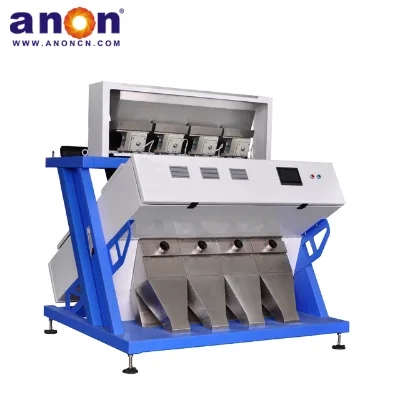
The CCD Grain Color Sorter represents a critical asset in modern agricultural processing and industrial sorting lines. These machines utilize Charge-Coupled Device (CCD) camera technology to identify and separate defective or foreign materials from bulk commodities with high precision. The fundamental operation relies on the principle of optical detection. As products travel through the sorting chamber, high-resolution cameras capture images of each item in real-time. The system's processor analyzes color, shape, and texture data against a pre-set database of acceptable standards. Once a defect is identified, the system triggers an ejector mechanism to remove the faulty item from the stream.
Based on observed product attributes, the industry standard for these units often involves a CCD sensor type sourced from established manufacturers, such as the Japan Toshiba CCD Sensor, which ensures high sensitivity and color accuracy. The detection capability is further enhanced by pixel counts, with observed specifications indicating cameras capable of resolving up to 5400 pixels, allowing for the identification of minute discolorations or surface imperfections. The physical structure of the sorter varies, with common configurations including "Waterfall" and "Freefall" designs. The choice between these structures often depends on the specific flow dynamics of the material being processed, whether it is a heavy grain like corn or a lighter product like tea. The primary function remains consistent across models: to separate good products from bad, ensuring the final output meets strict quality benchmarks for food safety and industrial standards.
Technical Specifications and Performance Metrics
When evaluating a CCD Grain Color Sorter, buyers must scrutinize specific technical parameters that dictate performance and throughput. The channel count is a primary indicator of sorting capacity and resolution. Market observations show a wide range of configurations, from compact units with 2 channels to high-end models featuring 192 channels. A higher channel count generally correlates with increased sorting precision and the ability to handle larger volumes of material simultaneously. For instance, a model designated as the "192 Channels CCD Color Sorter for Beans Cereal" offers significantly more detection points than a unit with 32 executive units or a 6SXZ-32 model.
The physical dimensions of the machine are also critical for facility planning. Observed standard sizes vary considerably, with some units measuring approximately 8504201560mm, while larger industrial models can reach dimensions of 336715361690mm. Buyers must verify that the machine's footprint fits their production line layout. Weight is another essential factor, with observed values ranging from 120kg to 150kg for smaller units, which influences foundation requirements and logistics.
Power requirements are standardized in many regions, with AC220/50V being a common specification. However, the air consumption and supply pressure are vital for the pneumatic ejector system. Typical air consumption ranges between 0.5 and 1.0 cubic meters per minute, requiring an air supply pressure of 0.6 to 0.8 MPa. The processing capacity is another variable, with observed rates spanning from 1.2 to 2.5 tons per hour depending on the specific model and material density. The reject ratio, a measure of sorting efficiency, is observed at 20:1 in certain configurations, indicating the machine's ability to handle high volumes of waste material while maintaining throughput.
Compliance, Certification, and Regulatory Standards
Navigating the regulatory landscape is a non-negotiable aspect of sourcing industrial machinery. Buyers must verify that the equipment meets international safety and quality standards. In the context of CCD color sorters, the presence of specific certifications is a strong indicator of compliance. Observed product data frequently lists ISOCE and CE certifications. The CE mark, in particular, is essential for products entering the European market, signifying that the machine adheres to health, safety, and environmental protection standards. Additionally, GS certification is noted in some product listings, which is a German safety mark often recognized globally for its rigorous testing protocols.
Beyond certifications, the structural and material standards of the machine must be verified. The processing material compatibility is broad, covering food items like rice, wheat, corn, beans, peanuts, and dehydrated vegetables, as well as industrial products such as ore and plastic. This versatility requires the machine to be constructed from materials that resist corrosion and wear, ensuring longevity in harsh processing environments. The origin of the product is also a key data point; observed listings indicate origins in Anhui, China, and Hefei, which are known industrial hubs. While the location itself does not dictate quality, it helps buyers understand the supply chain dynamics and potential logistics costs.
Cost Drivers and Pricing Structures
The pricing of CCD grain color sorters is influenced by a complex interplay of factors, including channel count, sensor quality, customization options, and structural design. The observed price range for these units spans from $1,599 to $50,000 USD. This wide variance reflects the difference between entry-level models and high-capacity industrial systems. A unit with 2 channels and basic features will naturally be priced at the lower end of the spectrum, whereas a 192-channel model with advanced sensors and custom screens will command a premium.
Customization is a significant cost driver. Many suppliers offer OEM services, including customized screens and logos, which can increase the base price. The choice of ejector components, such as the optional SMC ejectors, also impacts the final cost. SMC components are known for their reliability and speed, often justifying a higher price point for buyers requiring high-speed sorting. Furthermore, the packaging method, whether plywood cases, wooden boxes, or wooden packages, adds to the overall cost but is necessary for safe international transport.
Buyers should be aware that the Minimum Order Quantity (MOQ) for these machines is typically 1 unit, allowing for flexible procurement strategies. However, the total cost of ownership extends beyond the purchase price. Buyers must consider the cost of installation, training, and ongoing maintenance. The power supply requirements and air consumption rates directly affect operational expenses, making energy efficiency a key consideration in the long-term financial planning of the procurement.
Typical Applications and Material Compatibility
The versatility of CCD grain color sorters makes them suitable for a diverse array of applications across the agricultural and industrial sectors. The primary application is the sorting of grains and cereals. Observed product attributes list compatibility with rice, wheat, corn, beans, peanuts, and general grain products. In these applications, the sorter is used to remove stones, discolored kernels, broken grains, and other foreign materials that can compromise the quality of the final product.
Beyond grains, these machines are highly effective for processing dehydrated vegetables and tea. The sensitivity of the CCD sensors allows for the detection of subtle color variations that are critical in the tea industry, where leaf color and uniformity determine market value. The ability to sort dehydrated vegetables ensures that only high-quality, properly dried products reach the consumer, reducing waste and enhancing brand reputation.
In the industrial sector, the application extends to the sorting of ore and plastic. For ore processing, the sorter can separate valuable minerals from waste rock based on color and density differences. In plastic recycling, the machine can sort different types of plastic resins, ensuring a high-purity output for reprocessing. The "Function" of these machines is consistently described as separating good from bad, a capability that is universally applicable regardless of the specific material being processed. The structure of the machine, whether waterfall or freefall, is often selected based on the physical properties of the material, such as its flowability and particle size.
Supplier Evaluation and Quality Assurance
Selecting the right supplier is as important as selecting the right machine. Buyers should prioritize suppliers who demonstrate transparency in their product attributes and offer robust after-sales support. The availability of OEM services, such as customized screens and logos, indicates a supplier's willingness to tailor solutions to specific client needs. This level of customization is a strong indicator of a supplier's technical capability and customer focus.
Quality control should be a central part of the evaluation process. Buyers must verify the condition of the machines, ensuring they are "New" and not refurbished units unless explicitly stated. The brand reputation, such as the "Nage" brand observed in the market, can serve as a proxy for reliability, but it should not be the sole deciding factor. Instead, buyers should request detailed technical documentation, including test results and performance data, to validate the machine's capabilities.
The packaging method is another indicator of supplier professionalism. The use of plywood cases, wooden boxes, or wooden packages suggests that the supplier understands the need for secure transport, especially for international shipments. Buyers should also inquire about the lead time and the supplier's ability to meet delivery schedules. While specific lead times are not provided in the general data, a reputable supplier should be able to provide a clear timeline for manufacturing and shipping.
Long-Term Procurement and Operational Sustainability
Sourcing a CCD Grain Color Sorter is a long-term investment that requires careful consideration of future needs and operational sustainability. The modular nature of these machines, with options for different channel counts and sensor types, allows for scalability. As a business grows, the sorting capacity can be upgraded or expanded without replacing the entire system. The availability of spare parts, such as SMC ejectors and CCD sensors, is crucial for maintaining uptime and minimizing downtime.
Buyers should also consider the environmental impact of their procurement choices. Energy-efficient models with optimized power consumption and air usage can reduce the carbon footprint of the processing facility. The ability to sort waste materials effectively contributes to a circular economy by ensuring that only high-quality products are sent to the market, reducing food waste and industrial waste.
Finally, the customization options available, such as customized logos and screens, allow buyers to align the machine with their brand identity and specific operational requirements. This flexibility ensures that the procurement decision supports not just immediate production needs but also long-term strategic goals. By focusing on technical specifications, compliance, and supplier reliability, buyers can secure a CCD Grain Color Sorter that delivers consistent performance and value over its entire lifecycle.
| Feature Category | Observed Range / Specification | Key Verification Point |
|---|---|---|
| Channel Count | 2 to 192 Channels | Match throughput requirements to channel density. |
| Dimensions | 850mm to 3367mm (Length) | Verify facility floor space and clearance. |
| Weight | 120kg to 150kg | Assess foundation load capacity. |
| Power Supply | AC220/50V | Confirm compatibility with local grid. |
| Air Pressure | 0.6-0.8 MPa | Ensure compressor capacity meets demand. |
| Certifications | CE, ISOCE, GS | Validate for target market entry. |
| Sensor Type | Japan Toshiba CCD | Verify sensor age and replacement availability. |
| Processing Material | Food, Plastic, Mineral | Confirm material compatibility for specific use case. |
FAQs
What certifications do these CCD grain color sorters have?
These machines typically hold ISOCE, CE, and GS certifications. The CE mark ensures compliance with European safety standards, while GS indicates rigorous German safety testing protocols for industrial equipment.
Which materials can a CCD Grain Color Sorter process?
The device handles food items like rice, wheat, corn, beans, and tea, as well as industrial products such as ore and plastic. It separates good products from bad based on color and texture differences.
How many channels are available for CCD grain color sorters?
Channel counts range from compact 2-channel units to high-capacity 192-channel models. Higher channel counts generally provide increased sorting precision and allow for handling larger volumes of material simultaneously.
Can I get customized screens and logos for this equipment?
Yes, OEM services are available for customized screens and logos. This customization allows buyers to tailor the machine to specific operational requirements and align it with their brand identity.
What is the typical price range for these sorting machines?
Prices range from 1599 to 50000 USD depending on specifications. The cost varies based on channel count, sensor quality, and customization options like SMC ejectors or specific structural designs.
Where are these CCD grain color sorters manufactured?
Products originate from industrial hubs in Anhui and Hefei, China. These locations are known for producing agricultural machinery, though specific lead times and logistics depend on the supplier's current schedule.