Source CE Certified 200kg Medical Stretcher for Hospital, Ambulance, Emergency
Find and compare 30 CE Certified 200kg Medical Stretcher options from verified suppliers. Buyers can evaluate specifications like load capacity, folding size, and material to select the right equipment for hospital, ambulance, and emergency room applications.
Key considerations
Products List


Premium Folding Medical Stretcher with Height Adjustment for Transport
$1600.00 - $2000.00
MOQ: 2 Pieces

ISO14001 Certified Portable Emergency Medical Stretcher for First Aid
$1600.00 - $2000.00
MOQ: 2 Pieces


Medical Spine Board Stretcher, Plate Stretcher
$26.00 - $200.00
MOQ: 100 Pieces
Sainty International Group Jiangsu Yangzhou Sumex Imp. & Exp. Co., Ltd.


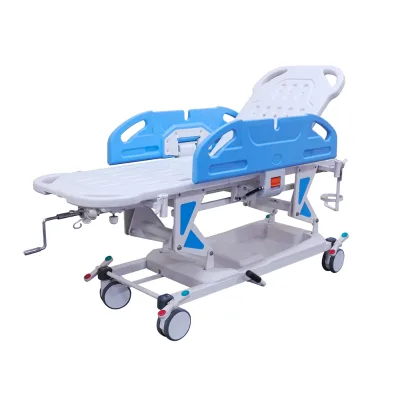


Professional Hydraulic Transfer Stretcher ABS Emergency Ambulance Stretcher Bed
$280.00 - $370.00
MOQ: 10 Pieces


Stair Stretcher Wheelchair Rescue Evacuation Yellow Ambulance Stair Climbing Wheelchair
$110.00 - $140.00
MOQ: 10 Pieces

Medical Emergency Bed Patient Hydraulic Folding Stretcher Ambulance Emergency Stretcher
$1683.00 - $2525.00
MOQ: 10 Pieces
Comprehensive Sourcing Guide
CE Certified 200kg Medical Stretcher Sourcing Guide
Procuring a CE certified medical stretcher with a 200kg load capacity requires a disciplined approach to verifying both regulatory compliance and mechanical integrity. Buyers must recognize that "CE certified" is not a single monolithic standard but a declaration of conformity against specific European directives, primarily the Medical Device Regulation (MDR) or the previous Medical Devices Directive (MDD), depending on the manufacturer's timeline and product classification. The 200kg capacity specification indicates a bariatric or heavy-duty design, which necessitates rigorous scrutiny of the frame material, joint mechanisms, and wheel load ratings to ensure safety under maximum stress. This guide provides a structured framework for evaluating suppliers, interpreting technical data, and mitigating procurement risks associated with medical transport equipment.
The sourcing process begins with distinguishing between general hospital stretchers and specialized ambulance or emergency room units, as the operational environment dictates different safety and durability requirements. While many suppliers list similar certifications, the actual scope of the CE mark varies significantly between manufacturers. Buyers should prioritize suppliers who provide transparent documentation linking their certification to specific product models rather than accepting generic claims. Understanding the distinction between a "CE marked" product and one that has undergone third-party notified body assessment is critical for ensuring that the equipment meets the essential safety and performance requirements mandated for medical devices in the European market.
Product Scope and Observed Listing Signals
The current market landscape for medical stretchers reveals a diverse range of product types, including foldaway, ambulance, and collapsible models, each serving distinct logistical and clinical needs. Observed listings indicate a wide variation in physical specifications, with some units designed for compact storage in ambulances featuring folded dimensions around 530×210×160mm, while others prioritize extended length for patient comfort, reaching up to 2290mm in standard configuration. The presence of customization options, such as logo printing or specific color choices like green, black, or orange, suggests that many manufacturers offer OEM services, allowing healthcare providers to align equipment with institutional branding or departmental identification protocols.
Weight and material composition are key differentiators among the observed listings, with aluminum construction being a common feature due to its balance of strength and portability. Some models weigh as little as 4.7kg when folded, making them suitable for rapid deployment in emergency scenarios, while heavier units around 9.7kg may offer enhanced stability or additional features like integrated mattresses. The number of belts, typically four, is a standard safety feature to secure patients during transport, but the quality of these restraints and their attachment points should be verified. Buyers should note that while many products claim CE certification, the actual load-bearing capacity varies, with some units rated for 160kg or 180kg, necessitating careful selection to meet the specific 200kg requirement.
Technical Specifications to Verify
When evaluating a stretcher for a 200kg capacity, the primary technical focus must be on the structural integrity of the frame and the reliability of the folding mechanism. Aluminum alloy frames are prevalent, but the thickness of the tubing and the design of the hinges are critical factors that determine long-term durability under heavy loads. Buyers should request detailed engineering drawings or material certificates to verify that the aluminum grade and wall thickness are sufficient to prevent deformation or failure at the maximum rated weight. Additionally, the wheel system, often described as silent or 5-inch variants, must be assessed for its ability to support the total weight, including the patient and any attached medical equipment, without compromising maneuverability on various surfaces.
The folding mechanism is another area requiring close inspection, as it is the most common point of mechanical failure in portable stretchers. The transition from the open operating mode to the folded state should be smooth and secure, with locking mechanisms that engage reliably to prevent accidental collapse during use. Specifications such as folded size and standard size should be cross-referenced with the supplier’s documentation to ensure consistency, as discrepancies may indicate poor quality control or misleading marketing. Furthermore, the inclusion of accessories like mattresses or package bags can impact the overall weight and balance of the stretcher, so buyers should confirm whether the 200kg rating includes these components or refers only to the bare frame.
Compliance and Safety Documentation
Securing valid compliance documentation is non-negotiable for importing medical devices into regulated markets. Buyers must obtain the CE Declaration of Conformity, which should explicitly list the applicable directives and harmonized standards, such as EN 1789 for ambulance stretchers or EN 1865-5 for emergency care stretchers, if relevant to the product type. It is essential to verify that the certification is issued by a recognized Notified Body for higher-risk classes of medical devices, rather than relying solely on self-declaration, which may be insufficient for certain applications. The documentation should also include a technical file that details the design, manufacturing process, and risk management analysis, providing evidence that the product meets all essential safety requirements.
In addition to CE certification, other regulatory marks such as FDA approval or ISO certifications may be present in supplier listings, indicating a broader compliance posture. However, buyers should treat these as supplementary information and not as substitutes for the primary CE documentation required for European market access. The presence of ISO 13485 certification for the manufacturer’s quality management system is a strong indicator of consistent production quality, but it does not guarantee that every individual unit meets the specific technical specifications. Buyers should also inquire about sterilization methods, such as ethylene oxide sterilization, and ensure that the chosen configuration aligns with their infection control protocols and local regulatory requirements.
Cost Drivers and Commercial Terms
The price range for medical stretchers varies significantly based on material quality, certification depth, and included accessories, with observed listings spanning from budget-friendly options to premium models with advanced features. Buyers should analyze the cost structure to understand what is included in the quoted price, such as packaging, shipping, and warranty coverage, as these factors can substantially impact the total cost of ownership. Customization options, such as logo printing or specific color schemes, may incur additional fees, so it is important to clarify these costs upfront to avoid unexpected expenses. The minimum order quantity (MOQ) also plays a role in pricing, with larger orders typically benefiting from economies of scale, but buyers should balance volume discounts against inventory holding costs.
Commercial terms, including lead times and payment conditions, are critical for supply chain planning. Some suppliers offer rapid lead times of within seven days, which is advantageous for urgent procurement needs, while others may have longer production cycles due to customization or quality assurance processes. Buyers should negotiate clear terms regarding warranty periods, with many suppliers offering one to two years of coverage, and ensure that the warranty explicitly covers mechanical failures and material defects. Additionally, the packaging method, whether standard or strong carton packaging, should be specified to prevent damage during transit, especially for international shipments where handling conditions can be unpredictable.
Supplier Qualification and Quality Control
Evaluating supplier qualifications involves more than just reviewing their certification documents; it requires a holistic assessment of their manufacturing capabilities and quality control processes. Buyers should verify the supplier’s production location, with many manufacturers based in regions like Ningbo, China, known for their medical device manufacturing expertise. It is advisable to request evidence of their quality management system, such as ISO 13485 certification, and to inquire about their internal testing procedures for load-bearing capacity and durability. Suppliers who provide detailed product specifications and are transparent about their manufacturing processes are generally more reliable partners for long-term procurement relationships.
Quality control measures should be integrated into the procurement process, with buyers considering third-party inspections for initial orders or high-volume purchases. These inspections can verify that the delivered products match the approved samples and comply with the specified technical requirements, including weight, dimensions, and material composition. Buyers should also establish clear communication channels with suppliers to address any quality issues promptly and to facilitate continuous improvement. Building a relationship with suppliers who prioritize quality and compliance can reduce the risk of receiving non-conforming products and ensure a steady supply of reliable medical equipment.
Long-Term Procurement Checks
Sourcing medical stretchers is not a one-time transaction but an ongoing process that requires regular review and maintenance of supplier performance. Buyers should establish key performance indicators (KPIs) to monitor delivery times, product quality, and after-sales support, using this data to make informed decisions about future orders. Regular audits of the supplier’s quality management system and compliance documentation can help ensure that they continue to meet regulatory requirements and maintain high standards of manufacturing. Additionally, staying informed about changes in medical device regulations and industry standards is essential for ensuring that the procured equipment remains compliant and suitable for its intended use.
Feedback from end-users, such as hospital staff and ambulance crews, is invaluable for assessing the practical performance of the stretchers in real-world scenarios. Buyers should collect this feedback to identify any recurring issues or areas for improvement, which can be shared with suppliers to drive product enhancements. Long-term procurement strategies should also include contingency planning for supply chain disruptions, such as maintaining relationships with alternative suppliers or keeping safety stock of critical spare parts. By adopting a proactive and data-driven approach to procurement, healthcare organizations can ensure a reliable supply of high-quality medical stretchers that meet the needs of their patients and staff.
FAQs
What certifications do the medical stretchers have?
The stretchers carry CE, FDA, and ISO certifications. Some models specifically list CE and ISO, while others include FDA and ISOCE. These certifications ensure compliance with international safety and quality standards for medical equipment used in hospitals and ambulances.
Can the stretchers be customized for specific needs?
Yes, customization is available and supported for these products. Buyers can request specific configurations such as mattress setups or logo printing options. This flexibility allows medical facilities to tailor the equipment to their unique operational requirements and branding preferences.
How much weight can the stretchers support?
The stretchers support varying loads, with capacities ranging from 160kg to 250kg depending on the model. Specific units are rated for 180kg or 250kg loading bearing. This ensures safe transport for patients of different sizes in emergency or hospital settings.
What is the lead time for delivery?
The lead time is within 7 days for these products. This rapid turnaround supports urgent procurement needs for emergency medical equipment. Buyers should confirm specific schedules with suppliers as production times may vary based on order volume and customization requests.
Are the stretchers made of aluminum material?
Yes, the stretchers are constructed from aluminum material. This lightweight yet durable material ensures the equipment is easy to maneuver while maintaining structural integrity. The aluminum construction contributes to the overall weight efficiency, with some units weighing as little as 4.7kg.
What is the warranty period for the stretchers?
The warranty period is typically 12 months or two years depending on the specific model. This quality guarantee covers defects and ensures reliability for medical facilities. Buyers should verify the exact terms with the supplier to understand the scope of coverage for their purchase.