Source CE Certified Chinese Herbal Crusher for Food, Chemical, and Pharmaceutical
Compare 30 CE certified Chinese herbal crushers available from Chinese manufacturers. These machines offer fine grinding and impact crushing for food, chemical, and pharmaceutical applications with customizable options and online support.
Key considerations
Products List

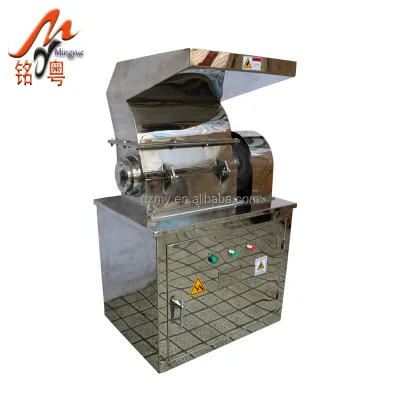
Stainless Steel Universal Crusher Chinese Herbal White Sugar Crusher
$2360.00 - $2380.00
MOQ: 1 Pieces

Chinese Herbal Medicine Vertical Stainless Steel High-Speed Universal Pulverizer
$3100.00 - $4500.00
MOQ: 1 Pieces


Professional Horizontal Herb Herbal Crushing Machine Food Coarse Crusher
$2000.00 - $20000.00
MOQ: 1 Pieces

Professional Herb Leaf Grinding Machine Food-Grade Coarse Crusher Manufacture
$2000.00 - $20000.00
MOQ: 1 Pieces

Stainless Steel Herb Grinding Machine Herbal Medicine Crushing Machine
$2500.00 - $80000.00
MOQ: 1 set

Stainless Steel SUS304# Herbal Medicine Coarse Crusher Tea Leaves Crusher Machine
$2500.00 - $80000.00
MOQ: 1 set

Automatic Herbal Powder Grinding Machine Auto Chinese Plant Herbs Grinder Equipment
$3000.00 - $3142.00
MOQ: 1 Pieces


Comprehensive Sourcing Guide
Strategic Sourcing Guide for CE Certified Chinese Herbal Crushers
Understanding the Technical Landscape of Pulverization Equipment
When sourcing a Chinese herbal crusher, buyers must first distinguish between the broad categories of machinery available in the market. The core keyword often leads to a variety of machine types, including hammer crushers, grinding machines, and pharmaceutical milling machinery. The technical specifications for these units vary significantly based on the intended application, whether for food processing, chemical manufacturing, or pharmaceutical production. A critical observation from current market data indicates that the crushing degree can range from fine grinding to ultra-fine milling. This distinction is vital because the particle size required for herbal processing directly impacts the efficacy of the final product, such as granules or powders.
The drive mechanism for these machines is predominantly electric, ensuring consistent power delivery for continuous operation. The crushing style typically combines grinding and impact forces, a method particularly effective for breaking down fibrous herbal materials. The core components of these systems usually include a high-performance motor, which is essential for maintaining the torque required for heavy-duty crushing. Buyers should note that the power consumption can vary, with some models listing a total power range between 4 and 15 kilowatts, while specific units may operate at 3000 watts or 380V voltage. The physical dimensions of the equipment also vary, with standard models measuring approximately 550mm in length, 250mm in width, and 650mm in height, though larger industrial units may differ.
Material construction is another primary technical consideration. The cutter material is frequently identified as High-Speed Steel (HSS), which offers durability and sharpness necessary for efficient pulverization. However, the overall body material often utilizes Stainless Steel, ensuring compliance with hygiene standards required for food and pharmaceutical applications. The feeding granularity is a critical specification to verify, with many machines designed to accept materials less than 5mm in size. The discharge size, which determines the fineness of the output, can range from 12 to 120 mesh, allowing for customization based on the specific herbal formulation requirements.
Navigating Compliance and Certification Verification
In the context of international procurement, the term "CE certified" serves as a primary indicator of compliance with European safety, health, and environmental protection standards. While the keyword explicitly mentions this certification, buyers must exercise due diligence in verifying the actual status of the product. The provided data confirms that CE certification is a recognized attribute for certain models in the category, specifically listed under the product properties. However, the presence of a CE mark on a product page does not automatically guarantee that every unit of that model is certified, nor does it imply that the certification covers all operational parameters.
Buyers should treat certification as a verification point rather than a blanket assumption. The verification process involves requesting the specific CE declaration of conformity from the supplier, which must be signed by the manufacturer or their authorized representative. This document should detail the specific directives the machine complies with, such as the Machinery Directive. It is also important to note that while CE is a standard requirement for export to the European market, other regions may have different regulatory frameworks. The product origin is consistently listed as China, which is a major manufacturing hub for this equipment, but the certification status must be validated against the specific batch or model number being purchased.
Furthermore, the certification process often extends beyond the machine itself to include the electrical components and safety guards. The warranty period for these machines is typically one year, which is a standard industry offering for new equipment. This warranty often covers the core components, such as the motor, but the scope of coverage regarding the certification validity should be clarified. Buyers should ensure that the supplier provides evidence that the CE marking was applied after a successful conformity assessment, rather than merely being a label applied to the product listing. The "High-confidence facts" indicate that CE is a listed attribute, but the buyer's responsibility is to confirm that this applies to the specific unit they intend to acquire.
Analyzing Cost Drivers and Pricing Structures
The pricing structure for Chinese herbal crushers is influenced by several dynamic factors, including the level of customization, the power rating, and the complexity of the crushing mechanism. The observed price range in the market spans from 0.9 USD to 100,000 USD, a vast disparity that reflects the difference between small-scale laboratory units and large industrial production lines. This wide range underscores the importance of defining precise requirements before engaging in price negotiations. A machine with a power of 3000 watts will naturally be priced differently than a unit with a total power of 15kw, which may require more robust electrical systems and heavier structural components.
Customization is a significant cost driver in this sector. The product attributes indicate that customization is available, and some models are explicitly listed as "Customized." This can include modifications to the discharge size, the addition of specific safety features, or alterations to the electrical voltage to match local grid standards. Customized units generally command a higher price due to the additional engineering and manufacturing time required. Additionally, the packing method, often described as a wooden case or export wooden box packaging, adds to the overall cost. This packaging is essential for protecting the machinery during long-distance shipping from China to international destinations.
The minimum order quantity (MOQ) also plays a role in the effective cost per unit. The observed MOQ range is between 1 and 12 units. For buyers seeking a single unit for a small facility, the MOQ of 1 allows for direct procurement without the need for a consortium or bulk purchase. However, larger orders may benefit from economies of scale, potentially lowering the unit cost. The weight of the machine, ranging from 32kg to over 1350kg, is another factor that influences shipping costs, which are often a separate line item in the total cost of ownership. Buyers should factor in these logistical expenses when comparing the base price of the machinery.
Evaluating Supplier Capabilities and After-Sales Support
Selecting a reliable supplier is as critical as selecting the right machine. The product attributes highlight "Online Support" as a key after-sales service feature. While this is a valuable offering, buyers should probe deeper into the scope of this support. Does it include remote troubleshooting, video guidance, or access to spare parts catalogs? The warranty period is consistently listed as one year, which is a standard benchmark. However, the longevity of the machine depends heavily on the availability of replacement parts, such as cutters and motors. The core components are identified as the motor, but the cutter material, being High-Speed Steel, will eventually wear out and require replacement.
The supplier's ability to provide technical documentation is another indicator of reliability. The product models, such as the HZY-350 type universal pulverizer or the CSJ model, suggest a standardized approach to manufacturing. A reputable supplier should be able to provide detailed operation manuals, maintenance schedules, and electrical diagrams for these specific models. The "Key Selling Points" often include "Easy to Operate," which implies that the user interface and control systems are designed for simplicity. Buyers should verify this claim by requesting demonstration videos or user guides that show the computerized features of the machine.
Furthermore, the supplier's experience in specific industries, such as hotels, manufacturing plants, food and beverage, and vegetable processing plants, is a strong indicator of their capability. The application fields listed include snack food factories and pharmaceutical milling, suggesting that the machinery is versatile. A supplier with a track record in these sectors is more likely to understand the specific hygiene and efficiency requirements of herbal processing. The "Computerized" attribute suggests that modern control systems are integrated, which requires the supplier to offer software support and potential firmware updates.
Quality Control and Performance Verification
Ensuring the quality of the crusher before shipment is essential to prevent operational failures. The production capacity of these machines can vary significantly, with some models capable of a maximum production capacity of 2200kg, while others may have an output of 100 to 300kg per hour. The fine powder production rate is noted to be between 1 and 6kg/h, and coarse powder production between 1 and 20kg/h. These figures are critical for buyers to match with their production targets. Buyers should request test results or performance data that validates these claims, rather than relying solely on the product listing.
The condition of the machine is listed as "New," which is a standard expectation. However, buyers should verify the manufacturing date and the storage conditions to ensure that the equipment has not degraded while in transit or in the warehouse. The finished dosage form, such as granules, is a specific output that requires precise control over the crushing fineness, which is specified as 30-120mm in some contexts, though mesh sizes like 12-120mesh are more common for powder production. The discrepancy in units (mm vs. mesh) highlights the need for buyers to clarify the exact discharge size requirements with the supplier.
Quality control should also extend to the materials used. The use of Stainless Steel for the main body and High-Speed Steel for the cutters is a positive indicator of durability and hygiene. Buyers should inspect the surface finish and the welding quality of the stainless steel components to ensure there are no crevices where material could accumulate. The packing method, whether a wooden case or export wooden box, should be robust enough to withstand the rigors of international shipping. A damaged machine upon arrival can lead to significant delays and additional costs.
Long-Term Procurement and Operational Considerations
For long-term success, buyers must consider the operational efficiency and maintenance requirements of the crusher. The "Easy to Operate" selling point suggests a user-friendly design, but the complexity of the computerized systems may require trained personnel. The voltage requirement of 380V is standard for industrial equipment, but buyers must ensure their facility has the appropriate electrical infrastructure to support this. The weight of the machine, ranging from 285kg to 1350kg, implies that a solid foundation and potentially a forklift or crane will be needed for installation.
The customization options available allow for long-term adaptability. As production needs change, the ability to adjust the crushing degree or discharge size can extend the useful life of the machine. The warranty of one year provides a safety net for initial defects, but buyers should plan for the long-term costs of maintenance and spare parts. The availability of the motor and cutter replacements is crucial for minimizing downtime. The supplier's location in China is a factor in lead times and shipping logistics, which should be factored into the procurement timeline.
Finally, the application fields, including food, chemical, and pharmaceutical industries, indicate the versatility of the equipment. However, buyers must ensure that the machine meets the specific regulatory requirements of their target industry. The CE certification is a step in this direction, but additional certifications or compliance with local standards may be necessary. By carefully evaluating the technical specifications, verifying certifications, and assessing supplier capabilities, buyers can make informed decisions that ensure the successful integration of Chinese herbal crushers into their production lines. The observed data provides a solid foundation for this evaluation, but the final decision should be based on a comprehensive due diligence process that addresses all specific operational needs.
FAQs
What is the drive type for these crushers?
The drive type is electric, ensuring consistent power for continuous operation. This electric mechanism supports the grinding and impact crushing style required for processing fibrous herbal materials efficiently.
Which materials are used for the cutters and body?
The cutter material is High-Speed Steel for durability and sharpness, while the body is constructed from Stainless Steel. This combination ensures hygiene standards are met for food and pharmaceutical applications.
Can the machine be customized for specific needs?
Yes, customization is available for various models including the HZY-350 type universal pulverizer. Buyers can request specific modifications to discharge size, voltage, or other parameters to match their production requirements.
What is the warranty period for this equipment?
The warranty period is typically one year for new equipment. This coverage often includes core components like the motor, though specific terms should be verified with the supplier for each batch.
How much does the machine weigh?
The weight ranges from 32kg for smaller units to over 1350kg for larger industrial models. Specific units like the 350 model weigh approximately 32kg, while others vary based on capacity and power.
What is the output capacity of the crusher?
Output capacity varies by model, ranging from 100 to 300kg per hour for some units and up to 2200kg for others. Fine powder production can reach 1-6kg/h while coarse powder reaches 1-20kg/h.
Is CE certification available for these machines?
CE certification is a listed attribute for certain models in this category. Buyers must verify the specific declaration of conformity from the supplier to ensure compliance with European safety standards.