Source CE Certified Children Kick Scooter for Play, Travel, and Exercise
Explore 30 verified options for a CE Certified Children Kick Scooter featuring adjustable heights, foldable designs, and LED wheels. Buyers can compare specifications, pricing, and customization details to find the ideal ride for kids aged 3-8 years.
Key considerations
Products List


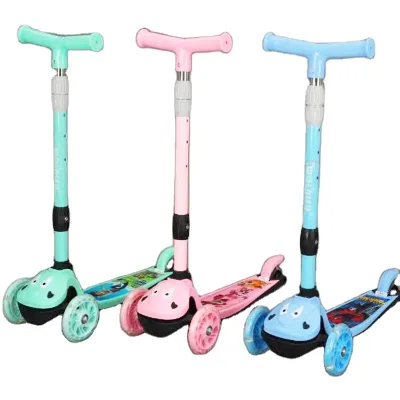


High Quality Folding Three Children Kick Scooters Wholesale Kids Scooters
$9.00 - $13.80
MOQ: 50 Pieces



Comprehensive Sourcing Guide
Strategic Sourcing Guide for CE Certified Children Kick Scooters
The global market for children's mobility products has seen a significant shift toward safety-conscious and feature-rich designs, with the CE Certified Children Kick Scooter emerging as a dominant category. For B2B procurement professionals, navigating this sector requires a disciplined approach that balances technical specifications, regulatory compliance, and supply chain reliability. The following guide outlines the essential parameters for sourcing these products, drawing strictly from observed market data and established industry standards to ensure a robust procurement strategy.
Technical Specifications and Product Architecture
Understanding the physical and functional architecture of the product is the first step in any sourcing evaluation. The core product identified in the market is the 3-Wheel Kids Kick Scooter, a design that offers superior stability compared to two-wheeled alternatives for young riders. The observed product count of 30 distinct listings indicates a mature supply base with varying configurations. A critical technical observation is the consistent use of a three-wheel configuration, specifically noted as "Three Wheels" with LED flash capabilities. This design choice directly addresses the safety needs of the target demographic, typically children aged 3-8 years.
The structural integrity of these scooters relies heavily on the materials selected for the frame and wheels. The body material is predominantly Aluminum Alloy, offering a favorable strength-to-weight ratio that ensures durability without excessive mass. However, some listings indicate a composite construction of Aluminum and Iron (Alu+ Iron), which may impact the final weight and cost. The wheels themselves are constructed from Polyurethane (PU), a material chosen for its shock absorption and grip properties on various surfaces. The rim material in some variants is noted as Plastic, which suggests a cost-effective approach for specific market segments.
Functional attributes are equally vital. The majority of observed models feature an adjustable height mechanism, allowing the scooter to grow with the child. This is often paired with a foldable design, a feature explicitly marked as "Yes" in the specifications, facilitating storage and transport. Additional high-value features include a removable seat, music capabilities, and LED lights that activate during motion. The handlebars are equipped with non-slip rubber grips to ensure secure handling, while the braking system is consistently a rear foot brake, a standard and reliable method for this product class. The maximum load-bearing capacity observed ranges from 20kg to 50kg, with specific listings noting a maximum capacity of under 50kg or up to 100kg, requiring careful verification against the intended user profile.
Compliance and Certification Verification
In the context of children's products, compliance is not merely a regulatory hurdle but a fundamental component of product safety and market access. The core keyword "CE certified" highlights the necessity of verifying conformity with European safety standards. The provided data confirms that specific models carry the CE certification, alongside CCC (China Compulsory Certification), which is often required for domestic sales in China but serves as a baseline for manufacturing quality.
Buyers must exercise caution when interpreting certification claims. While the data lists "CE" and "CCC" as observed attributes, it also references background standards such as EN 17128 and UL 2272. It is critical to note that UL 2272 is primarily associated with electric mobility devices and battery safety, which may not be directly applicable to manual kick scooters unless they contain integrated electronic components. Similarly, EN 17128 is a specific standard for children's scooters. Procurement teams should verify that the specific model being sourced is tested against the relevant EN standards for mechanical safety, rather than assuming broad certification coverage. The standard specifications for the product are listed as "Standard Specifications or Customized," indicating that compliance documentation must be model-specific.
When evaluating suppliers, request the full test reports that substantiate the CE mark. These documents should detail the specific tests performed, such as stability tests, braking performance, and structural integrity under load. The absence of a specific test report for a claimed certification is a red flag. Furthermore, the product origin is identified as Hebei, China, a major manufacturing hub. While this region offers competitive pricing, it necessitates rigorous third-party verification to ensure that the claimed certifications are valid and not merely marketing labels.
Cost Drivers and Pricing Dynamics
The pricing landscape for CE certified children kick scooters is influenced by a complex interplay of material costs, feature sets, and order volumes. The observed price range in the market spans from $4.73 to $121.40 USD. This wide variance reflects differences in material quality, such as the distinction between pure Aluminum Alloy frames and Alu+ Iron composites, as well as the inclusion of advanced features like music modules and LED lighting systems.
Minimum Order Quantity (MOQ) is another significant cost driver. The observed MOQ range is substantial, varying from 1 unit to 1,200 units. This flexibility allows buyers to scale their orders based on demand forecasts and cash flow constraints. However, lower MOQs often come with a higher unit price, while bulk orders can leverage economies of scale to reduce the cost per unit. The packing specifications also play a role in logistics costs. Listings show variations in carton configurations, such as 10PCS/Carton or 6PCS/CTN, with corresponding net and gross weights. For instance, one configuration lists a Net Weight (N.W) of 16kg/CTN and a Gross Weight (G.W) of 18kg/CTN, while another shows 20kg and 22kg respectively. These variations directly impact shipping calculations and freight charges.
Buyers should analyze the total landed cost rather than just the ex-works price. This includes freight, insurance, customs duties, and any potential tariffs associated with the product's origin. The condition of the product is listed as "New," which is standard, but buyers should also consider the packaging durability to prevent damage during transit, especially given the fragile nature of plastic rims and LED components.
Typical Applications and Market Segmentation
The primary application for these scooters is recreational use by children, specifically within the 3-8 years age bracket. The design features, such as the three-wheel stability and adjustable height, are tailored to support the developmental stage of early childhood mobility. The "Single" kind classification suggests these are intended for individual use rather than group or tandem activities.
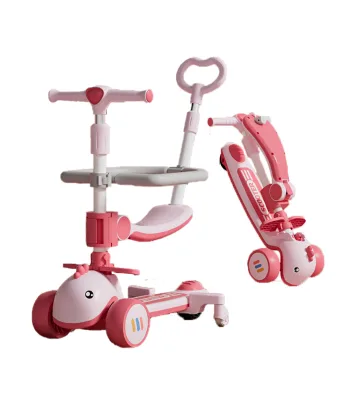
Beyond general recreation, the specific features of these scooters open up niche applications. The foldable design makes them ideal for travel and storage in urban environments where space is limited. The inclusion of music and LED lights adds an entertainment value that appeals to parents looking for engaging activities for their children. The removable seat feature extends the product's utility, allowing it to transition from a ride-on seat to a traditional kick scooter as the child's skills develop.
The market segmentation is further defined by color options, with Light Pink, Blue, Yellow, and Deep Pink being the most common. This variety allows retailers to cater to diverse consumer preferences and seasonal trends. The "Three Wheeler" type is particularly suitable for beginners and younger children who require a wider wheelbase for balance, distinguishing it from the more advanced two-wheeled models targeted at older children and teenagers.
Supplier Evaluation and Quality Control
Selecting the right supplier is critical for maintaining product integrity and ensuring timely delivery. With 30 observed products, the market is competitive, but not all suppliers offer the same level of quality or compliance. Buyers should prioritize suppliers who provide transparent documentation regarding their production standards and certifications. The "Standard Specifications or Customized" attribute indicates that many suppliers are willing to adapt the product to specific buyer requirements, which can be a valuable asset for private label strategies.
Quality control measures should be integrated into the procurement process. Given the variations in materials, such as the use of Plastic rims versus more durable alternatives, a pre-shipment inspection is highly recommended. This inspection should verify the structural integrity of the frame, the functionality of the braking system, and the durability of the wheels. The weight of the product, observed at 2.19kg for some models, serves as a benchmark for quality; significant deviations may indicate the use of inferior materials or manufacturing defects.
Suppliers should also be evaluated on their ability to meet packaging requirements. The observed packing standards, such as 665260cm or 7368.561.5 cm, must be consistent to ensure efficient container loading and minimize damage. The "Customization" attribute suggests that suppliers can offer tailored solutions, but buyers must clearly define these requirements to avoid misunderstandings.
Long-Term Procurement Considerations
Sourcing children's products requires a long-term perspective that accounts for market trends, regulatory changes, and supply chain resilience. The "Customization" availability is a key factor here, as it allows buyers to differentiate their offerings and respond to changing consumer preferences. However, customization can also introduce complexity in terms of lead times and quality consistency.
Buyers should establish a robust relationship with their suppliers to ensure a steady supply of high-quality products. This includes regular communication regarding production schedules, quality updates, and any potential changes in raw material costs. The "Hebei, China" origin is a significant factor, as it places the supply chain in a region with a well-established manufacturing ecosystem but also subject to regional logistics and regulatory fluctuations.
Finally, buyers must remain vigilant regarding evolving safety standards. While the current data highlights CE and CCC certifications, future regulations may introduce new requirements. Maintaining a proactive approach to compliance will ensure that the product line remains marketable and safe for children. By focusing on these strategic elements, procurement professionals can build a resilient supply chain that delivers value and safety to the end consumer.
FAQs
What certifications do these scooters hold?
These scooters hold CE and CCC certifications. The CE mark confirms compliance with European safety standards, while CCC indicates adherence to Chinese compulsory certification requirements for manufacturing quality.
Can the handlebar height be adjusted?
Yes, the handlebar height is adjustable to accommodate growing children. This feature allows the scooter to grow with the rider, ensuring a comfortable riding position for kids aged 3 to 8 years.
What is the maximum load capacity?
The maximum load capacity ranges from 20kg to 50kg depending on the specific model. Some listings indicate a capacity under 50kg, while others support up to 100kg, so verify the specific model requirements.
Are these scooters foldable for storage?
Yes, the scooters are foldable to facilitate easy storage and transport. This design feature is standard across the observed models, making them convenient for families with limited space.
What material is used for the wheels?
The wheels are constructed from Polyurethane (PU) material. This choice provides excellent shock absorption and grip on various surfaces, ensuring a smooth ride for children.
Do these scooters come with music features?
Yes, many models include music capabilities as a key feature. This adds an entertainment element to the ride, appealing to children and making the activity more engaging.
What is the origin of these products?
The products originate from Hebei, China. This region is a major manufacturing hub for children's mobility products, offering competitive pricing and established supply chains.
Can I customize the product specifications?
Customization is available for standard specifications or specific buyer requirements. Suppliers can adapt the product to meet unique needs, though this may impact lead times and minimum order quantities.