Source CE Certified Clutch Disc for Tractors, Trucks, and Farm Machinery
Compare 30 verified listings for CE Certified Clutch Disc options tailored for heavy-duty trucks, tractors, and farm machinery. Buyers can evaluate specifications, materials, and customization needs across multiple suppliers in China.
Key considerations
Products List
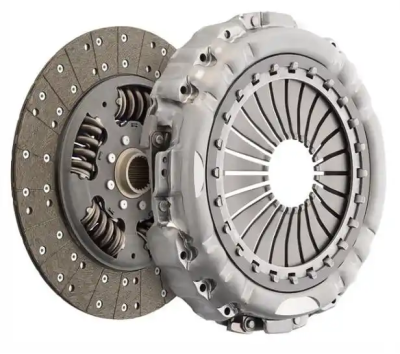


Fricwel Auto Partsclutch Friction Disc Replacement Clutch Plate Wear-Resisting
$16.20 - $17.00
MOQ: 100 Pieces


Comprehensive Sourcing Guide
Strategic Sourcing Guide for Clutch Disc Acquisition
Navigating the global market for industrial and automotive components requires a disciplined approach to verifying technical compatibility and supply chain reliability. When sourcing a clutch disc, particularly one described with attributes such as "CE certified," buyers must distinguish between marketing terminology and verifiable, documented compliance. The available market data indicates a diverse range of products originating from China, with specific model numbers, material compositions, and application profiles that vary significantly. This guide provides a framework for evaluating these components based on observed product attributes, ensuring that procurement decisions are grounded in factual evidence rather than unverified claims.
Technical Specifications and Model Identification
The first step in any procurement process is the precise identification of the component through its model number and technical specifications. The observed product data reveals a wide array of model identifiers, ranging from alphanumeric codes like "WG9925160622" and "160200" to specific part numbers such as "31250-12070" and "1878 023 731." Each of these codes corresponds to a unique set of physical and functional requirements. For instance, the data lists specific dimensions for certain models, such as "1801251921.6" and "1901432420.4," which are critical for ensuring the clutch disc fits the transmission housing and pressure plate assembly of the target vehicle or machinery.
Buyers must not assume that a generic "clutch disc" will fit all applications. The data highlights that different models serve different working modes and states. Some units are designed for "Power Combining" with a "No linkage" working state, while others operate via "Electricity Combination" with a "Linkage" state. Furthermore, the engine stroke is a defining characteristic; the market offers both "4 Stroke" and "2 Stroke" variants. A procurement error in selecting the wrong stroke type can lead to immediate mechanical failure. Therefore, the primary verification step involves cross-referencing the specific model number on the supplier's catalog against the vehicle's service manual or the original equipment manufacturer (OEM) specifications.
Material Composition and Durability Factors
The longevity and performance of a clutch disc are heavily dependent on its material composition. The observed product facts explicitly identify "Steel" as a primary material for the structural components. More specifically, the clutch hub material is noted as "50 CRV4," a high-strength alloy steel known for its durability and resistance to fatigue under high-torque conditions. This is a crucial detail for heavy-duty applications where the clutch disc is subjected to repeated engagement and disengagement cycles.
The friction facing material is another critical specification. The data confirms the use of "Non Asbestos" materials for the clutch facing. This is a significant health and environmental consideration, as asbestos was historically used in friction materials but is now widely restricted or banned in many jurisdictions due to carcinogenic properties. Buyers should verify that the "Non Asbestos" claim is backed by material safety data sheets (MSDS) or specific test reports. Additionally, the color "Grey" is observed as a standard attribute, which may serve as a visual indicator of the specific friction compound used, though color alone is not a definitive measure of performance. The warranty period of "12 Months" suggests a baseline expectation for product reliability, though this should be evaluated in conjunction with the intended usage intensity.
Compliance, Certification, and Regulatory Verification
The core keyword "CE certified" introduces a layer of complexity regarding regulatory compliance. While the provided data includes a low-confidence background note regarding "CE," it does not provide a definitive certification status for every listed product. The high-confidence facts list "ISO/TS16949:Classification:Friction Clutch" and "ISO" as certifications. ISO/TS16949 is a specific quality management standard for the automotive industry, indicating that the manufacturer has processes in place to meet automotive quality requirements. However, the presence of an ISO certification does not automatically equate to CE marking for the European Economic Area.
Buyers must treat the "CE" designation as a claim that requires independent verification. The CE mark indicates conformity with health, safety, and environmental protection standards for products sold within the European Economic Area. Since the data does not explicitly confirm CE certification for all items, procurement teams should request the specific Declaration of Conformity (DoC) from the supplier. This document should reference the specific directives (e.g., Machinery Directive, EMC Directive) that the clutch disc complies with. Relying solely on the product title or a generic "CE" label without supporting documentation poses a risk of non-compliance, which can lead to customs seizures or legal liabilities in regulated markets. The observed "Standard" attributes, such as "GB/T 5764-1998," indicate adherence to Chinese national standards, which buyers should understand as a baseline but not necessarily as a substitute for international certifications like CE or ISO.
Cost Drivers and Pricing Structures
Understanding the cost structure of clutch discs is essential for budgeting and supplier negotiation. The observed price range in the market spans from 1 to 1000 USD, reflecting the vast difference between small, light-duty components and heavy-duty, specialized units. This wide range is driven by several factors, including the complexity of the model, the quality of the "50 CRV4" steel used, and the specific friction material technology employed.
The Minimum Order Quantity (MOQ) also plays a significant role in the total cost of ownership. The data shows an MOQ range of 1 to 500 units. Suppliers with lower MOQs (e.g., 1 unit) may charge a higher unit price to cover administrative and logistics costs, whereas bulk orders (up to 500 units) often benefit from economies of scale. Buyers should consider the "Customization: Available" attribute as a potential cost driver. Custom orders, which may involve specific dimensions like "330" or "302846," often incur additional tooling or setup fees. Furthermore, the "Place of Origin: China" implies that shipping costs, tariffs, and exchange rate fluctuations will significantly impact the final landed cost. The "Ocean Freight" and "Carton&Pallets" packing methods observed in the data suggest that logistics planning is a major component of the procurement strategy, especially for international buyers.
Typical Applications and Usage Scenarios
Clutch discs are not one-size-fits-all components; they are engineered for specific operational environments. The product data highlights a diverse range of applications, including "Farm Machinery," "Tractors," "Heavy Duty Trucks," "Cars," "Motorcycles," and even "Racing Cars." This variety necessitates a careful match between the clutch disc's specifications and the intended use case.
For example, a clutch disc intended for "Heavy Duty Trucks" likely requires a robust design capable of handling high torque and frequent engagement, possibly utilizing the "4 Stroke" engine configuration. In contrast, components for "Farm Machinery" might prioritize durability in dusty or variable conditions. The "Working Mode" is also a key differentiator; "Power Combining" systems differ significantly from "Electricity Combination" systems in terms of control and engagement speed. Buyers must ensure that the selected clutch disc matches the vehicle's transmission type and the engine's stroke count. Using a component designed for a "2 Stroke" engine in a "4 Stroke" application, or vice versa, will result in immediate mechanical incompatibility. The "Usage" field in the product data serves as a primary filter for narrowing down the search to relevant models.
Supplier Evaluation and Quality Control Protocols
Evaluating a supplier for clutch disc components requires a multi-faceted approach that goes beyond price comparison. The presence of "ISO/TS16949" certification is a strong indicator of a supplier's commitment to quality management, but it should be verified through current audit reports. Buyers should also assess the supplier's ability to provide "Customization" services, as this indicates flexibility and technical capability.
Quality control should be a central part of the procurement agreement. Given the "Condition: New" attribute, buyers must ensure that the products are not refurbished or reconditioned items sold as new. The "Warranty: 12 Months" is a standard offering, but the terms of this warranty should be clearly defined in the contract. Does it cover manufacturing defects only, or does it include performance under specific load conditions? The "Standard" attributes, such as "By The Customer Needs" or specific numerical standards like "30kg" and "10kg," suggest that some suppliers offer products tailored to specific load requirements. Buyers should request test reports or batch inspection records to verify that the "Non Asbestos" material and "50 CRV4" hub material meet the specified standards.
Long-Term Procurement and Logistics Considerations
Sourcing clutch discs is not a one-time transaction but a long-term relationship that requires careful logistics planning. The "Place of Origin: China" and the various packing methods observed, such as "Carton," "Box+Pallet," and "Ocean Freight," highlight the importance of supply chain stability. Buyers should evaluate the supplier's lead times and their ability to maintain consistent inventory levels, especially for critical models like "MTZ T80" or "1861486234."
The "Standard" of "30kg" or "14kg" mentioned in the data may refer to packaging weight or specific load ratings, which impacts shipping costs and handling requirements. For international buyers, understanding the Incoterms (e.g., FOB, CIF) is crucial to determine who bears the risk and cost during transit. Additionally, the "Customization: Available" feature suggests that long-term contracts may involve ongoing design iterations. Buyers should establish clear communication channels to manage these changes and ensure that any modifications are documented and tested. Finally, the "12 Months" warranty period should be integrated into the maintenance schedule of the fleet or machinery, ensuring that replacements are planned proactively to avoid downtime.
Comparative Analysis of Product Attributes
To facilitate decision-making, the following table summarizes key observed attributes and their implications for procurement:
| Attribute Category | Observed Values | Procurement Implication |
|---|---|---|
| Material | Steel, 50 CRV4, Non Asbestos | Verify alloy grade and safety compliance; ensures durability and health safety. |
| Model/Spec | WG9925160622, 160200, 31250-12070, etc. | Strict model matching required; dimensions vary (e.g., 18012519*21.6). |
| Certification | ISO, ISO/TS16949, CE (Low Confidence) | Request DoC for CE; ISO/TS16949 indicates automotive quality standards. |
| Usage | Farm Machinery, Trucks, Racing Cars, etc. | Match working mode (Power vs. Electricity) and stroke (2 vs. 4) to application. |
| Packing | Carton, Box+Pallet, Ocean Freight | Affects shipping cost and handling; verify palletization for bulk orders. |
| Warranty | 12 Months | Standard term; verify coverage scope and claim process in contract. |
This structured approach ensures that buyers can navigate the complexities of the clutch disc market with confidence, relying on verified data and rigorous evaluation criteria rather than unverified marketing claims. By focusing on material integrity, precise model matching, and regulatory compliance, procurement teams can secure high-quality components that meet the demanding requirements of modern industrial and automotive applications.
FAQs
What certifications do clutch discs typically have?
Products often carry ISO or ISO/TS16949 certifications for friction clutches. While some listings mention CE, this is a low-confidence background note. Buyers must request specific Declarations of Conformity to verify compliance with European safety directives before purchasing.
Which materials are used for the clutch hub?
The clutch hub is constructed from 50 CRV4 alloy steel. This high-strength material ensures durability under high-torque conditions. The friction facing material is confirmed as non-asbestos, which meets health and environmental safety standards for industrial applications.
Can I find custom clutch discs for specific needs?
Yes, customization is available for many clutch disc models. Buyers can request specific dimensions or standards like GB/T 5764-1998. Custom orders may involve unique packaging or load ratings, so confirm details with the supplier to ensure the part fits your machinery.
What is the warranty period for these products?
The standard warranty period for these clutch discs is 12 months. This coverage applies to new condition items sourced from China. Buyers should verify the specific terms regarding manufacturing defects and usage conditions in the purchase contract.
How do I verify the working mode of a clutch?
Check the product attributes for Working Mode and Working State. Options include Power Combining with no linkage or Electricity Combination with linkage. Ensure the stroke type matches your engine, as both 2 Stroke and 4 Stroke variants are available in the market.
What is the minimum order quantity for these parts?
The observed minimum order quantity ranges from 1 to 500 units. Lower MOQs may incur higher unit prices, while bulk orders benefit from economies of scale. Packaging options like carton or pallets affect shipping costs and handling requirements for international buyers.
Which vehicles can use these clutch discs?
These parts are suitable for farm machinery, tractors, heavy-duty trucks, cars, and racing cars. Specific models are designed for different applications, so match the usage field to your vehicle type. Always cross-reference the model number with your equipment's service manual.