Source CE Certified Kids Orthopedic Shoes for flat feet, gait correction, and daily wear
Explore 21 listings of CE Certified Kids Orthopedic Shoes designed for flat feet, X-shaped legs, and O-shaped legs. Buyers can compare features like non-slip soles, breathable uppers, and built-in 3D insole technology from verified suppliers.
Key considerations
Products List




Comprehensive Sourcing Guide
Sourcing Guide for CE Certified Kids Orthopedic Shoes
Understanding the Product Category and Core Specifications
When sourcing children's orthopedic footwear, buyers must first distinguish between general athletic shoes and specialized medical-grade footwear designed to correct or support specific foot conditions. The core keyword "CE Certified Kids Orthopedic Shoes" implies a product that not only meets European safety standards but also possesses structural features intended for therapeutic use. Based on observed market data, these products are frequently categorized under "Anti-Slip Sports Orthopedic Shoes" or simply "Orthopedic Shoes," with a primary target demographic of female children, though unisex options exist.
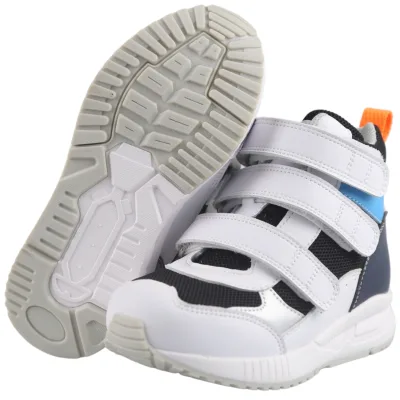
The technical specifications for these shoes are critical for procurement success. The upper material is often a composite of leather and mesh, or microfiber and mesh, designed to balance durability with breathability. The "Element" of the design may vary, ranging from standard leather and cotton constructions to more decorative "Totem" patterns, though the functional integrity of the orthopedic support remains the priority. The sole material is typically EVA (Ethylene-Vinyl Acetate), chosen for its lightweight properties and shock absorption capabilities. A defining characteristic of these orthopedic models is the "Built-in 3D Insole Technology," which is marketed as a key advantage for providing arch support and correcting alignment issues.
Buyers should note that while some listings indicate the shoes are suitable for outdoor use, others specify an indoor and outdoor ambient capability. The toe style is predominantly round, which is generally preferred for orthopedic applications to prevent toe crowding. The closure type varies, with "Hook & Loop" (Velcro) being a common specification for children's shoes to facilitate independent dressing. Size specifications are often flexible, ranging from size 22 to 38 in metric measurements, or available "According to Demand" in US sizing, with specific models like "Jan-2025-AS" or "DM80" appearing in the market. It is essential to verify if the specific model is "Folded" or "Non-Folding," as this impacts shipping logistics and storage requirements.
Compliance and Certification Verification
The term "CE certified" is a mandatory compliance requirement for selling footwear in the European Economic Area. However, the presence of the CE mark on a product listing does not automatically guarantee that every specific batch or model meets the rigorous safety thresholds required for orthopedic devices. In the observed product data, "CE" and "ISO" are listed as certifications. Buyers must treat these as observations of the supplier's claimed capabilities rather than guaranteed status for every unit ordered.
The distinction between general safety certifications and orthopedic-specific standards is vital. While the provided data mentions "ISO" generally, it does not specify ISO 27001, which is an information security standard and irrelevant to footwear safety. Buyers should not assume that a product labeled with "ISO" in a general product description holds a specific medical device certification unless explicitly detailed in the technical dossier. The verification process must involve requesting the actual Certificate of Conformity (CoC) from the supplier. This document should detail the specific harmonized standards applied to the footwear, such as EN standards for safety footwear or specific medical device directives if the shoes are marketed as Class I medical devices.
Furthermore, the "prod_standard" field in some listings refers to material composition (e.g., "Leather and mesh" or "Leather and Cotton") rather than a regulatory standard. This highlights a common confusion in product data where material standards are conflated with regulatory compliance. A buyer must explicitly ask the supplier to clarify which regulatory standard the CE mark references. Is it the general safety standard for footwear, or does it include specific biomechanical testing for orthopedic correction? Without this clarification, the risk of non-compliance in the destination market increases significantly. The "Place of Origin" is frequently listed as China, specifically Fujian, which is a major manufacturing hub, but the origin location does not dictate the validity of the certification; the testing facility and the notified body responsible for the assessment do.
Cost Drivers and Pricing Structure Analysis
The pricing for CE Certified Kids Orthopedic Shoes is influenced by several distinct factors, creating a wide observed range of 13.9 to 150 USD. This variance is not merely a reflection of brand markup but is driven by the complexity of the orthopedic technology and the quality of materials used. The "Built-in 3D Insole Technology" is a significant cost driver. Unlike standard insoles, 3D insoles require specialized molding and material engineering to provide the necessary arch support and heel cup stability. Suppliers who utilize genuine medical-grade EVA or specialized memory foam composites will naturally command higher price points within the observed range.
Material composition is another primary determinant of cost. Shoes constructed with full-grain leather and high-quality mesh linings will be more expensive than those using microfiber or synthetic leather. The "Waterproof" attribute is also a cost factor; while the observed data indicates that many orthopedic shoes are "Not Waterproof," models that integrate waterproof membranes without compromising breathability will incur higher production costs. Additionally, the "Customization" status plays a crucial role. The data shows that customization is "Available" for some models, while others are "Non-Customized." Custom orders, which may involve specific sizing adjustments, color changes, or logo placement, typically carry a higher unit cost due to the setup and production line adjustments required.
The Minimum Order Quantity (MOQ) is a critical component of the cost structure. The observed MOQ range spans from 1 to 1000 units. For buyers seeking small quantities or samples, the unit price will be significantly higher, often approaching the upper end of the 13.9-150 USD range. Conversely, bulk orders meeting higher MOQ thresholds can access the lower end of the price spectrum. However, buyers must be cautious of suppliers offering extremely low MOQs with high unit prices, as this may indicate a lack of economies of scale or a focus on small-batch, high-margin trading rather than manufacturing. The "Stock" availability also affects pricing; items marked as "Stock" may be available at a discount compared to made-to-order items, but the selection of sizes and colors may be limited.
Typical Applications and Target Demographics
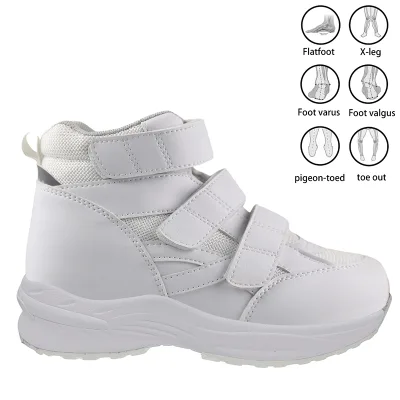
Orthopedic shoes for children are designed to address specific medical and developmental needs. The "Applicable People" field in the product data explicitly lists "Flat Feet, X-Shaped and O-Shaped Legs." This indicates that the primary application is corrective therapy for children with flat feet (pes planus) or leg alignment issues such as genu valgum (knock-knees) or genu varum (bow-legs). The "Type" is clearly defined as "Orthopedic Shoes," distinguishing them from standard sports or casual footwear.
The "Applicable Season" is listed as "Winter," suggesting that these products are often designed with thermal insulation or thicker linings to protect developing feet during colder months. However, the "Using Ambient" attribute also includes "Outdoor" and "Indoor," implying versatility. The "Sole Features" are described as "Non-Slip and Wear-Resistant," which is essential for active children who may be prone to falls or require stability during play. The "Upper Features" of being "Lightweight and Breathable" are crucial for comfort, preventing overheating and allowing for natural foot movement.
It is important to note that while the product name often includes "Sports," the orthopedic function takes precedence over athletic performance. These shoes are not intended for high-impact competitive sports but rather for daily wear, school, and light activity. The "Gender" is predominantly listed as "Female," but "Unisex" options are available, ensuring that boys with similar orthopedic needs can access appropriate footwear. The "Condition" is always "New," and the "Element" may include decorative features like "Totem" patterns to appeal to children, but the underlying structure must remain consistent with orthopedic requirements.
Supplier Evaluation and Quality Control Protocols
Evaluating a supplier for orthopedic footwear requires a rigorous approach beyond standard manufacturing checks. Buyers should verify the supplier's ability to maintain consistent quality across the "Customization" spectrum. Since the data shows both "Customized" and "Non-Customized" options, the supplier must have the flexibility to handle bespoke orders without compromising the structural integrity of the 3D insoles or the alignment of the sole. The "Product Name" and "Item No." (e.g., Jan-2025-as) should be used to track specific batches, ensuring traceability.
Quality control (QC) protocols must focus on the "Sole Material" (EVA) and the "Lining Material" (Mesh). The bonding between the EVA sole and the upper material is a critical failure point in orthopedic shoes; delamination can render the shoe ineffective or dangerous. Buyers should request evidence of peel strength testing for the sole-to-upper bond. Additionally, the "Closure Type" (Hook & Loop) must be tested for durability, as children often abuse fasteners. The "Single package size" of 35X25X15 cm provides a baseline for logistics planning, but buyers should confirm if this includes the retail box or just the shipping carton.
The "prod_packing" is listed as "Carton," which is standard, but the condition of the packaging must be sufficient to protect the shoes during transit, especially given the "Non-Folding" nature of the product. Buyers should also verify the "Brand Name" associated with the product. While "Diacomfort" is listed in the data, buyers should not assume this is the only brand or that the brand is universally recognized. The "Place of Origin" being Fujian, China, is a common manufacturing hub, but buyers should conduct factory audits to ensure that the facility has the specific machinery required for orthopedic shoe production, such as specialized last-making equipment and insole molding tools.
Long-Term Procurement and Strategic Considerations
Sourcing orthopedic shoes is a long-term commitment that requires strategic planning beyond the initial transaction. The "Customization" availability suggests that buyers may need to adapt products to specific regional medical standards or customer preferences over time. This flexibility is a key advantage for building a sustainable supply chain. However, buyers must be aware that "Customized" orders often come with longer lead times and higher MOQs compared to standard stock items.
The "Stock" status indicates that some models are readily available, which is beneficial for immediate market entry. However, relying solely on stock items may limit the ability to differentiate the product line. Buyers should consider a hybrid strategy: using stock items for initial market testing and transitioning to customized orders once the product-market fit is established. The "Shoe Size(US)" being "According to Demand" is a significant logistical advantage, allowing for a wide range of sizes without the need for excessive inventory holding.
Long-term success also depends on the supplier's ability to maintain the "CE" and "ISO" certifications over time. Regulatory landscapes change, and suppliers must be proactive in renewing certifications and updating their testing protocols. Buyers should include clauses in their contracts that require the supplier to notify them immediately of any changes in certification status or manufacturing processes that could affect product compliance. Finally, the "Advantage" of "Built-in 3D Insole Technology" should be a focal point of marketing and quality assurance, as this is the primary value proposition for the end-user. Ensuring that this technology remains consistent and effective is the key to maintaining customer trust and repeat business in the orthopedic footwear market.
FAQs
What certifications do these orthopedic shoes hold?
The products hold CE and ISO certifications as observed in the listings. Buyers must verify the specific Certificate of Conformity for each batch, as general ISO labels may not guarantee medical device standards.
Can I customize the shoe specifications for my order?
Customization is available for some models, while others are non-customized. Buyers should confirm if specific sizing, colors, or logos can be adjusted before placing an order to ensure the orthopedic structure remains intact.
Which materials are used for the shoe uppers and soles?
Uppers typically combine leather, microfiber, and mesh for breathability. The soles are made of EVA material, which provides lightweight shock absorption and wear resistance suitable for children with flat feet or leg alignment issues.
How does the 3D insole technology benefit the wearer?
The built-in 3D insole technology offers arch support and helps correct alignment for flat feet or X-shaped and O-shaped legs. This feature is a key advantage for therapeutic use in daily wear and light activity.
What is the minimum order quantity for these shoes?
The minimum order quantity ranges from 1 to 1000 units depending on the supplier and model. Smaller orders often incur higher unit prices, while bulk purchases may access lower pricing tiers within the observed market range.
Are these shoes suitable for outdoor and indoor use?
Yes, the shoes are designed for both indoor and outdoor ambient conditions. They feature non-slip and wear-resistant soles, making them safe for active children in various environments during winter or other seasons.
Where are these orthopedic shoes manufactured?
The products originate from China, with specific mentions of Fujian as a production hub. Buyers should verify the specific factory location and audit capabilities to ensure consistent quality control for orthopedic footwear production.