Source CE Certified Plasma Cutting Torch for Machinery, Hand, Metal Processing
Find and compare 30 CE Certified Plasma Cutting Torch options for metal processing machinery parts, hand applications, and general machinery. Review specifications like operating current, duty cycle, and cutting capacity from suppliers in Qingdao and Jiangsu.
Key considerations
Products List


$188.00 - $264.00
MOQ: 5 Pieces


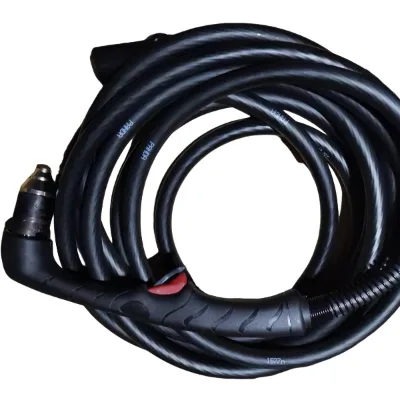


Comprehensive Sourcing Guide
Strategic Sourcing Guide for CE Certified Plasma Cutting Torches
Selecting the right plasma cutting torch is a critical decision for any procurement team managing metal processing machinery. The core keyword "CE Certified Plasma Cutting Torch" signals a specific requirement for regulatory compliance within the European market, but it also encompasses a broader set of technical, operational, and logistical considerations. Buyers must navigate a landscape where product attributes vary significantly across different models, from high-current industrial units to portable handheld devices. This guide provides a structured approach to evaluating suppliers and products, ensuring that the final selection aligns with operational needs, safety standards, and budgetary constraints without relying on unverified marketing claims.
Technical Specifications and Performance Parameters
When evaluating plasma cutting torches, the primary focus must be on the technical specifications that directly impact cutting efficiency and equipment longevity. The supplied data indicates a diverse range of operating currents, which is the most critical factor in determining the torch's capability. For instance, specific models are rated for 40 AMPS, 100 AMPS, and 150 AMPS. A procurement strategy should begin by mapping these current ratings to the intended material thickness. The observed data shows a direct correlation between operating current and cutting capacity, with maximum cutting thicknesses ranging from 10mm for lower-current units to 35mm for high-current models.
Beyond current and thickness, the duty cycle is a vital specification that dictates continuous operating time. Some units in the observed range feature a 60% duty cycle, while others are rated at 35%. This percentage indicates the amount of time a torch can operate at a specific current within a ten-minute period before requiring a cooldown. Selecting a torch with an insufficient duty cycle for high-volume production environments can lead to frequent downtime and premature component failure. Additionally, the cooling method is a key differentiator. The available data highlights "Air Cooling" as a standard feature for several models, which simplifies the system by eliminating the need for water circulation. However, buyers must verify if the specific model supports the required airflow rates, as some specifications list air flow requirements of 150L/Min, while others specify air pressure ranges between 0.35 and 0.45 MPa.
The arc starting method is another technical parameter that influences the quality of the cut and the ease of operation. The observed products utilize a "Non-High Frequency" starting method, which is generally preferred for its ability to reduce electromagnetic interference (EMI) and protect sensitive electronic components in the cutting machine. Furthermore, the frequency range is noted as "Low Frequency," which is consistent with modern inverter-based plasma systems. Buyers should ensure that the torch's electrical characteristics match the power source of their existing machinery to avoid compatibility issues.
Compliance and Certification Verification
The requirement for "CE certification" is not merely a label but a legal necessity for selling and operating machinery within the European Economic Area. The data provided lists multiple certification entries, including "CE," "RoHS," and "ISOCE." It is important to distinguish between these. While "CE" indicates conformity with health, safety, and environmental protection standards for products sold within the EEA, "RoHS" (Restriction of Hazardous Substances) ensures that the product does not contain specific hazardous materials. The presence of "ISOCE" in the data suggests a combination of ISO and CE standards, but buyers must verify the specific scope of this certification on the official documentation provided by the supplier.
Compliance extends beyond the torch itself to the manufacturing standards of the facility. The observed products reference standards such as "BS," "ANSI," "JIS," "GB," "GOST," "ASTM," and "DIN." While these are listed as general product standards, the specific torch models often cite "ISO9001" as their production standard. ISO9001 certification indicates that the manufacturer has a quality management system in place, which is a strong indicator of consistent product quality. However, buyers should not assume that every listed product automatically satisfies every standard mentioned in the general category. Instead, the procurement process must include a request for the specific CE Declaration of Conformity and the relevant test reports for the exact model number being purchased.
The data also mentions "EN60974-7" as a background standard. This standard specifically relates to safety requirements for arc welding equipment. While it is listed in the low-confidence background section, it is highly relevant for plasma cutting torches as they operate on similar principles. Buyers should explicitly ask suppliers if the torch design complies with EN60974-7, as this is the primary safety standard for such equipment in Europe. Relying solely on the "CE" mark without verifying the underlying test data against this standard can expose the buyer to liability in the event of an accident.
Cost Drivers and Pricing Structure
Understanding the cost structure of plasma cutting torches is essential for budgeting and negotiating effectively. The observed price range in the market is substantial, spanning from 0.55 USD to 409.65 USD. This wide disparity is not indicative of a single product line but rather reflects the vast differences in specifications, materials, and intended applications. The lower end of the price spectrum likely corresponds to consumable parts, accessories, or very basic handheld torches with limited current capacity. The higher end of the range likely represents complete, high-duty cycle torches with advanced cooling systems and robust construction designed for heavy industrial use.
Several factors drive these costs. First, the operating current and duty cycle are primary cost drivers. A 150 AMP torch with a 60% duty cycle requires more robust internal components, such as larger contact tips, higher-grade nozzles, and more durable cables, which increases the manufacturing cost. Second, the material quality plays a significant role. The data mentions "Steel Alloy Machining Part" with a tolerance of 0.01mm, suggesting that precision engineering is a value-add feature. Torches that maintain tight tolerances during high-temperature operations will command a higher price. Third, the packaging and origin influence the final landed cost. Products originating from "Qingdao" or "Jiangsu Changzhou" in China may have different shipping and tariff implications compared to other regions. The observed packing standards, such as "Europe Standard Packing" or specific box configurations like "1set/Box Neutral Packing," also add to the cost but ensure safe transit.
Buyers should be wary of prices that seem too good to be true, especially when they fall outside the typical range for the specified current and duty cycle. A torch priced at the lower end of the spectrum with claims of 150 AMP capacity and 60% duty cycle should be scrutinized for potential compromises in material quality or safety features. The Minimum Order Quantity (MOQ) is another financial consideration. The observed MOQ ranges from 1 to 100 units, with some specific models requiring a minimum of 5 units. This variability allows for flexibility in procurement, but buyers must calculate the total cost of ownership, including the cost per unit at different volume tiers, to determine the most economical purchasing strategy.
Typical Applications and Operational Context
Plasma cutting torches are versatile tools, but their application is strictly defined by their technical specifications. The data indicates that these products are primarily used for "Metal Processing Machinery Parts" and general "Machinery" applications. The specific models identified, such as the "A101 Plasma Cutting Torch," "Cp150 Plasma Cutting Torch," and "High Quality PT31 Plasma Cutting Torch," suggest a range of use cases from light-duty to heavy-duty industrial tasks.
The "Hand" application attribute suggests that some models are designed for manual operation, offering flexibility for on-site repairs or custom fabrication work. These portable units, often characterized by smaller cutting capacities (e.g., 10mm max) and lower operating currents (40 AMPS), are ideal for workshops that require mobility. Conversely, the "CNC plasma cutting torch" models are designed for integration into automated CNC machines. These units must withstand continuous operation and precise movement, making the duty cycle and cooling method critical factors. The "A101" model, with a 25mm maximum cutting capacity, represents a mid-range solution suitable for general fabrication shops that process a variety of steel thicknesses.
The "Flame Number" attribute, listed as "Single Flame," is a standard configuration for plasma cutting, distinguishing it from oxy-fuel cutting which may use multiple flames. The "Maximum Welding Thickness" of >15mm mentioned in the data is an interesting attribute, as plasma torches are primarily cutting tools. This may indicate that the torch assembly or the associated power source is part of a multi-process system capable of both cutting and welding, or it may refer to the thickness of the material the torch can handle in a specific cutting mode. Buyers must clarify this attribute with the supplier to ensure the equipment meets their specific process requirements. The "Standard" size and "Portable" size options further expand the application scope, allowing buyers to select a torch that fits their workspace constraints.
Supplier Evaluation and Quality Control
Evaluating a supplier for plasma cutting torches requires a rigorous approach to quality control and reliability. The data points to several key attributes that serve as indicators of supplier competence. The "Condition" of the products is listed as "New," which is a baseline expectation, but the "Customization" and "Customized" attributes suggest that suppliers are capable of tailoring products to specific client needs. This flexibility is valuable for buyers with unique operational requirements, such as specific cable lengths or connector types.
The "Place of Origin" is consistently listed as locations in China, specifically "Qingdao" and "Jiangsu Changzhou." These regions are known manufacturing hubs, but buyers should not assume uniform quality across all suppliers in these areas. The presence of "ISO9001" as a product standard is a positive signal, but it should be verified as an active certification for the specific manufacturing facility. Buyers should request evidence of the supplier's quality management system and ask for samples of their quality control logs.
Quality control should also extend to the physical inspection of the product upon receipt. The "Europe Standard Packing" and specific box configurations (e.g., "5sets/Carton Box") are designed to protect the torch during transit. However, buyers must verify that the packaging is intact and that the contents match the order specifications. The "Tolerance: 0.01mm" for steel alloy machining parts is a precise specification that should be verified through dimensional inspection of the torch components. Any deviation from this tolerance could affect the alignment of the electrode and nozzle, leading to poor cut quality and increased consumable wear.
Long-Term Procurement and Maintenance Considerations
Sourcing a plasma cutting torch is not a one-time transaction but the beginning of a long-term relationship with a supplier. The "Duty Cycle" and "Cooling Way" are critical factors in determining the maintenance schedule and total cost of ownership. A torch with a 60% duty cycle and air cooling is generally more robust and requires less frequent maintenance than a unit with a 35% duty cycle. However, even high-duty cycle torches require regular inspection of consumables such as nozzles, electrodes, and swirl rings.
The "Operating Current" and "Rated Current" specifications are also vital for long-term planning. Operating a torch consistently at its maximum rated current can accelerate wear and reduce its lifespan. Buyers should consider the availability of replacement parts and the lead time for restocking. The "MOQ" of 5 units for some models suggests that buyers may need to stock a minimum quantity of consumables or spare torches to ensure continuous operation.
Furthermore, the "Standard" and "Certification" requirements must be maintained throughout the product's lifecycle. If a torch is used in a regulated environment, any modification or repair must not void the CE certification. Buyers should establish a protocol with their supplier to ensure that any replacement parts are also certified and compatible with the original torch. The "Air Flow" and "Air Pressure" requirements must be monitored regularly, as deviations can indicate internal blockages or leaks that need immediate attention. By focusing on these long-term considerations, buyers can ensure that their plasma cutting operations remain efficient, safe, and compliant with all relevant standards.
FAQs
What certifications do these plasma cutting torches hold?
These torches hold CE, RoHS, and ISO9001 certifications. Some listings also mention ISOCE and compliance with standards like BS, ANSI, JIS, GB, GOST, ASTM, and DIN. Buyers should verify specific documentation for the exact model purchased.
Which operating currents are available for these torches?
Available operating currents include 40 AMPS, 100 AMPS, and 150 AMPS depending on the model. Higher currents generally support greater cutting capacities, ranging from 10mm up to 35mm maximum thickness for steel materials.
Can I find customized plasma cutting torch options?
Yes, customization is available for these products. Suppliers offer customized solutions to meet specific requirements, allowing buyers to tailor specifications for their metal processing machinery parts or general machinery applications.
How does the duty cycle affect torch performance?
Duty cycles vary between 35% and 60% for different models. A 60% duty cycle allows for longer continuous operation within a ten-minute period compared to a 35% cycle, which is critical for high-volume production environments.
What is the minimum order quantity for these torches?
The minimum order quantity ranges from 1 to 100 units, with some specific models requiring a minimum of 5 units. This flexibility allows buyers to adjust their procurement strategy based on volume needs and budget constraints.
Where are these plasma cutting torches manufactured?
Products originate from Qingdao and Jiangsu Changzhou in China. These locations are established manufacturing hubs, and buyers should consider shipping and tariff implications associated with these specific origins when calculating total costs.