Source CE Certified Record Player for Home, Commercial, and Portable Use
Compare 30 CE Certified Record Player options from Guangdong suppliers. Buyers can evaluate models like DS-168 and TR-17CD for home, commercial, and portable applications with features such as USB playback and FM radio.
Key considerations
Products List


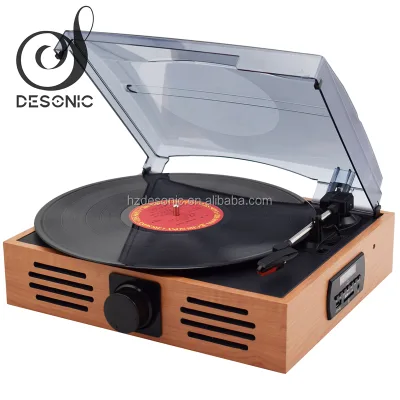
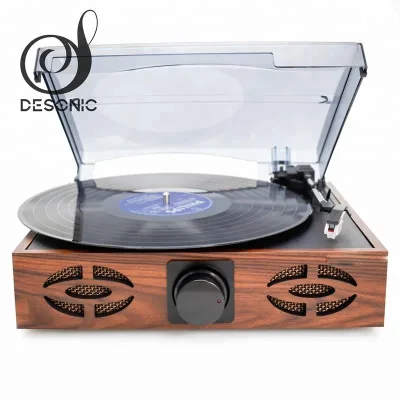
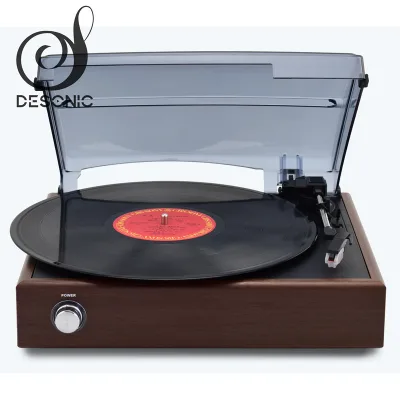


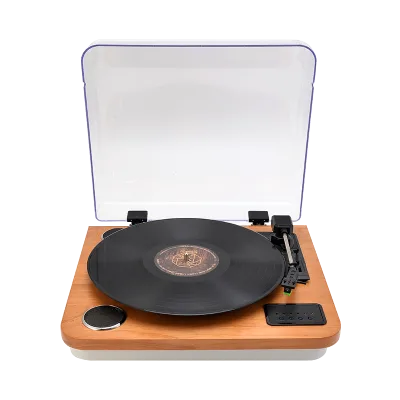


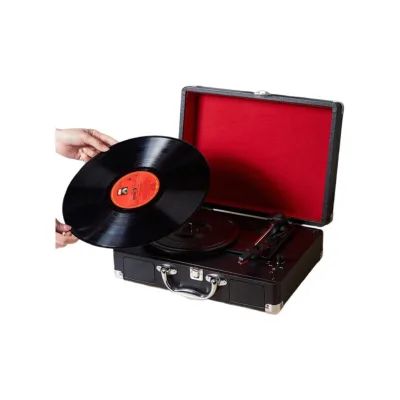
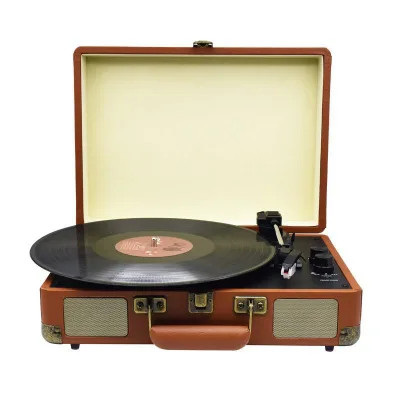
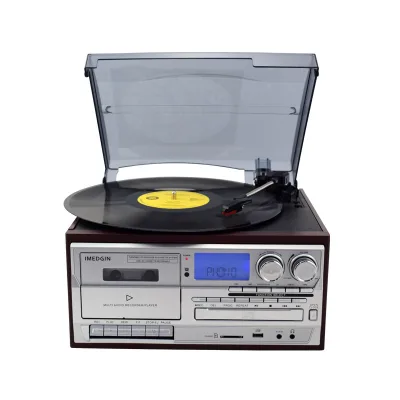
3 Speed Belt Driven Vintage Vinyl Record Player for Entertainment Aux in RCA out
$15.58 - $16.40
MOQ: 500 Pieces




Comprehensive Sourcing Guide
Strategic Sourcing Guide for CE Certified Record Players
Understanding the Product Category and Technical Specifications
The global market for vinyl playback equipment has seen a resurgence, driven by audiophiles and casual listeners alike. When sourcing a "CE Certified Record Player," buyers must first distinguish between high-fidelity turntables and the more common "economic type, wooden style" units often found in B2B catalogs. Based on available market data, these devices typically feature a "simple&best" design philosophy, utilizing materials such as MDF (Medium Density Fiberboard) and PVC to balance cost with aesthetic appeal. The core functionality generally revolves around a "3-Speed records" mechanism, capable of playing 7", 10", and 12" records at 33, 45, and 78 RPM.
Technical specifications vary significantly between models, even within the same product line. For instance, specific model numbers like DS-168, TR-17CD, and DS-106E indicate distinct configurations. The physical dimensions are critical for logistics and display planning. Observed standard packaging sizes include units measuring approximately 340500250mm or 330300210mm, while single unit dimensions can range from 320300125 mm to larger configurations like 39X35.5X36 cm. Buyers should verify the "Unit size" against their retail display requirements, as some models are designed for portability, while others are stationary home units.
Power requirements also present a variable factor in technical evaluation. Many units in this category support a "power adaptor" with dual voltage capabilities, specifically "110v 220v," ensuring compatibility with international electrical grids. However, the absence of a screen and the "Without Game Function" status are consistent features across portable and commercial variants. Advanced models may include "Optional feature" capabilities such as Bluetooth connectivity, equalizers, or USB encoding, allowing for the digitization of vinyl records. The "Multiple Audio Format" support often includes MP3, facilitating modern integration with digital ecosystems.
Compliance Verification and Certification Standards
The term "CE certified" is a primary filter for procurement in the European market and beyond. It signifies that the manufacturer declares the product meets EU safety, health, and environmental protection requirements. In the context of record players, this certification is not merely a label but a verification of electrical safety and electromagnetic compatibility. The specific certifications observed in the supply chain include CE, LVD (Low Voltage Directive), EMC (Electromagnetic Compatibility), FCC (Federal Communications Commission), and ROHS (Restriction of Hazardous Substances).
Buyers must understand that "CE" and "RoHS" are distinct but often paired requirements. The CE mark covers the LVD and EMC directives, ensuring the device does not pose a shock hazard and does not emit excessive electromagnetic interference that could disrupt other electronics. The FCC certification, while primarily a US standard, is frequently bundled with CE in global manufacturing to streamline export logistics. The ROHS directive ensures that the materials used, such as the MDF and PVC mentioned in product descriptions, do not contain restricted hazardous substances like lead or mercury.
When evaluating a supplier, it is crucial to request the specific Declaration of Conformity (DoC) for the exact model number being purchased. Generic claims of "CE certification" without a DoC linked to the specific model number (e.g., DS-108 or S-2034) are insufficient for B2B compliance. The "standard" field in product data often lists "CE;" as a standalone entry, but this should be cross-referenced with the full list of certifications. Buyers should also note that while "ISO 9001" is a common background standard for quality management, it is not a product-specific certification and should not be confused with the CE mark itself.
Cost Drivers and Pricing Dynamics
The pricing structure for record players in this category is influenced by a complex interplay of material costs, customization options, and supply chain logistics. The observed price range in the market spans from $1 to $5,000 USD, a wide spectrum that reflects the difference between basic economic units and high-end, feature-rich models. The "economic type" units, often featuring wooden styles and basic 3-speed mechanisms, tend to cluster at the lower end of this range. Conversely, models with "Optional feature" additions like Bluetooth, equalizers, or USB recording capabilities command higher price points.
Material composition is a significant cost driver. The use of MDF and PVC is standard for the "wooden style" aesthetic, but the quality of the finish and the thickness of the materials can vary. Customization is a key variable; the "prod_prop.Customization: Available" attribute indicates that buyers can request specific color options such as Black, Cherry, Mahogany, or Walnut, or even fully customized finishes. These custom orders often incur additional costs and may affect the Minimum Order Quantity (MOQ).
The MOQ range observed is between 1 and 2,000 units. This flexibility allows buyers to test the market with small batches or secure bulk pricing for large retail chains. However, the "Supply Ability" varies by manufacturer, with some capable of producing 25,000 pieces per month and others up to 35,000 units. This capacity directly impacts the unit price; higher volume orders typically benefit from economies of scale. Additionally, packaging details, such as the use of poly bags, protective buffers, and gift boxes, add to the overall cost. The "Single gross weight" of approximately 6.160 kg for certain models also influences shipping costs, which are a hidden but significant component of the total landed cost.
Typical Applications and Market Segmentation
Record players sourced with CE certification serve a diverse range of applications, from commercial environments to private homes. The "Application" field explicitly lists "Commercial, Home," indicating the versatility of these units. In a commercial setting, such as cafes, hotels, or retail stores, the "Turntable player" functionality provides ambient entertainment that enhances the customer experience. The "3-Speed records" capability ensures compatibility with the vast library of vinyl available, while the "FM radio" and "Aux in" features allow for a broader range of audio sources.
For home use, the "Features: economic type, wooden style" appeal to consumers looking for a blend of retro aesthetics and modern functionality. The "Optional" features like "PC-LINK" or an "S shape tone arm" cater to enthusiasts who value precision and connectivity. The "Portable" type designation suggests that some models are designed for mobility, making them suitable for events or smaller living spaces. The "Game Function: Without Game Function" attribute clarifies that these are dedicated audio devices, not hybrid entertainment systems, which is a crucial distinction for buyers targeting specific user needs.
The "Product name: Hot sale simple turntable record player" suggests a strong market demand for straightforward, reliable units. The "Selling Units: Single item" status indicates that these products are often sold individually, though bulk packaging is available for distributors. The "Warranty: 12 Months" is a standard offering that provides buyers with a baseline of confidence regarding product longevity. However, the specific warranty terms should always be verified against the supplier's policy, as they can vary based on the region and the specific model purchased.
Supplier Evaluation and Supply Chain Capabilities
Selecting the right supplier requires a rigorous evaluation of their production capabilities and logistical infrastructure. The "prod_prop.prod_origin: Guangdong, China" and "prod_prop.prod_origin: China" data points confirm that the majority of these products originate from major manufacturing hubs in China. Guangdong, in particular, is known for its electronics and furniture manufacturing clusters, offering a robust supply chain for components like motors, tone arms, and wooden casings.
The "Port of dispatch: Shenzhen" is a critical logistical detail. Shenzhen is a major global shipping hub, facilitating efficient export to Europe, North America, and other regions. Buyers should verify the "Lead times" and "Container loading" capacities to ensure timely delivery. For example, a 20GP container can load approximately 1,150 units of certain models, while a 40GP can hold up to 2,300 units. This data is essential for calculating shipping costs and planning inventory levels.
Supplier reliability is further indicated by their "Supply Ability." A capacity of 25,000 to 35,000 units per month suggests a mature manufacturing operation capable of handling large orders without significant delays. However, buyers should also assess the supplier's responsiveness to customization requests and their ability to maintain consistent quality across batches. The "Packaging Details" provide insight into the care taken during the shipping process, with descriptions like "packing with poly bag and protective buffer" indicating a commitment to product safety.
Quality Control and Long-Term Procurement Considerations
Quality control is paramount when sourcing electronic devices like record players. The "Certifications: CE LVD EMC FCC ROHS" serve as a baseline for quality, but buyers should implement additional verification steps. Regular audits of the production line can ensure that the "Material: MDF, PVC" meets the specified standards and that the "Power supply: 110v 220v" components are correctly installed. The "Warranty: 12 Months" is a strong indicator of the manufacturer's confidence in their product, but it should be accompanied by a clear process for handling defects and returns.
Long-term procurement considerations involve building a sustainable relationship with the supplier. The "Customization: Available" attribute offers opportunities for brand differentiation, allowing buyers to create unique products that stand out in the market. However, customization can introduce complexity into the supply chain, requiring careful management of design changes and production schedules. Buyers should also consider the "Optional feature" landscape, as technology evolves rapidly. Features like Bluetooth and USB encoding are becoming standard expectations, and suppliers who can adapt to these trends will be more valuable partners in the long run.
Finally, buyers must remain vigilant about the "Observed listed price range" and "MOQ range." While the data suggests a wide range of options, the actual cost and minimum order requirements can fluctuate based on market conditions, raw material prices, and geopolitical factors. Establishing a clear communication channel with the supplier and maintaining a detailed record of all specifications, certifications, and packaging details will help mitigate risks and ensure a successful procurement strategy. By focusing on these critical areas, buyers can secure high-quality, CE-certified record players that meet their specific business needs and customer expectations.
FAQs
What certifications do these record players hold?
These units hold CE, LVD, EMC, FCC, and ROHS certifications. This ensures compliance with EU safety and environmental standards while meeting US electromagnetic compatibility requirements for global export.
Which materials are used for the product casing?
The casing is constructed from MDF and PVC materials. This combination provides a wooden style aesthetic while maintaining durability and cost-effectiveness for economic type models.
Can I customize the color and finish of the unit?
Yes, customization is available for colors like Black, Cherry, Mahogany, and Walnut. Buyers can request specific finishes to match their brand requirements or retail display needs.
What is the minimum order quantity for these items?
The minimum order quantity ranges from 1 to 2000 units depending on the supplier. This flexibility allows for small batch testing or large volume retail chain orders.
How much supply capacity do the manufacturers have?
Manufacturers report a supply ability of 25,000 to 35,000 units per month. This high capacity ensures that large orders can be fulfilled without significant production delays.
What power supply options are supported by the device?
The device supports a power adaptor with 110v and 220v voltage options. This dual voltage capability ensures compatibility with electrical grids in different international regions.
Where are these record players manufactured and shipped from?
Products originate from Guangdong, China, and are dispatched from the Shenzhen port. This location leverages established manufacturing clusters and efficient global shipping logistics.