Source CE Certified Resin Septic Tank for Villa, Warehouse, Dormitories
Compare 30 CE Certified Resin Septic Tank options from verified Chinese manufacturers. These units are available in PE, FRP, and PP+PE materials with customizable volumes and thicknesses for household, industrial, and environmental protection applications.
Key considerations
Products List




Comprehensive Sourcing Guide
Strategic Sourcing Guide for CE Certified Resin Septic Tanks
Navigating the global market for septic tanks requires a precise understanding of material science, regulatory compliance, and supply chain logistics. For buyers specifically searching for "CE Certified Resin Septic Tank," the procurement process involves distinguishing between various resin-based technologies, primarily Polyethylene (PE) and Fiberglass Reinforced Plastic (FRP). The term "resin" in this context often encompasses both pure polymer tanks and composite structures where resin acts as the binding matrix for glass fibers. This guide outlines the critical factors for sourcing these units, focusing on the intersection of technical specifications, certification verification, and operational suitability.
Understanding Material Composition and Structural Integrity
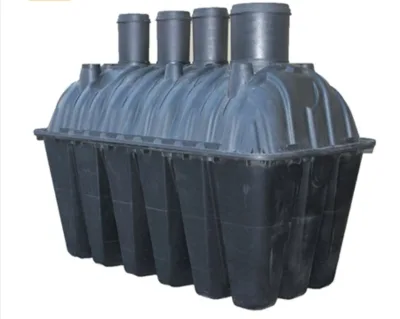
The foundation of any septic tank procurement decision lies in the material selection. The observed market data indicates a divergence between two primary material categories: Polyethylene (PE) and Fiberglass Reinforced Plastic (FRP). PE tanks are typically manufactured from high-density polyethylene, often blended with other polymers like PP (Polypropylene) to enhance durability. These units are frequently observed in black, white, green, or blue colors and are designed for underground installation. The material properties of PE offer excellent resistance to chemical corrosion and a seamless construction that minimizes leak points.
Conversely, FRP tanks utilize a resin matrix, specifically Epoxy FRP or GFRP (Glass Fiber Reinforced Plastic), to create a composite structure. These tanks are characterized by a grey color and a smooth surface treatment. The structural integrity of FRP tanks relies on the thickness of the resin and fiber layers, which can range from 3.0mm to 7.0mm or be fully customized to meet specific load-bearing requirements. The "Molding Method" used for FRP production ensures a high degree of structural consistency, while PE tanks often rely on rotational molding or injection molding techniques.
When evaluating technical specifications, buyers must verify the volume capacity. Standardized models often appear in ranges such as 0.5 to 3.0 cubic meters, or specific increments like 0.6, 0.8, 1.0, 1.2, 1.5, 2.0, and 2.5 cubic meters. The physical dimensions are usually dictated by the volume, with sizes adjusted accordingly to fit the required capacity. For applications requiring non-standard volumes, the "Customizable" attribute is a key differentiator, allowing suppliers to tailor the thickness and dimensions to specific site conditions.
Verification of CE Certification and International Standards
The core keyword "CE certified" implies compliance with European Union safety, health, and environmental protection requirements. However, the presence of a CE mark is not a guarantee of quality without supporting documentation. In the context of septic tanks, the CE certification is often linked to the EN 12566 series of standards, which govern small sewage treatment plants. While specific standard references like EN 12566-1 appear in background data, buyers must verify that the specific product batch holds valid certification that aligns with the intended market of use.
The supplied data confirms that ISO9001 is a common certification among suppliers, indicating adherence to quality management systems. Some listings also reference CE, RoHS, and ISO certifications in combination. It is critical for buyers to request the actual certificate of conformity rather than relying on marketing claims. The verification process should include checking the validity of the certificate, the scope of the certification (e.g., does it cover the specific volume and material type?), and the issuing body.
Furthermore, the "Production" capacity of suppliers, observed at 100,000 pieces per week, suggests a high-volume manufacturing environment. While this indicates scalability, it also necessitates rigorous quality control to ensure that the CE certification remains consistent across large batches. Buyers should inquire about the specific testing protocols used to maintain compliance, such as pressure testing, leak detection, and material tensile strength verification.
Cost Drivers and Pricing Dynamics
The pricing for resin septic tanks varies significantly based on material, volume, and customization. The observed price range in the market spans from $2.5 to $433 USD. This wide disparity is primarily driven by the distinction between small-scale residential units and large industrial or commercial tanks. Smaller units, often in the 0.5 to 1.0 cubic meter range, tend to fall at the lower end of the spectrum, while larger, custom-engineered FRP tanks with enhanced thickness and specialized coatings command higher prices.
Material costs are a primary driver. FRP tanks, which require a complex molding process and higher-grade resins, generally cost more than standard PE tanks. Additionally, the "Thickness" specification plays a crucial role; tanks with thicknesses of 5mm or higher, or those in the 3.0-7.0mm range, require more raw material and processing time, directly impacting the unit price. Customization is another significant cost factor. While "Customization" is listed as available, any deviation from standard models—such as specific inlet/outlet configurations, unique colors, or non-standard volumes—will increase the manufacturing cost and potentially the lead time.
The "MOQ" (Minimum Order Quantity) also influences the effective cost per unit. The observed MOQ range is 1 to 100 units. Buyers purchasing a single unit for a specific project may face a higher per-unit cost compared to those placing orders for 100 units, where economies of scale can reduce the price. The "Standard" packaging and "Seaworthy Packaging" options also contribute to the final landed cost, as specialized packaging for large tanks adds to the shipping and handling expenses.
Typical Applications and Usage Scenarios
Resin septic tanks are versatile and serve a broad spectrum of applications, ranging from residential to industrial. The data indicates usage in "Industrial, Agriculture, Home, Hospital," as well as "Household, Industrial, Environmental Protection," and specific sites like "Warehouse, Villa, Dormitories." This versatility stems from the material's ability to resist corrosion and withstand underground conditions.
For residential applications, such as villas and dormitories, the focus is often on compact, underground units that fit within limited space. The "Style" is typically underground, and the color options (black, white, green, blue) allow for aesthetic integration or camouflage. In agricultural settings, the tanks must handle larger volumes of waste and potentially harsher chemical environments, making the chemical resistance of PE and FRP critical.
Industrial and hospital applications demand higher reliability and larger capacities. The "Application" of "Water Purification" suggests that some resin tanks are designed not just for storage but for active treatment processes. In these scenarios, the structural integrity of the tank is paramount to prevent leakage into the surrounding soil. The "Weight" of the units, such as the observed 300kg for certain models, is a critical factor for installation logistics, particularly in sites with limited access or soft soil conditions.
Supplier Evaluation and Production Capabilities
Selecting the right supplier is as important as selecting the right product. The geographic origin of the products is predominantly in Hebei Province, China, with specific mentions of Shijiazhuang and Hengshui City. These regions are known for their manufacturing clusters, offering a competitive advantage in terms of supply chain efficiency. However, buyers must evaluate suppliers based on their production capacity and quality assurance processes.
The "Production" rate of 100,000 pieces per week indicates a high-capacity facility. While this is beneficial for large orders, it requires robust quality control measures to ensure consistency. Buyers should verify the supplier's "OEM/ODM" capabilities, as the data confirms that these services are available. This allows for branding customization and specific engineering requirements.
The "After Sale Service" is another critical evaluation metric. The availability of "Installation Video" support suggests that suppliers are providing digital resources to assist with the complex installation of underground tanks. Buyers should also inquire about the "Sample" policy, as the data indicates that free samples may be available. Requesting a sample allows for a physical inspection of the material quality, thickness, and finish before committing to a large order.
Quality Control and Long-Term Procurement Considerations
Ensuring long-term performance requires a proactive approach to quality control. The "Surface Treatment" of FRP tanks is noted as "Smooth," which is essential for preventing the accumulation of debris and facilitating cleaning. Buyers should verify that the smoothness is consistent and that the resin curing process has been completed correctly to avoid brittleness or cracking over time.
The "Standard" packaging and "Wooden Pallets" or "Seaworthy Packaging" are vital for protecting the tanks during transit. Given the fragility of resin-based materials, improper packaging can lead to damage that compromises the tank's integrity. Buyers should inspect the packaging upon delivery and verify that the "Thickness" specifications match the order requirements.
Long-term procurement considerations also include the "Customized" nature of the products. While customization offers flexibility, it introduces variability. Buyers should establish clear specifications and testing protocols for custom orders to ensure they meet the same quality standards as standard models. Additionally, the "Lead Time" and "MOQ" should be factored into the procurement schedule to avoid delays in project timelines.
Comparative Analysis of Material Options
To assist buyers in making an informed decision, the following table compares the key attributes of the two primary material types observed in the market:
| Attribute | Polyethylene (PE) | Fiberglass Reinforced Plastic (FRP) |
|---|---|---|
| Primary Material | PE, PP+PE | Epoxy FRP, GFRP |
| Typical Color | Black, White, Green, Blue | Grey |
| Thickness Range | 5mm (Customizable) | 3.0 - 7.0mm (Customized) |
| Volume Range | 0.5 - 3.0m³ | 0.6 - 2.5 Cbm |
| Surface Treatment | Smooth | Smooth |
| Certifications | ISO9001, CE, RoHS | ISO9001, CE, ISO |
| Molding Method | Rotational/Injection | Molding |
| Primary Usage | Home, Agriculture, Industrial | Household, Environmental Protection |
| Packaging | Standard, Seaworthy | Wooden Pallets, Seaworthy |
This comparison highlights that while both materials offer robust solutions, the choice depends on specific project requirements regarding volume, color, and structural thickness. PE tanks offer a wider color palette and are often more cost-effective for standard volumes, while FRP tanks provide superior structural strength for larger or more demanding applications.
Conclusion
Sourcing a CE Certified Resin Septic Tank requires a meticulous approach that balances technical specifications, regulatory compliance, and supplier reliability. Buyers must verify the authenticity of certifications, understand the implications of material choices, and evaluate the supplier's capacity to meet specific customization needs. By focusing on the observed data points regarding volume, thickness, and origin, procurement professionals can make informed decisions that ensure the long-term performance and safety of their septic tank installations. The availability of free samples, installation videos, and customizable options further empowers buyers to select the optimal solution for their specific operational environment.
FAQs
What certifications do CE certified resin septic tanks hold?
These tanks typically hold ISO9001, CE, and RoHS certifications. Some models also carry ISO certification, ensuring adherence to quality management systems and safety standards for the intended market.
Which materials are used for resin septic tanks?
Manufacturers use Polyethylene (PE), PP+PE blends, or Fiberglass Reinforced Plastic (FRP). FRP tanks often utilize Epoxy FRP or GFRP for enhanced structural integrity and chemical resistance.
Can buyers request custom thickness for these tanks?
Yes, customization is available for thickness specifications. Options include 5mm or ranges from 3.0 to 7.0mm, allowing suppliers to tailor units to specific load-bearing requirements.
How large is the production capacity for these units?
Suppliers demonstrate a production capacity of 100,000 pieces per week. This high-volume output supports large orders while maintaining consistency across batches for quality assurance.
Where are these resin septic tanks manufactured?
Products originate from Hebei Province, China, specifically Shijiazhuang and Hengshui City. These regions offer established manufacturing clusters for efficient supply chain logistics.
What volume capacities are available for these tanks?
Standard volumes range from 0.5 to 3.0 cubic meters. Specific models offer increments like 0.6, 0.8, 1.0, 1.2, 1.5, 2.0, and 2.5 cubic meters to suit various needs.