Source CE Charcoal Fire Bowl for Garden, Patio, and Outdoor Events
Explore 30 listings for the CE Charcoal Fire Bowl, comparing carbon steel and corten steel options with varying diameters and surface treatments. Buyers can evaluate specifications like thickness, fuel type, and packaging details to find suitable outdoor heating solutions.
Key considerations
Products List
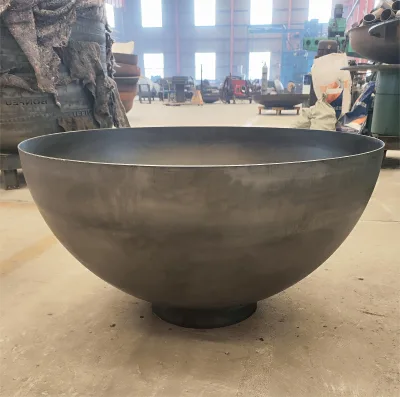
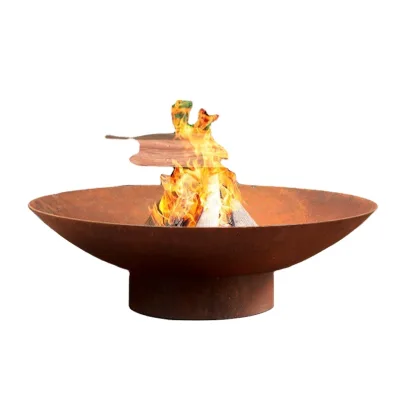
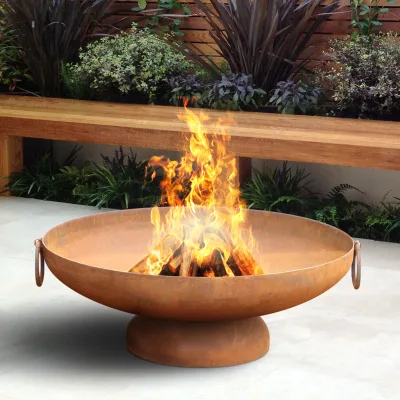
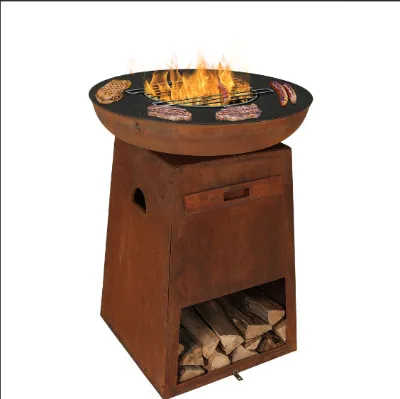
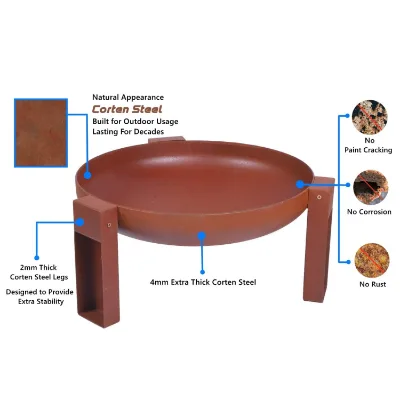
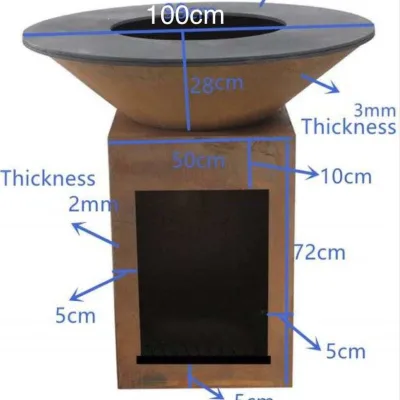


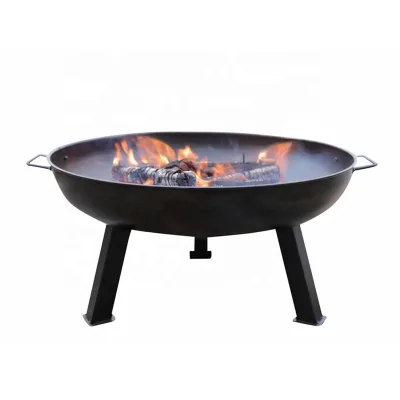


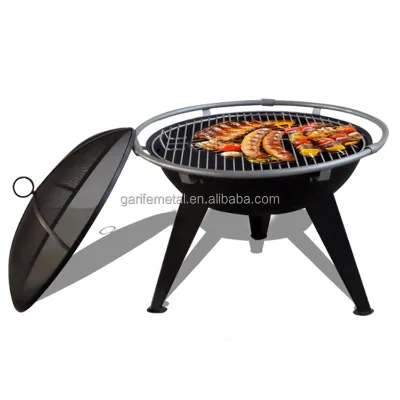
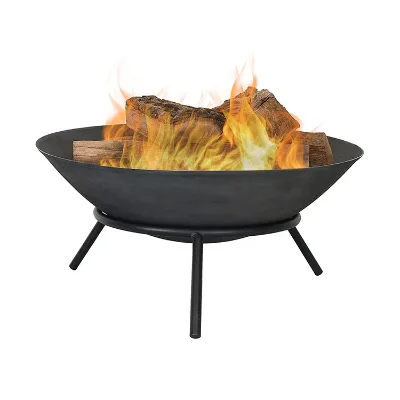
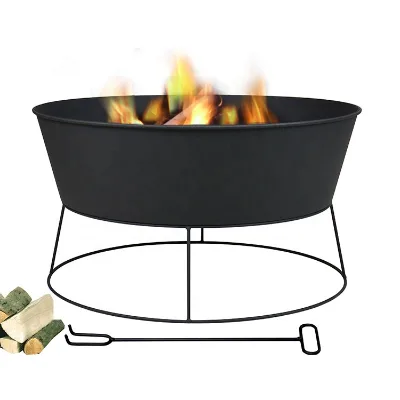
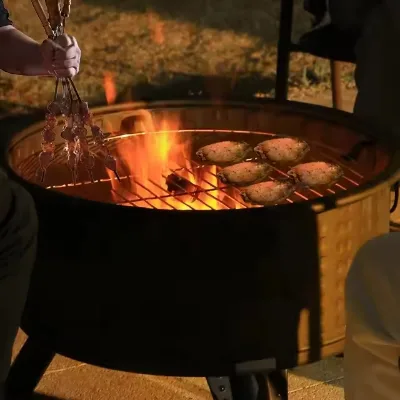
Comprehensive Sourcing Guide
Strategic Sourcing Guide for CE Charcoal Fire Bowl Procurement
Understanding Product Specifications and Material Variations
When sourcing a charcoal fire bowl, buyers must first distinguish between products marketed as "wood burning" and those explicitly designed for charcoal use, as the supplied product data reveals a mix of fuel types. The observed product listings indicate that many units are described with "Fuel Type: Wood" or "Fuel: Firewood," yet the specific search term "charcoal fire bowl" often implies a design optimized for charcoal grilling. The available data confirms that "grill type: Charcoal Grills" is a documented attribute for some units in this category, suggesting that while the primary fuel source listed for many items is wood, the structural design may accommodate charcoal.
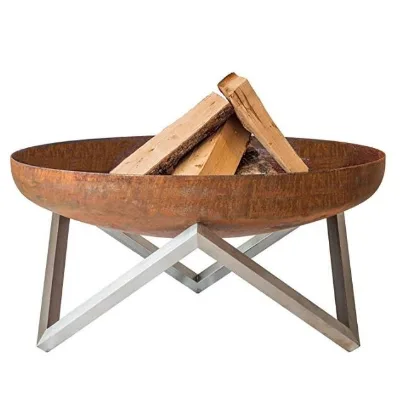
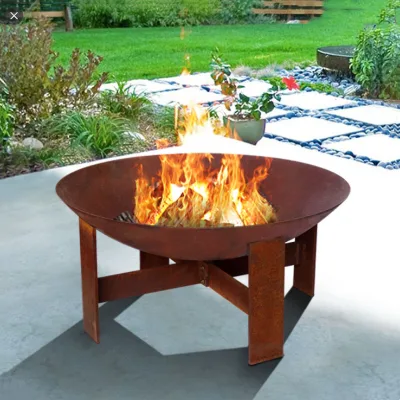
Material selection is a critical first step in the evaluation process. The observed product attributes list "Carbon steel," "stainless steel," and "alloy" as primary materials. A specific subset of the data highlights "Corten Steel" as a material option, which is often chosen for its weathering properties and natural rust appearance, described in the data as "Natural Rust." The thickness of the metal varies significantly across the observed listings, with ranges noted from "2mm-10mm" and a specific observation of "3-6mm." Buyers must verify the exact thickness for their specific order, as thinner gauges may not withstand the high, concentrated heat of charcoal grilling as effectively as thicker alloys.
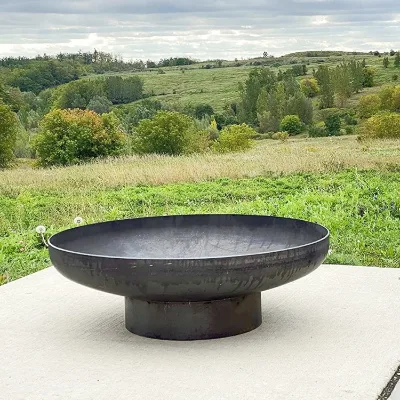
Dimensions are another pivotal specification. The data presents a wide range of diameters, including "60cm, 80cm, 100cm, 120cm, 1500cm" and metric equivalents like "600mm, 800mm, 1000mm, 1200mm, 1500mm." It is important to note the anomaly in the data where "1200cm" is listed alongside millimeter measurements; buyers should clarify whether this is a typographical error for 120cm or a custom large-scale industrial specification. The shape is consistently described as "Round" or "custom," and the style is noted as "Modern." Understanding these dimensional constraints is essential for logistics planning, as the single package sizes vary from "60X60X15 cm" to "100X50X50 cm," and the single gross weight ranges from 20.000 kg to 43.000 kg depending on the model and packaging.
Compliance Verification and Certification Standards
The search keyword includes "CE," implying a requirement for European conformity. However, the supplied product facts do not explicitly confirm a CE certification status for the specific items listed. The high-confidence facts provided only confirm "ISO9001:2015" and "ISO 9001:2015" as observed certifications. While the low-confidence background mentions "CE," this should not be treated as a guaranteed attribute of the supplied products. Buyers must treat the CE mark as a verification requirement rather than an inherent feature.
In the absence of explicit CE documentation in the provided facts, procurement teams must request specific test reports and conformity declarations from the supplier. The observed product standards listed include "ANSI, ASME, MSS, API, DIN, JIS." These are recognized international standards for pressure vessels and piping, which may be relevant for the structural integrity of the fire bowl, particularly if it is intended for high-temperature applications. The presence of "DIN" (German Institute for Standardization) standards is particularly relevant for European markets, as compliance with DIN standards often aligns with CE requirements for mechanical safety.
Buyers should verify that the manufacturer holds valid ISO 9001:2015 certification, as this indicates a quality management system capable of maintaining consistent product standards. The "place of origin" is listed as "Hebei, China," a major manufacturing hub. While this location is a known industrial center, it does not automatically confer CE compliance. The buyer must ensure that the specific batch of fire bowls being purchased has undergone the necessary testing for CE marking, which typically involves assessments for fire safety, material toxicity, and structural stability under load. Without explicit confirmation in the product data, the burden of proof for CE compliance rests entirely on the supplier's ability to provide third-party test certificates.
Cost Drivers and Pricing Dynamics
The observed price range for these products is substantial, spanning from 1 USD to 380 USD. This wide variance suggests that the "charcoal fire bowl" category encompasses everything from small, lightweight portable units to large, heavy-duty industrial or commercial-grade bowls. The price is likely driven by the material composition, with Corten Steel or stainless steel commanding higher prices than standard carbon steel. The thickness of the material, ranging from 2mm to 10mm, is another significant cost factor; thicker steel requires more raw material and energy to process, directly impacting the unit price.
Packaging and logistics also play a major role in the final cost. The data indicates various packaging methods, including "Wooden Case," "steel Pallet," "carbon box," and "steel framework." The single gross weight varies from 20 kg to 43 kg, and the package dimensions differ significantly. Shipping costs for a 43 kg item in a wooden case will be considerably higher than for a 20 kg item in a smaller box. Buyers should calculate the landed cost, which includes the unit price, packaging fees, and freight charges, rather than focusing solely on the FOB price.
The Minimum Order Quantity (MOQ) is another critical cost driver. The observed MOQ ranges from 1 to 231 units, with a specific listing noting an MOQ of "10 Pieces." For buyers seeking to minimize inventory risk, the lower MOQ options are preferable, though they may come with a higher per-unit cost. Conversely, ordering at the higher end of the volume spectrum may unlock better pricing tiers, but the buyer must ensure they have the storage and demand to justify the volume. The "Supply Ability" is noted as "250000 pieces per Year," indicating that suppliers have the capacity to handle large orders, but the actual lead time may vary based on current order backlogs.
Typical Applications and Usage Scenarios
The application data for these fire bowls is diverse, covering "Oil, chemical industry, water conservancy, electric power," as well as "outdoor garden" and "Everyday" use. This suggests that the products are versatile, ranging from industrial components to consumer outdoor furniture. For the specific keyword "charcoal fire bowl," the primary application is likely "outdoor garden" or patio heating and cooking. The "Fuel Type: Wood" and "Fuel: Firewood" attributes in the data suggest that many of these units are designed for open-flame heating, but the "grill type: Charcoal Grills" attribute confirms that some models are specifically engineered for cooking.
The "Style: Modern" and "Style: Wood Burning" attributes indicate that these products are designed to fit contemporary outdoor aesthetics. The "Natural Rust" finish of Corten Steel models is particularly popular for modern landscaping, as it weathers over time to a stable, protective layer. The "Portable" advantage listed in the data is crucial for buyers looking for units that can be moved easily between different outdoor spaces. The "Service: OEM" capability suggests that buyers can request custom branding or design modifications to suit specific application needs, such as adding handles, legs, or specific grill grates.
For industrial applications, the "ANSI, ASME, MSS, API" standards are relevant, suggesting that some units may be used in contexts requiring high durability and safety compliance, such as in oil or chemical facilities where heat management is critical. However, for the average B2B buyer sourcing for hospitality or residential projects, the focus should be on the "outdoor garden" applications, ensuring the unit is safe for public or semi-public use and resistant to weathering.
Supplier Evaluation and Operational Capabilities
Evaluating a supplier for charcoal fire bowls requires a deep dive into their operational capabilities and service levels. The data indicates that the "place of origin" is "Hebei, China," and the "Port of dispatch" is "Tianjin." Buyers should verify the supplier's proximity to the port and their experience with international shipping from this region. The "Delivery time" is listed as "15-25 days" or "20 days," which provides a baseline for lead time planning. However, buyers must confirm if these times are for production only or include shipping, as delays can occur during the logistics phase.
The "Service: OEM, reply within 2 hours" attribute highlights the importance of communication speed and customization support. A supplier that responds quickly is better equipped to handle last-minute changes or technical queries regarding the charcoal grill specifications. The "Single gross weight" and "Single package size" data are essential for verifying the supplier's ability to handle the specific logistics of the order. Buyers should request a packing list and proforma invoice that details the exact dimensions and weight to ensure accurate freight calculations.
When evaluating suppliers, buyers should also consider the "Supply Ability" of 250,000 pieces per year. This indicates a high-volume manufacturer, which is beneficial for large orders but may mean that smaller buyers are treated as lower priority. It is advisable to ask for references from other clients who have purchased similar charcoal fire bowls to gauge the supplier's reliability and quality consistency. The "Model number: custom" attribute suggests flexibility, but buyers must ensure that the customization process is well-documented and that the final product matches the agreed-upon specifications exactly.
Quality Control and Long-Term Procurement Considerations
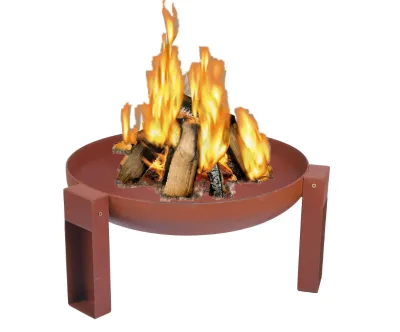
Quality control is paramount when sourcing fire bowls, especially those intended for charcoal use where heat resistance and structural integrity are critical. The observed "Surface treatment" options include "Pickling or polishing or no treatment" and "Painted." For charcoal applications, the surface treatment must be able to withstand high temperatures without peeling or releasing toxic fumes. Buyers should verify that the "Painted" finish is heat-resistant and that the "Natural Rust" finish of Corten Steel is stable and does not flake excessively.
The "Thickness" of 2mm to 10mm is a key quality indicator. Thinner materials may warp or burn through when used for charcoal grilling, which generates intense, concentrated heat. Buyers should insist on a minimum thickness that aligns with the intended use, likely leaning towards the 3mm to 6mm range observed in the data for durability. The "Standard" compliance with "ANSI, ASME, MSS, API, DIN, JIS" provides a framework for quality, but buyers must ensure that the specific product meets the relevant standard for fire safety and structural load.
Long-term procurement considerations include the availability of spare parts and the durability of the product. The "Package: Wooden Case" and "steel Pallet" options suggest robust packaging, which helps prevent damage during transit. However, buyers should also consider the long-term maintenance requirements of the fire bowl. Corten Steel, for example, requires no painting but will rust over time, which is a design feature rather than a defect. Stainless steel, on the other hand, may require cleaning to maintain its appearance. Buyers should factor in these maintenance costs when calculating the total cost of ownership.
Finally, the "MOQ" and "Lead time" should be aligned with the buyer's inventory strategy. A supplier with a flexible MOQ and a reliable lead time of 15-25 days allows for a more agile supply chain. Buyers should establish a long-term relationship with the supplier to ensure consistent quality and pricing, especially if they plan to order regularly. The "Service: OEM" capability also offers the opportunity to develop a unique product line, which can provide a competitive advantage in the market. By carefully evaluating these factors, buyers can secure a reliable supply of high-quality charcoal fire bowls that meet their specific operational and aesthetic requirements.
FAQs
Can I find ce charcoal fire bowls with ISO 9001:2015 certification?
Yes, products in this category often carry ISO 9001:2015 certification. Buyers should verify this specific standard on the product page before ordering to ensure quality management compliance.
What material options are available for ce charcoal fire bowls?
Available materials include carbon steel, stainless steel, alloy, and Corten steel. Corten steel is noted for its natural rust appearance, while other options offer different durability levels.
Which diameter sizes are offered for custom fire bowl orders?
Standard diameters range from 60cm to 150cm, with options for 600mm up to 1500mm. Custom sizes are also available to meet specific project requirements or space constraints.
How long is the typical delivery time for these fire bowls?
The standard delivery time ranges from 15 to 25 days or approximately 20 days. This timeline covers production and preparation for dispatch from the Hebei region.
What is the minimum order quantity for ce charcoal fire bowls?
The minimum order quantity varies from 1 piece up to 231 pieces depending on the supplier. Some specific listings require a minimum of 10 pieces for purchase.
Can I get fire bowls with a thickness between 3mm and 6mm?
Yes, thickness options include 3mm to 6mm as well as a broader range of 2mm to 10mm. Thicker gauges provide better heat resistance for charcoal grilling applications.
Which surface treatments are applied to these metal fire bowls?
Surface treatments include pickling, polishing, painting, or no treatment. Corten steel models typically feature a natural rust finish without additional paint layers.