Source CE Industrial Hand-Held Metal Detector for Factory Security
Compare 30 verified CE industrial hand-held metal detector options for factory, public area, and examination room security. View specifications, certifications, and pricing to find the right portable alarm system for your industrial needs.
Key considerations
Products List


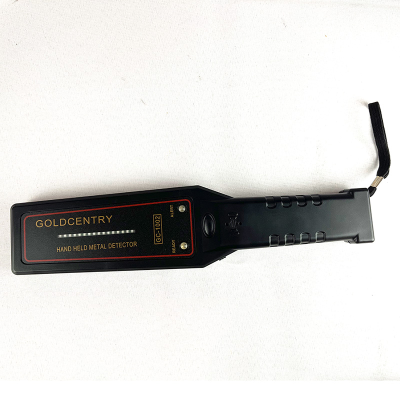

$22000.00 - $25000.00
MOQ: 1 Pieces


Comprehensive Sourcing Guide
Strategic Sourcing Guide for CE Industrial Hand-Held Metal Detectors
Selecting the right industrial hand-held metal detector requires a disciplined approach that balances technical performance, regulatory compliance, and total cost of ownership. For procurement professionals targeting the core keyword "CE industrial hand-held metal detector," the primary objective is to identify equipment that meets rigorous safety standards while delivering reliable detection capabilities in diverse environments. The following guide outlines the critical factors buyers must evaluate, grounded in observed product attributes and established industry practices.
Technical Specifications and Detection Capabilities
When evaluating hand-held metal detectors, the physical dimensions and detection mechanisms are paramount. The market offers a variety of form factors, ranging from compact units designed for portability to larger frames for specific inspection scenarios. Observed specifications indicate that portable models often feature dimensions such as 2956828mm, making them easy to maneuver in tight spaces. In contrast, some industrial units are designed with larger outer frames, such as 2220mm (H) X 820mm (W) X 522mm (D), which may serve as walk-through gates or specialized stationary units rather than handheld devices. Buyers must distinguish between these categories to ensure the selected device matches the intended workflow.
The alarm form is another critical technical differentiator. Available data highlights three distinct alarm mechanisms: Display Alarm, Sound and Light Alarm, and Shock Alarm. A Display Alarm provides visual feedback, which is essential in noisy industrial environments where auditory signals might be missed. Conversely, Sound and Light Alarm systems offer dual-channel alerts, ensuring immediate operator awareness. Shock Alarm features may be relevant for specific security protocols where physical feedback is required. Furthermore, the application scope varies significantly; some units are optimized for general Industrial and Security Check tasks, while others are tailored for specific high-security locations like Stations, Piers, Prisons, and Museums. Understanding these application-specific nuances is vital for selecting a device that fits the operational context.
Compliance and Certification Verification
The "CE" designation in the search query refers to the Conformité Européenne, a mandatory conformity mark for products sold within the European Economic Area. While the term is ubiquitous, verifying the actual certification status is a non-negotiable step in the procurement process. Observed product listings frequently cite CE certification alongside ISO standards. However, the presence of a "CE" label in a product description does not automatically guarantee compliance with specific EU directives without proper documentation.
Buyers should expect to see a combination of certifications, such as ISO, CE, SGS, and RoHs, depending on the manufacturer's scope. For instance, some industrial models list CE, RoHs, and ISO as their standard compliance suite, while others may only list CE and ISO. It is crucial to request the specific test reports and certificates of conformity that validate these claims. The "CE" mark implies adherence to health, safety, and environmental protection standards, but the specific directives (e.g., EMC, Low Voltage) must be confirmed. Relying solely on the marketing term without verifying the supporting documentation exposes the buyer to regulatory risks and potential liability.
Cost Drivers and Pricing Structures
The pricing for industrial hand-held metal detectors is highly variable, influenced by the complexity of the technology, the materials used, and the level of customization. The observed price range in the market spans from 1 USD to 25,000 USD. This wide disparity suggests that the market includes both basic, entry-level units and sophisticated, high-end systems with advanced features. A unit priced at the lower end of the spectrum likely offers basic detection capabilities with standard features, whereas a unit at the higher end may include advanced spectral analysis, specialized alarm systems, or custom engineering.
Minimum Order Quantity (MOQ) is another significant cost driver. The observed MOQ range is between 1 and 100 units. Buyers seeking to test a single unit or replace a broken device can often find suppliers with an MOQ of 1. However, for large-scale deployments in factories or public areas, an MOQ of 100 might be required, which can impact the unit economics. Additionally, customization options are available, which can increase the cost. Whether the requirement is for a specific color, branding (OEM), or modified dimensions, custom orders typically command a premium over standard "Non-Customized" models. Buyers must balance the upfront cost against the long-term value provided by customization and durability.
Typical Applications and Operational Environments
The application environment dictates the necessary robustness and feature set of the metal detector. The data indicates that these devices are deployed in a wide array of settings, including factories, public areas, examination rooms, stations, piers, prisons, and museums. In an industrial factory setting, the device must be durable and capable of detecting small metal contaminants in production lines. In security contexts like prisons or stations, the focus shifts to high sensitivity and the ability to detect concealed items quickly.
The "Portable" attribute is a key requirement for many of these applications. A portable detector allows security personnel or quality control inspectors to move freely and conduct spot checks. For example, a device with a "Hand-held security detector" designation is ideal for personal screening in public areas. Conversely, for large-scale facility screening, the "Outer Frame" dimensions suggest that some units function as walk-through gates, which are not strictly "hand-held" in the traditional sense but are part of the broader security ecosystem. Buyers must align the physical form factor with the specific operational constraints of their site. For instance, a museum might require a non-intrusive device that does not disturb artifacts, while a prison requires a device with high sensitivity and robust alarm capabilities.
Supplier Evaluation and Origin Considerations
When sourcing these devices, the origin of the product plays a significant role in logistics, lead times, and quality assurance. The observed data points to several key manufacturing locations, including China, Shanghai, Shenzhen, and Zhejiang. These regions are known for their electronics manufacturing capabilities, but the specific location can influence the supply chain dynamics. For example, a product originating from Shanghai might have different shipping logistics compared to one from Shenzhen.
Supplier evaluation should extend beyond the product specifications to include the supplier's ability to provide after-sales support. The warranty period is a critical indicator of supplier confidence. Observed warranty terms range from 1 Year to 2 Years, with some industrial applications specifying a warranty of greater than 1 Year. A longer warranty period often suggests a higher quality product and a more reliable supplier. Additionally, the "Customization" attribute indicates that some suppliers offer OEM services, allowing buyers to brand the device with their own logo. This is particularly relevant for security firms or large industrial corporations that require branded equipment. Buyers should verify the supplier's capacity to meet customization requests and their track record in delivering on time.
Quality Control and Long-Term Procurement
Ensuring the long-term reliability of hand-held metal detectors requires a robust quality control strategy. The "Warranty" term is a primary metric, but it should be complemented by an understanding of the product's construction and materials. For instance, the "prod_packing" attribute varies from "Paper Packing" to "Plywood Pallet" and "Wooden" packaging. The choice of packaging often reflects the intended durability of the product during transit and storage. A product shipped in a plywood pallet is likely designed for heavy-duty industrial use, whereas paper packing might be suitable for lighter, consumer-grade devices.
Long-term procurement considerations also involve the availability of spare parts and the ease of maintenance. The "Alarm Form" and "Detection Method" are critical for ongoing performance. A device with a "Spectroscopic" detection method and "UV Spectrometer" capabilities, for example, offers advanced analytical features that may require specialized maintenance. Buyers should ensure that the supplier provides clear maintenance guidelines and has a supply chain for replacement parts. Furthermore, the "Standard" specifications, such as the dimensions 415 mm85 mm45 mm or 425 mm*100 mm *55 mm, should be verified to ensure compatibility with existing infrastructure.
Comparative Analysis of Product Attributes
To facilitate a clear comparison between different options, the following table summarizes key attributes observed in the market. This comparison helps buyers quickly identify which product aligns with their specific requirements.
| Attribute | Model A (HD20) | Model B (BVE-HD20) | Model C (AT2008) | Model D (AT-IIIC) | Model E (Spectrometer) |
|---|---|---|---|---|---|
| Origin | China | Shanghai | Shenzhen | Shenzhen | Zhejiang, China |
| Certification | ISO, CE | CE | CE, SGS, ISO | CE, RoHs, ISO | CE (Implied) |
| Alarm Form | Display Alarm | Sound and Light | Shock Alarm | N/A | N/A |
| Application | Industrial, Security | Factory, Public | Station, Pier, Prison | Public Area | Industrial |
| Warranty | 1 Year | 2 Year | N/A | N/A | > 1 Year |
| Packing | Paper Packing | Plywood Pallet | Wooden | N/A | N/A |
| Customization | Available | Customized | N/A | N/A | N/A |
| Dimensions | 4158545 mm | N/A | N/A | 2220820522 mm | 2956828 mm |
This table illustrates the diversity in the market. Model A offers a basic industrial solution with a 1-year warranty, while Model B provides a longer warranty and sound/light alarms. Model C is designed for high-security environments like prisons, and Model D features advanced spectral analysis. Buyers must weigh these differences against their specific needs.
Conclusion
Sourcing a CE industrial hand-held metal detector is a complex process that requires careful attention to technical specifications, compliance, and supplier reliability. By understanding the variations in alarm forms, dimensions, and applications, buyers can make informed decisions that align with their operational goals. The wide range of prices and MOQs necessitates a clear definition of requirements before engaging with suppliers. Ultimately, the goal is to select a device that not only meets the CE standards but also provides reliable performance in the intended environment, supported by a supplier who offers adequate warranty and customization options.
FAQs
What certifications do these detectors typically hold?
Many models hold CE and ISO certifications, with some also listing SGS or RoHs standards. Buyers should verify specific test reports to confirm compliance with EU directives before purchasing.
Can I customize the detector for my brand?
Customization is available for many industrial units, allowing for OEM branding and specific modifications. However, some standard models are sold as non-customized, so check the specific product listing for availability.
How portable are the hand-held security detectors?
Portable models feature compact dimensions like 295*68*28mm for easy maneuvering in tight spaces. These units are designed for spot checks in factories and public areas where mobility is essential.
What warranty periods are offered for these devices?
Warranty terms typically range from 1 year to 2 years, with some industrial applications specifying over 1 year. A longer warranty often indicates higher product reliability and supplier confidence in the equipment.
Which alarm forms are available for industrial use?
Detectors offer various alarm forms including Display Alarm, Sound and Light Alarm, and Shock Alarm. The choice depends on the environment, such as noisy factories requiring visual alerts or high-security zones needing physical feedback.
What are the minimum order quantities for bulk purchases?
Minimum order quantities vary between 1 unit for testing and 100 units for large-scale deployments. Buyers should check specific listings to determine if the supplier requires bulk orders for custom pricing.
Where are these detectors manufactured and shipped from?
Products originate from locations such as China, Shanghai, Shenzhen, and Zhejiang. The specific origin affects logistics and lead times, so buyers should confirm the place of origin for their specific order.