Source Diesel Injector Test Bench for Pump and Nozzle Testing
Find 30 Diesel Injector Test Bench options for calibrating common rail pumps and verifying injector performance. Compare specifications like voltage, power, and certification to select the right equipment for your workshop or manufacturing needs; compare the available evidence and request quotations based on your requirements.
Key considerations
Products List


Diesel Fuel System 2001117 Fuel Injector Nozzle Test Bench
$315.00 - $355.00
MOQ: 10 Pieces
Di Sai Long Electronic Fuel Injection System (Dongguan) Co.,Ltd.

Diesel Engine Parts 174-7527 Fuel Injector Test Bench
$345.00 - $385.00
MOQ: 10 Pieces
Di Sai Long Electronic Fuel Injection System (Dongguan) Co.,Ltd.


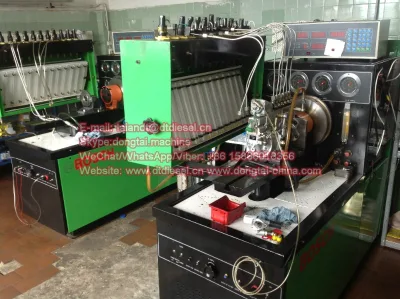

Common Rail Testing Machine Lab Equipment Diesel Injecor Pump Test Bench
$6200.00 - $7800.00
MOQ: 1 Pieces


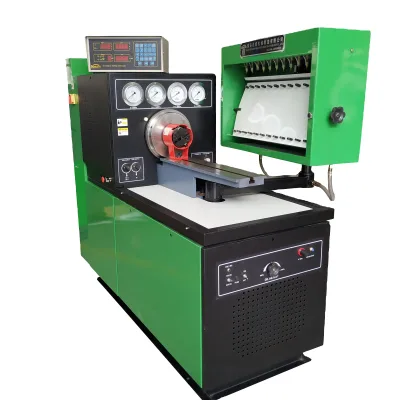


Comprehensive Sourcing Guide
Diesel Injector Test Bench Sourcing Guide
Procuring a Diesel Injector Test Bench requires a strategic approach that balances technical precision with commercial viability. These specialized machines are essential for verifying the performance of common rail injectors and pumps, ensuring they meet strict emission and efficiency standards. Buyers must navigate a market where specifications vary significantly, from basic manual units to fully automated systems with remote update capabilities. Understanding the core technical requirements is the first step in defining a successful procurement strategy.
The sourcing landscape for these devices is diverse, with manufacturers primarily located in China, particularly in regions like Shandong and Taian. Listings indicate a wide range of models, such as the 12PSB, HCR318C, and EPS205-Pro, each catering to different operational needs. Buyers should focus on verifying the specific voltage, power, and dimensional constraints of each unit to ensure compatibility with their existing workshop infrastructure. This initial due diligence prevents costly integration errors and ensures the selected equipment aligns with long-term maintenance goals.
Product Scope and Observed Listing Signals
The current market for diesel injector test benches presents a broad spectrum of options, with observed prices ranging from $80 to $50,000 USD. This variance reflects differences in automation levels, brand reputation, and included software features. Minimum order quantities are typically low, often between one and ten units, allowing for flexible procurement strategies. Buyers should analyze these signals to determine whether they are sourcing for a single workshop or for distribution purposes, as this influences negotiation leverage and logistics planning.
Observed product attributes reveal a strong emphasis on customization and modern connectivity. Many units support internet-based updates, while others rely on hard disk methods, indicating a split in software maintenance philosophies. The availability of multiple language interfaces, including English, French, German, and Japanese, suggests these machines are designed for global deployment. Buyers must verify which update method aligns with their IT security policies and ensure the machine’s physical dimensions, such as the 1920x1120x1140mm standard, fit their available floor space.
Technical Specifications to Verify
Voltage and power requirements are critical technical parameters that must be matched to the buyer’s facility infrastructure. Common specifications include 380V three-phase or 220V three-phase power supplies, with heating powers around 2kw and main powers near 11kw. The drive axis height is often standardized at 125mm, which affects how injectors are mounted and tested. Buyers must confirm these electrical details to avoid the need for expensive facility upgrades or the installation of incompatible transformers and power conditioning units.
Physical dimensions and weight are equally important for logistics and installation planning. Units vary in size, with some measuring 14609701610mm and others 8607751450mm, while weights can range from 750kg to 800kg. The material composition is typically steel, ensuring durability under high-pressure testing conditions. Buyers should request detailed packing specifications, such as wooden cases or plywood boxes, to assess shipping costs and handling requirements. Verifying these physical attributes ensures the equipment can be safely transported and installed without structural modifications to the workshop.
Compliance and Safety Documentation
Certification status is a primary indicator of regulatory compliance and manufacturing quality. Most observed units carry CE certification, which is essential for market access in Europe and many other regions. Some suppliers also provide ISO and GS certifications, indicating adherence to broader international quality and safety management systems. Buyers must verify the validity of these certificates and ensure they cover the specific model being purchased, as certifications are often tied to particular production batches or factory locations.
Safety documentation should include detailed operational manuals and emergency procedures, especially given the high-pressure nature of fuel injection testing. The working temperature limits, such as 40 degrees Celsius, must be understood to prevent overheating during extended use. Buyers should also check for any specific safety interlocks or pressure relief mechanisms built into the design. Ensuring that the supplier provides comprehensive safety guidelines helps protect operators and reduces the risk of workplace accidents during routine maintenance and testing operations.
Cost Drivers and Commercial Terms
The total cost of ownership extends beyond the initial purchase price, encompassing shipping, installation, and software licensing. The observed price range of $80 to $50,000 USD suggests that basic manual benches are significantly cheaper than fully automated, computer-controlled systems. Buyers should clarify whether the quoted price includes the software license for injector mapping and data analysis, as this can be a separate recurring cost. Understanding the breakdown of costs helps in budgeting for hidden expenses like customs duties and local transportation.
Commercial terms such as payment methods, warranty periods, and after-sales support are crucial for risk mitigation. Suppliers often offer OEM customization support, which can add value but may also extend lead times. Buyers should negotiate clear terms for spare parts availability, particularly for high-wear components like nozzles and seals. Establishing a robust support agreement ensures that technical issues can be resolved quickly, minimizing downtime and maintaining the productivity of the testing facility.
Supplier Qualification and Quality Control
Supplier qualification involves verifying the manufacturer’s production capabilities and quality control processes. Many suppliers are based in Shandong, China, a region known for its industrial manufacturing base. Buyers should request evidence of consistent production quality, such as factory audit reports or third-party inspection results. The availability of customization support, including color and branding options, indicates a flexible manufacturing process, but buyers must ensure that these customizations do not compromise the machine’s structural integrity or performance standards.
Quality control checks should include pre-shipment inspections to verify that the delivered unit matches the agreed specifications. Buyers should confirm that the machine’s weight, dimensions, and power ratings are within the specified tolerances. Additionally, testing the machine’s functionality before final payment can prevent receiving defective units. Establishing a clear quality assurance protocol with the supplier ensures that the investment is protected and that the equipment meets the required performance standards for diesel injector testing.
Long-Term Procurement Checks
Long-term procurement success depends on the supplier’s ability to provide ongoing software updates and technical support. The observed update methods, including internet and hard disk options, highlight the importance of software maintenance in keeping the test bench relevant. Buyers should verify the frequency and cost of software updates to ensure the machine can adapt to new injector technologies and emission standards. A reliable support channel is essential for troubleshooting complex issues that may arise during advanced testing procedures.
Spare parts availability and lifecycle management are also critical for long-term operations. Buyers should establish a relationship with the supplier for the supply of consumables and replacement parts. Monitoring the machine’s performance over time and scheduling regular maintenance can extend its lifespan and maintain accuracy. By focusing on these long-term factors, buyers can ensure that their investment in a Diesel Injector Test Bench continues to deliver value and operational efficiency for years to come.
FAQs
What certifications do diesel injector test benches have?
Diesel injector test benches typically carry CE and ISO certifications to ensure safety and quality compliance. Some models also include GS certification. These standards verify that the equipment meets international manufacturing requirements for industrial testing environments.
Can I customize the color of the test bench?
Yes, customization is available for the color of the Diesel Injector Test Bench. Buyers can request specific colors to match their facility branding. This option allows for tailored aesthetics while maintaining the standard industrial functionality required for fuel injection testing.
What is the power supply requirement for this equipment?
The equipment operates on 380V three-phase or 220V three-phase power supplies. Some models support 220/380V flexibility. This ensures compatibility with various industrial power grids while maintaining the 11kw power rating needed for efficient common rail injector testing operations.
How is the software updated on the test bench?
Software updates can be performed via the internet or by using a hard disk. This dual-method approach ensures flexibility for facilities with varying connectivity. It allows technicians to easily upgrade system parameters and diagnostic tools without needing physical hardware replacement.
What is the typical weight of the diesel test bench?
The machine weight generally ranges from 750kg to 800kg depending on the specific model. This substantial weight ensures stability during high-pressure fuel testing. The heavy steel construction supports the 125mm drive axis height and provides a solid foundation for accurate measurements.
Which models are available for common rail pump testing?
Available models include 12PSB, HCR318C, EPS205-Pro, nts300, and BD850. Each model is designed to test common rail pumps and injectors. These units feature specific dimensions and power ratings to suit different industrial testing requirements and facility space constraints.
What is the working temperature range for the machine?
The working temperature is specified at 40 degrees Celsius for optimal performance. This limit ensures the internal components remain stable during extended testing cycles. Operating within this range prevents overheating and maintains the accuracy of the fuel injection device testing results.