Source Laboratory Dry Block Calibrator for Lab, Industry, Thermal Power
Compare 20 Laboratory Dry Block Calibrator units from verified Chinese suppliers. These devices feature stainless steel construction, LCD displays, and temperature ranges from -30 to 660 degrees Celsius for precise thermal calibration in various industrial and laboratory settings; compare the available evidence and request quotations based on your requirements.
Key considerations
Products List


220V Digital Temperature Calibration Dry Block Temperature Dry Block Calibrator
$3500.00 - $3800.00
MOQ: 1 Pieces

Calibrator Temperature Dry Block Precision Reference Temperature Calibrator
$1500.00 - $1800.00
MOQ: 1 Pieces

Dry Block Temperature Calibrator Portable Dry Block Calibrator Temperature Calibrator
$3500.00 - $3800.00
MOQ: 1 Pieces


High-Precision Dry Block Temperature Calibrator for Accurate Testing
$1139.96 - $1189.16
MOQ: 5 pieces

Advanced Touch Screen Temperature Dry Block Calibrator for Precision Testing
$1600.00 - $1800.00
MOQ: 1 pieces

Versatile 1200 Degree Portable Dry Block Temperature Calibration Tool
$1073.00 - $1181.00
MOQ: 1 pieces



Comprehensive Sourcing Guide
Laboratory Dry Block Calibrator Sourcing Guide
Procuring laboratory dry block calibrators requires a disciplined approach to verifying thermal stability and accuracy, as these instruments serve as the primary reference for validating temperature sensors in industrial and research settings. Buyers must prioritize devices that offer precise control loops and high-resolution displays to ensure traceable measurements, particularly when dealing with critical applications in pharmaceuticals, electronics, or energy sectors. The selection process should begin by defining the specific temperature ranges and insertion depths required for your calibration tasks, ensuring the chosen unit can accommodate the probes or sensors you intend to test without compromising thermal uniformity.
This guide focuses on the technical and commercial realities of sourcing these devices, drawing from observed market data and standard industry practices. We examine the key specifications that differentiate high-performance calibrators from basic models, including heating and cooling capabilities, display resolution, and physical dimensions. By understanding these factors, procurement teams can avoid common pitfalls such as selecting units with insufficient temperature ranges or inadequate accuracy for their specific quality assurance protocols, ultimately leading to more efficient and reliable calibration workflows.
Product Scope and Observed Listing Signals
The current market for laboratory dry block calibrators presents a diverse array of models, with observed price points ranging from approximately $1,000 to $5,500 USD, reflecting variations in technology, brand, and feature sets. Minimum order quantities are typically low, often between one and five units, indicating that these are primarily purchased as individual capital equipment items rather than bulk commodities. This pricing structure suggests that buyers should focus on the total cost of ownership, including maintenance and calibration services, rather than just the initial purchase price, as higher-end models may offer better long-term reliability and support.
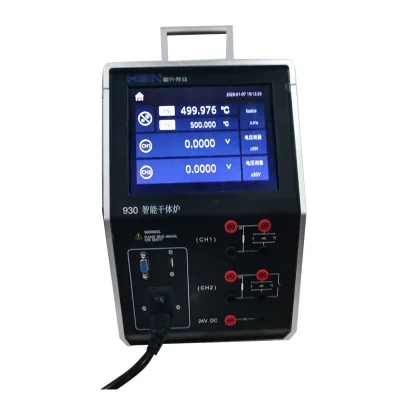
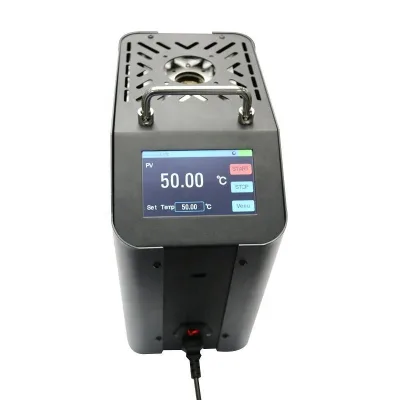
Observed product attributes highlight a strong emphasis on customization and portability, with many units featuring stainless steel construction for durability and resistance to corrosion. Common specifications include heating ranges up to 155°C or higher, with some advanced models offering cooling capabilities down to -30°C, allowing for comprehensive temperature verification across a wide spectrum. The presence of LCD displays and touch screen controls indicates a trend toward user-friendly interfaces that simplify operation and data recording, while portable designs facilitate use in both fixed laboratory environments and field service applications where mobility is essential.
Technical Specifications to Verify
When evaluating technical specifications, buyers must closely examine the temperature range and accuracy claims, as these are the most critical performance indicators for calibration tasks. For instance, some models offer a temperature range of -30°C to 155°C with a deviation of ±0.5°C, while others may extend up to 660°C or 450°C, depending on the application needs. It is essential to verify the resolution of the display, with some units offering 0.001°C or 0.01°C resolution, ensuring that the device can detect minute temperature fluctuations that are crucial for high-precision calibration work.
Physical dimensions and block insertion diameters are also vital considerations, as they determine the compatibility with various sensor types and probe sizes. Standard insertion diameters often include 6mm, 8mm, and 10mm options, with insert depths reaching up to 170mm or 150mm, allowing for secure placement of longer probes. Buyers should also check the gross weight and overall dimensions, such as 310x240x400mm or 410x235x410mm, to ensure the unit fits within their available workspace and can be handled safely, especially if portability is a requirement for their operations.
Compliance and Safety Documentation
Compliance with international safety standards is a non-negotiable aspect of sourcing laboratory equipment, with CE certification being a common requirement for products sold in many global markets. Buyers should request documentation that confirms the device meets relevant electrical safety and electromagnetic compatibility standards, ensuring that the unit operates safely in laboratory environments without posing risks to personnel or interfering with other sensitive equipment. This documentation often includes test reports and certificates of conformity, which provide assurance that the manufacturer has adhered to rigorous quality and safety protocols during production.
In addition to safety certifications, buyers should inquire about the availability of calibration certificates and traceability documentation for the dry block itself. Since these devices are used to calibrate other instruments, their own accuracy must be traceable to national or international standards, such as those maintained by NIST or similar bodies. Procurement teams should verify that the supplier can provide up-to-date calibration records and that the device’s performance metrics, such as temperature uniformity and stability, are documented and verified by independent testing laboratories to ensure reliability and compliance with industry regulations.
Cost Drivers and Commercial Terms
Several factors influence the final cost of a Laboratory Dry Block Calibrator, including the complexity of the temperature control system, the materials used in construction, and the level of customization offered. Units with advanced features such as dual-zone heating and cooling, touch screen interfaces, and high-resolution displays typically command higher prices due to the increased engineering and component costs involved. Additionally, the inclusion of specialized blocks or accessories, such as multiple insertion diameters or extended depth blocks, can further impact the overall price, making it important for buyers to clearly define their requirements to avoid unnecessary expenditures.
Commercial terms, including payment methods, shipping arrangements, and warranty coverage, also play a significant role in the total cost of acquisition. Buyers should negotiate for favorable terms such as extended warranties, which can provide peace of mind and reduce long-term maintenance costs, as well as flexible payment options that align with their budget cycles. It is also advisable to clarify the responsibilities for shipping and insurance, especially for international orders, to avoid unexpected costs or delays, and to ensure that the supplier provides adequate support for installation and initial setup to maximize the utility of the equipment from day one.
Supplier Qualification and Quality Control
Selecting a qualified supplier is crucial for ensuring the reliability and longevity of laboratory dry block calibrators, and buyers should prioritize manufacturers with a proven track record in producing high-quality thermal calibration equipment. This involves verifying the supplier’s manufacturing capabilities, quality management systems, and after-sales support infrastructure, as these factors directly impact the performance and serviceability of the devices. Buyers should request information about the supplier’s production processes, including material sourcing, assembly procedures, and final testing protocols, to assess their commitment to quality and consistency.
Quality control measures should be a key focus during the supplier evaluation process, with buyers looking for evidence of rigorous testing and inspection procedures. This includes checking for certifications such as ISO 9001, which indicates a standardized approach to quality management, and verifying that the supplier conducts regular internal audits and performance tests on their products. Additionally, buyers should inquire about the supplier’s response time and technical support capabilities, as these are critical for resolving any issues that may arise during installation or operation, ensuring minimal downtime and maximum efficiency in the laboratory environment.
Long-Term Procurement Checks
Long-term procurement success depends on establishing a robust framework for ongoing supplier performance monitoring and equipment maintenance, ensuring that the laboratory dry block calibrators continue to meet performance standards over time. Buyers should implement regular reviews of supplier delivery times, product quality, and customer service responsiveness, using these metrics to identify potential issues and address them proactively. This includes maintaining open communication channels with the supplier to discuss any updates, improvements, or changes in product specifications that may affect future purchases or upgrades.
Furthermore, buyers should develop a comprehensive maintenance and calibration schedule for their dry block calibrators, ensuring that the devices are regularly serviced and recalibrated to maintain accuracy and reliability. This involves tracking the usage hours, performing routine inspections, and scheduling professional calibration services as needed, all of which contribute to the longevity and performance of the equipment. By investing in proactive maintenance and staying informed about industry best practices, procurement teams can maximize the return on their investment and ensure that their laboratory operations remain efficient and compliant with regulatory requirements.
FAQs
What temperature ranges are available for laboratory dry block calibrators?
Laboratory dry block calibrators offer various temperature ranges depending on the model. For instance, the SPMK313B supports a range from -30 to 155 degrees Celsius, while the SPMK313A covers 33 to 660 degrees Celsius. Other models like the Tcbf provide a range of 50 to 450 degrees Celsius. These ranges allow for precise calibration of different sensors across diverse industrial and laboratory applications.
Can I customize the insertion diameter for my specific sensors?
Yes, customization is available for many laboratory dry block calibrators. The SPMK313B model, for example, supports standard block insertion diameters of 6, 8, and 10mm. This flexibility ensures that the calibrator can accommodate various probe sizes. Buyers should verify specific customization options with suppliers to ensure compatibility with their existing sensor inventory and operational requirements.
What certifications do these calibrators typically carry?
Many laboratory dry block calibrators carry CE certification, indicating compliance with European health, safety, and environmental protection standards. This certification is crucial for buyers operating in regulated markets. It ensures the equipment meets specific quality and safety benchmarks. Buyers should always request certification documents from suppliers to verify compliance before making a purchase decision for their laboratory or industrial setup.
How accurate are these dry block calibrators?
Accuracy varies by model, but high-end units offer precise control. The Tcbf model, for instance, boasts an accuracy of plus or minus 0.1 degrees Celsius. The SPMK313B has a deviation of plus or minus 0.5 degrees Celsius. These levels of precision are suitable for critical laboratory and thermal power applications. Buyers should select a model based on their specific tolerance requirements for sensor calibration tasks.
What is the typical gross weight of these units?
The gross weight of laboratory dry block calibrators generally ranges from 12.0kg to 19.0kg. For example, the SPMK650 weighs 12.0kg, while the SPMK150 weighs 15.5kg. Heavier models like the SPMK313B can weigh up to 18.0kg. This weight range reflects the robust stainless steel construction and internal heating elements. Buyers should consider shipping costs and handling requirements when planning logistics for these portable units.
Do these calibrators feature digital displays for monitoring?
Yes, most modern laboratory dry block calibrators feature digital displays. The SPMK313B includes an LCD display with a resolution of 0.001 degrees Celsius, allowing for precise temperature monitoring. The Tcbf model also features a touch screen control interface. These displays provide real-time feedback on temperature stability and deviation. Buyers benefit from these features for accurate calibration processes and easy operation in laboratory environments.