Source CE Pneumatic Angle Seat Valve for filling, heating, and sanitary use
Find 30 CE Pneumatic Angle Seat Valve options from verified Chinese manufacturers. Compare models like PV300 and PV800 for filling machines, heating pipelines, and sanitary ware applications with varying MOQs and service lives.
Key considerations
Products List


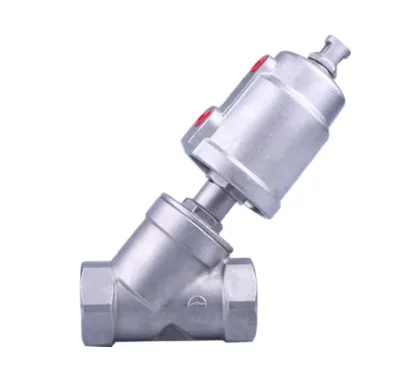


2 Way Control with Threaded End Plastic Actuator Pneumatic Angle Seat Valve
$31.00 - $41.00
MOQ: 100 Pieces


Comprehensive Sourcing Guide
Strategic Sourcing Guide for CE Pneumatic Angle Seat Valves
Understanding the Technical Architecture and Material Composition
When sourcing a CE Pneumatic Angle Seat Valve, the primary objective is to identify components that align with specific industrial fluid control requirements while adhering to safety and performance standards. The term "angle seat" refers to the internal geometry of the valve, which allows for a 90-degree flow path change, typically resulting in lower pressure drop and higher flow capacity compared to straight-through designs. In the context of the available market data, these valves are frequently categorized under "Other Valves" but are specifically engineered for pneumatic actuation.
The material composition is a critical variable that dictates the valve's suitability for different media and environments. Observed listings indicate a diverse range of materials, including Steel, Stainless Steel, and Aluminum. For applications involving sanitary ware or water treatment, Stainless Steel is often the preferred choice due to its corrosion resistance and ability to maintain hygiene standards. Conversely, Steel variants may be selected for general industrial applications where cost is a primary driver, provided the media does not induce rapid corrosion. Aluminum constructions are also present, typically serving lighter-duty pneumatic areas or specific filling machine applications.
The actuation mechanism is inherently pneumatic, relying on compressed air to open and close the valve. The observed product attributes suggest a "Pneumatic" power source, which allows for rapid cycling and precise control. The valve plug, a critical internal component, is noted in some specifications as being made of Alloy, which enhances durability against wear and tear during frequent operation. The connection form is predominantly Thread, with standard sizes ranging from 1/2" to 3" in some models, while others offer customized sizes such as 1/4 inch. This variability requires buyers to meticulously match the valve thread specifications with their existing piping infrastructure to ensure a leak-free installation.
Compliance Verification and Certification Standards
The inclusion of "CE" in the core keyword signifies a mandatory requirement for products entering the European Economic Area (EEA). The CE marking indicates that the manufacturer has assessed the product and meets EU safety, health, and environmental protection requirements. In the context of pneumatic valves, this certification often implies compliance with the Machinery Directive and potentially the Pressure Equipment Directive, depending on the operating pressure and volume.
While the supplied data explicitly lists "CE" and "ISO" as observed certifications, buyers must exercise caution. These attributes should be treated as observations of specific listings rather than universal guarantees for every product in the category. A robust sourcing strategy involves verifying that the specific batch or model being purchased carries valid, traceable certification documents. The presence of ISO certification, such as ISO 9001, suggests that the manufacturing process adheres to quality management principles, but this is distinct from product-specific safety certifications.
Buyers should not assume that all listed "Angle Seat Valves" automatically possess CE status. The verification process should include requesting the Declaration of Conformity (DoC) from the supplier. This document must explicitly reference the specific standards met by the valve. Additionally, while "RoHS" is mentioned in background contexts, its relevance depends on the specific application and local regulations regarding hazardous substances. For industrial pneumatic systems, the primary focus should remain on the CE marking and the specific pressure ratings, which are often denoted in the product model (e.g., J611F-16P/R, where "16" may indicate a pressure rating of 16 bar).
Cost Drivers and Economic Factors in Procurement
The pricing landscape for pneumatic angle seat valves is influenced by several tangible factors, including material grade, actuation complexity, and certification status. The observed price range in the market spans from 1 to 400 USD, a wide spectrum that reflects the diversity in product specifications. A valve priced at the lower end of this range likely utilizes standard steel construction with a basic pneumatic actuator and standard thread connections. In contrast, units approaching the higher price point typically feature Stainless Steel bodies, specialized alloy plugs, and potentially more sophisticated control mechanisms or custom engineering.
Material costs are a primary driver. Stainless Steel is significantly more expensive than carbon steel or aluminum, directly impacting the final unit price. Furthermore, the customization level plays a pivotal role. While many suppliers offer "OEM, ODM, OBM" support, allowing for brand and specification customization, these services often incur additional costs. The "Customization: Available" attribute suggests that buyers can request specific modifications, but these custom orders may have different pricing structures compared to standard off-the-shelf items.
Minimum Order Quantity (MOQ) also affects the effective cost per unit. The observed MOQ range varies from 1 to 100 pieces. Suppliers offering an MOQ of 1 piece, such as those listing "PV300" or "PV800" models, provide flexibility for small-scale projects or prototyping but may charge a premium per unit. Conversely, bulk orders with higher MOQs, such as 10 pieces or more, often benefit from economies of scale, reducing the average cost. Buyers must balance the need for immediate inventory against the potential savings from larger orders.
Typical Applications and Operational Environments
Pneumatic angle seat valves are versatile components deployed across various industrial sectors. The observed product attributes highlight specific applications, including "Sanitary Ware," "Heating Pipeline," and "Filling Machine" operations. In sanitary applications, such as food and beverage processing or pharmaceutical manufacturing, the smooth internal surfaces of Stainless Steel valves are essential to prevent bacterial growth and facilitate cleaning. The "Service Life" of these valves is often cited as exceeding 3 to 5 years, indicating their reliability in continuous operation environments.
The "Media" handled by these valves is predominantly Water, but the design often extends to other compatible fluids depending on the seal material and body construction. The "Temperature" rating is generally listed as "Ordinary Temperature" or "Normal Temperature," suggesting these valves are optimized for standard industrial conditions rather than extreme high-temperature or cryogenic environments. However, for specialized heating pipeline applications, buyers must verify the specific temperature limits of the selected model to ensure the seals and body materials can withstand the thermal stress.
The "Situation" is broadly defined as "Industrial," encompassing a wide array of manufacturing processes. The "Function" is described as operating within a "Pneumatic Area," meaning they are integral to automated systems where air pressure is used to control fluid flow. The "Usage" in sanitary ware and filling machines underscores their role in precise dosing and flow control. For instance, in a filling machine, the rapid opening and closing capabilities of a pneumatic angle seat valve ensure accurate volume control and prevent dripping or spillage.
Supplier Evaluation and Origin Considerations
When evaluating potential suppliers for pneumatic angle seat valves, the geographical origin is a significant factor. The supplied data indicates origins in "Zhejiang" and "Henan, China," both of which are major manufacturing hubs in the region. These locations are known for a dense network of valve manufacturers, offering a competitive market with a wide range of options. However, the presence of multiple origins suggests that buyers should not rely solely on geography to determine quality. Instead, the focus should be on the specific manufacturer's track record, production capabilities, and quality control systems.
The "Brand Name" "ji tong" is observed in the data, but buyers should be aware that many suppliers operate under different brand names or as unbranded manufacturers offering OEM services. The "Customized support" attributes of OEM, ODM, and OBM indicate that suppliers are willing to adapt products to the buyer's needs, which is crucial for specialized applications. However, the "Customized: Non-Customized" attribute in some listings highlights that not all products are flexible; buyers must clearly distinguish between standard catalog items and those available for modification.
Supplier reliability is further assessed through warranty terms and service life expectations. The observed "Warranty: 1 year" provides a baseline for post-purchase support, but buyers should negotiate terms that align with the expected "Service Life" of >3 or >5 years. A supplier offering a 1-year warranty on a product with a 5-year expected life is standard, but the clarity of the warranty terms regarding what constitutes a defect is vital. Additionally, the "Selling Units" being listed as "Single item" suggests that suppliers are flexible in how they package and sell, which can be beneficial for small orders.
Quality Control and Long-Term Procurement Strategy
Ensuring the quality of pneumatic angle seat valves requires a proactive approach to quality control (QC) that extends beyond the initial purchase. The "prod_packing" methods observed, such as "Carton Box," "Plywood Case," and "Bag + Box," indicate varying levels of protection during shipping. For long-term procurement, buyers should specify packaging requirements that prevent damage during transit, especially for valves with delicate internal components like the alloy plug or pneumatic actuator seals.
Long-term procurement considerations involve establishing a relationship with suppliers who can provide consistent quality over time. The "Service Life" claims of >3 or >5 years are significant, but they are contingent on proper installation and maintenance. Buyers should verify the "Open Manner" of the valve, which is listed as "General," to ensure it meets the specific operational needs of their facility. Regular maintenance schedules should be developed to inspect seals, actuators, and connection threads for wear.
To mitigate risks, buyers should implement a rigorous incoming inspection protocol. This includes verifying the "prod_model" against the purchase order, checking the "Certification" documents for validity, and performing visual inspections for manufacturing defects. For critical applications, third-party testing may be necessary to validate performance claims. The "Structure" of the valve, noted as "Other" in some listings, requires careful examination to ensure it matches the intended design and does not compromise system integrity.
| Feature | Standard Observation | Verification Requirement |
|---|---|---|
| Material | Steel, Stainless Steel, Aluminum | Confirm material grade via Mill Test Certificate |
| Certification | CE, ISO | Request valid Declaration of Conformity |
| Connection | Thread (1/2" - 3") | Verify thread standard (e.g., NPT, BSP) |
| Actuation | Pneumatic | Confirm air pressure requirements and response time |
| Warranty | 1 Year | Clarify coverage scope and claim process |
| Origin | Zhejiang, Henan, China | Validate factory audit and production capacity |
Conclusion and Final Sourcing Recommendations
Sourcing CE pneumatic angle seat valves requires a balanced approach that weighs technical specifications, compliance requirements, and economic factors. The market offers a wide array of options, from standard steel models to customized stainless steel units, with prices ranging significantly based on material and features. Buyers must prioritize the verification of CE certification and material composition to ensure safety and longevity. By focusing on suppliers with transparent quality control processes and clear warranty terms, organizations can secure reliable components that meet their industrial needs. The final selection should be driven by a thorough understanding of the specific application requirements, ensuring that the chosen valve integrates seamlessly into the existing pneumatic and fluid control systems.
FAQs
What materials are used for ce pneumatic angle seat valves?
These valves are constructed from Steel, Stainless Steel, or Aluminum depending on the specific model. Stainless Steel is preferred for sanitary ware applications due to corrosion resistance, while Steel suits general industrial use.
Which certifications do these valves typically hold?
Observed listings indicate CE and ISO certifications are available for these products. Buyers must verify specific batch documentation as these attributes apply to observed items rather than every listed product universally.
Can I find valves with a service life exceeding three years?
Yes, some models offer a service life greater than three years, while others exceed five years. This longevity depends on the material grade and operating conditions within the industrial environment.
What is the minimum order quantity for these valves?
The minimum order quantity ranges from 1 piece to 100 pieces depending on the supplier and model. Some models like PV300 allow single item purchases, while others require bulk orders.
How are these valves connected to piping systems?
The connection form is predominantly Thread, with sizes ranging from 1/2 inch to 3 inches. Customized sizes like 1/4 inch are also available to match specific infrastructure requirements.
Which origins are common for these pneumatic valves?
Products originate from Zhejiang and Henan, China, which are major manufacturing hubs. These locations provide a competitive market with diverse options for industrial sourcing needs.