Source Center High Mount Stop Light for Cars, Trucks, and Buses
Compare 30 verified listings for the Center High Mount Stop Light from Chinese manufacturers. Buyers can evaluate specifications like voltage, LED count, and certifications to find suitable units for automotive repair and replacement needs; compare the available evidence and request quotations based on your requirements.
Key considerations
Products List
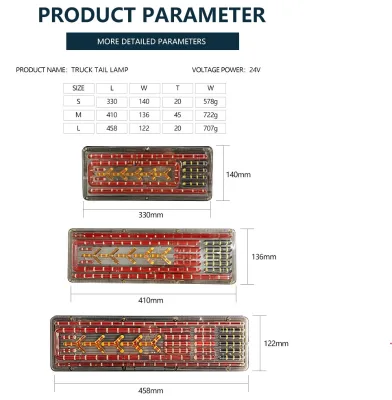


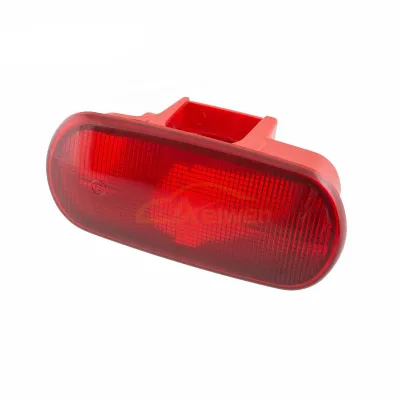


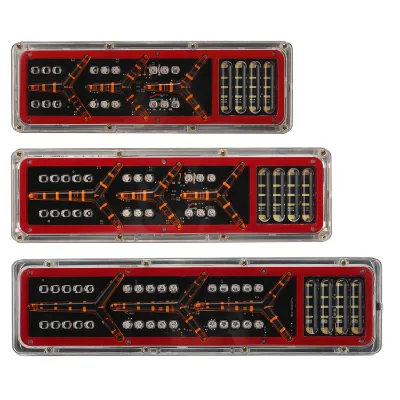

Traffic Light Stop Light Portable Traffic Lights Traffic Signal Light
$80.00 - $100.00
MOQ: 100 Pieces

Traffic Light Traffic Signal Light Stop Light Temporary Traffic Lights
$80.00 - $100.00
MOQ: 100 Pieces


Comprehensive Sourcing Guide
Center High Mount Stop Light Sourcing Guide
Procurement professionals must first distinguish between general automotive lighting and specialized center high mount stop lights (CHMSL) when reviewing supplier catalogs. The observed product data reveals a mix of items labeled as "AUTO LAMP" with varying applications, including railway, tunnel, and road use, which indicates that generic listings often lack specific CHMSL compliance. Buyers should scrutinize the product name and application fields to ensure the item is explicitly designed for the rear center position of passenger vehicles rather than general warning or industrial signaling.
Verification of the specific model number is critical before proceeding with any order, as the supplied facts list multiple distinct models like PWL10101-01 and HR20108042L with different standard requirements. A single listing may contain attributes for both automotive and traffic sign applications, creating confusion regarding the actual intended use. Sourcing teams must isolate listings that explicitly reference DOT, SAE, or ECE standards for automotive stop lights to avoid purchasing incompatible industrial lighting products that fail to meet vehicle safety regulations.
Product Scope and Observed Listing Signals
The market data indicates a wide variance in product descriptions, with some items claiming "Universal" type status while others specify "Warning Traffic Sign" applications. This inconsistency suggests that many suppliers aggregate diverse lighting products under broad categories, requiring buyers to carefully parse the "Application" field for specific mentions of "AUTO CAR" or vehicle repair contexts. Relying solely on the term "AUTO LAMP" is insufficient, as the same listing may also describe railway or tunnel usage, which falls outside the scope of standard automotive CHMSL requirements.
Buyers must also evaluate the physical attributes listed, such as the "Octagonal" shape and "High Light" reflector, to determine if they align with the geometric and optical requirements of a Center High Mount Stop Light. The presence of "49PCS" LEDs and specific voltage ratings like "12/24V" provides a baseline for electrical compatibility, but these features must be cross-referenced with the specific vehicle model's mounting bracket and lens shape. Without explicit confirmation of the mounting interface and lens geometry, the risk of acquiring a product that fits the electrical system but not the physical chassis remains high.
Technical Specifications to Verify
Electrical compatibility is the first technical hurdle, as the observed data lists both "12 V" and "12/24V" options alongside "DC" and "AC" power sources. A standard automotive CHMSL must operate on the vehicle's DC system, typically 12V or 24V depending on the vehicle class, and listing "AC" as a primary power source is a red flag for non-automotive applications. Procurement teams must verify that the specific unit selected matches the vehicle's electrical architecture to prevent immediate failure or the need for complex conversion hardware that compromises safety.
Optical performance and durability are equally critical, with observed specifications citing "View Distance >800 M" and "IP Rating" details that vary by product. While a long view distance is desirable, the specific intensity and beam pattern must meet regulatory limits for stop lights to ensure they are visible without blinding following drivers. Additionally, the material composition, such as "Rubber" or "Polycarbonate" diffusers, must be validated for resistance to UV degradation and impact, ensuring the unit maintains its structural integrity and light transmission over the expected service life of the vehicle.
Compliance and Safety Documentation
Regulatory compliance is non-negotiable for center high mount stop lights, yet the supplied facts show a confusing mix of certifications including "CE, ISO, FCC, MUTCD, ASTM, AS/NZS" and "ECE/SAE/DOT". Buyers must demand specific documentation proving that the unit meets the DOT or ECE standards applicable to the target market, as general certifications like FCC or MUTCD often relate to radio frequency or road signage rather than automotive lighting safety. Relying on a broad list of certifications without specific automotive validation can lead to legal liabilities and failed vehicle inspections.
The "Standard" field in product listings often contains conflicting information, with some entries citing "CE" while others reference "ECE/SAE/DOT". It is essential to request the specific test reports that demonstrate compliance with the relevant automotive safety standard for the region of operation. A supplier may possess a valid CE certificate for industrial lighting, but this does not automatically validate the product for use as a mandatory safety component on a road-legal vehicle. Procurement teams must insist on seeing the specific test data for the CHMSL model to confirm it meets the required photometric and mechanical safety thresholds.
Cost Drivers and Commercial Terms
Pricing in this category is influenced by the complexity of the optical design and the quality of the materials used, such as the "Polycarbonate" diffuser and "Rubber" components observed in the data. The "Factory-direct" feature suggests potential cost savings, but buyers must weigh this against the risk of lower quality control if the supplier lacks specialized automotive testing capabilities. The observed price range of 1-100 USD is broad, indicating significant variation in product quality, and the lowest price points often correlate with generic industrial lighting rather than certified automotive safety components.
Commercial terms also play a vital role in the total cost of ownership, with observed requirements for "T/T 30%" payment and "Neutral Packing" or "Export Cartons". The "MOQ" range of 1-1000 units allows for flexibility, but smaller orders may incur higher per-unit costs or lack the volume needed to justify custom tooling for specific vehicle models. Buyers should negotiate terms that include clear warranty provisions, such as the observed "6 months" coverage, and ensure that the "Customization" options are clearly defined to avoid hidden costs for branding or specific mounting adaptations.
Supplier Qualification and Quality Control
Supplier identity and business type are key indicators of reliability, with the data noting "Trading Company" status and origins in "Zhejiang, China" and "Shenzhen City, Guangdong Province". While trading companies can offer access to a wider range of products, they may lack direct control over the manufacturing process and quality assurance protocols. Buyers should prioritize suppliers who can demonstrate direct factory relationships or provide detailed information about their production lines to ensure consistent quality in the "Top Quality Oriented" products they claim to sell.
Quality control processes must be verified through the "Sample" availability and the specific "Installation" methods described, such as "Movement" or fixed mounting. The "Condition" is listed as "New" for all items, but this does not guarantee the absence of defects or the consistency of the "49PCS" LED array. Procurement teams should request pre-shipment inspection reports and verify that the "Packing" methods, whether "Bubble Bag" or "Cartons," are sufficient to protect the delicate optical components during transit to prevent damage before the product even reaches the assembly line.
Long-Term Procurement Checks
Sustainability and lifecycle management are critical for automotive components, with observed data citing an "IP Life:50000h" and a "Warranty" of "6 months". Buyers must assess whether the claimed lifespan aligns with the actual usage patterns of the vehicle fleet and if the warranty terms adequately cover premature failures. A short warranty period relative to the long operational life of the component suggests a potential mismatch in quality expectations, requiring a more rigorous long-term performance monitoring plan to identify recurring defects early.
Future-proofing the supply chain involves verifying the availability of "OEM" services and "Customization" options to adapt to changing vehicle models or regulatory updates. The "Purpose" listed as "for replace/repair" indicates a focus on the aftermarket, but buyers must ensure the supplier can support long-term availability of spare parts and technical updates. Establishing a relationship with a supplier who offers consistent "Business Type" stability and clear communication channels is essential for maintaining a reliable supply of safety-critical components over the long term.
FAQs
What voltage options are available for center high mount stop lights?
These lights typically support 12V or 24V DC power sources to accommodate various vehicle electrical systems. The design ensures compatibility with standard automotive and commercial truck applications. Buyers should verify the specific voltage requirement of their target fleet before ordering to ensure proper operation and safety compliance.
Which certifications are required for these automotive lighting products?
Manufacturers often provide CE, ISO, FCC, MUTCD, ASTM, and AS/NZS certifications to meet international standards. Some models also adhere to ECE, SAE, or DOT regulations for specific regional markets. These certifications ensure the product meets safety and quality benchmarks for global distribution and regulatory compliance.
Can I request custom packaging for bulk orders of stop lights?
Yes, customization is available for packaging to suit specific logistics or branding needs. Standard options include neutral packing, export cartons, or bubble bags with double blister packaging. Buyers can specify their preferred packaging style during the inquiry process to ensure safe transit and professional presentation upon delivery.
What is the typical warranty period for these auto lamp components?
The standard warranty period is usually six months for new condition products. This coverage protects against manufacturing defects and ensures product reliability during initial use. Buyers should confirm the specific warranty terms with the supplier before finalizing the purchase agreement to understand the scope of support provided.
How many LEDs are typically used in these high-mount stop lights?
Many models utilize 49 LEDs to provide bright, uniform illumination for enhanced visibility. The high light reflector and polycarbonate diffuser help distribute the light effectively. This configuration ensures the stop light is clearly visible to following drivers, improving overall road safety during braking events.
What is the minimum order quantity for these automotive lighting parts?
The minimum order quantity is often set at 500 pieces per item. This threshold allows suppliers to maintain efficient production runs while offering competitive pricing. Buyers planning large-scale procurement should consider this MOQ when budgeting and scheduling their inventory replenishment cycles for consistent supply.