Source Central Air Condition Motherboard for HVAC, Commercial, and Industrial
Explore 30 listings for the Central Air Condition Motherboard suitable for HVAC systems, commercial buildings, and industrial facilities. Buyers can compare specifications, certifications, and pricing to find the right component for their needs; compare the available evidence and request quotations based on your requirements.
Key considerations
Products List


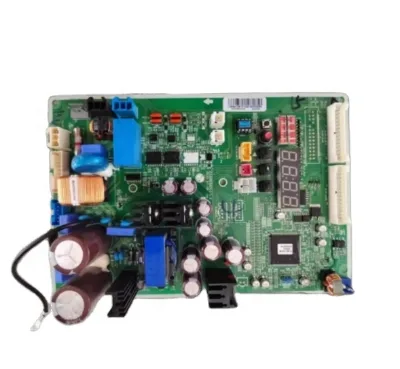

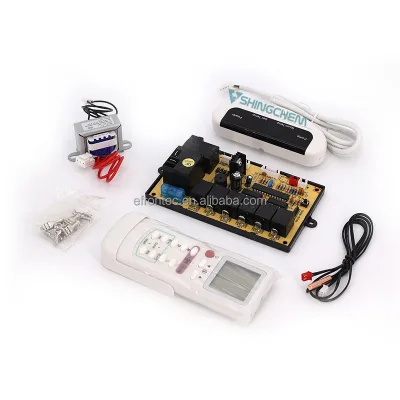


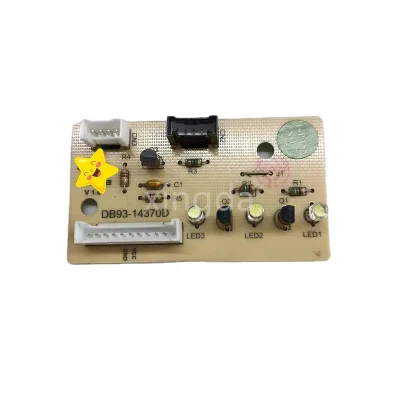


Comprehensive Sourcing Guide
Central Air Condition Motherboard Sourcing Guide
Sourcing a Central Air Condition Motherboard for commercial or residential HVAC systems requires balancing technical fit, compliance evidence, and commercial practicality. The listed products in this category span finished control boards, PCB assemblies, and compressor-control components, with observed listings ranging from a few dollars to several hundred dollars per unit and minimum order quantities from single samples to 5,000 pieces. That spread reflects the difference between buying a bare multilayer board, a populated PCBA, and a complete control module ready for installation. Buyers should first decide which level of integration they need, because it drives every downstream requirement, from documentation depth to packaging and testing.
This guide is written for procurement teams, OEM buyers, and maintenance contractors evaluating suppliers of central air conditioner control boards. It walks through the product scope visible in current listings, the specifications worth verifying before sample approval, the compliance paperwork to request, the cost drivers behind quoted prices, supplier qualification practices, and the checks that protect a long-term supply relationship. Throughout, treat listing attributes as observations to confirm, not guarantees that every product meets the same standard.
Product Scope and Observed Listing Signals
The category covers several distinct product types. Some listings are complete controller boards with model identifiers such as PHFS-16RDI-M, PHKS-8AO-M, and PHFS-32DI-DM, described with linear mathematical models, continuous signals, and automatic control functions — language typical of programmable or configurable HVAC control modules. Others are PCB and PCBA offerings, including rigid multilayer circuit boards produced with SMT processing, copper electrolytic foil technology, and X-ray and AOI testing stages. A third group consists of finished appliance parts, such as compressor-control boards and plastic controller units like the QD-U03A+ or GT1216B, aimed at home refrigerator and freezer applications but often sold by the same suppliers.
Observed listing signals help segment suppliers. Origin declarations include Beijing, Ningbo, and broader China entries; packing ranges from individual boxes to carton and export-standard packaging; and condition fields include both new and used units, so buyers must filter carefully. Certification mentions include ISO and ISO9001, customization is offered by some suppliers but explicitly marked non-customized by others, and small orders are noted as acceptable in some PCBA listings. These attributes describe individual listings — confirm which apply to the specific product you intend to buy.
Technical Specifications to Verify
For complete controller modules, verify the input/output configuration against your system architecture. Model designations in this category suggest channel counts and signal types — for example, digital input and analog output variants — but the listing alone does not confirm how many points a board actually provides. Request the full I/O schedule, the signal standard (the observed "dual line analog output" designation should be validated against your wiring scheme), the supply voltage range, and whether the control logic is fixed or programmable. Ask how parameters are set: dip switches, keypad, or software, and who holds the configuration tool. For replacement applications, confirm compatibility with the original equipment's sensors, actuators, and communication method before committing to a pilot order.
For bare boards and PCBA services, the verification focus shifts to construction. Listings cite rigid circuit boards, multilayer builds, copper metal coating, electrolytic foil processing, and organic resin insulation, with flame retardant property listed as V0 and base material referencing FR-grade laminate with RoHS mention. Confirm layer count, copper weight, finished board thickness, surface finish, and laminate grade through a datasheet rather than a listing attribute. For PCBA work, ask which inspection stages — the observed X-ray and AOI — apply to your order, and whether functional testing is available before shipment.
Compliance and Safety Documentation
Because a control board sits inside an energized HVAC appliance, compliance documentation should be gathered before, not after, sample approval. Listings in this category mention ISO and ISO9001 certification and a RoHS reference tied to the base material, but certification status is a listing attribute, not a verified fact — request the actual certificates, check scope and expiry, and confirm they belong to the manufacturing entity rather than a trading office. For flame retardancy, the cited V0 rating should be supported by the laminate supplier's material certificate, and you should ask which laminate grade and standard the fabricator is using.
Beyond management-system and material certificates, clarify which product-level requirements apply in your destination market and ask the supplier what evidence they can provide — do not assume a listing implies conformity. For PCBA orders, request RoHS declarations covering solder, surface finishes, and components, plus process control records if your quality system requires them. For finished controller boards, ask for wiring diagrams, insulation and safety test procedures, and the user or installation manual, since these documents reveal whether the supplier controls design or only assembles to a customer file. Keep all documents versioned against the sample you approve.
Cost Drivers and Commercial Terms
Quoted prices in this category span from roughly $0.10 to $450, which tells buyers that these listings are not directly comparable. A bare single-sided or small multilayer board can plausibly sit at the low end, while a fully populated, tested controller module with enclosure-facing interfaces sits far higher. When comparing quotes, normalize for board level (bare, assembled, or finished module), layer count, component sourcing (consigned versus turnkey), testing scope, and packaging. Ask whether the quoted price assumes the stated MOQ — observed ranges run from 1 piece for samples or small PCBA orders up to 5,000 pieces, with one finished-parts listing explicitly stating MOQ 500 pcs.
Commercial terms to settle early include sample policy — one listing offers free samples, but confirm whether sample freight and any tooling or programming fees apply — and customization terms, since some suppliers advertise customization while others mark their products non-customized. Clarify packing format (box, carton, or export-standard packing), selling unit (one listing specifies single item), and who owns any firmware or design files created during a custom project. For repeat purchases, request a validity period on the quotation and a defined change-notification process, because component substitution is a common source of silent cost and quality drift.
Supplier Qualification and Quality Control
Qualify suppliers by capability evidence rather than listing claims. For PCBA and board fabricators, the observed production attributes — SMT mode of production, X-ray and AOI testing — indicate a modern assembly line, but you should verify line capability in person or through a third-party audit: solder paste inspection, reflow profile control, ICT or functional test availability, and ESD controls. For finished controller suppliers, ask whether design, firmware, and manufacturing are in-house or outsourced, because responsibility for failures becomes ambiguous when development is subcontracted. An ISO9001 claim should be verified against the certificate itself, including whether it covers the actual production site.
Quality control terms belong in the purchase agreement, not just in conversation. Define incoming inspection criteria and an acceptable quality level for your orders, require batch traceability (date codes at minimum), and agree on how nonconforming lots are handled — sort, rework, replacement, and responsibility for freight. For custom boards, require first-article inspection reports and golden samples retained by both parties. If the supplier offers X-ray and AOI as standard, ask for inspection records with your shipments; if functional testing of finished controllers is offered, specify the test conditions and require test reports per lot.
Long-Term Procurement Checks
A control board supplier relationship succeeds or fails on consistency over years of repeat orders. Establish a change-control clause: no component substitution, firmware revision, or layout change without written notice and, for significant changes, requalification samples. Ask for a component lifecycle report periodically, especially for controller ICs and communication chips that face obsolescence; a supplier who proactively flags end-of-life parts and proposes validated alternatives is far more valuable than one who ships whatever is available. For customized designs, confirm in writing that you own or have usage rights to the design files and firmware, so you can transfer production if needed.
Operationally, review suppliers on measured performance: on-time delivery, defect rates from your incoming inspection, responsiveness on quality issues, and documentation accuracy. Keep a qualified second source for high-volume boards where feasible, and reconcile its product against your golden sample before qualifying it. Re-verify certificates at renewal dates, refresh RoHS declarations annually, and revisit packing and export documentation when volumes grow — carton packing that suits a trial order may need export-standard packaging at scale. Schedule periodic audits for strategic suppliers so process drift is caught before it reaches your assembly line or service fleet.
FAQs
What certifications are available for central air condition motherboards?
ISO certification is available for new central air condition motherboards. Some components also carry RoHS certification. These standards ensure quality and compliance. Buyers should verify specific model requirements. Customization is often available to meet distinct project needs. Always confirm the exact certification status with the supplier before ordering to ensure regulatory alignment.
Can I customize the Central Air Condition Motherboard for my project?
Yes, customization is available for many Central Air Condition Motherboard models. Suppliers offer both customized and non-customized options. You can adjust specifications to fit unique system requirements. This flexibility supports diverse application scenarios. Contact the manufacturer to discuss your specific technical needs and ensure the final product meets your operational standards.
What is the typical MOQ for central air condition motherboards?
The minimum order quantity ranges from 1 to 5000 units. Some specific models may have an MOQ of 500 pieces. Small orders are often acceptable for testing purposes. Buyers should check the specific product page for exact limits. MOQs vary by manufacturer and product complexity. Confirming the MOQ early helps in planning your procurement budget effectively.
Where are central air condition motherboards typically manufactured?
Manufacturing locations include Beijing and Ningbo in China. These regions are known for electronics production. Origin details are listed for each product model. Buyers can filter suppliers by these specific locations. Proximity to manufacturing hubs may impact lead times. Verify the origin to ensure supply chain reliability and logistical efficiency for your specific delivery requirements.
What materials are used in central air condition motherboards?
Materials include stainless steel, complex materials, and organic resin insulation. Some components feature copper metal coating. The base material may be FR with specific certifications. These materials ensure durability and performance. The structure is often a combination type. Understanding material composition helps in assessing longevity and suitability for your specific environmental conditions.
How are central air condition motherboards packaged for shipping?
Packaging options include box, carton package, and export standard packing. Some items are packed in cartons for bulk shipping. The packaging is designed to protect sensitive electronic components. Buyers should specify their preferred packaging method. Proper packaging ensures safe transit. Confirm packaging details with the supplier to prevent damage during international shipping and handling.