Source Centrifugal Spray Drying Machine for Food Chemical Pharma
Explore 30 Centrifugal Spray Drying Machine options for food, chemical, and pharmaceutical applications. Buyers can compare specifications like heat source, atomization mode, and evaporation capacity to find suitable industrial solutions.
Key considerations
Products List


High Speed Liquid Centrifugal Spray Dryer Customized Drying Machine
$13800.00 - $250000.00
MOQ: 1 Pieces


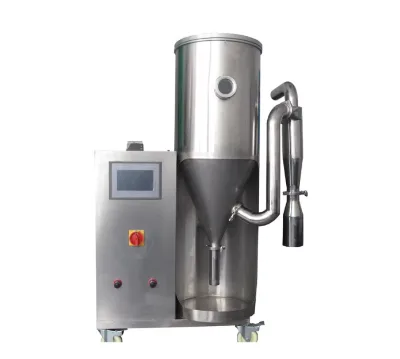


High Speed Centrifugal Spray Drying Equipment for Drying Chemical Solution
$4000.00 - $150000.00
MOQ: 1 Pieces


High Quality Centrifugal Spray Drying Machinery
$14000.00 - $90000.00
MOQ: 1 Sets
Shanghai Yiqi Pharmaceutical Machinery Group Company Limited

Drying Equipment & Pharmaceutical Spray Dryer Machine
$15000.00 - $16000.00
MOQ: 1 Sets
Shanghai Yiqi Pharmaceutical Machinery Group Company Limited


Industrial Centrifugal Spray Dryer Machine with Touch Screen Operation
$5200.00 - $91000.00
MOQ: 1 Pieces

Comprehensive Sourcing Guide
Strategic Sourcing Guide for Centrifugal Spray Drying Machines
Understanding Core Technical Specifications and Configuration
When sourcing a Centrifugal Spray Drying Machine, the primary objective is to align the equipment's physical and operational capabilities with the specific rheological properties of the liquid feed and the desired characteristics of the final powder. The fundamental mechanism involves the atomization of a liquid feed into a fine mist within a drying chamber, where it contacts a hot drying medium to achieve rapid moisture evaporation. In the context of the available market data, the atomization method is a critical differentiator. Buyers must verify whether the unit utilizes a rotary atomizer, which is the standard for centrifugal spray drying, or if alternative methods like pressure or gas atomization are being offered as hybrid options. The supply data indicates that rotary atomization is a confirmed configuration, while pressure and gas atomization modes are also observed in the broader equipment landscape.
The drying chamber design and airflow pattern significantly influence product quality and energy efficiency. The observed configurations include co-current, counter-current, and mixed-current flow modes, alongside cross-flow arrangements. In a co-current system, the hot air and the atomized liquid move in the same direction, which is generally preferred for heat-sensitive materials to prevent thermal degradation. Conversely, counter-current flow maximizes thermal efficiency but may require careful temperature control to avoid damaging the product. The inlet temperature range observed in the market data spans from 140 to 350 degrees Celsius, with some units offering automatic control within this band. The outlet temperature is typically maintained between 80 and 90 degrees Celsius, a range that ensures the product is dry while preventing overheating. Buyers should confirm that the specific unit they are evaluating can be adjusted to meet the thermal requirements of their specific material, as the data suggests these parameters are often customizable per site condition.
The construction material of the machine is paramount for industries handling food, pharmaceuticals, or chemicals. The standard material status observed is stainless steel, which provides the necessary corrosion resistance and hygiene standards required for these sectors. The evaporation capacity varies widely, with observed ranges extending from 5 to 2000 liters per hour, allowing for scalability from pilot-scale testing to full industrial production. The operational method is predominantly continuous, ensuring steady-state production, and the control system often features an automatic digital control panel to manage the complex interplay of temperature, flow rates, and atomization speed.
Compliance, Certification, and Regulatory Standards
Navigating the regulatory landscape is a non-negotiable aspect of sourcing industrial drying equipment, particularly for applications in the food, chemical, and pharmaceutical industries. The supply data explicitly lists several standards and certifications that are relevant to the market, including CE, SGS, ISO, and GMP. These designations serve as indicators that the equipment has undergone specific assessments regarding safety, quality management, and Good Manufacturing Practice compliance.
The CE marking is a mandatory conformity mark for products sold within the European Economic Area, indicating that the manufacturer has assessed the product and meets EU safety, health, and environmental requirements. For buyers operating in or exporting to Europe, verifying the validity of the CE certification is essential. Similarly, the ISO standard, often referenced as ISO 9001:2015 in broader industry contexts, signifies that the manufacturer adheres to a quality management system. While the specific ISO standard number is not universally guaranteed for every unit in the provided data, the presence of "ISO" as a listed attribute suggests that certified manufacturers are available.
GMP (Good Manufacturing Practice) compliance is particularly critical for pharmaceutical and food-grade applications. This standard ensures that products are consistently produced and controlled according to quality standards. When evaluating a supplier, buyers must request documentation proving that the specific model of the spray dryer, including its contact parts and control systems, is designed and validated to meet GMP requirements. The data also mentions SGS, a leading inspection, verification, testing, and certification company. An SGS certification typically implies that an independent third party has verified the product's quality and safety claims.
Buyers should not assume that every listed product automatically satisfies all these standards. Instead, the procurement strategy must involve a rigorous verification process. This includes requesting valid certificates of conformity, reviewing the scope of the certification to ensure it covers the specific model and configuration being purchased, and confirming that the certification is current. For international transactions, the origin of the equipment, often cited as China or specifically Shanghai in the data, may require additional import compliance checks. The packaging method, observed as wooden cases with foam protection, is also a factor in ensuring the equipment arrives without damage, which is a prerequisite for maintaining the integrity of the certification and warranty.
Cost Drivers and Economic Considerations
The total cost of ownership for a Centrifugal Spray Drying Machine is influenced by a complex array of factors beyond the initial purchase price. The observed price range in the market is extensive, spanning from 1 to 300,000 USD. This vast disparity reflects differences in capacity, material grade, automation level, and the complexity of the customization required. A unit with a capacity of 5 liters per hour will naturally cost significantly less than a 2000 liters per hour industrial system. However, the price is not solely a function of size; the choice of heating source is a major cost driver.
The data identifies multiple heating options, including natural gas, coal gas, steam, and electricity. The selection of the heat source has profound implications for both capital expenditure (CapEx) and operational expenditure (OpEx). Electric heating systems, while potentially having a lower initial installation cost if the site already has adequate power infrastructure, may incur higher ongoing energy costs depending on local electricity rates. Conversely, systems designed for natural gas or steam may require significant upfront investment in piping, burners, and safety systems but could offer lower operating costs in regions with cheap fuel. The "Heating Mode" is listed as optional per site condition, meaning the buyer must conduct a detailed energy audit of their facility to determine the most economical choice.
Customization is another significant cost variable. The supply data confirms that customization is available for attributes such as evaporation capacity, atomization mode, and flow direction. While customization allows the machine to be perfectly tailored to the process, it inevitably increases the lead time and the unit price. The material construction, specifically the grade of stainless steel used for the drying chamber and contact parts, also impacts cost. Higher grades of stainless steel offer better corrosion resistance and longevity but come at a premium.
Furthermore, the power supply requirements, observed as 380V 50Hz, must be compatible with the buyer's facility infrastructure. If the local grid differs, additional transformers or electrical modifications will be required, adding to the total project cost. The weight of the equipment, with observed values around 2920kg for certain models, also influences logistics and installation costs. Heavy machinery requires specialized lifting equipment and potentially reinforced flooring, which are hidden costs that must be factored into the budget. Buyers should request a detailed breakdown of costs, including the base machine, customization fees, heating system integration, and shipping, to avoid unexpected expenses during the procurement process.
Typical Applications and Material Compatibility
Centrifugal spray drying machines are versatile tools designed to handle a wide variety of materials across multiple industries. The observed applications explicitly include the food, chemical, and pharmaceutical sectors. The versatility of the machine stems from its ability to convert liquid feeds into dry powders while preserving the chemical and physical properties of the original material. The material status observed in the data includes cream, solution, and powder, indicating the machine's capability to process feeds ranging from viscous liquids to suspensions.
In the food industry, spray drying is commonly used to produce instant coffee, milk powder, egg powder, and various flavorings. The ability to control the inlet and outlet temperatures allows for the processing of heat-sensitive ingredients without compromising their nutritional value or flavor profile. The "Flash Drying" or "Instant Drying" feature mentioned in the data is particularly valuable here, as it ensures rapid moisture removal, which is essential for maintaining the quality of food products.
The chemical industry utilizes these machines for drying pigments, detergents, and various chemical intermediates. The corrosion resistance of the stainless steel construction is vital in this sector, where the feed materials may be acidic or alkaline. The ability to select different atomization modes, such as rotary or pressure atomization, allows for the optimization of particle size distribution, which is a critical quality parameter for chemical powders.
In the pharmaceutical industry, the requirements are even more stringent. The GMP compliance mentioned in the data is a prerequisite for this sector. Spray drying is used to produce active pharmaceutical ingredients (APIs), excipients, and granules. The continuous operational method ensures consistent batch-to-batch quality, which is essential for regulatory approval. The ability to customize the drying chamber and airflow patterns allows for the precise control of particle morphology, which affects the dissolution rate and bioavailability of the final drug product.
The following table summarizes the key application areas and their specific requirements based on the observed data:
| Industry Sector | Key Material Types | Critical Requirements | Relevant Observed Features |
|---|---|---|---|
| Food | Milk, Coffee, Egg, Flavors | Heat sensitivity, Hygiene, Flavor retention | Flash Drying, Stainless Steel, Temp Control |
| Chemical | Pigments, Detergents, Salts | Corrosion resistance, Particle size control | Co/Counter-Flow, Custom Atomization |
| Pharmaceutical | APIs, Excipients, Granules | GMP Compliance, Sterility, Consistency | GMP Standard, Digital Control, Stainless Steel |
Supplier Evaluation and Selection Criteria
Selecting the right supplier for a Centrifugal Spray Drying Machine requires a multi-faceted evaluation process that goes beyond price comparison. The supply data indicates that the brand "Ltpm China" is present in the market, and the origin is frequently cited as China or Shanghai. While specific supplier names should not be recommended, buyers can use these data points to understand the competitive landscape. The presence of a specific brand and origin suggests a concentration of manufacturing capability in that region, which may offer competitive pricing but requires careful due diligence regarding quality control and after-sales support.
Buyers should prioritize suppliers who demonstrate a clear understanding of the customization process. The data confirms that customization is available for heat sources, atomization modes, and flow directions. A reputable supplier will not simply sell a standard model but will engage in a technical consultation to tailor the machine to the buyer's specific process needs. This includes analyzing the feed material properties, determining the required evaporation capacity, and selecting the appropriate heating system.
The availability of certifications is another critical evaluation criterion. Suppliers who can provide valid CE, SGS, ISO, and GMP certificates for their specific models demonstrate a commitment to quality and regulatory compliance. Buyers should verify these certificates directly with the issuing bodies to ensure their authenticity. Additionally, the supplier's experience in the specific industry sector (food, chemical, or pharmaceutical) is a strong indicator of their capability to deliver a successful project.
After-sales support is often the differentiator between a good and a great supplier. The complexity of spray drying equipment requires specialized technical support for installation, commissioning, and troubleshooting. Buyers should inquire about the availability of local service engineers, the warranty terms, and the supply chain for spare parts. The "Condition" of the equipment is listed as "New," which implies that buyers should verify the supplier's policy on new versus refurbished units and ensure that the machine is delivered in pristine condition.
Quality Control and Long-Term Procurement Considerations
Ensuring the quality of the Centrifugal Spray Drying Machine is essential for long-term operational success. The procurement process should include a rigorous quality control plan that covers the manufacturing phase, the pre-shipment inspection, and the post-installation validation. The data highlights the importance of the material construction, specifically stainless steel, which must be verified for grade and thickness. Buyers should request material test reports (MTRs) for the stainless steel components to ensure they meet the specified standards.
The dimensional specifications, such as the observed 460042007000mm for certain models, must be validated to ensure the equipment fits within the buyer's facility. The weight of the unit, around 2920kg, also requires verification to ensure the floor can support the load. The packaging method, described as wooden cases with foam, should be inspected upon delivery to confirm that the equipment has not suffered transit damage.
Long-term procurement considerations involve the scalability and adaptability of the equipment. The observed evaporation capacity range of 5 to 2000 liters per hour suggests that the technology is scalable. However, buyers should consider future production needs and whether the selected model can be upgraded or expanded. The "Customization" attribute indicates that the machine can be adapted to changing process requirements, which is a valuable feature for long-term investment.
Energy efficiency is another long-term consideration. The choice of heating mode and the optimization of the airflow pattern (co-current, counter-current, or mixed) will directly impact the energy consumption of the machine. Buyers should request energy efficiency data from the supplier and consider the total cost of ownership over the lifespan of the equipment. The operational method, listed as continuous, suggests that the machine is designed for high-volume production, which requires robust maintenance schedules to ensure reliability.
Finally, the integration of the spray dryer into the existing production line is a critical factor. The "Liquid Feed Method" using a feed pump and the "Drying Medium" being air must be compatible with the buyer's upstream and downstream processes. The "Spray Dryer Control Method," which is often an automatic digital control panel, should be evaluated for its user-friendliness and compatibility with the buyer's existing control systems. By addressing these quality control and long-term considerations, buyers can ensure that their investment in a Centrifugal Spray Drying Machine delivers consistent value and performance over its operational life.
FAQs
What atomization modes are available for centrifugal spray drying machines?
Rotary atomization is the standard configuration for centrifugal spray drying machines. The equipment also supports pressure atomizing and gas atomizing modes depending on the specific model and customization requirements.
Can the evaporation capacity be customized for specific production needs?
Yes, the evaporation capacity is fully customizable to meet specific production requirements. Available ranges extend from 5 to 2000 liters per hour, allowing for scalability from pilot testing to full industrial output.
Which certifications are commonly associated with these spray drying units?
Common certifications include CE, SGS, ISO, and GMP compliance for quality and safety. These standards ensure the equipment meets regulatory requirements for food, chemical, and pharmaceutical industries.
How is the inlet temperature controlled during the drying process?
The inlet temperature is automatically controlled within a range of 140 to 350 degrees Celsius. This precise control helps prevent thermal degradation of heat-sensitive materials during the flash drying operation.
What materials are used to construct the spray dryer contact parts?
The machine construction primarily utilizes stainless steel to ensure corrosion resistance and hygiene. This material status is essential for applications in the food, chemical, and pharmaceutical sectors.
Which heating sources can be selected for the drying operation?
Multiple heating sources are available including natural gas, coal gas, steam, and electricity. The specific heating mode is selected based on site conditions and operational preferences.