Source Child Proof Borosilicate Glass Vials for Medicine, Cosmetics, Food
Compare 30 listings of Child Proof Borosilicate Glass Vials suitable for medicine, cosmetics, and food packaging. Buyers can review specifications like volume, glass type, and closure options from verified suppliers in China.
Key considerations
Products List


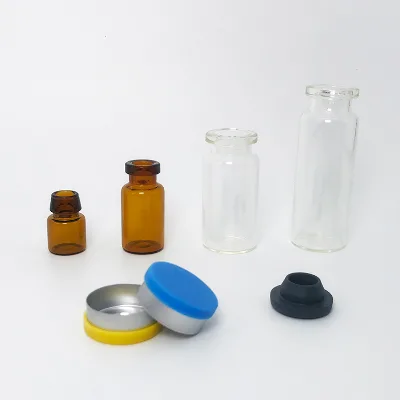


Small Borosilicate Glass Bottle Glass Vial with Coating and Screen Printing
$0.04 - $0.10
MOQ: 50000 Pieces


5ml 6ml 7ml Small Glass Bottle Borosilicate Glass Vial for Medical or Cosmetic
$0.02 - $0.04
MOQ: 50000 Pieces


Comprehensive Sourcing Guide
Strategic Sourcing Guide for Child-Proof Borosilicate Glass Vials
Understanding Material Integrity and Glass Specifications
When sourcing child-proof borosilicate glass vials, the primary focus must remain on the fundamental material properties that ensure safety and chemical resistance. The supplied data indicates a clear distinction between general glass types and specific high-performance variants. Buyers should prioritize vials explicitly identified as Borosilicate Glass or Neutral Borosilicate Glass, as these materials offer superior thermal shock resistance and chemical durability compared to soda lime alternatives. The provided facts list Borosilicate Glass 7.0 and 5.0 alongside Soda Lime Glass as potential options, necessitating a rigorous verification step to ensure the specific order matches the required chemical inertness for the intended application.
The hydrolytic property of the glass is a critical metric for pharmaceutical and medical applications. The available data highlights USP Type I as a specific hydrolytic classification observed in the product pool. This classification denotes the highest level of resistance to water attack, which is essential for maintaining the stability of sensitive liquid medications. When evaluating potential suppliers, procurement teams must request documentation confirming that the glass meets USP Type I standards, rather than accepting generic "borosilicate" claims without specific hydrolytic testing results. The material is consistently described as Clear or Amber, with the latter often used to protect light-sensitive formulations. The physical form is typically Moulded via Bottle Blowing or Mould techniques, resulting in a Hard flexibility profile that is essential for withstanding the mechanical stress of child-proof closures.
Technical Specifications and Capacity Ranges
The technical landscape for these vials is defined by a wide spectrum of capacity ranges and specific model identifiers. The observed data reveals a fragmented but comprehensive range of specifications, including 1-30ml, 0.5-2ml, and larger volumes such as 10, 15, 30, 50, 100ml. Some listings specify exact models like 20mlA and 30mlA, while others use generic descriptors like glass vial or Transparent Injectable Vials. This variability requires buyers to be precise in their Requests for Quotation (RFQs) to avoid receiving mismatched inventory. The prod_standard field in the data includes specific volume standards like 2ml, 250ML, and ranges like 7-100ml and 5ml-100ml, suggesting that capacity is a primary differentiator in the product line.
Furthermore, the closure mechanism is a defining technical feature for child-proofing. The data explicitly lists Rubber Stopper and Screw Cap as available closure types. For child-proof applications, the interaction between the vial neck and the closure is paramount. A Screw Cap is often required to achieve the specific torque and engagement needed for child-resistant features, whereas Rubber Stopper configurations are more common for injectable applications requiring a seal that can be penetrated by a needle. The Surface Handling process, specifically Siliconization, is noted in the supply data. This treatment reduces friction and prevents the glass from sticking to the closure or the needle, which is a critical quality attribute for injectable vials. Buyers must verify that the siliconization process is consistent across the batch to ensure reliable dosing and seal integrity.
Compliance, Standards, and Regulatory Alignment
Navigating the compliance landscape for medical and pharmaceutical packaging requires strict adherence to recognized standards. The supplied facts mention ISO Standard as a relevant classification, alongside specific product standards like 2R, 4R, 6R...30R, which likely refer to specific dimensional or capacity ratings within a regulatory framework. While background knowledge suggests certifications like ISO9001 or ISO14001 are common in the industry, the provided data does not confirm their presence for every listed product. Therefore, buyers must treat these as verification targets rather than assumed attributes. The procurement strategy should mandate that suppliers provide current certification documents proving compliance with ISO Standard requirements and any regional pharmacopoeia standards relevant to the destination market.
The USP Type I hydrolytic property mentioned in the data serves as a direct compliance anchor for medical-grade glass. This standard is non-negotiable for parenteral products. Additionally, the prod_standard field lists 2ml and 250ML as specific standards, indicating that volume-specific regulatory compliance may vary by product size. Buyers should not assume that a vial compliant for a 2ml application is automatically compliant for a 250ml application without specific validation. The Place of Origin is consistently listed as China, specifically Shandong, China (Mainland). While this location is a known manufacturing hub, it necessitates a robust supplier audit to ensure that the production facilities in this region adhere to the same rigorous quality control protocols as those in other global manufacturing centers. The absence of specific certification names in the high-confidence facts means that the buyer's due diligence must include a direct request for the supplier's quality management system certificates.
Cost Drivers and Economic Considerations
The economic profile of sourcing borosilicate glass vials is influenced by several distinct factors, primarily driven by material costs, customization requirements, and order volume. The observed price range in the data spans from 0 to 2.8 USD, a wide variance that likely reflects differences in capacity, customization levels, and order quantities. The MOQ (Minimum Order Quantity) range is substantial, observed between 1000 and 500,000 units. This high MOQ floor indicates that these products are designed for industrial-scale procurement rather than small-batch or prototype sourcing. Buyers with lower volume needs may face significant challenges in finding suppliers willing to meet their requirements without incurring premium costs or requiring a consolidation of orders.
Customization is a major cost driver. The data confirms that Customization is Available, but also notes conflicting attributes regarding Logo Printing (both With and Without are listed) and Recycled content (both Recycled and Unrecycled are listed). These variations directly impact the unit price. A vial with Logo Printing and specific Siliconization will command a higher price than a standard, unbranded, unrecycled unit. The prod_packing options, ranging from Cartons to Carton or Pallet, also affect the total landed cost. Larger packaging units like pallets may offer economies of scale in shipping but require more storage space. The Brand "Spg" is mentioned in the data, suggesting that branded products may carry a price premium over generic equivalents. Buyers should analyze the total cost of ownership, including the cost of custom tooling for logos, the premium for recycled glass (if available), and the logistics of handling large palletized shipments, rather than focusing solely on the unit price.
Typical Applications and Usage Scenarios
The versatility of borosilicate glass vials is evident in the diverse applications listed in the supply data. The primary usage categories include Pharmaceutical Packaging, Medical, Cosmetics, Beverage, Food, and Medicine. The specific designation of Sample Vial and Injectable vial points to high-value, regulated industries where the integrity of the container is critical. The Type field also lists Feeding Bottle, which, while less common for borosilicate, suggests a potential application in specialized medical feeding scenarios. The Application tag specifically highlights Medical, reinforcing the importance of the USP Type I hydrolytic property for these products.
The distinction between Clear and Amber vials is crucial for application-specific sourcing. Clear vials are suitable for products that do not degrade under light exposure, while amber vials are mandatory for light-sensitive pharmaceuticals. The Closure Type of Rubber Stopper is predominantly associated with injectable applications, where the vial must be punctured by a needle for administration. Conversely, Screw Cap closures are more typical for oral liquids, topical creams, or cosmetic products where child-proofing is a regulatory requirement but needle access is not. The Forming Type of Moulded ensures a consistent shape that is essential for automated filling lines in pharmaceutical manufacturing. Buyers must align their product formulation requirements with the specific vial attributes, ensuring that the Glass Type and Closure Type are compatible with the product's chemical nature and the intended route of administration.
Supplier Evaluation and Quality Assurance Protocols
Evaluating suppliers for child-proof borosilicate glass vials requires a multi-dimensional approach that goes beyond price and basic specifications. The Technics of Bottle Blowing and Mould suggest that the manufacturing process is critical to the final product's strength and consistency. Buyers should request detailed process descriptions to ensure the supplier utilizes modern, controlled environments that minimize defects. The Surface Handling of Siliconization is a specific technical step that must be verified for uniformity. Inconsistent siliconization can lead to dosing errors or seal failures, particularly in injectable applications.
Quality control protocols must be rigorous. Given the high MOQ requirements, a single batch failure can result in significant financial loss. Buyers should demand evidence of ISO Standard compliance and specific testing results for USP Type I hydrolytic resistance. The data lists CE as a background certification, but this should not be assumed; it must be verified through documentation. The Place of Origin being Shandong, China requires a specific focus on the supplier's export history and their ability to meet international shipping and quality standards. Buyers should conduct on-site audits or third-party inspections to verify the Machine type, specifically Horizontal Machine usage, which can impact production efficiency and consistency. The Flexibility being Hard is a standard expectation for borosilicate glass, but it must be validated through drop tests and impact resistance testing to ensure the vials can withstand the rigors of child-proof closure mechanisms and shipping.
Long-Term Procurement and Supply Chain Resilience
Sourcing child-proof borosilicate glass vials is a long-term commitment that requires careful planning for supply chain resilience. The prod_model variations, such as 110081 or 20mlA, indicate that specific product lines may have unique supply constraints. Buyers should establish long-term contracts that lock in pricing and capacity, especially given the wide MOQ range of 1000 to 500,000. The prod_packing options, including Inner Packing and Carton or Pallet, should be standardized to minimize handling errors and maximize logistics efficiency.
The Recycled status of the glass is an emerging consideration. While the data shows both Recycled and Unrecycled options, the sustainability of the supply chain is increasingly important. Buyers should inquire about the supplier's ability to provide Recycled glass vials without compromising the USP Type I standards or the Hard flexibility of the material. The Logo Printing availability offers a branding opportunity, but it also introduces a dependency on the supplier's ability to maintain consistent print quality over long production runs. Finally, the Lead Time and Location factors, while not explicitly quantified in the data, are critical for inventory management. Buyers must factor in the distance from Shandong, China to their distribution centers and the potential for supply chain disruptions when planning their procurement cycles. By focusing on these long-term factors, buyers can secure a reliable supply of high-quality, child-proof borosilicate glass vials that meet their regulatory and operational needs.
FAQs
What glass types are available for child-proof vials?
Neutral Borosilicate Glass and Borosilicate Glass 7.0 are available options. Some listings also include Soda Lime Glass, but buyers must verify the specific hydrolytic property meets USP Type I standards for medical applications.
Which closure types are compatible with these vials?
Rubber Stopper and Screw Cap closures are explicitly listed as available options. The choice depends on the application, with rubber stoppers common for injectables and screw caps often used for child-proof requirements in other sectors.
Can I order vials with logo printing customization?
Customization is available, including options with and without logo printing. Buyers should confirm specific branding requirements during the RFQ process as both printed and unprinted versions appear in the product data.
What is the minimum order quantity for these vials?
The minimum order quantity ranges from 1000 to 500000 units depending on the supplier. This high MOQ floor indicates these products are designed for industrial-scale procurement rather than small-batch sourcing.
How are these vials packaged for shipment?
Packaging options include cartons, inner packing, or carton or pallet configurations. The specific packing method affects logistics costs and storage requirements, so buyers should specify their preferred packaging format when ordering.
What capacity sizes are offered for injectable vials?
Available capacities range from 0.5-2ml up to 100ml, with specific models like 20mlA and 30mlA. Listings also mention standards like 2ml, 250ML, and ranges such as 7-100ml for various pharmaceutical needs.
Where are these glass vials manufactured?
The place of origin is consistently listed as China, specifically Shandong, China. Buyers should verify that facilities in this region adhere to required quality control protocols and international shipping standards.