Source Chiffon Blouse for casual wear, summer events, and office style
Explore 30 verified listings for the Chiffon Blouse featuring options in polyester and chiffon fabrics with custom sizes. Buyers can compare OEM services, seasonal styles, and shipping details from suppliers in China.
Key considerations
Products List

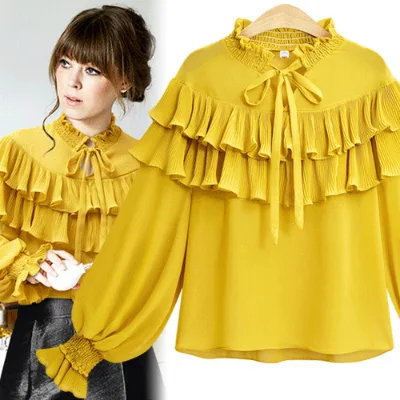


Women's Banquet Solid Color High Collar Chiffon Perspective Long Sleeve Blouse
$23.00 - $25.00
MOQ: 500 Pieces


High Quality Exclusive Pattern Blouse Fashion Forward Details Chiffon Material Work Shirt
$4.85 - $5.42
MOQ: 185 Pieces
Comprehensive Sourcing Guide
Chiffon Blouse Sourcing Guide
Sourcing chiffon blouses requires a nuanced understanding of fabric behavior, manufacturing capabilities, and commercial terms that vary significantly across suppliers. This guide synthesizes observed market signals and technical realities to help procurement professionals navigate the complexities of sourcing women’s leisure wear. By focusing on verified attributes and standard industry practices, buyers can mitigate risks associated with quality inconsistencies, supply chain delays, and compliance gaps. The following sections provide a structured approach to evaluating suppliers, verifying product specifications, and establishing robust procurement frameworks for Chiffon Blouse orders.
Product Scope and Observed Listing Signals
The current market landscape for chiffon blouses reveals a diverse range of product variations, primarily targeting adult women for casual and leisure wear. Observed listings indicate a strong emphasis on customization, with suppliers offering OEM services and private logo acceptance. The product scope spans multiple styles, including slim and loose fits, with top types categorized as shirts or blouses. Buyers should note that while some listings specify standard sizes like S, others explicitly offer customized sizing options, reflecting the flexibility inherent in modern garment manufacturing. This variability necessitates clear communication regarding fit preferences and size charts during the initial inquiry phase.
Color and pattern options further define the product scope, with common offerings including yellow, white, and black, as well as customized color requests. Patterns such as stripes are frequently observed, adding visual variety to the basic chiffon silhouette. The material composition is predominantly chiffon, though some listings also mention polyester, suggesting that buyers must verify the exact fabric blend to ensure it meets their desired handfeel and drape requirements. Additionally, the seasonal applicability ranges from summer to spring and autumn, indicating that the weight and weave of the chiffon can be adapted for different climate conditions. Understanding these scope variations is crucial for aligning product selection with target market demands.
Technical Specifications to Verify
Technical verification begins with confirming the fabric type and construction details. While chiffon is the primary material, buyers must distinguish between pure chiffon and polyester chiffon, as this affects durability, care instructions, and cost. The weave structure, often described as a specific count like CPT100S/2*CPT100S/2 in some contexts, should be validated to ensure the desired transparency and texture. Sleeve styles vary, with long sleeve options being common, but buyers should also inquire about short sleeve or sleeveless variants if needed. The collar style, particularly V-neck designs, is a key aesthetic feature that requires precise measurement to ensure consistency across production batches.
Model numbers and technical codes, such as GC01-DPT1103S-cf or 2018031306, serve as unique identifiers for specific designs. Buyers should request detailed tech packs that include these codes to avoid confusion during sampling and production. The technics employed, whether printed or yarn-dyed, significantly impact the final appearance and colorfastness of the garment. Printed chiffon may offer vibrant, complex patterns, while yarn-dyed options provide a more subtle, integrated color effect. Additionally, functional attributes like shrink resistance should be confirmed through supplier documentation or third-party testing, as chiffon is prone to shrinking if not treated properly.
Compliance and Safety Documentation
Compliance and safety are critical components of any apparel sourcing strategy, particularly for garments intended for international markets. Buyers must ensure that suppliers adhere to international standards, which may include specific requirements for fiber content labeling, care instructions, and safety regulations. The origin of the product, often listed as Shantou or Guangdong in China, does not automatically guarantee compliance; therefore, buyers should request relevant certification documents from their suppliers. These documents may include test reports for formaldehyde content, pH levels, and colorfastness, which are essential for meeting regulatory requirements in regions like the European Union and North America.
Labeling requirements are another area of focus, with suppliers often accepting OEM or ODM branding, including private labels. Buyers must verify that all labels, including care labels and country of origin tags, are accurately applied and comply with local regulations. The packaging details, such as polybag or inner carton packing, should also be reviewed to ensure they meet sustainability goals and protect the product during transit. Additionally, buyers should confirm that the supplier has a clear process for handling non-compliant products, including procedures for rework or disposal, to minimize financial and reputational risks.
Cost Drivers and Commercial Terms
Cost drivers for chiffon blouses include fabric quality, customization complexity, and order volume. The supply ability, often cited as 30,000 pieces per month, indicates that larger orders may benefit from economies of scale, potentially reducing the unit cost. However, customized sizes, private logos, and specific color requests can increase production complexity and lead to higher costs. Buyers should negotiate clear pricing structures that account for these variables, ensuring that any additional fees are transparent and justified. The minimum order quantity (MOQ) typically ranges from 1 to 500 pieces, with some suppliers setting a standard MOQ of 300 pieces, which can impact initial investment decisions for new buyers.
Commercial terms such as payment methods, sample times, and shipping options also influence the overall cost structure. Payment options like T/T and PayPal offer flexibility, but buyers should consider the security implications of each method. Sample times, usually ranging from 5 to 7 days, are crucial for maintaining project timelines, and delays in sampling can cascade into production bottlenecks. Shipping methods, including express, air, and sea freight, should be selected based on urgency and budget, with door-to-door services offering convenience but potentially higher costs. Understanding these commercial terms allows buyers to optimize their procurement strategy and manage cash flow effectively.
Supplier Qualification and Quality Control
Supplier qualification is a foundational step in ensuring consistent product quality and reliable delivery. Buyers should assess suppliers based on their production capacity, technical expertise, and past performance. The availability of OEM services and private logo acceptance suggests that suppliers are equipped to handle customized orders, but buyers must verify their ability to maintain quality standards across different product lines. Requesting references or case studies from previous clients can provide insights into the supplier’s reliability and professionalism. Additionally, visiting the factory or conducting virtual audits can help buyers evaluate the production environment and quality control processes firsthand.
Quality control measures should be integrated into the procurement process from the sampling stage through to final shipment. Buyers should establish clear quality criteria, including fabric weight, stitch quality, and color accuracy, and communicate these expectations to the supplier. Implementing a pre-production sample approval process can help identify potential issues early, reducing the risk of large-scale defects. During production, regular inspections, such as during-line checks and final random inspections, should be conducted to ensure that the products meet the agreed-upon standards. Establishing a robust quality control framework not only protects the buyer’s interests but also fosters a collaborative relationship with the supplier.
Long-Term Procurement Checks
Long-term procurement success depends on continuous monitoring and evaluation of supplier performance. Buyers should establish key performance indicators (KPIs) to track metrics such as on-time delivery, defect rates, and responsiveness to issues. Regular performance reviews, conducted quarterly or annually, can help identify areas for improvement and reinforce accountability. Building a diversified supplier base can also mitigate risks associated with single-source dependencies, ensuring that buyers have alternative options in case of supply chain disruptions. Additionally, staying informed about industry trends and technological advancements can help buyers make informed decisions about product development and sourcing strategies.
Sustainability and ethical sourcing are increasingly important considerations for long-term procurement. Buyers should evaluate suppliers’ commitment to environmental practices, such as waste reduction and energy efficiency, as well as their adherence to labor standards. Engaging in open dialogue with suppliers about sustainability goals can drive continuous improvement and align procurement practices with corporate social responsibility objectives. By prioritizing long-term relationships and ethical considerations, buyers can build a resilient and responsible supply chain that supports both business growth and positive social impact.
FAQs
Can I request a customized size for the Chiffon Blouse?
Yes, customized sizes are available for this Chiffon Blouse product. The listing confirms that while standard sizes like S exist, buyers can specify their own dimensions to meet specific fit requirements for their target audience.
What is the typical sample time for this blouse order?
The sample time is typically 5 to 7 days for this Chiffon Blouse. This duration allows suppliers to prepare a prototype or initial unit for buyer approval before proceeding with the full production run of the garment.
Which fabric types are used for this Chiffon Blouse?
The product utilizes chiffon fabric, which is described as having a weave structure and a comfortable handfeel. Some variations may also be made from polyester, offering options for different textures and durability levels in the final garment.
How is the product packed for shipment?
The product is packed with one piece per polybag, and multiple units are placed in inner cartons and master cartons. This packaging method ensures the Chiffon Blouse remains protected during transit and meets standard international shipping requirements.
Can I add a private logo to the blouse?
Yes, private logo acceptance is available for this Chiffon Blouse. Buyers can utilize the OEM service to have their own branding applied to the garment, allowing for custom labeling and brand identity integration on the final product.
What is the minimum order quantity for this blouse?
The minimum order quantity is 300 pieces for this Chiffon Blouse. This MOQ applies to the standard production run, though some listings indicate a range starting from 1 piece for samples or specific small-batch scenarios.
Which colors are available for the Chiffon Blouse?
Available colors include yellow, white, and black, with customized color options also accepted. Buyers can select from these standard shades or request specific color variations to match their seasonal collection or brand requirements.
Where is the product origin for this blouse?
The product originates from Shantou and Guangdong in China. These locations are the primary production hubs for this Chiffon Blouse, ensuring adherence to international standards and efficient logistics for global distribution.