Source China Mainland Cashmere Scarf for Winter, Spring, and Autumn
Compare 30 verified listings for China Mainland Cashmere Scarf from Zhejiang and Inner Mongolia suppliers. Buyers can review specifications like material, size, and MOQ to find suitable options for daily life and seasonal wear; compare the available evidence and request quotations based on your requirements.
Key considerations
Products List


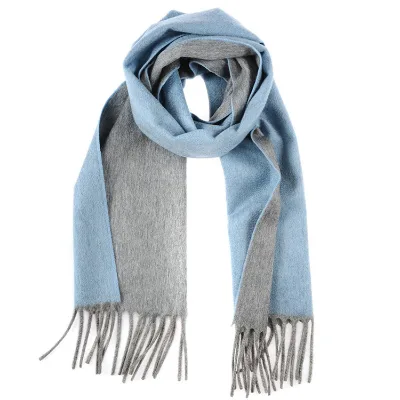


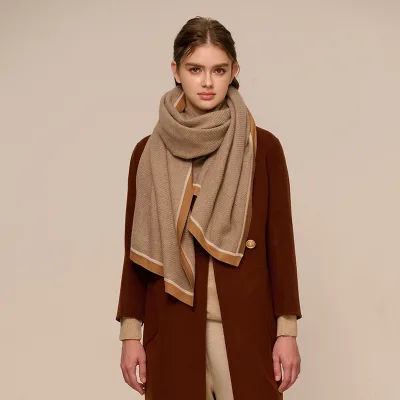


100% Pure Cashmere Scarf for Women Lightweight Fine Knit Winter Scarves
$10.00 - $35.00
MOQ: 50 Pieces


Custom Wool Cashmere Classic Luxury Scarves Shawl Winter Warm Soft Scarf
$1.50 - $4.50
MOQ: 200 Pieces


Comprehensive Sourcing Guide
China Mainland Cashmere Scarf Sourcing Guide
Sourcing cashmere scarves from mainland China requires careful navigation of diverse product listings that often blend specific material claims with general textile attributes. Buyers must distinguish between items explicitly described as cashmere woven scarves and those listed with generic materials like chiffon or plain patterns. The observed market data indicates a wide variance in product models, ranging from floral designs to specific animal motifs, which suggests a need for rigorous filtering to isolate genuine cashmere inventory.
Procurement teams should prioritize suppliers who explicitly state "cashmere" in their material specifications and provide detailed descriptions of the weaving technique. While some listings mention "Daily Life" usage and "Winter" seasonality, these broad tags do not guarantee material authenticity. A strategic approach involves cross-referencing the stated material against the product model and origin details to ensure the item matches the intended high-end thermal requirements of the target market.
Product Scope and Observed Listing Signals
The current market landscape for cashmere scarves in China presents a fragmented catalog where specific material claims are sometimes obscured by generic packaging or style descriptors. Buyers will encounter listings with varying package sizes, such as 55cm45cm110cm or 54cm40cm55cm, which may indicate different product types or bundling strategies rather than the scarf dimensions themselves. It is critical to verify that the "Product Model" and "Description" fields explicitly confirm the cashmere composition before proceeding with any order.
Observations reveal that some suppliers offer customization options for patterns and colors, yet the underlying material may vary between listings. While certain items are described as "Long" or "Medium Long" with "Plain Dyed" styles, others feature complex designs like "Lotus" or "Bee" motifs. Buyers must scrutinize the "Department Name" and "Season" attributes to ensure the product aligns with adult winter needs, as some listings may target different demographics or seasonal transitions like Spring/Autumn.
Technical Specifications to Verify
Technical verification begins with confirming the exact material composition, as the supply chain contains items labeled with materials ranging from cashmere to chiffon. Buyers must demand a material certificate or detailed specification sheet that isolates the cashmere content percentage, distinguishing it from blended fabrics that might be marketed similarly. The "Thickness" attribute, often listed as "Normal," requires physical sampling to ensure it meets the thermal insulation standards expected of genuine cashmere products.
Dimensional accuracy is another critical technical parameter, with observed standards varying from 180cm65cm to 180cm63cm depending on the specific model. The "Length" classification of "Medium Long" must be validated against the actual finished product to prevent discrepancies in the final delivery. Additionally, the "Gross Weight" of 0.32kg for specific items serves as a benchmark for density, helping buyers assess whether the fabric weight correlates with the claimed premium material quality.
Compliance and Safety Documentation
Ensuring compliance involves verifying that the supplier can provide documentation for chemical safety and fiber content accuracy, particularly given the low-confidence background references to standards like ISO 12945 or OEKO-TEX. While these standards are not explicitly confirmed in the provided data, reputable suppliers should be able to demonstrate adherence to international safety protocols for textiles intended for direct skin contact. Buyers should request test reports that specifically address the cashmere content and the absence of harmful substances.
Documentation must also cover the origin of the raw materials, with specific attention to the "Place of Origin" which may vary between Zhejiang, Inner Mongolia, or other regions. Inner Mongolia is historically significant for cashmere production, so verifying the specific origin claim is essential for authenticity. The "Port of Dispatch" details, such as Beijing Air Port or Tianjin Seaport, should be cross-referenced with the supplier's logistics capabilities to ensure the documentation travels with the shipment without delay.
Cost Drivers and Commercial Terms
Cost structures for cashmere scarves are heavily influenced by the raw material quality, the complexity of the weaving process, and the specific customization requirements. The observed Minimum Order Quantity (MOQ) ranges from a single piece to 500 pieces, indicating that unit costs will fluctuate significantly based on order volume. Buyers should anticipate higher per-unit costs for small batches but must balance this against the potential for bulk discounts if the order size exceeds the 100-piece threshold often seen in listings.
Commercial terms vary widely, with payment methods including T/T, L/C at Sight, Western Union, and PayPal. The "Delivery Time" of 7 to 15 working days suggests a relatively quick turnaround, but this may be contingent on the availability of raw materials and the specific production schedule. Buyers must clarify whether the quoted price includes packaging details, such as the "Inner: one piece in polybag" and "Outer: standard export carton," to avoid unexpected logistics costs.
Supplier Qualification and Quality Control
Supplier qualification requires a deep dive into their production capacity and historical performance, specifically looking for the "Supply Ability" of 20,000 pieces per month mentioned in some listings. This capacity figure helps buyers gauge whether the supplier can handle large-scale orders without compromising on quality or delivery timelines. It is also vital to verify the "OEM/ODM" availability, ensuring the supplier has the technical expertise to execute custom designs while maintaining the integrity of the cashmere material.
Quality control protocols must be established before production begins, focusing on the consistency of the "Plain Dyed" or "Digital Print" finishes. Buyers should implement a pre-shipment inspection plan that checks for defects in the "Tassels" and the overall weave structure, as these are common points of failure in scarf manufacturing. The "Brand Name" and "Design" customization options should be reviewed to ensure the final product meets the specific aesthetic and functional requirements of the buyer's brand.
Long-Term Procurement Checks
Establishing a long-term partnership requires regular audits of the supplier's ability to maintain consistent quality across multiple production runs. Buyers should monitor the "Product Standard" consistency, ensuring that dimensions like 180cm*65cm remain stable over time and that the "Gross Weight" does not drift from the established 0.32kg benchmark. Continuous communication regarding material sourcing is necessary to prevent substitutions that could degrade the perceived value of the cashmere scarves.
Strategic planning must also account for seasonal demand fluctuations, as the "Season" attribute indicates a primary focus on Winter and Spring/Autumn markets. Buyers should align their inventory planning with the supplier's lead times and production cycles to avoid stockouts during peak seasons. Regular reviews of the "Payment Terms" and "Delivery Time" performance will help identify any emerging risks in the supply chain, ensuring a stable and reliable flow of high-quality cashmere products.
FAQs
What are the standard dimensions for these cashmere scarves?
The standard product dimensions are 180cm by 65cm without tassels or 180cm by 63cm with tassels. These measurements provide a versatile length for daily wear. Buyers should verify specific model requirements, as styles like Lotus or Bee may have slight variations in width and length specifications.
Can I customize the design and pattern of the scarf?
Yes, customization is available for both design and pattern. Buyers can choose from plain dyed styles or request digital, screen, or heat transfer printing methods. The material is chiffon, allowing for multiple color options and tailored designs to meet specific branding or aesthetic requirements for the winter season.
What is the minimum order quantity for bulk purchases?
The minimum order quantity varies by product model. Some models require a minimum of 100 pieces, while others may accept orders as low as 50 pieces or even a single piece. Buyers should confirm the specific MOQ for their chosen model to ensure compliance with supplier production thresholds.
How long does delivery take after payment?
The typical delivery time is seven to fifteen working days. This timeframe applies after payment confirmation and order processing. Buyers should account for this lead time when planning inventory, especially for seasonal winter products. Expedited shipping options may be available depending on the supplier's current capacity and logistics arrangements.
What payment methods are accepted for these orders?
Accepted payment methods include T/T, L/C at sight, Western Union, and PayPal. These options provide flexibility for international transactions. Buyers should confirm the specific payment terms with their selected supplier to ensure smooth processing. Secure payment channels are recommended to protect both parties during the transaction.
Where are these cashmere scarves manufactured?
These scarves are manufactured in China, with specific origins including Zhejiang and Inner Mongolia. The production facilities are located in these regions, known for textile manufacturing. Buyers can verify the exact place of origin for each product model to ensure alignment with sourcing preferences and quality expectations.