Source China Mainland Thiourea Dioxide for Catalysts, Plating, and Synthesis
Find and compare 30 listings for China Mainland Thiourea Dioxide from verified suppliers. Buyers can evaluate purity levels, packaging options, and trade terms for industrial and electronic grade applications.
Key considerations
Products List


Bulk Supply Thiourea (Thiocarbamide) 99% Min, Fast Deliveryfob China Port, Top Quality
$1000.00 - $1500.00
MOQ: 1 Tons


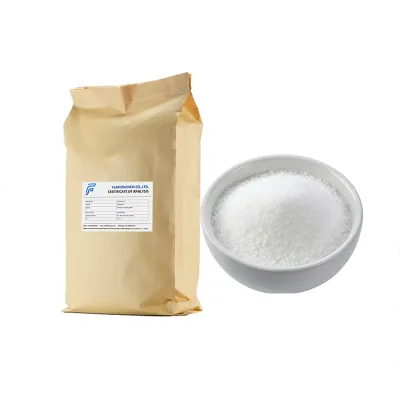

99% High Purity Ethylene Thiourea Competitive Price Industrial Chemical
$1500.00 - $2000.00
MOQ: 1 Tons


Comprehensive Sourcing Guide
Strategic Sourcing Guide for China Mainland Thiourea Dioxide
Understanding Product Specifications and Technical Variants
When sourcing thiourea dioxide from China mainland, buyers must first distinguish between the specific chemical forms and purity grades available in the market. The product landscape is not monolithic; it includes variations such as high-purity thiourea, electronic-grade intermediates, and industrial-grade synthesis materials. Technical due diligence begins with verifying the molecular formula, which is typically cited as CH4n2o2s in supplier documentation, though precise stoichiometric verification is essential for specific applications. The physical state of the product is consistently observed as a solid, often appearing as a white crystalline powder or a white powder, depending on the processing method and grade.
A critical differentiator in this category is the purity level. Market observations indicate a wide range of purity specifications, from 90% to 99% for general industrial use, up to ≥99.0 Wt% for thiourea content in high-purity variants. Buyers should note that some listings specify a purity of ≥99% as a standard attribute, while others define the grade standard strictly as Industrial Grade or Electronic Grade. The distinction is vital because electronic-grade materials often require stricter control over trace impurities. For instance, specific technical data points mention a Thiocyanate content of ≤ 0.02 Wt% and an Ignition Residue of ≤ 0.10 Wt% for certain high-quality batches. Furthermore, the initial melting point is a key identifier, with observed values ranging from ≥ 171 °C for specific grades to a broader range of 124-127°C for others. These discrepancies highlight the necessity of matching the exact chemical specification to the intended application rather than relying on generic product names.
Compliance, Certification, and Quality Standards
Navigating the regulatory landscape for chemical procurement from China requires a rigorous approach to certification and standard verification. The most frequently cited certification in the observed product data is ISO, which serves as a baseline for quality management systems. However, buyers should not assume that all listed products automatically meet specific international safety or environmental standards without explicit verification. The product attributes often list "Industrial Grade" and "Electronic Grade" as distinct classifications, implying that compliance requirements vary significantly between these categories.
For applications in the electronics industry, the "Trace Metal Control" attribute is paramount. High-quality suppliers often state that their materials conform to Electronic Industry Standards, which typically demand lower limits for heavy metals and other contaminants compared to general industrial uses. Additionally, the "Sulfated Ash" content is a critical compliance metric, with some listings specifying a limit of ≤ 0.1% specifically for Electronic Grade products. The "Loss on Drying" is another standardized test parameter, with observed limits set at ≤ 0.5% when tested at 105°C to constant weight. Buyers must verify that the supplier's test reports align with these specific numerical thresholds, as these values directly impact the performance and safety of the final product.
The "Grade Standard" is another layer of compliance. While "Industrial Grade" is the most common classification, the presence of "Electronic Grade" indicates a higher tier of purity and testing. The "Quality" attribute is often described as "Refined" or "Industrial," which should be cross-referenced with the supplier's quality assurance documentation. It is essential to confirm that the supplier holds valid ISO certification and that their internal quality control processes are capable of consistently meeting the specified limits for parameters like "Transmittance," which is observed to be ≥ 95% in certain high-purity contexts.
Cost Drivers and Pricing Dynamics
The pricing structure for thiourea dioxide in the China mainland market is influenced by several dynamic factors, primarily driven by purity, packaging, and order volume. The observed price range in the market is broad, spanning from $1 to $2000 USD, reflecting the diversity of product grades and order sizes. This wide variance suggests that a buyer's specific requirements for purity and volume will drastically alter the unit cost. High-purity electronic-grade materials, which require more rigorous refining processes and stricter quality control, naturally command a premium over standard industrial-grade intermediates.
Packaging plays a significant role in cost calculation. The market offers various packaging options, including 25kg bags, drums, and 25kg/Drum configurations. The choice between bulk drums and smaller bags can affect logistics costs and handling fees, which are often factored into the final price. Furthermore, the Minimum Order Quantity (MOQ) is a critical cost driver. Observed MOQs range from 1 unit to 1000 units, with specific listings indicating an MOQ of 1 Ton for certain grades. Buyers must align their procurement volume with these MOQs to avoid unnecessary surcharges or the inability to place an order.
Trade terms also influence the landed cost. Common trade terms observed include FOB (Free on Board), CFR (Cost and Freight), and CIF (Cost, Insurance, and Freight). The choice of Incoterm determines who bears the risk and cost of shipping and insurance, directly impacting the total procurement budget. Buyers should carefully evaluate whether they have the logistics infrastructure to manage freight from a Chinese port or if they require a supplier to handle delivery to their facility. Additionally, the "Customization" attribute being available suggests that tailored specifications or packaging can be negotiated, which may introduce variable costs depending on the complexity of the request.
Typical Applications and Usage Scenarios
Thiourea dioxide serves a diverse range of industrial applications, primarily driven by its chemical properties as a synthesis material intermediate and a reducing agent. The product is frequently categorized under "Synthesis Material Intermediates," indicating its role in the broader chemical manufacturing supply chain. One of the most prominent applications is in the textile industry, where it is used as a reducing agent for vat dyes. However, the specific usage can vary based on the grade; "Positive Catalyst" and "Organic Chemical Material" are listed usage categories, suggesting its utility in catalytic processes and organic synthesis.
The "Solid Catalyst" status and "Positive Catalyst" usage highlight its function in accelerating chemical reactions without being consumed in the process. In the electronics sector, the high purity and trace metal control make it suitable for sensitive manufacturing processes where contamination must be minimized. The "Disposable" feature noted in some product attributes may refer to single-use applications in specific laboratory or industrial settings. The physical properties, such as the boiling point of 355.3±25.0 °C and density of 1.68, determine its behavior under processing conditions, influencing how it is handled and stored in various industrial environments.
Buyers should match the product's "Appearance" and "Status" to their operational needs. For instance, the "White Crystalline Powder" form is ideal for applications requiring precise dosing and dissolution, while the "Powder" form might be used in bulk mixing processes. The "Storage" requirement to keep the product in a "Cool, Dry, and Well-Ventilated Place" is a universal constraint that affects warehouse planning and logistics for all users. Understanding these application-specific nuances ensures that the selected product not only meets chemical specifications but also fits seamlessly into the buyer's existing production workflows.
Supplier Evaluation and Verification Protocols
Evaluating suppliers in the China mainland chemical market requires a multi-faceted approach that goes beyond basic contact information. Buyers should prioritize suppliers who provide transparent technical data sheets that align with the observed specifications, such as the "Molecular Weight" of 108.12 and "Refractive Index" of 1.6550. The availability of samples is a crucial indicator of supplier confidence and flexibility. The "Sample Available: Yes" attribute suggests that many suppliers are willing to provide test units, allowing buyers to verify quality before committing to a larger order.
When assessing a supplier, buyers must verify the consistency of their product attributes. Discrepancies in reported "Molecular Formula" or "Melting Point" can indicate a lack of quality control or mislabeling. It is also essential to confirm the "prod_origin" is indeed China, as this impacts shipping logistics and potential trade tariffs. The "Customization: Available" attribute indicates a supplier's ability to adapt to specific buyer needs, which is a valuable trait for long-term partnerships. Buyers should also inquire about the supplier's capacity to handle different "Trade Term" requirements, such as Fob/CFR/CIF, to ensure flexibility in their supply chain.
Furthermore, the "Quality" attribute, whether listed as "Industrial" or "Refined," should be backed by verifiable quality management systems. While ISO certification is a common benchmark, buyers should request evidence of specific test results for parameters like "Sulfated Ash" and "Loss on Drying" to ensure the supplier can consistently meet the required standards. The presence of a "prod_model" number, such as QMZM25256 or QMZM25189, can help in tracking specific batches and ensuring traceability throughout the supply chain.
Quality Control and Long-Term Procurement Considerations
Ensuring consistent quality in thiourea dioxide procurement requires a robust quality control framework that extends beyond the initial purchase. Buyers should implement a system of regular testing to verify critical parameters such as "Purity," "Thiocyanate" content, and "Ignition Residue." The observed ranges, such as "Purity: ≥99%" or "Purity: 90%~99%," serve as benchmarks, but buyers must establish their own acceptance criteria based on their specific end-use requirements. For electronic applications, the "Trace Metal Control" and "Sulfated Ash" limits are non-negotiable and should be verified with every batch.
Long-term procurement considerations also involve supply chain resilience. The "MOQ" of 1 Ton for some products suggests that buyers may need to plan for significant inventory storage, which must be managed according to the "Storage" requirements of a "Cool, Dry, and Well-Ventilated Place." The "Lead time" and "Production capacity" of the supplier are critical factors in maintaining a stable supply, although specific numerical values should be confirmed directly with the supplier. Buyers should also consider the "Customization" options available, as the ability to tailor packaging or specifications can provide a competitive advantage in the long run.
Finally, the "Sample Available" feature should be leveraged not just for initial qualification but for ongoing quality assurance. Regular sampling and testing help detect any drift in product quality over time, ensuring that the supplier maintains the high standards required for industrial and electronic applications. By combining rigorous technical verification with strategic supplier management, buyers can secure a reliable supply of thiourea dioxide that meets their operational and quality objectives.
| Attribute | Observed Range/Value | Verification Priority |
|---|---|---|
| Purity | 90% ~ ≥99% | High |
| Appearance | White Powder / Crystalline | Medium |
| Grade Standard | Industrial / Electronic | High |
| Melting Point | 124-127°C / ≥171°C | High |
| Trace Metal Control | Electronic Industry Standards | Critical |
| Packaging | 25kg Bag / Drum | Medium |
| MOQ | 1 Unit / 1 Ton | High |
| Certification | ISO | Medium |
FAQs
What purity levels are available for thiourea dioxide from China?
Purity levels range from 90% to 99% for industrial use and reach 99% or higher for electronic grades. Buyers should verify specific thiourea content and trace metal controls to match their application needs.
Which certifications do suppliers typically hold for this product?
Most suppliers hold ISO certification as a baseline for quality management systems. Electronic grade products often require additional compliance with trace metal control standards and specific sulfated ash limits.
Can I customize the packaging for my order?
Customization is available for packaging options such as 25kg bags, drums, or specific configurations. Buyers should confirm the exact packaging requirements with the supplier to ensure compatibility with their logistics.
What is the minimum order quantity for industrial grade thiourea?
The minimum order quantity can be as low as one unit but is often set at one ton for certain grades. Buyers must align their procurement volume with these specific MOQs to avoid surcharges.
How should thiourea dioxide be stored during transit and warehousing?
The product must be kept in a cool, dry, and well-ventilated place to maintain stability. This storage requirement applies universally to all grades, including industrial and electronic variants.
What are the common trade terms for sourcing this chemical?
Common trade terms include FOB, CFR, and CIF, which determine shipping and insurance responsibilities. Buyers should select terms based on their logistics capabilities and budget constraints.