Source China Mainland Power Inverter for Industrial and Solar Use
Source a China Mainland Power Inverter from 30 verified listings. Compare V/F and vector control models, single and three-phase options, and solar inverters with CE certification. Evaluate input voltages, efficiency ratings, and packaging details to find the right drive for your application.
Key considerations
Products List
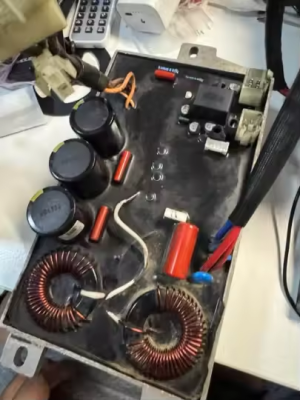

China Inverter Speed Control Inverter Solar Power Inverter AC Inverter
$652.00 - $655.00
MOQ: 1 Pieces


$500.00 - $998.00
MOQ: 1 Pieces


Comprehensive Sourcing Guide
China Mainland Power Inverter Sourcing Guide
Buyers entering the China Mainland Power Inverter market must first recognize the diverse product scope available, ranging from general-purpose variable-frequency drives to specialized units for textile and elevator applications. The observed listings indicate a wide spectrum of configurations, including single-phase and three-phase transducers with distinct control principles like V/F and vector control. This variety suggests that procurement strategies must be highly specific to the intended industrial use case rather than relying on generic specifications.
The market signals also reveal significant variation in physical dimensions and power capacities, with observed models ranging from compact 1.5KW units to larger 6KW systems. Buyers should note that packaging standards vary from simple cartons to advanced wooden boxes with foam, which directly impacts logistics planning and cost. Understanding these listing signals is essential for filtering suppliers who can meet the specific voltage, phase, and output requirements of the target application.
Product Scope and Observed Listing Signals
Procurement teams must verify the specific nature of the DC power and the main circuit type, as listings show both voltage and current variable-frequency drives with different switching modes. The observed data includes PWM control for high-performance transducers and sine wave inverters for DC/AC conversion, indicating that the buyer must match the inverter's internal architecture to the load characteristics. Misalignment between the listed switching mode and the actual application can lead to inefficiency or equipment failure.
Buyers should also scrutinize the listed output types, as the market offers both single and triple output configurations with varying input voltage ranges like 220/380/660V. The presence of specific models such as the S90-37T4 and E-INV01 suggests that catalog numbers are critical for identifying exact capabilities. Since customization is available, buyers must clearly define whether they need standard off-the-shelf units or tailored solutions to ensure the final product matches the operational environment.
Technical Specifications to Verify
Technical verification must begin with the input and output voltage compatibility, ensuring the unit supports the required 220VAC or 220VDC inputs for the specific phase configuration. The observed listings highlight a mix of single-phase and three-phase outputs, requiring buyers to confirm that the inverter's phase count aligns with the motor or load requirements. Incorrect phase matching can result in inadequate torque or complete system failure during operation.
Efficiency and power handling capabilities are equally critical, with observed data citing efficiencies up to 93% and maximum PV array powers of 5kw or 6kw. Buyers must validate the actual output power range, noting that some units fall between 501W and 1000W while others support higher loads. It is essential to cross-reference the listed productivity rates, such as 50,000 pieces per month, against the supplier's ability to maintain consistent quality during high-volume production runs.
Compliance and Safety Documentation
Safety documentation verification requires checking for the presence of recognized certifications like CE, SGS, ISO999, and CCC, which are explicitly mentioned in several product listings. These standards indicate a baseline level of compliance for electrical safety and electromagnetic compatibility, but buyers must confirm that the specific batch of goods carries the valid certificates. Relying on general claims without verifying the certificate for the exact model number poses a significant compliance risk.
Buyers should also investigate the adherence to international standards such as UL458 or UL1741, though these are noted as background information rather than confirmed facts for all listed items. The absence of explicit certification data for every unit means that third-party testing may be necessary before final acceptance. Ensuring that the supplier can provide up-to-date test reports for the specific model is a non-negotiable step for maintaining regulatory compliance in the destination market.
Cost Drivers and Commercial Terms
Cost structures are heavily influenced by the complexity of the control principle, with vector control and high-frequency converter transducers typically commanding higher prices than simple V/F types. The observed price range of 1.03 to 690,000 USD reflects this disparity, driven by factors such as power capacity, material quality, and the inclusion of advanced features like sine wave inversion. Buyers must align their budget with the specific technical requirements to avoid overpaying for unnecessary features or under-specifying for critical applications.
Commercial terms regarding minimum order quantities and lead times are also key cost drivers, with observed MOQs ranging from 1 to 500 units and mass production lead times of approximately four weeks. The packaging type, whether standard carton or advanced wooden box, adds to the total landed cost and must be factored into the budget. Negotiating these terms early is essential, as the availability of customization can extend lead times and increase the overall cost of the procurement cycle.
Supplier Qualification and Quality Control
Supplier qualification should focus on verifying the production origin, with most observed listings confirming a location in Shanghai, China, or general mainland China. Buyers must assess the supplier's capacity to handle the observed productivity of 50,000 pieces per month without compromising on quality control measures. A high production volume is only beneficial if the supplier maintains consistent standards across all units, particularly for specialized applications like elevators or textile machinery.
Quality control protocols must include a review of the physical construction, such as the use of iron shells for durability and specific dimensions like 890500376MM or 18095.5126MM. Buyers should request samples to verify the build quality and ensure that the product packing, whether carton or wooden box, protects the unit during transit. Establishing a clear quality agreement that defines acceptable tolerances and defect rates is crucial for mitigating the risks associated with high-volume sourcing.
Long-Term Procurement Checks
Long-term procurement success depends on establishing a reliable supply chain that can sustain the four-week lead time for mass products while accommodating future customization needs. Buyers should monitor the supplier's ability to maintain consistent stock levels for critical components, especially given the wide range of observed models and specifications. A stable supply chain ensures that production schedules are not disrupted by material shortages or logistical delays.
Continuous performance monitoring is also necessary to verify that the inverter efficiency and output stability remain consistent over time. Buyers should track the actual performance of the units in the field against the claimed specifications, such as the 93% efficiency or specific voltage outputs. Regular audits and feedback loops with the supplier help identify any drift in quality or performance, allowing for timely corrective actions to protect the long-term viability of the procurement relationship.
FAQs
What input voltage options are available for these inverters?
The inverters support 220/380/660V input voltage configurations. This flexibility allows integration with various industrial power systems. Users can select the appropriate model based on their specific electrical infrastructure requirements. The low voltage variable-frequency drive ensures safe and efficient operation across different industrial environments.
Can these inverters be customized for specific applications?
Yes, customization is available for these units. Buyers can request modifications to meet unique operational needs. The product supports various functions including constant torque and textile special types. This adaptability ensures the inverter aligns precisely with specialized industrial processes and performance expectations.
What certifications do these power inverters hold?
These inverters hold CE, SGS, ISO999, and CCC certifications. These standards verify compliance with international safety and quality requirements. The certifications provide assurance for global sourcing and regulatory adherence. Buyers can rely on these documented standards for risk mitigation and market access in various regions.
What is the typical lead time for mass production?
The mass products lead time is four weeks. This timeline applies to standard orders meeting basic specifications. Buyers should account for this duration when planning inventory and supply chain logistics. Early communication with suppliers can help manage expectations and ensure timely delivery for project schedules.
How is the product packaged for shipping?
Products are packaged in carton boxes or advanced wooden boxes with foam. This packaging protects the inverter during transit. The carton package ensures secure handling and storage. Buyers can expect robust protection to prevent damage, ensuring the product arrives in optimal condition for immediate installation and use.
What is the monthly production capacity for these inverters?
The productivity rate is 50,000 pieces per month. This capacity supports large-scale procurement needs. Buyers requiring high volumes can rely on consistent supply availability. The manufacturing output ensures that bulk orders can be fulfilled efficiently without significant delays or bottlenecks in the production pipeline.