Source China Mainland Tube Fitting for Power, Gas, and Sewage
Find 30 listings for China Mainland Tube Fitting suitable for power stations, gas systems, and sewage treatment. Compare high-pressure quick connectors in carbon steel and copper, available in DIN and ANSI standards with customizable options; compare the available evidence and request quotations based on your requirements.
Key considerations
Products List

$2.00 - $3.00
MOQ: 1000 Pieces


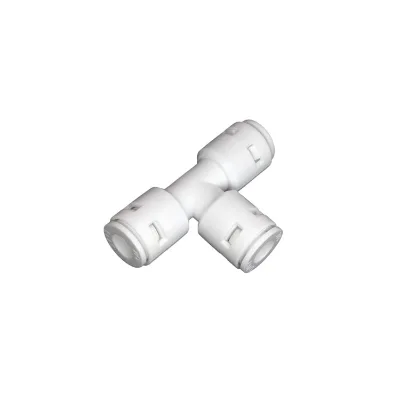


Tubing Coupling for Pipe Connection
$4.50 - $5.00
MOQ: 10 Pieces
Tianjin Dongfanglong Petroleum Equipment Manufacture Co., Ltd.

Tubes and Connections Adaptor with Male Thread and Plain End Pipe Fitting
$0.50 - $25.00
MOQ: 1000 piece


Comprehensive Sourcing Guide
China Mainland Tube Fitting Sourcing Guide
Buyers entering the China mainland market for tube fittings must first recognize the diverse product signals present in current listings. The observed catalog includes items ranging from hydraulic quick connectors to specialized laser sources, with materials varying from carbon steel and copper to various alloys. This heterogeneity requires a disciplined approach to filtering, as a single search term often aggregates unrelated industrial components. Procurement teams should prioritize verifying the specific product model, such as the 1JN or KL-62 series, against their actual engineering requirements before proceeding with any supplier engagement.
The commercial landscape for these components is defined by a wide price spectrum and flexible minimum order quantities. Listings indicate prices starting as low as 0.01 USD with MOQs ranging from single units to 1,000 pieces, reflecting a market that serves both prototype development and bulk industrial deployment. Buyers must carefully distinguish between standard components and non-standard customizations, as the availability of customization services varies significantly between suppliers. Understanding these baseline commercial signals is essential for establishing realistic budget expectations and negotiating effective volume tiers.
Product Scope and Observed Listing Signals
The product scope for tube fittings in this region spans critical industrial applications, including power stations, gas infrastructure, and sewage treatment facilities. Listings explicitly identify high-pressure and high-temperature capabilities, often paired with specific connection types like female quick fittings or hexagon heads. Buyers should scrutinize the stated usage environments to ensure the selected fitting can withstand the operational stresses of their specific facility, as the difference between a household application and heavy industrial use is substantial.
Observations also reveal a mix of standard and non-standard component offerings, with some suppliers providing custom manufacturing while others offer fixed models. The physical attributes, such as silver or yellow coloring and specific packing methods like wooden cases or plastic tubes, serve as indicators of the intended logistics and handling requirements. Procurement teams must verify if the listed head type, such as round or hexagon, aligns with their existing tooling and installation protocols to avoid compatibility issues during the assembly phase.
Technical Specifications to Verify
Technical verification begins with confirming the material composition, as listings cite carbon steel, copper, and alloy options for different performance profiles. Buyers must ensure the selected material matches the fluid compatibility and corrosion resistance needs of their system, particularly for applications involving gas or sewage treatment. The presence of specific models like HS-SFP-003 or PPU suggests distinct design geometries that require precise dimensional checks against the buyer's piping schematics.
Pressure ratings and temperature tolerances are critical parameters that must be validated against the supplier's technical data sheets. While some products are explicitly rated for high pressure and high temperature, others may be designed for general-purpose use. The connection type, whether described as a quick fitting or a standard female thread, must be cross-referenced with the standard components list, such as DIN, ANSI, or JIS, to guarantee seamless integration with existing infrastructure and avoid costly retrofitting.
Compliance and Safety Documentation
Compliance verification requires a rigorous review of the certification documents provided by the supplier, as listings mention ISO9001, CE, and TS16949 standards. Buyers should request physical copies of these certificates to confirm their validity and ensure they cover the specific product models being ordered. The presence of multiple certifications indicates a supplier's commitment to quality management, but the scope of each certificate must be checked to ensure it applies to the manufacturing of the specific tube fitting components.
Safety documentation also includes adherence to international standards like ISO9001 and specific industry norms that govern pressure vessel components. Procurement teams must verify that the supplier's quality control processes, such as shear-punching and composite folding, are documented and aligned with the required safety protocols. Ensuring that the product meets the necessary regulatory requirements for the buyer's region is a non-negotiable step before finalizing any purchase agreement.
Cost Drivers and Commercial Terms
Cost drivers in this market are heavily influenced by material selection, customization levels, and the complexity of the manufacturing process. Buyers should anticipate that high-pressure, high-temperature fittings made from specialized alloys will command a premium over standard carbon steel components. The availability of customization services adds another layer of cost variability, as non-standard components often require dedicated tooling and longer production cycles compared to off-the-shelf items.
Commercial terms are typically structured around payment methods like T/T or L/C, with delivery times ranging from 30 to 35 days. The origin location, often Ningbo or Wenzhou, impacts logistics costs and lead times, so buyers should factor in shipping variables when calculating the total landed cost. Understanding the trade methods, such as FOB, is essential for determining who bears the risk and cost during transit, ensuring that the financial terms align with the buyer's supply chain strategy.
Supplier Qualification and Quality Control
Supplier qualification involves assessing the operational capacity and workforce size, with some listings indicating a workforce of around 120 employees. This scale suggests a mid-sized operation capable of handling moderate to large order volumes, but buyers should verify the supplier's actual production capacity against their specific order requirements. The presence of a dedicated quality control process, including steps like curved folding and composite cutting, indicates a structured approach to manufacturing that should be validated through site audits or third-party inspections.
Quality control checks must extend beyond the final product to include the raw material sourcing and in-process inspections. Buyers should request evidence of the supplier's adherence to their stated standards, such as ISO9001, and verify that the production line is equipped to handle the specific tolerances required for high-pressure applications. Establishing a clear communication channel for quality feedback is crucial, as the ability to address defects or deviations quickly can prevent significant disruptions in the buyer's production schedule.
Long-Term Procurement Checks
Long-term procurement success depends on establishing a robust framework for ongoing supplier performance monitoring and relationship management. Buyers should implement regular audits to ensure that the supplier continues to meet the agreed-upon quality standards and delivery timelines over the life of the contract. This proactive approach helps identify potential issues early, allowing for corrective actions before they impact the buyer's operations or product quality.
Sustainability and supply chain resilience are also key considerations for long-term partnerships. Buyers should evaluate the supplier's ability to maintain consistent material supply and adapt to market fluctuations, ensuring that the procurement channel remains stable. By fostering a collaborative relationship based on transparency and mutual growth, buyers can secure a reliable source of high-quality tube fittings that supports their long-term operational goals and strategic objectives.
FAQs
What certifications are available for China Mainland Tube Fitting products?
Available certifications include ISO9001, CE, and ISO9001 Ts16949. These documents verify quality management systems and compliance with international standards. Buyers should request specific certificates to ensure the fittings meet their industry requirements and regulatory obligations for safe operation.
Which standards do china mainland tube fittings typically follow?
Fittings often follow DIN, ANSI, and JIS standards. Some products also adhere to specific size standards like 1/2 inch. These standards ensure compatibility with global piping systems. Buyers must verify the exact standard required for their application to prevent connection failures or leaks.
Can china mainland tube fittings be customized for specific needs?
Customization is available for many tube fitting products. Buyers can request specific materials, head types, or connection styles. Non-customized options are also common. It is essential to discuss requirements with the supplier early to confirm feasibility and potential impacts on lead time and pricing.
What is the typical lead time for China Mainland Tube Fitting orders?
Typical delivery times range from 30 to 35 days. This duration depends on order volume and customization complexity. Buyers should plan their procurement schedules accordingly. Confirming the exact lead time with the supplier before placing an order helps avoid production delays and project bottlenecks.
Where are china mainland tube fittings primarily manufactured?
Manufacturing is concentrated in Wenzhou and Ningbo, Zhejiang Province. These regions are known for industrial hardware production. Buyers sourcing from these locations benefit from established supply chains. Verifying the specific factory location ensures transparency and helps assess logistics costs for international shipping.
What materials are used for china mainland tube fittings?
Common materials include carbon steel, copper, and alloy. The choice depends on pressure, temperature, and corrosion resistance needs. Carbon steel offers strength, while copper provides conductivity. Buyers must select the material that matches their system's operational conditions to ensure durability and safety.