Source Citroen Family Cars Automotive Alternator for SUVs, Sedans, Vans
Find 15 Citroen Family Cars Automotive Alternator options with varying amperage and pulley types. Buyers can compare specifications like voltage, bonding type, and model numbers to select the right unit for their vehicle needs.
Key considerations
Products List


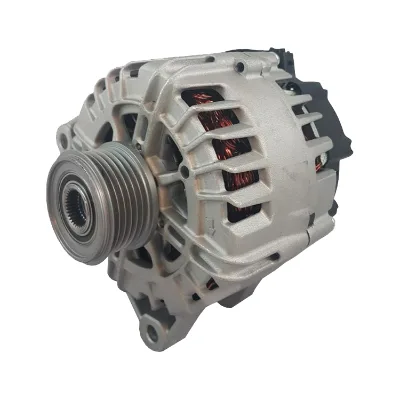
![Alternator for Citroen Ax 14 1.4 [K1f (TU3A) ]](https://image.made-in-china.com/221f0j00oiycYHzrnOpF/Alternator-for-Citroen-Ax-14-1-4-K1f-TU3A-.webp)


Durable Automotive Alternator 0-125-811-028 for Enhanced Vehicle Efficiency
$40.00 - $120.00
MOQ: 10 Pieces
Comprehensive Sourcing Guide
Citroen Family Cars Automotive Alternator Sourcing Guide
Sourcing replacement alternators for Citroen family vehicles requires a precise alignment of electrical specifications, mechanical fitment, and commercial reliability. The automotive alternator is a critical component in the vehicle’s charging system, responsible for converting mechanical energy from the engine into electrical energy to power onboard systems and recharge the battery. For family-oriented models, which often feature higher electrical loads due to comfort and safety features, the alternator must maintain consistent output under varying engine speeds. Buyers must navigate a market where generic listings often obscure critical differences in amperage, pulley design, and terminal configurations, making detailed verification essential before placing any order.
The procurement process for these components is heavily influenced by the diversity of Citroen’s model range and the specific engineering variations across production years. Even within the same vehicle family, alternators may differ significantly in their internal structure, such as the bonding type of the magnetic field winding or the design of the rectifier. Furthermore, the physical mounting points, head cover positions, and pulley grooves must match the engine bay layout exactly to ensure proper installation. This guide provides a structured approach to evaluating supplier listings, verifying technical data, and establishing quality controls, ensuring that procurement teams can source reliable components that meet the rigorous demands of automotive repair and replacement markets.
Product Scope and Observed Listing Signals
The current market landscape for Citroen alternators presents a wide array of options, with observed price points ranging from forty to one hundred twenty US dollars and minimum order quantities (MOQ) varying between two and twenty units. These figures suggest a flexible supply chain catering to both small-scale repair shops and larger distribution networks, though the "negotiated" price attribute indicates that final costs are likely dependent on volume, customization, and specific model requirements. Buyers should interpret these ranges as baseline indicators rather than fixed costs, recognizing that specialized variants with higher amperage outputs or custom packaging may command premium pricing. The presence of multiple model codes, such as JL-A5114, JL-A5113D, and 9646065480, highlights the fragmented nature of the product catalog, necessitating careful cross-referencing with vehicle identification numbers.
Listing signals also reveal significant variation in product attributes, which can lead to compatibility errors if not rigorously audited. For instance, while some listings specify an amperage of 150A, others indicate 90A or 80A, reflecting the different power demands of various Citroen models. Similarly, pulley types range from clutch designs to specific groove configurations like 6pk49 or 6pk55, which must align with the vehicle’s serpentine belt system. The observed data includes diverse structural types, including integral alternators and units with integrated pumps, as well as varying voltage adjuster types, from electronic to electromagnetic vibratory systems. These discrepancies underscore the importance of treating every listing as a unique data point that requires validation against the target vehicle’s technical specifications rather than assuming interchangeability across similar model names.
Technical Specifications to Verify
Verifying the electrical output and internal architecture is the first critical step in ensuring alternator compatibility. Buyers must confirm the rated amperage, which typically falls into categories such as 80A, 90A, or 150A, depending on the vehicle’s electrical load requirements. The voltage adjuster type, whether electronic or electromagnetic vibratory, must match the original equipment manufacturer (OEM) design to ensure stable voltage regulation under load. Additionally, the bonding type of the magnetic field winding, often specified as inner bonding, and the brushless alternator type, such as magnetizing or permanent magnet types, are crucial for determining the unit’s efficiency and durability. Misalignment in these internal components can lead to premature failure or inadequate charging performance, particularly in family cars that frequently operate with high electrical demands from infotainment and climate control systems.
Mechanical fitment and physical dimensions require equally stringent verification to prevent installation issues. The pulley diameter, observed at 54mm in some listings, must be measured against the engine’s crankshaft pulley to ensure proper belt tension and alignment. The number of pulley grooves, commonly six, and the specific belt profile, such as 6pk49 or 6pk55, must correspond exactly to the vehicle’s drive belt system. Furthermore, the head cover position, whether front or back, and the B+ terminal size, often M8, are critical for correct wiring and housing integration. The rotation direction, typically clockwise (CW), and the plug code, such as 129, must also be confirmed to ensure seamless connectivity with the vehicle’s electrical harness. Any deviation in these mechanical parameters can result in improper fitment, belt slippage, or electrical connection failures.
Compliance and Safety Documentation
Ensuring that sourced alternators meet recognized quality and safety standards is essential for maintaining vehicle reliability and regulatory compliance. Listings often reference standards such as SGS and Intertek, which indicate that the products have undergone third-party testing for quality assurance. Buyers should verify the validity and scope of these certifications, ensuring that they cover the specific manufacturing processes and material compositions of the alternators being procured. The presence of a "standard size" designation suggests adherence to common industry dimensions, but this should be corroborated with detailed technical drawings and OEM part number cross-references to avoid assumptions about universal compatibility.
Documentation should also include clear information on material composition and construction quality. The use of aluminum in housing and structural components is common due to its lightweight and heat-dissipating properties, but buyers should confirm that the material grade meets automotive durability requirements. Additionally, the current type, specified as alternating current, and the application scope, such as family cars, should be explicitly stated to ensure the product is suitable for the intended market. Buyers must request test reports or quality control certificates that validate the alternator’s performance under standard operating conditions, including thermal stability and electrical output consistency, to mitigate the risk of field failures.
Cost Drivers and Commercial Terms
The total cost of ownership for automotive alternators is influenced by several commercial factors, including minimum order quantities, packaging requirements, and customization options. Observed MOQs ranging from two to twenty units allow for flexible purchasing strategies, but buyers should consider the impact of volume discounts on the final unit price. The "negotiated" price attribute suggests that significant cost savings may be achievable through bulk purchasing or long-term supply agreements, particularly for high-volume models like the JL-A5114 or 11027188. Buyers should engage suppliers early in the negotiation process to clarify pricing tiers, payment terms, and any additional fees associated with customization or expedited shipping.
Packaging and logistics also play a significant role in determining the overall cost. Listings indicate various packaging options, including carton pallets, neutral packaging, and customized boxes, each with different implications for storage, handling, and protection during transit. Neutral packaging may reduce costs for buyers who intend to rebrand the products, while customized packaging may be necessary for retail distribution. Buyers should assess the durability of the packaging to prevent damage during shipping, as alternators are heavy and sensitive to impact. Additionally, the origin of the products, typically China, should be considered in the context of import duties, shipping times, and supply chain resilience, ensuring that logistical risks are adequately managed.
Supplier Qualification and Quality Control
Establishing a robust supplier qualification process is vital for mitigating risks associated with inconsistent product quality and unreliable delivery. Buyers should conduct thorough due diligence on potential suppliers, verifying their manufacturing capabilities, quality management systems, and track record in the automotive parts industry. Requesting samples for initial testing is a critical step, allowing buyers to evaluate the alternator’s physical dimensions, electrical performance, and build quality before committing to larger orders. Suppliers should be required to provide detailed technical datasheets and compliance certificates, which serve as baseline documents for ongoing quality assurance.
Quality control measures should be integrated into the procurement workflow to ensure consistent product standards. Buyers should implement incoming inspection protocols that verify key attributes such as amperage output, pulley dimensions, and terminal configurations against the agreed-upon specifications. Regular audits of supplier production processes, including checks on material sourcing and assembly line quality, can help identify and address potential issues before they impact the supply chain. Additionally, establishing clear communication channels for reporting defects and managing returns is essential for maintaining a responsive and reliable supply network, ensuring that any quality deviations are promptly addressed and resolved.
Long-Term Procurement Checks
Sustaining a successful procurement strategy for Citroen alternators requires ongoing monitoring of supplier performance and market dynamics. Buyers should regularly review supplier delivery times, product quality metrics, and responsiveness to issues, using this data to inform future purchasing decisions and contract renewals. Tracking changes in product specifications, such as updates to model codes or pulley designs, is crucial for maintaining compatibility with evolving vehicle models. Buyers should also stay informed about industry trends and technological advancements in alternator design, such as improvements in voltage regulation or material efficiency, to ensure that their sourcing strategy remains competitive and aligned with market demands.
Building long-term relationships with qualified suppliers can provide significant advantages in terms of pricing, priority service, and access to new product developments. Buyers should engage in regular strategic discussions with suppliers to align on volume forecasts, quality expectations, and innovation opportunities. Additionally, maintaining a diverse supplier base can help mitigate risks associated with supply chain disruptions, ensuring continuity of supply even in the face of unforeseen challenges. By continuously evaluating and refining their procurement processes, buyers can secure a reliable supply of high-quality Citroen alternators that meet the needs of their customers and support the long-term success of their business.
FAQs
What is the voltage and amperage range for these alternators?
The voltage is fixed at 12V for stable electrical performance. Amperage options vary across models, including 80A, 90A, 150A, and 180A ratings. This range allows selection based on specific vehicle power requirements. Buyers should verify the exact amperage needed for their application before ordering to ensure compatibility with the vehicle's electrical system.
Can these alternators be customized for specific vehicle models?
Yes, customization is available for these integral alternators. Buyers can request specific configurations to match unique vehicle requirements. The products support various pulley types, including clutch and specific groove counts like 6pk49 or 6pk55. This flexibility ensures proper fitment and mechanical alignment for diverse automotive applications.
Which certifications do these alternators meet?
These alternators meet SGS and Intertek standards for quality assurance. The products also adhere to standard size specifications for broad compatibility. These certifications indicate adherence to recognized industry benchmarks for manufacturing and testing. Buyers can rely on these verified standards to ensure product reliability and safety in automotive applications.
What is the minimum order quantity for bulk purchases?
The minimum order quantity ranges from 2 to 20 units depending on the specific model. This flexible MOQ supports both small trial orders and larger bulk purchases. Buyers can adjust their order size based on inventory needs and budget constraints. The pricing is negotiated, allowing for potential volume discounts on larger orders.
Where are these alternators manufactured and shipped from?
These alternators are manufactured in China and shipped from there. The origin is clearly documented for supply chain transparency. Buyers should consider logistics and lead times associated with shipping from this location. The products are packed in cartons, either neutral or customized, for safe transit.
What materials are used in the alternator construction?
The alternators are constructed using aluminum for the housing and components. This material choice provides durability and heat dissipation benefits. The integral structure includes inner bonding for the magnetic field winding. Aluminum construction helps reduce overall weight while maintaining structural integrity for automotive use.