Source Class II Portable ECG Machine for Hospitals Clinics and Home Care
Find and compare 30 verified Class II Portable ECG Machine options from Chinese manufacturers. Buyers can evaluate specifications like channel count, certifications, and dimensions to select the right physiological monitoring equipment for medical diagnostics.
Key considerations
Products List


Medical 12 Channel EKG Electronic Portable Electrocardiograph ECG Machine
$679.00 - $1199.00
MOQ: 1 Pieces

Medical Equipment Portable 3 Channel ICU ECG/EKG Electrocardiogram Machine
$399.00 - $799.00
MOQ: 1 Pieces


Hot Sale 6 Channel ECG Machine Portable Electrocardiogram Machine for Hospital
$469.00 - $899.00
MOQ: 1 Pieces


Contec ECG1212g Portable Electrocardiograph Diagnosis Equipment ECG Machine
$550.00 - $700.00
MOQ: 1 Pieces


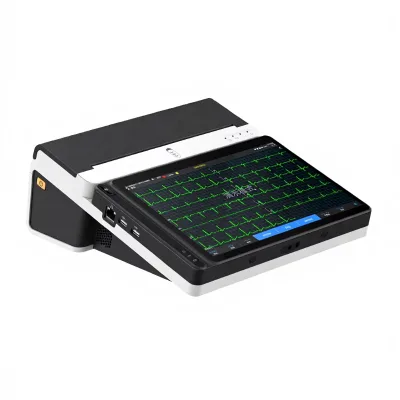


Portable Human 3 Channel Electrocardiograph Machine Digital ECG Machine
$130.00 - $340.00
MOQ: 1 Pieces


Portable ECG Machine for Medical Diagnosis - 3 Channel Electrocardiogram
$160.00 - $400.00
MOQ: 1 Pieces


Portable Electrocardiograph ECG Monitor with CE Certificate Contec ECG Machine
$350.00 - $500.00
MOQ: 1 Pieces


Comprehensive Sourcing Guide
Sourcing Guide for Class II Portable ECG Machines
The global market for physiological monitoring equipment has seen a significant shift toward portable solutions that maintain clinical-grade accuracy outside of traditional hospital settings. For procurement professionals targeting a Class II Portable ECG Machine, the sourcing landscape requires a rigorous understanding of technical specifications, regulatory compliance, and supply chain logistics. These devices, often categorized under physiological functions of diagnosis and monitoring equipment, are critical for cardiac assessment in diverse environments ranging from emergency response units to remote clinics. This guide synthesizes observed market data and technical attributes to provide a structured approach for acquiring reliable 12-channel and multi-channel electrocardiogram systems.
Understanding Technical Specifications and Channel Configurations
When evaluating portable ECG machines, the channel configuration is the primary determinant of diagnostic capability and device complexity. The market offers a spectrum of options, ranging from single-channel monitors to high-fidelity 12-channel systems. Procurement teams must distinguish between devices designed for basic rhythm monitoring and those capable of comprehensive 12-lead analysis. Observed product listings indicate a prevalence of 3-channel, 6-channel, and 12-channel models, with specific configurations like the "12 Channel ECG Monitor" and "12 Leads" systems being prominent.
The physical interface and display technology are equally critical. Modern portable units frequently feature 7-inch touch screens, which facilitate intuitive operation in high-pressure environments. The display must support clear visualization of waveforms across multiple channels simultaneously. Furthermore, the frequency response is a vital technical parameter that defines the fidelity of the captured signal. Verified specifications for certain models indicate a frequency response range of 0.05Hz to 150Hz, with a tolerance of -3dB to +0.4dB. This range ensures that both low-frequency baseline wander and high-frequency noise are managed effectively without distorting the P-QRS-T complex.
Other essential electrical characteristics include the Common Mode Rejection Ratio (CMRR), which measures the device's ability to reject interference from external sources like power lines. High-performance units demonstrate a CMRR of greater than 60dB, rising to over 100dB when filters are engaged. The time constant, typically exceeding 3.2 seconds, is another key metric that influences the accuracy of ST-segment analysis. Buyers should verify that the selected model includes sensitivity choices such as 2.5, 5, 10, 20, and 40mm/mV to accommodate varying patient signal strengths. Additionally, the calibration voltage is a standard reference point, often set at 1mV, which ensures that the amplitude of the recorded ECG is consistent and comparable across different devices.
Regulatory Compliance and Certification Verification
Navigating the regulatory landscape is paramount when sourcing medical devices. In the context of Class II portable ECG machines, compliance is not merely a formality but a prerequisite for market access and patient safety. The observed product data highlights a mix of certifications, including CE, FDA, and ISO standards. Specifically, some listings reference FDA and CE certifications, while others mention ISOMSDS and ISOCE. It is crucial for buyers to understand that these certifications represent specific regulatory pathways and that a single product may not possess all listed credentials simultaneously.
The CE marking indicates conformity with health, safety, and environmental protection standards for products sold within the European Economic Area. The FDA certification suggests that the device has met the requirements for marketing in the United States, often involving a 510(k) clearance process for Class II devices. The mention of ISOMSDS and ISOCE in product attributes points to adherence to international quality management and material safety standards. However, procurement teams must treat these as observations rather than universal guarantees. Every listed product must be individually verified against the specific regulatory requirements of the target market.
For Class II devices, the instrument classification is a definitive factor in the risk management strategy. The observed data explicitly categorizes these units as Class II instruments, which implies a moderate to high risk requiring special controls to ensure safety and effectiveness. Buyers should request the specific regulatory documents, such as the Declaration of Conformity or FDA 510(k) summary, directly from the supplier. Relying solely on the presence of a certification label on a product page is insufficient; the validity and scope of the certification must be confirmed through official regulatory databases.
Cost Drivers and Pricing Structures
The pricing of portable ECG machines is influenced by a complex interplay of technical capabilities, certification status, and manufacturing origins. The observed market data indicates a price range between 100 and 1800 USD. This wide variance reflects the differences in channel count, display technology, and regulatory approvals. Entry-level models, often featuring fewer channels or basic touch interfaces, tend to cluster at the lower end of this spectrum. Conversely, advanced 12-channel systems with high-resolution touch screens and comprehensive certifications command prices closer to the upper limit.
Manufacturing location is another significant cost driver. The majority of the observed products originate from China, with specific mentions of Jiangsu as a production hub. This region is known for a robust supply chain in medical electronics, which can offer competitive pricing. However, the cost structure also includes the expenses associated with obtaining and maintaining international certifications. Products with FDA and CE certifications often carry a premium due to the rigorous testing and documentation required.
Minimum Order Quantity (MOQ) is another factor that impacts the total cost of ownership. The observed data shows an MOQ range of 1 to 1, suggesting that many suppliers are willing to sell single units. This flexibility is beneficial for hospitals or clinics looking to test a specific model before committing to a larger fleet purchase. However, buyers should be aware that unit prices may decrease with volume, and the "1 unit" pricing might not reflect the most economical rate for bulk procurement. Additionally, packaging standards, such as "Standard Export Package" or "Export-Dedicated Paperboard Boxes," can influence shipping costs and the overall landed cost of the equipment.
Typical Applications and Target User Groups
The versatility of Class II portable ECG machines allows them to serve a wide array of clinical applications. The primary target group identified in the product data includes middle-aged and elderly patients, who represent the demographic with the highest prevalence of cardiac conditions. These devices are essential for diagnosing arrhythmias, ischemia, and other cardiac abnormalities in this population. The classification of these machines under "Physiological Functions of Diagnosis and Monitoring Equipment" underscores their role in critical care and routine diagnostics.
Beyond human diagnostics, the product attributes also mention "Animal Diagnosis and Examination," indicating that some models are designed for veterinary applications. This dual-use capability expands the potential market for suppliers and offers buyers the opportunity to source equipment that can be utilized across different departments within a medical facility. The input mode, described as "Floating and Defibrillation Protection," is particularly relevant for emergency settings where patients may require defibrillation. This feature ensures that the ECG monitor can safely record data even in the presence of high-voltage electrical shocks, a critical requirement for emergency medical services (EMS) and intensive care units.
The portability of these devices makes them ideal for point-of-care testing, home monitoring, and field triage. The compact dimensions observed in the data, such as 340mm(L) * 320mm(W) * 85mm(H), facilitate easy transport and storage in ambulances or mobile clinics. The weight of the units, with some models weighing as little as 3.2kg, further enhances their mobility, allowing healthcare providers to move the equipment effortlessly between patient rooms or to different locations during an emergency response.
Supplier Evaluation and Quality Control Protocols
Selecting a reliable supplier is a critical step in the procurement process. The observed product data lists various models, including the LSMZ-14, DE 12, DE 03A, and YH-100G, among others. While the specific names of suppliers are not provided, the diversity of model numbers suggests a competitive market with multiple manufacturers. Buyers should evaluate suppliers based on their ability to provide consistent product quality, adherence to specifications, and responsiveness to after-sales support.
Quality control should be a central component of the supplier evaluation. Buyers must verify that the manufacturer has a robust quality management system in place. The mention of ISO standards in the product attributes suggests that many suppliers adhere to international quality benchmarks. However, buyers should request evidence of these systems, such as ISO 9001 certificates, and verify their validity. The warranty period, observed as "One Year" for some models, is another indicator of the manufacturer's confidence in their product. A longer warranty period or the availability of extended warranty options can be a significant factor in the decision-making process.
Logistics and packaging are also important considerations. The observed data mentions various packaging methods, including "Carton," "Carton Packaging," and "by Air or by Sea." Buyers should ensure that the packaging is sufficient to protect the delicate electronic components during transit. The "Standard Export Package" and "Export-Dedicated Paperboard Boxes" are designed to withstand the rigors of international shipping, but specific handling instructions should be confirmed with the supplier. Additionally, the lead time and delivery terms should be clearly defined in the purchase agreement to avoid delays in deployment.
Long-Term Procurement and Lifecycle Management
Sourcing a Class II Portable ECG Machine is not just a one-time transaction but the beginning of a long-term relationship with the supplier. Buyers should consider the lifecycle management of the device, including maintenance, software updates, and spare parts availability. The "Customization: Available" attribute suggests that some suppliers may offer tailored solutions, such as specific software configurations or hardware modifications. This flexibility can be valuable for organizations with unique operational requirements.
The warranty terms, typically observed as one year, should be reviewed carefully to understand what is covered and what constitutes a claimable event. Buyers should also inquire about the availability of technical support and training services. Proper training is essential for healthcare staff to maximize the utility of the device and ensure accurate data collection. The supplier's ability to provide ongoing support, including remote troubleshooting and on-site repairs, is a key differentiator in the market.
Furthermore, buyers should plan for the eventual replacement or upgrade of the equipment. As technology evolves, newer models may offer improved features, such as higher channel counts, better connectivity, or enhanced diagnostic algorithms. Establishing a relationship with a supplier that offers upgrade paths or trade-in programs can help manage the total cost of ownership over the device's lifecycle. By focusing on these long-term considerations, procurement professionals can ensure that their investment in Class II portable ECG machines delivers sustained value and supports high-quality patient care.
FAQs
What certifications do class ii portable ecg machines typically have?
Many models hold CE, FDA, and ISO certifications, though not every unit possesses all three simultaneously. Buyers must verify specific regulatory documents like the Declaration of Conformity or FDA 510(k) summary for each product to ensure compliance with target market requirements.
Which channel configurations are available for portable ECG devices?
The market offers 3-channel, 6-channel, and 12-channel systems, with 12-lead analysis being a prominent high-fidelity option. Specific models like the DE 12 and ECG1200g demonstrate these configurations, allowing selection based on diagnostic complexity needs.
How much do class ii portable ecg machines cost?
Prices range from 100 to 1800 USD depending on channel count, display technology, and certification status. Entry-level models with fewer channels cluster at the lower end, while advanced 12-channel systems with comprehensive approvals command higher prices.
Can these machines be used for animal diagnosis?
Yes, some models are explicitly designed for animal diagnosis and examination in addition to human diagnostics. This dual-use capability allows facilities to utilize the same equipment across different departments, provided the specific product attributes confirm veterinary suitability.
What is the typical weight and size of these devices?
Units are compact and lightweight, with some weighing as little as 3.2kg and dimensions around 340mm by 320mm. This portability facilitates easy transport in ambulances or mobile clinics, ensuring mobility during emergency response or point-of-care testing.
What warranty periods are offered for these machines?
A standard warranty period of one year is observed for many models, indicating manufacturer confidence in product durability. Buyers should inquire about extended warranty options or specific after-sales support terms to ensure long-term operational reliability.