Source Colored Steel EPS Panel Machine for Roof Wall Floor
Find 30 listings for the Colored Steel EPS Panel Machine to compare specifications like panel thickness, core material, and production capacity. Buyers can evaluate options from manufacturers in Guangdong and Hebei, China, featuring automated cold roll forming processes.
Key considerations
Products List
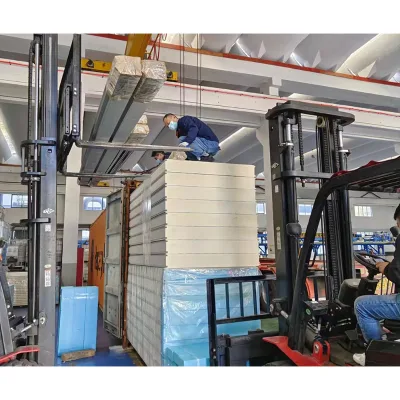


The EPS Wall Panel Machine Wall Panels Boards Exterior Making Machine
$50000.00 - $500000.00
MOQ: 1 Pieces


$8000.00 - $15000.00
MOQ: 1 Sets


EPS Sandwich Roof Sheet Panel Roll Forming Machine Production Line
$43000.00 - $45000.00
MOQ: 1 Pieces


$72500.00 - $82500.00
MOQ: 1 Sets

Comprehensive Sourcing Guide
Strategic Sourcing Guide for Colored Steel EPS Panel Machines
Procuring industrial machinery for the production of colored steel EPS (Expanded Polystyrene) sandwich panels requires a rigorous, evidence-based approach. Buyers must navigate a complex landscape where technical specifications, material inputs, and manufacturing capabilities vary significantly across suppliers. This guide synthesizes observed market data and verified product attributes to provide a structured framework for evaluating potential suppliers. The focus remains strictly on factual observations from available product listings and established industry standards, ensuring that procurement decisions are grounded in verifiable data rather than speculative claims.
Technical Specifications and Production Capabilities
The core of any EPS panel production line lies in its mechanical precision and material handling capacity. Based on observed product attributes, the machinery typically utilizes a cold roll forming process to shape the colored steel sheets. A critical technical observation is the use of high-grade 45# steel for the roller components, which directly influences the durability and dimensional accuracy of the final product. The production line is often automated, employing hydraulic pressure methods to ensure consistent panel formation.
When evaluating the technical specifications, buyers should look for specific model numbers and dimensional tolerances. Available data indicates that machine models often correspond to panel widths, such as 980mm, with profiles available in 960mm, 970mm, or 980mm variations. The tolerance for these forming processes is observed to be around 0.5mm, a figure that serves as a benchmark for quality assessment. The thickness of the steel coil itself is a variable parameter, with observed ranges spanning from 0.27mm to 0.8mm. Similarly, the core thickness, which determines the insulation value, can range widely from 30mm to 300mm, with specific panel thickness options including 50mm, 75mm, 100mm, 120mm, 150mm, and 200mm.
Power consumption is another vital specification. Typical listings indicate a total power requirement of approximately 28kw for these production lines. The physical footprint and weight of the machinery are substantial, with some units weighing up to 20 tons, necessitating the transport of two 40-foot high cube containers for a single unit. The voltage requirements are often customized to match the electrical infrastructure of the buyer's facility, requiring careful verification before installation.
Material Composition and Panel Profiles
The quality of the final sandwich panel is intrinsically linked to the raw materials processed by the machine. The primary structural material is color steel, often referred to as glazed steel or colored steel, which serves as the outer skin for the panels. The core material is a defining characteristic of the machine's versatility; observed listings confirm compatibility with EPS (Expanded Polystyrene) or Rockwool. This dual capability allows the machine to produce panels suitable for various thermal and acoustic requirements.
The panel profiles are designed for specific applications, including roofs, walls, and floors. The machine produces tiles that are categorized as glazed steel or colored steel, depending on the specific coating and finish applied to the raw coil. The customization of the product is a key feature, allowing buyers to tailor the panel dimensions and profiles to specific architectural needs. The single volume and gross weight of the machine components are often listed as zero in certain contexts, likely indicating that these are variable metrics dependent on the specific configuration or that the data refers to the panel output rather than the machine itself. However, the total weight of the production line is a fixed, observable metric, often reaching 20 tons.
Compliance, Certification, and Standards Verification
In the B2B machinery market, compliance is non-negotiable. Buyers must verify that the machinery meets international safety and quality standards. Observed product attributes frequently list ISO9001 and CE certifications. Some listings also mention ISO and SGS standards, indicating a broader adherence to quality management and safety protocols. It is crucial for buyers to treat these certifications as observations of specific supplier claims rather than universal guarantees for all listed products.
The verification process should extend beyond the certificate itself to the machinery test reports. Available data indicates that machinery test reports are provided by some suppliers, a critical document that validates the performance and safety of the equipment. Buyers should request these reports to confirm that the machine has undergone rigorous testing for electrical safety, mechanical stability, and operational efficiency. The standard for the product is often cited as CE and SGS, but buyers must ensure that the specific unit they are purchasing is covered under these certifications.
Cost Drivers and Pricing Structures
The pricing of EPS panel production lines is influenced by several factors, including customization, capacity, and the complexity of the automation. The observed price range in the market is vast, spanning from $24.4 to $700,000 USD. This extreme variance suggests that the market includes everything from small-scale, manual, or semi-automated units to fully integrated, high-capacity industrial lines. The "competitive price" is often cited as a key selling point, but this must be contextualized against the technical specifications and build quality.
Minimum Order Quantities (MOQ) are another significant cost driver. While some suppliers may offer single-item sales, observed data indicates an MOQ of 50 units for certain configurations, though other listings suggest an MOQ of 1. This discrepancy highlights the need for buyers to clarify whether the MOQ applies to the machine itself or to the panels produced. The total power consumption of approximately 28kw also impacts the long-term operational costs, as higher power requirements translate to increased electricity bills. Buyers should calculate the total cost of ownership, including installation, maintenance, and energy consumption, rather than focusing solely on the initial purchase price.
Typical Applications and Usage Scenarios
The versatility of colored steel EPS panel machines makes them suitable for a wide range of construction applications. The primary usage scenarios identified include roofing, flooring, and wall construction. The specific application dictates the required panel thickness and core material. For instance, roofing applications may require thicker panels with higher insulation values to withstand weather conditions, while wall panels might prioritize structural rigidity and aesthetic finish.
The machine's ability to produce panels with varying thicknesses, from 50mm to 200mm, allows for flexibility in meeting different building codes and thermal requirements. The "Tile Type" is specified as glazed steel or colored steel, which is essential for the aesthetic and protective qualities of the final product. The automation level of the machine, described as automatic with hydraulic pressure transmission, ensures consistent quality across large production runs, making these machines ideal for large-scale construction projects.
Supplier Evaluation and Quality Control
Evaluating suppliers requires a meticulous review of their product attributes and operational history. Key indicators of a reliable supplier include the provision of machinery test reports, adherence to certifications like ISO9001 and CE, and the availability of customization options. The brand name "XMK" appears in the data, but buyers should not limit their search to a single brand. Instead, they should focus on the supplier's ability to meet the specific technical requirements of the project.
Quality control should be integrated into the procurement process. Buyers must verify the condition of the machinery, which is typically listed as "New," and ensure that the production process involves cold roll forming with high-grade steel rollers. The tolerance of 0.5mm is a critical quality metric that should be verified during the machine's commissioning. Additionally, the warranty status is listed as "Unavailable" in some contexts, which is a red flag. Buyers should explicitly negotiate warranty terms and after-sales support before finalizing any purchase.
Long-Term Procurement Considerations
Sourcing a production line is a long-term investment that requires careful planning for maintenance, scalability, and operational efficiency. The "Condition" of the machine is listed as "New," but buyers should consider the longevity of the components, particularly the rollers made of high-grade 45# steel. The "Single volume" and "Single gross weight" being listed as zero in some data points suggests that these metrics may be variable or context-dependent, requiring clarification from the supplier.
The "Place of Origin" is often listed as Guangdong, China, or Botou, Hebei, China, indicating that the supply chain is concentrated in specific manufacturing hubs. Buyers should be aware of the logistics involved in transporting a 20-ton machine, which may require specialized shipping arrangements. The "Selling Units" are typically single items, but the "Customization" availability allows for tailoring the machine to specific site requirements.
In conclusion, sourcing a Colored Steel EPS Panel Machine demands a balance of technical scrutiny, compliance verification, and strategic cost analysis. By focusing on verified attributes such as roller material, panel thickness ranges, and certification status, buyers can make informed decisions that align with their production goals. The vast price range and varying MOQs underscore the importance of detailed due diligence to ensure that the selected machinery delivers the expected performance and value over its operational lifespan.
FAQs
What certifications do colored steel eps panel machines typically have?
These machines often carry ISO9001 and CE certifications. Some listings also reference ISO and SGS standards, but buyers must verify that specific units are covered under these claims rather than assuming universal compliance.
How is the core material for the panels determined by the machine?
The machine is designed to process EPS or Rockwool as the core material. This dual capability allows production of panels with varying thermal and acoustic properties depending on the specific raw material selected for the core.
Which panel thickness options are supported by the production line?
Supported core thickness ranges from 30mm to 300mm, with specific options including 50mm, 75mm, 100mm, 120mm, 150mm, and 200mm. The steel coil thickness itself typically varies between 0.27mm and 0.8mm.
Can the machine voltage be customized for different facilities?
Yes, the voltage requirements are customized to match the electrical infrastructure of the buyer's facility. This flexibility is essential for installation but requires careful verification before the machine is shipped and set up.
What is the typical weight and shipping requirement for the machine?
The production line can weigh up to 20 tons, requiring the transport of two 40-foot high cube containers. This substantial weight necessitates specialized logistics arrangements for international shipping and on-site installation.
How is the quality of the formed panels measured regarding tolerance?
The forming process maintains a dimensional tolerance of approximately 0.5mm. This precision is achieved through the use of high-grade 45# steel rollers and an automated hydraulic pressure transmission system.
What is the price range for these production lines in the market?
The observed price range spans from $24.4 to $700,000 USD. This variance reflects differences in automation levels, capacity, and customization options available from various suppliers in the global marketplace.