Source Colorful Christmas Ball Ornaments for Home Hotel Street
Compare 24 listings of Colorful Christmas Ball Ornaments made from plastic and glass, featuring modern styles for indoor and outdoor decoration. Buyers can review specifications, pricing, and customization options from suppliers in China.
Key considerations
Products List

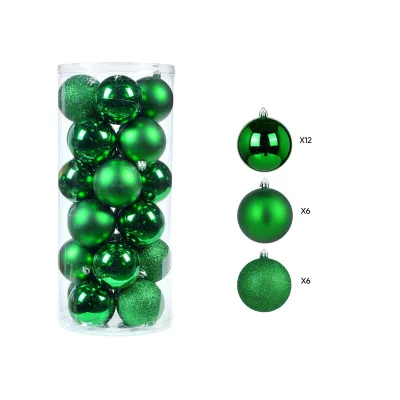
Christmas Ball Ornaments, Colorful Christmas Tree Decorations Hanging Ornaments
$9.60 - $10.00
MOQ: 500 Sets


Comprehensive Sourcing Guide
Strategic Sourcing Guide for Colorful Christmas Ball Ornaments
Procuring Colorful Christmas Ball Ornaments requires a nuanced understanding of the diverse product landscape available in the global market. These items, often categorized under Christmas decorations, serve as a critical visual element for holiday retail, hospitality, and residential sectors. The sourcing process involves navigating a wide array of material compositions, from plastic to glass, and addressing varying customization needs. Buyers must distinguish between mass-produced standard items and bespoke designs, as the supply chain dynamics differ significantly for each. This guide outlines the essential technical, commercial, and operational factors necessary for a successful procurement strategy, ensuring that the final selection aligns with specific project requirements while maintaining cost efficiency and quality standards.
Technical Specifications and Material Diversity
The first step in sourcing involves defining the precise technical specifications of the ornaments. The market presents a dichotomy in material composition, with products primarily categorized as either plastic or glass. Plastic variants are frequently noted for their durability and suitability for outdoor applications, whereas glass options often cater to indoor settings where fragility is less of a concern. The observed product data indicates a specific weight profile, with certain units recorded at approximately 1.41 pounds, suggesting a substantial build quality for larger decorative balls.
Size specifications vary widely, reflecting the need for ornaments to fit different display scales. Available dimensions range from small 5cm units to larger 15cm or 20cm variants. Some suppliers offer a broad spectrum of sizes, such as ranges from 30mm to 190mm, allowing for layered visual effects in large installations. Standardization is also evident, with specific models adhering to dimensions like 8cm, 10cm, or 15cm. When evaluating potential inventory, buyers should verify the exact size consistency across a batch, as the "standard" size can vary between 4cm and 10cm depending on the specific product line. The packaging method is another critical technical attribute; most units are shipped in carton boxes, which must be robust enough to protect the contents during transit, especially for glass items.
Customization Capabilities and Design Flexibility
A significant differentiator in the Christmas ornament market is the level of customization available. The supply chain supports both non-customized and fully customized production runs. Buyers seeking unique branding or specific thematic elements must verify if a supplier offers "Customized" options, which may include tailored colors, logos, or specific design motifs. The "Multicolour" attribute is common, offering a vibrant aesthetic that is essential for the festive season. However, for those requiring a specific color palette, the availability of customization becomes a primary selection criterion.
The production models, such as sy23, sy25, sy119, and SNY-Ball, suggest a structured approach to manufacturing where different SKUs correspond to distinct design features. Some products are explicitly labeled as "New Design," indicating a focus on innovation and trend responsiveness. When dealing with customization, the buyer must clarify the extent of the modification. While some suppliers offer standard multicolour options, others may require specific input for the "Theme" or "Style," such as modern or traditional aesthetics. The ability to customize is often tied to the Minimum Order Quantity (MOQ), which can range significantly from 20 units for standard items to 900 or more for bespoke runs.
Compliance, Certification, and Safety Standards
Safety and compliance are paramount, particularly when ornaments are intended for use in environments with children. The product attributes explicitly mention suitability for children, which necessitates rigorous adherence to safety standards regarding material toxicity and physical integrity. While specific certification data is not universally confirmed for all listed items, the BSCI (Business Social Compliance Initiative) is a relevant background consideration for ethical sourcing, though its application should be verified on a case-by-case basis.
Buyers must verify that the materials used, whether plastic or glass, meet the safety regulations of their target market. For instance, plastic components should be free from harmful chemicals, and glass items should be tempered or treated to minimize shattering risks. The "Quality Warranty" of one year observed in some listings suggests a commitment to durability, but this should be backed by concrete testing data regarding impact resistance and weatherproofing, especially for outdoor applications. The "Non Power" and "No Batteries Required" attributes simplify compliance regarding electrical safety, removing the need for complex electrical certification checks. However, the physical standards, such as the 1.18/1.57/2.36 inches mentioned for certain specifications, must be strictly maintained to ensure the product fits standard tree branches or display fixtures.
Cost Drivers and Pricing Dynamics
The pricing structure for Christmas ball ornaments is influenced by several key factors, including material type, size, and the degree of customization. The observed price range in the market spans from $0.55 to $10.57 USD, reflecting the vast difference between small, mass-produced plastic balls and larger, potentially glass or highly customized units. The lower end of the spectrum typically corresponds to standard, non-customized items with basic packaging, while the higher end is associated with premium materials, intricate designs, or larger dimensions.
MOQ requirements play a crucial role in the unit cost calculation. Suppliers often set MOQs at 250, 500, 600, or even 900 units to justify the setup costs for production lines. For buyers with smaller volume needs, the unit price may be higher, or they may need to source from suppliers with lower entry thresholds, such as those offering MOQs as low as 20 units. The payment terms, typically T/T (Telegraphic Transfer), and the shipping origin, often Ningbo Port, also impact the final landed cost. Buyers should account for the "Deliver Time" of approximately 60 days when budgeting, as longer lead times can affect cash flow and inventory planning. Understanding these cost drivers allows for more accurate forecasting and negotiation strategies.
Supplier Evaluation and Operational Logistics
Selecting the right supplier requires a comprehensive evaluation of their operational capabilities and logistical reliability. The origin of the products is predominantly China, with Ningbo Port serving as a common shipping hub. This geographic concentration offers access to a robust manufacturing ecosystem but also necessitates careful vetting of individual suppliers. Buyers should assess the supplier's ability to handle the specific "Application" requirements, whether for home, hotel, or street decorations. The "Style" of the ornaments, such as modern designs, must align with the supplier's production expertise.
The delivery timeline is a critical operational metric. With a standard delivery time of 60 days, buyers must integrate this into their procurement calendar well in advance of the holiday season. Any delays in production or shipping can result in missed sales opportunities. Furthermore, the packaging method, described as "Pack by Carton" or "Carton Box," must be evaluated for its ability to withstand international shipping conditions. Suppliers should demonstrate a track record of consistent quality and on-time delivery. The "Fob" (Free on Board) terms indicate that the buyer assumes responsibility for freight and insurance once the goods leave the port, which requires a clear understanding of logistics management.
Quality Control and Long-Term Procurement Strategy
Implementing a robust quality control (QC) protocol is essential to mitigate risks associated with mass production. Given the variation in materials and sizes, a sampling strategy should be employed to verify that the physical attributes match the specifications. For instance, confirming that the "Size" is consistently 8cm or 10cm across the batch is vital for uniformity. The "Quality Warranty" of one year provides a baseline for recourse, but proactive QC measures, such as pre-shipment inspections, are recommended to ensure compliance with safety and aesthetic standards.
Long-term procurement considerations involve building a sustainable relationship with suppliers who can adapt to changing market trends. The "Theme" of Christmas decorations evolves, and suppliers with flexible production lines can offer new designs like the "75mm New Design Paper Wrapped Ball" or other innovative styles. Buyers should prioritize suppliers who demonstrate a commitment to continuous improvement and can scale production up or down based on demand fluctuations. Establishing clear communication channels regarding customization requests, packaging requirements, and delivery schedules will facilitate a smoother procurement process. By focusing on these strategic elements, buyers can secure a reliable supply of high-quality Colorful Christmas Ball Ornaments that meet both immediate commercial needs and long-term brand objectives.
FAQs
What materials are used for Colorful Christmas Ball Ornaments?
Products are available in both plastic and glass materials. Plastic variants are suitable for outdoor use, while glass options are typically designed for indoor settings. Buyers should verify the specific material for each model to ensure durability and safety.
Can I find customized Colorful Christmas Ball Ornaments?
Yes, customization is available for certain product lines. Some models support custom designs, while others are non-customized. Buyers must check specific product attributes to confirm if a supplier offers tailored options for branding or specific themes.
What is the typical MOQ for these ornaments?
Minimum Order Quantities range from 20 to 1000 units depending on the supplier and product type. Specific models may require 250, 500, 600, or 900 units. Lower MOQs are often available for standard items, while customized runs usually have higher thresholds.
How are these ornaments packaged for shipping?
Most units are packed in carton boxes to ensure protection during transit. Some listings specify packing by carton, which is essential for safeguarding fragile glass items. Buyers should confirm packaging details to prevent damage during international shipping.
Where are these products manufactured and shipped from?
The products originate from China and are typically shipped from Ningbo Port. This location is a common hub for such decorations. Buyers should account for the origin and port when calculating logistics and delivery timelines.
What sizes are available for these decorations?
Sizes vary from 5cm to 20cm, with some ranges extending from 30mm to 190mm. Specific models come in dimensions like 8cm, 10cm, or 15cm. Buyers should select sizes that fit their display requirements, as options include 4cm, 6cm, and 8cm.
Are these ornaments suitable for children?
Yes, some products are explicitly suitable for children. Safety is a key consideration, especially for items intended for environments with kids. Buyers should verify material safety and physical integrity to ensure compliance with relevant safety standards.