Source CE Certified Disposable Micro Needle for Medical, Injection, Blood Collection
Compare 30 listings of CE Certified Disposable Micro Needle from verified Chinese manufacturers. Buyers can evaluate needle sizes, sterilization methods, and packaging options for medical, intramuscular injection, and blood collection applications.
Key considerations
Products List


Disposable Syringe Needle for Medical Use
$0.01 - $0.02
MOQ: 10000 Pieces
Sainty International Group Jiangsu Yangzhou Sumex Imp. & Exp. Co., Ltd.


High Quality CE Certified Disposable Needle Injection for Safe Medical Use
$0.01 - $0.10
MOQ: 100000 Boxes



Reliable Disposable Hypodermic Needle for Precision Medical Applications
$0.01 - $0.01
MOQ: 500000 Pieces
Comprehensive Sourcing Guide
Strategic Sourcing Guide for CE Certified Disposable Micro Needles
Understanding Product Specifications and Technical Variability
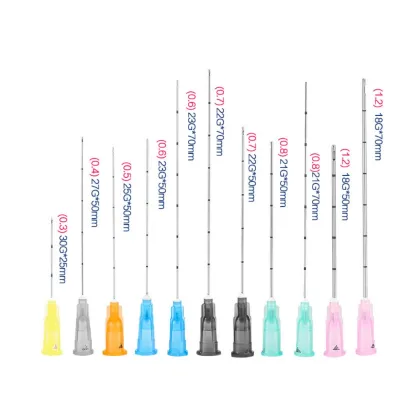
When sourcing disposable micro needles, buyers must first navigate a complex landscape of technical specifications that vary significantly across the supply base. The core keyword "micro needle" often implies a specific gauge and length profile, yet the available data indicates a broad spectrum of needle types ranging from 14G to 34G, with specific model numbers like CMHN and STY-BL01 appearing in the market. A critical observation is the discrepancy in standard gauges listed; some entries cite ranges from 14G to 31G, while others extend to 34G or specify discrete sizes such as 16G through 23G. This variance suggests that "micro needle" in a procurement context may refer to a category of hypodermic needles rather than a single, uniform product type.
The physical construction of these needles is equally diverse. The needle hub is frequently described as a "Standard Luer Lock," which is essential for compatibility with syringes and blood collection tubes. However, the needle type itself varies, with options including single vent, double vent, and paste needles. The length specifications are equally critical for medical applications, with observed data listing lengths such as 1/2", 5/8", 1", 1 1/4", and 1 1/2". Buyers must verify that the specific gauge and length combination aligns with the intended clinical procedure, as a 14G needle is fundamentally different in application from a 30G or 31G micro needle. Furthermore, the material composition is predominantly noted as metal, likely stainless steel, though some product attributes mention plastic components, possibly referring to the hub or packaging.
The packaging format also influences the handling and storage of these devices. Common configurations include single blister packages, single PE bags, and bulk cartons. The availability of OEM design options allows for customized packaging, which is vital for branding and regulatory labeling. The shelf life is consistently noted as five years, providing a substantial window for inventory management. However, the "Single Blister Package with OEM Design" and "PE or Blister" options suggest that the barrier properties of the packaging are a key consideration for maintaining sterility until the point of use.
Compliance Verification and Certification Standards
For any medical device procurement, particularly those involving the keyword "CE certified," verifying compliance is the most critical step. The provided data explicitly lists "CE" and "ISO" as certifications, with some entries mentioning "ISOCE" or a broader suite including GMP, SGS, and TUV. It is important to distinguish between the presence of a certification claim and the actual validity of the certificate for the specific product model. The term "CE certified" in the search query implies adherence to the European Union's Medical Device Regulation (MDR) or the older Active Implantable Medical Device Directive, depending on the classification of the needle.
Buyers must exercise caution when interpreting certification data. While the text lists "CE & ISO certified" as a standard attribute, it does not provide specific certificate numbers or the exact version of the ISO standard (e.g., ISO 13485 for quality management systems). The presence of "SGS" and "TUV" suggests third-party testing or quality assurance involvement, but these are distinct from the regulatory CE marking itself. A robust procurement strategy requires the buyer to request the actual Certificate of Conformity (CoC) and the Declaration of Conformity (DoC) for the specific batch or model being purchased. The data mentions "14G---34G" standards, but without a specific standard number (like ISO 7864 for hypodermic needles), the buyer cannot assume compliance with international safety norms solely based on the provided list.
The "Ethylene Oxide Sterilization" attribute is a vital component of compliance. This method is standard for disposable medical devices to ensure they are free from viable microorganisms. However, the buyer must confirm that the sterilization process is validated and that the sterilization indicator is present on the packaging. The "Sterilization" attribute is listed generally, but the specific method (Ethylene Oxide) is a strong indicator of quality. Additionally, the "Disposable" feature is a non-negotiable requirement for single-use medical needles to prevent cross-contamination. The combination of CE marking, ISO certification, and Ethylene Oxide sterilization forms the baseline for a compliant product, but the buyer must verify that these attributes apply to the exact item code (e.g., Cmhn) and model number in question.
Cost Drivers and Pricing Dynamics
The pricing structure for disposable micro needles is influenced by several factors, including volume, customization, and certification status. The observed price range in the data is listed as 0-3.9 USD, which likely represents a unit price for high-volume orders or a specific promotional tier. This wide range indicates that the final cost is highly dependent on the order quantity and the specific configuration of the needle. The "MOQ range: 1-500000" suggests that suppliers are willing to accommodate both small trial orders and massive industrial contracts, but the unit price will likely decrease significantly as the order volume approaches the higher end of this spectrum.
Customization is a primary cost driver. The data confirms that "Customization: Available" and "Logo Printing: With Logo Printing" are standard offerings. Customizing the packaging, such as the "Single Blister Package with OEM Design," or altering the needle specifications to meet unique clinical needs will incur additional costs. The "Samples: for Free" attribute is a common practice in the industry to allow buyers to evaluate product quality before committing to a large order, but it does not imply that the final production run will be free of charge. The "Capacity: 100millionpcs Per Month" indicates that suppliers have the infrastructure to handle large volumes, which can stabilize costs for high-demand buyers.
Buyers should also consider the cost implications of the "Package Way: Customized" option. While standard blister packaging is likely the most economical, custom printing and specific packaging requirements can increase the unit cost. The "Item Code: Cmhn" and "Product Name: Disposable Hypodermic Needle" suggest that there are standardized SKUs, but the variability in gauge and length (14G-34G) means that different configurations may have different price points. The "Free Sample" policy is a positive indicator for cost-effective evaluation, but the buyer must ensure that the sample matches the production specifications exactly to avoid discrepancies in the final pricing.
Typical Applications and Clinical Use Cases
The applications for these disposable micro needles are diverse, spanning various medical procedures. The data explicitly mentions "Intramuscular Injection" and "Use with: Blood Collection Tubes and Needle Holder," indicating that these needles are designed for both therapeutic and diagnostic purposes. The "Application: Medical" tag confirms their intended use in healthcare settings, but the specific gauge ranges suggest different clinical scenarios. For instance, needles in the 14G-16G range are typically used for blood donation or rapid fluid administration, while needles in the 25G-31G range are more suitable for intramuscular injections or subcutaneous administration where patient comfort is a priority.
The "Type: Injection Needle" and "Product: Hypodermic Needle" classifications further define the scope of use. The presence of "Single Vent" and "Double Vent" needle types suggests that these devices are designed to manage air flow and fluid dynamics during injection, which is crucial for preventing air embolisms and ensuring accurate dosing. The "Paste Needle" option indicates a specialized application, possibly for the application of topical medications or pastes in dermatological or veterinary contexts. The "Group: Adult" attribute clarifies that these needles are primarily intended for adult patients, though the gauge range might overlap with pediatric applications depending on the specific clinical protocol.
The "Needle Size: 18g-31g" and "Size: 16g-30g" ranges cover a broad spectrum of medical needs. Buyers must match the needle gauge to the viscosity of the fluid being administered and the depth of the injection required. For example, a 18G needle is suitable for thick fluids or rapid infusion, while a 30G or 31G needle is ideal for insulin injections or delicate procedures. The "Standard Luer Lock" hub ensures compatibility with a wide range of syringes and holders, making these needles versatile for various medical environments, from hospitals to clinics and home care settings.
Supplier Evaluation and Capacity Assessment
Evaluating suppliers for disposable micro needles requires a focus on capacity, reliability, and the ability to meet specific customization needs. The data indicates a "Capacity: 100millionpcs Per Month," which is a significant indicator of a supplier's ability to handle large-scale orders and maintain consistent supply. This high capacity suggests that the supplier has established manufacturing lines and quality control processes capable of sustaining high production volumes. However, buyers should verify that this capacity is dedicated to the specific product line they are interested in and that it does not compromise quality during peak demand periods.
The "prod_origin: China" attribute identifies the geographical location of the manufacturing base. While this provides insight into the supply chain logistics, buyers must assess the supplier's track record in exporting to their target markets, particularly those requiring CE certification. The "Location" of the supplier is also relevant for lead times and shipping costs. The "MOQ range: 1-500000" suggests flexibility, but buyers should negotiate terms that align with their inventory strategy. A supplier that can accommodate low MOQs for sampling and high MOQs for production is ideal for scaling operations.
Customization capabilities are another key factor in supplier evaluation. The "prod_packing: Single Blister Package with OEM Design" and "Package Way: Customized" attributes indicate that the supplier is equipped to handle branding and packaging requirements. Buyers should request samples of the OEM packaging to ensure the quality of printing and the integrity of the blister seals. The "Samples: for Free" and "Sample: Free" attributes are positive signs, but buyers should verify that the samples are representative of the final production quality. The "Item Code: Cmhn" and "prod_model: CMHN" suggest that the supplier has a standardized product line, but the ability to customize these models is crucial for meeting specific market demands.
Quality Control and Long-Term Procurement Considerations
Maintaining quality in the procurement of disposable micro needles requires a rigorous approach to quality control and long-term planning. The "Shelf Life: 5years" attribute provides a clear timeline for inventory management, but buyers must ensure that the storage conditions maintain the sterility and integrity of the needles throughout this period. The "Ethylene Oxide Sterilization" process must be validated, and the packaging must be designed to prevent moisture and light from compromising the sterility barrier. The "Single Blister Package" and "PE or Blister" options suggest that the packaging is designed to protect the needle, but buyers should verify the packaging's resistance to puncture and tearing.
Long-term procurement considerations include the stability of the supply chain and the consistency of the product quality. The "100millionpcs Per Month" capacity is a strong indicator of stability, but buyers should establish a relationship with the supplier that includes regular quality audits and performance reviews. The "Certification: ISOCE" and "Certificates: CE,ISO,GMP,SGS,TUV" suggest a commitment to quality, but buyers should verify that these certifications are current and applicable to the specific product models. The "Feature: Disposable" attribute reinforces the need for a reliable supply chain to avoid stockouts, which could disrupt medical operations.
Buyers should also consider the environmental impact of the packaging and the disposal of the needles. The "PE or Blister" packaging materials may have specific disposal requirements, and the "Single Blister Package" design should be evaluated for its recyclability. The "Customization: Available" attribute allows for the potential of more sustainable packaging options, but this would require additional negotiation and testing. Finally, the "Needle Hub: Standard Luer Lock" ensures compatibility with existing medical equipment, reducing the need for additional training or equipment upgrades. By focusing on these quality control and long-term considerations, buyers can ensure a reliable and safe supply of disposable micro needles for their medical operations.
FAQs
What certifications do these disposable micro needles hold?
These needles hold CE and ISO certifications, with some entries also listing GMP, SGS, and TUV. Buyers must verify the specific certificate numbers for the model CMHN or STY-BL01 to ensure compliance with current medical device regulations.
How are these needles sterilized before packaging?
The needles undergo Ethylene Oxide Sterilization to ensure they are free from microorganisms. This process is standard for disposable medical devices and is validated to maintain sterility until the point of use in clinical settings.
Which needle sizes and gauges are available for purchase?
Available sizes range from 14G to 34G, with specific models offering 18G to 31G or 16G to 23G. Lengths include 1/2 inch, 5/8 inch, 1 inch, 1 1/4 inch, and 1 1/2 inch to suit various injection depths.
Can I get free samples for quality evaluation?
Yes, free samples are available for buyers to evaluate product quality before placing a large order. However, the final production run will incur costs based on the specific configuration, volume, and customization requirements selected.
What packaging options are provided for these medical needles?
Packaging includes single blister packages, single PE bags, and bulk cartons, with options for OEM design and logo printing. The packaging is designed to maintain sterility and can be customized to meet specific branding or regulatory labeling needs.
What is the monthly production capacity of the suppliers?
Suppliers have a stated capacity of 100 million pieces per month, indicating they can handle large-scale industrial contracts. This high volume suggests established manufacturing lines capable of sustaining consistent supply for global procurement needs.
How long is the shelf life of these disposable needles?
The shelf life is consistently noted as five years, providing a substantial window for inventory management. This duration ensures the devices remain sterile and effective for medical applications like intramuscular injections or blood collection over time.