Source Commercial Electric Turkey Fryer for Restaurants
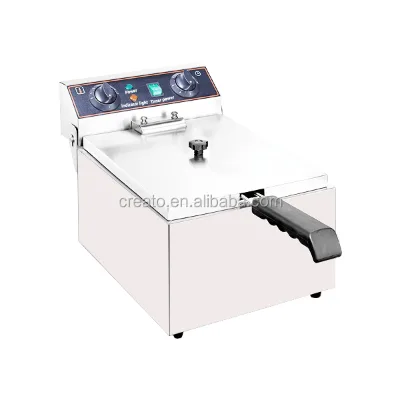
Find a Commercial Electric Turkey Fryer from 30 verified listings. Compare stainless steel models with 380V power, timing devices, and high-efficiency heating for fast food restaurants and commercial kitchens; compare the available evidence and request quotations based on your requirements.
Key considerations
Products List

Commercial Stainless Steel Electric Pressure Fryer Price/Turkey Fryer
$943.00 - $1667.00
MOQ: 1 Pieces


Electric Open Commercial Chicken Frying Machine Fryer with Factory Price
$1528.00 - $2183.00
MOQ: 1 Pieces

Hot Sale Four Tanks Frier Chicken Commercial Machine Electric Deep Fryer
$2475.00 - $3535.00
MOQ: 1 Pieces


Factory Direct Sales Frying Machine / Chicken Fryer / Electric Deep Fryer
$619.00 - $989.00
MOQ: 1 Sets




Comprehensive Sourcing Guide
Commercial Electric Turkey Fryer Sourcing Guide
Procuring a Commercial Electric Turkey Fryer requires distinguishing between standalone units and integrated processing lines, as the market offers diverse configurations for different operational scales. Buyers must verify whether the equipment is designed for high-volume continuous frying or batch processing, noting that observed listings include both single-tank fryers and extensive mesh belt systems. The presence of dual-tank configurations suggests a need for simultaneous cooking and holding, which is critical for maintaining throughput in busy fast-food environments.
When evaluating product listings, attention must be paid to the specific power source and voltage requirements, as some units are explicitly rated for 380V electric operation while others may support gas or hybrid heating methods. The observed data indicates a wide range of capacities, from 15-liter pots to industrial lines with dimensions reaching 4000mm in length. This variance necessitates a precise assessment of kitchen infrastructure to ensure the selected unit fits the physical space and electrical supply capabilities of the facility.
Product Scope and Observed Listing Signals
The product scope for commercial turkey fryers spans from compact electric units to large-scale automated frying lines, each serving distinct operational needs. Listings frequently highlight features such as high efficiency, long service life, and the ability to handle various food types including meat and vegetables. Buyers should note that while some units are marketed specifically as chicken pressure fryers, others function as general-purpose deep fryers capable of processing chips and other fried goods, requiring careful alignment with the intended menu.
Observed listing signals reveal significant variation in packaging and physical dimensions, with some units shipped in wooden cases or frames while others utilize standard carton boxes. The weight of these machines can range from 80kg for smaller units to 500kg for heavy-duty industrial lines, impacting logistics and floor load requirements. It is essential to verify the specific model number and dimension specifications, such as the 10665115cm footprint or the 400012002200mm processing line size, to ensure compatibility with the installation site.
Technical Specifications to Verify
Technical verification must begin with the heating method and power source, as the market contains both electric and gas heating options, with some models offering dual compatibility. Buyers should confirm the voltage rating, specifically looking for 380V/50Hz specifications or customizable options, to prevent electrical incompatibility issues. The temperature control range is another critical parameter, with observed units capable of operating between 50°C and 300°C, which must be sufficient for the specific frying requirements of turkey and other proteins.
Dimensional accuracy and material composition are equally vital for long-term durability and performance. The observed data points to the use of 304 stainless steel for the main body and pots, ensuring resistance to corrosion and ease of cleaning in commercial settings. Buyers must cross-reference the pot size, such as the 503432.5cm specification, against the intended batch size to avoid underutilization or capacity bottlenecks. Additionally, the mesh belt width of 6000mm in processing lines indicates a high-throughput capability that differs significantly from standard batch fryers.
Compliance and Safety Documentation
Compliance documentation is a non-negotiable aspect of sourcing commercial kitchen equipment, particularly for units intended for use in regulated food service environments. Buyers should request evidence of ISO and CE certifications, which are explicitly mentioned in the product data, to ensure the equipment meets international safety and quality standards. These certifications often cover electrical safety, mechanical guarding, and material safety, providing a baseline assurance that the product has undergone rigorous testing before market release.
Beyond general certifications, specific safety features related to the core components and warranty terms must be scrutinized to mitigate operational risks. The observed warranty of one year for core components suggests a standard industry expectation, but buyers should verify the scope of this coverage and the availability of online support for troubleshooting. Ensuring that the equipment includes necessary safety interlocks and emergency stop mechanisms is crucial, especially for high-temperature units operating at 380V, to protect staff and prevent accidents during daily operations.
Cost Drivers and Commercial Terms
Cost drivers for commercial turkey fryers are heavily influenced by the complexity of the heating system, the material grade, and the scale of the production line. Units featuring advanced temperature control, dual heating methods, or extensive stainless steel construction will command higher prices, as seen in the observed range of 86.87 to 8690 USD. Buyers must also account for the cost of specialized packaging, such as wooden cases or frames, which adds to the overall landed cost and affects shipping logistics.
Commercial terms, including the minimum order quantity (MOQ) and supply ability, play a significant role in the procurement strategy. While some listings indicate an MOQ of just one piece, others may have higher thresholds depending on the customization level and production capacity. The observed supply ability of 1000 sets per week suggests that suppliers can handle large orders, but buyers should confirm lead times and production schedules to align with their operational launch dates. Customization options, such as specific dimensions or voltage requirements, may also incur additional costs and extend the delivery timeline.
Supplier Qualification and Quality Control
Supplier qualification should focus on the manufacturer's ability to deliver consistent quality and provide reliable after-sales support. The presence of online support as a standard service indicates a commitment to maintaining equipment functionality, but buyers should verify the response time and technical expertise of the support team. It is also important to assess the supplier's production capacity and history, ensuring they can meet the demand for customized units without compromising on material quality or assembly standards.
Quality control measures must be integrated into the procurement process to prevent defects and ensure the equipment meets the specified performance criteria. Buyers should request detailed inspection reports or third-party test results that verify the durability of the 304 stainless steel construction and the accuracy of the temperature control systems. Given the heavy weight of some units, such as the 500kg industrial lines, verifying the structural integrity and stability of the frame is essential to prevent safety hazards during installation and operation.
Long-Term Procurement Checks
Long-term procurement checks involve establishing a framework for ongoing maintenance and performance monitoring to maximize the lifespan of the equipment. Buyers should develop a preventive maintenance schedule that aligns with the manufacturer's recommendations, focusing on the heating elements, temperature sensors, and mechanical components. Regular inspections can help identify wear and tear early, preventing costly downtime and ensuring that the fryer continues to operate at peak efficiency throughout its service life.
Evaluating the supplier's track record for providing spare parts and technical updates is crucial for sustaining operations over the long term. The observed one-year warranty on core components is a starting point, but buyers should negotiate extended support agreements or service contracts to cover the equipment beyond the initial warranty period. Additionally, staying informed about potential upgrades or modifications to the model, such as improved energy efficiency or enhanced safety features, can help the business remain competitive and compliant with evolving industry standards.
FAQs
Can commercial electric turkey fryers be customized for specific restaurant needs?
Yes, customization is available for these units to suit specific operational requirements. Buyers can request tailored specifications such as voltage adjustments or dimensional changes. This flexibility ensures the equipment integrates seamlessly into existing kitchen layouts. Suppliers often provide online support to assist with these custom configurations during the procurement process.
What certifications are typically required for commercial electric fryers?
Commercial electric fryers typically require ISO and CE certifications to ensure safety and quality standards. These certifications verify that the manufacturing processes and electrical components meet international regulatory requirements. Buyers should verify these documents before placing orders to ensure compliance with local health and safety regulations in their target markets.
What is the standard voltage for commercial electric deep fryers?
The standard voltage for these commercial units is typically 380V. This high voltage supports the high power requirements needed for efficient deep-frying operations in fast food restaurants. Some models may offer customized voltage options to match local electrical infrastructure, ensuring safe and stable performance without overloading standard circuits.
How is the Commercial Electric Turkey Fryer packaged for shipping?
These fryers are commonly packaged in wooden cases or wooden frames to protect the stainless steel body during transit. This robust packaging prevents damage to the heavy components, which can weigh up to 80kg. Proper packing ensures the equipment arrives in new condition, ready for immediate installation and use in commercial kitchen environments.
What is the minimum order quantity for commercial electric fryers?
The minimum order quantity is often just one piece, allowing buyers to test the equipment before larger purchases. This low MOQ reduces initial investment risks for new restaurant owners. Suppliers typically support small batch orders, making it easier for businesses to acquire high-efficiency cooking equipment without committing to large inventory volumes.
What material is used for the body of commercial electric fryers?
The body of these fryers is constructed from stainless steel, often grade 304 for durability and hygiene. This material resists corrosion and withstands high temperatures during deep-frying processes. The robust construction ensures long service life and easy cleaning, which are critical for maintaining food safety standards in busy commercial kitchen operations.